


A professional engine bay detail typically costs $50 to $400, with a common average around $150 for a standard vehicle. That's the honest range most Central PA drivers should expect, and the final price usually comes down to the size of the vehicle, how dirty the bay is, and whether you want the convenience of a mobile service.
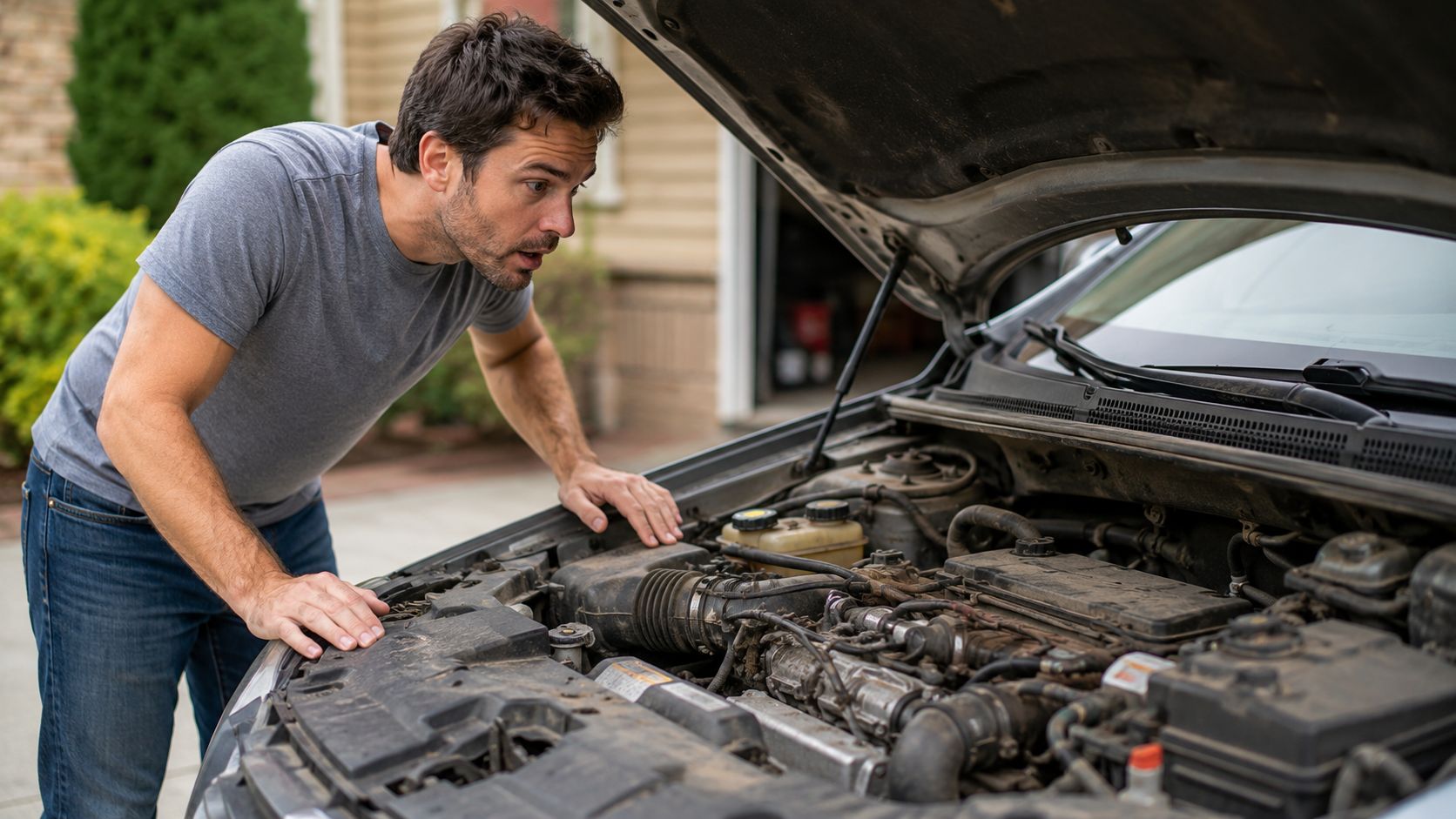
A lot of people around Harrisburg, Mechanicsburg, Carlisle, and Newport end up asking about engine bay detailing the same way. They pop the hood to top off washer fluid or check the oil, and they see dust around the plastic covers, leaves tucked near the cowl, and old greasy buildup sitting on hoses and metal brackets. At that point, the question usually isn't just “Can this be cleaned?” It's “What's this going to cost me, and is it worth paying someone to do it right?”
It usually is worth it, especially if you care about resale, easier maintenance, or just not having a grimy mess under the hood. The cheap version of this service often sounds good until you realize it may mean a rushed spray-down with very little protection for sensitive components. Professional work costs more for a reason. The process is slower, safer, and a lot more deliberate.
Popping the Hood on Engine Bay Detailing
If you've never had your engine bay cleaned, you're not alone. Most drivers don't think about it until they notice how rough it looks, or until a mechanic points out that everything under the hood is coated in dust and residue.
In Central PA, that buildup happens fast. Pollen, road grime, moisture, bits of leaf debris, and oily film all collect under the hood over time. Some of that is cosmetic. Some of it makes basic inspection harder. A clean engine bay won't repair a problem, but it can make it much easier to spot one.
What people usually find under the hood
Here's what a typical neglected engine bay looks like:
- Light dust and pollen: Common on daily drivers that are otherwise maintained well.
- Leaf debris and organic matter: Often packed near trim edges and corners.
- Grease and oily residue: Usually around older engines or vehicles with minor seepage.
- Faded plastics: The bay may be clean enough structurally, but still look tired and chalky.
A dirty engine bay doesn't always mean the vehicle was neglected. It usually means nobody's cleaned one of the least convenient parts of the car.
That's why engine bay detailing isn't just for show cars. It's a practical service for family SUVs, commuter sedans, work trucks, and older vehicles that need a little cleanup to make inspection easier and the whole vehicle feel better cared for.
The price range is wide for a reason
The broad price range exists because not every engine bay takes the same amount of effort. A lightly dusty sedan is a completely different job from an older truck with baked-on grime and seepage around multiple components. That difference is what separates a quick budget clean from professional detailing.
What You Actually Pay For in a Professional Detail
A professional engine bay service isn't just someone spraying degreaser and rinsing it off. Engine bay detailing costs range globally from $60 to $400, with a professional industry average of $150 for a standalone service, driven by a 7-step technical process that requires 30–60 minutes of labor to prevent electrical damage and detect leaks, according to this industry discussion on engine bay detailing workflow and pricing.
That time goes into caution as much as cleaning.
The work behind the price
A proper engine bay detail usually includes several steps done in the right order:
Assessment first
The bay gets checked while dry and cool. That's when a pro looks for loose covers, cracked plastics, exposed electronics, obvious leaks, and areas that need extra care.Sensitive areas are protected
Fuse boxes, exposed filters, electrical connections, and vulnerable components need protection before moisture is introduced.Degreaser is applied where needed
Not every surface gets the same chemical treatment. Heavy grime needs one approach. More delicate trim and coated parts need another.Agitation with the right tools
Detail brushes, soft boar's-hair brushes, microfiber towels, and hand tools are indispensable for intricate cleaning in tight spaces. Cheaper services frequently cut corners in these areas.Controlled rinsing
Professionals use controlled water, not reckless blasting. The goal is to remove contamination without forcing water where it shouldn't go.Drying matters
Compressed air, microfiber towels, and patience are what make the service safe. Skipping this step is where trouble starts.Protective dressing
A quality water-based dressing restores a clean, OEM-like finish to plastics and rubber without leaving a greasy mess.
Why process discipline matters
Good detailing work is repeatable. That's true whether you're cleaning an engine bay or checking a finished product on a production line. If you like seeing how professionals think through consistency, SaberTask's quality assurance checklist is a useful read because it shows why checklists help reduce missed steps.
Practical rule: The more crowded and heat-sensitive the engine bay, the less room there is for guesswork.
If you want to see what a properly scoped mobile service might look like for your own vehicle, you can get a ballpark through The Mobile Buff's instant pricing calculator. It's a better starting point than assuming every vehicle should cost the same.
Key Factors That Drive Engine Detailing Costs
Most customers don't need a lecture on pricing. They just want to know why one quote is modest and another is much higher. The answer usually comes down to three things. Professional engine bay detailing costs typically range from $50 to $400, with a widely cited average of $150 for standard vehicles. Sedans often fall in the $100–$150 range, while larger SUVs, trucks, and luxury cars frequently command $130–$225 or higher, based on this engine detailing cost breakdown.
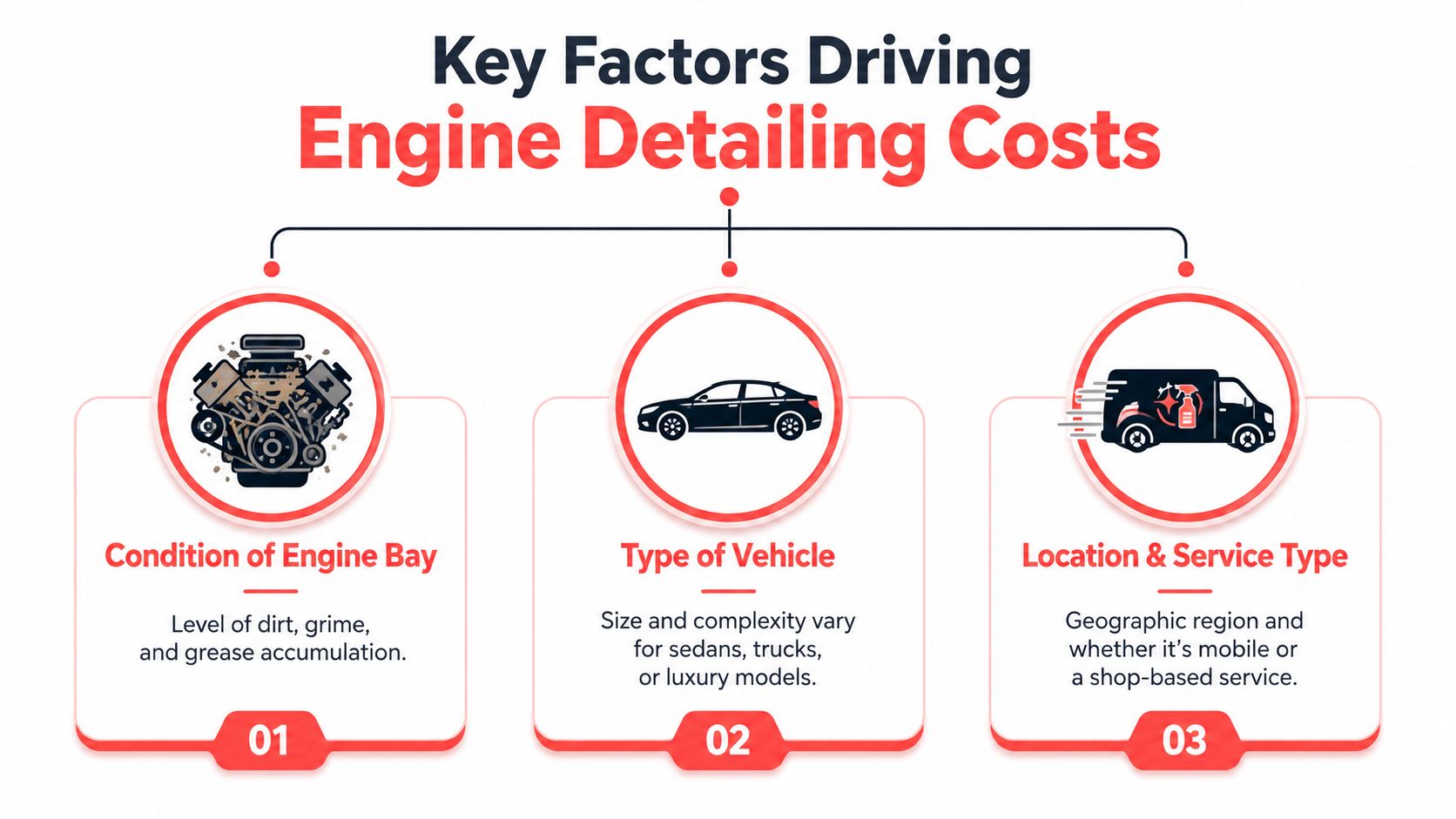
Vehicle size and layout
A small four-cylinder sedan usually gives a detailer more room to work and fewer surfaces to scrub. A larger SUV, truck, or luxury model often has a wider bay, more trim, tighter access points, and more areas where grime can hide.
Some engine compartments also pack components tightly. That slows down brushing, wiping, and drying. A larger engine bay isn't always harder, but it often takes longer.
Condition changes everything
Condition is where pricing can swing the most. There's a major difference between a bay that's dusty and a bay that's coated in old grease.
Here's a simple way to think about it:
| Condition | What it usually means for the job |
|---|---|
| Light dust | Fast cleanup, minimal degreasing |
| Moderate grime | More brushing, more product, more drying |
| Heavy grease or residue | Slow hand work, repeated cleaning cycles |
| Leak contamination | May require specialty handling and a much higher quote |
The dirtiest engine bays aren't hard because they look bad. They're hard because the contamination sticks to everything and sits near sensitive parts.
Vehicle type and service style
Some vehicles demand a more careful touch because of what's under the hood. Luxury cars, performance models, older vehicles, diesels, and collector cars can require slower work and more selective cleaning methods.
Location and service style matter too. Mobile detailing adds convenience, setup time, water management, and travel logistics to the job. That doesn't make it overpriced. It means you're paying for professional work at your driveway instead of losing part of your day at a shop.
If you want a broader look at how detailing prices change across service types, this breakdown of professional car detailing cost gives useful context.
DIY vs Professional a Cost and Risk Analysis
A lot of people look at engine bay detailing cost and think, “I'll just do it myself.” That reaction makes sense. Older forum posts made engine bay cleaning sound like a cheap add-on. In community forums from 2022, detailers reported charging as little as $30 to $50 for a basic engine bay clean. By 2026, industry pricing guides confirm that the average has shifted to $150, with a broad range of $100 to $400 becoming the standard for professional services, according to this discussion on changing engine bay pricing.
The big change is what customers expect now. Safer process. Better finish. Less risk.
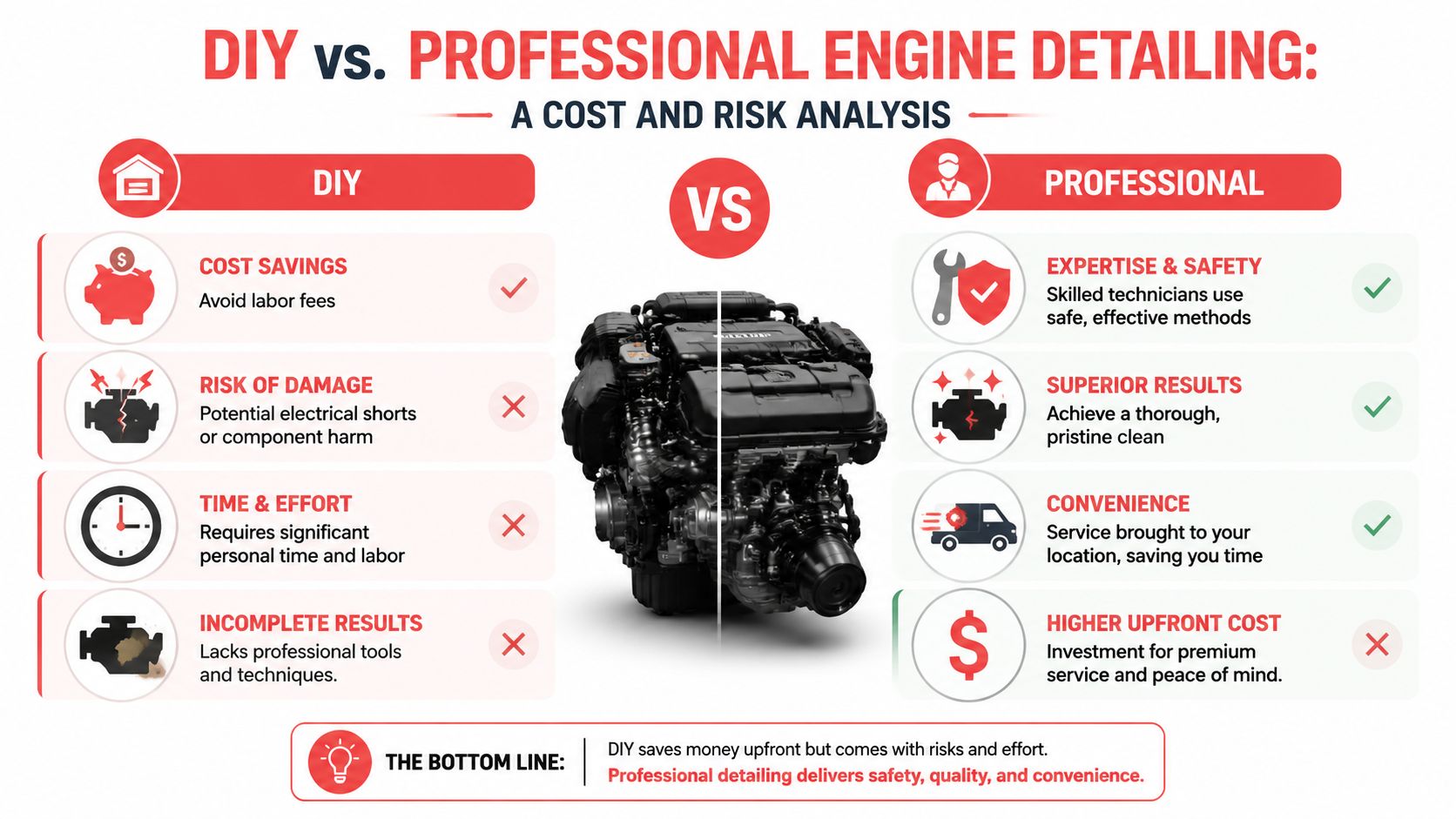
Why the cheap option often isn't cheap
DIY sounds inexpensive until you count the full picture:
- Products: You need proper automotive-safe degreaser, brushes, towels, and dressing.
- Technique: You need to know what should be covered and what should stay mostly dry.
- Time: A first attempt is slow. Setup, agitation, drying, and cleanup are often underestimated.
- Risk: One bad decision with water pressure or harsh chemicals can turn a cleaning job into a repair problem.
A rushed DIY attempt also tends to leave the engine bay half-clean. The flat surfaces may look better, but grime remains around connectors, brackets, hose bases, and lower trim.
For a safer explanation of what professionals consider acceptable methods, this guide on how to clean an engine bay safely is a better reference than random social clips.
Here's a good example of why technique matters in real life:
What professional service really buys you
Hiring a pro buys you more than labor. It buys you judgment.
If I had to sum it up simply, a professional detailer knows what to clean, what to avoid, and when to slow down.
That matters most on newer vehicles with packed electronics, on older vehicles with brittle materials, and on anything that already shows signs of oil residue. The service fee is usually easier to justify when you compare it to the time, uncertainty, and possible downside of doing it wrong.
Engine Detailing in Central PA with The Mobile Buff
For drivers in Central Pennsylvania, convenience is a big part of the value. You've got work, school pickup, errands, weekend plans, and enough on the calendar already. Mobile service fixes that. Instead of dropping a car off and arranging a ride, the work happens at your home or office.
Pricing benchmarks show that basic engine bay cleaning starts at $60–$80 in some markets, but the cost is influenced by geographic labor rates and mobile service logistics, with mobile providers in the US often charging $150 for on-site convenience, according to this engine bay pricing overview. For busy drivers in Central PA, that convenience is often the difference between meaning to schedule service and getting it done.
What local customers usually care about
Around Harrisburg, Mechanicsburg, Carlisle, Newport, and nearby areas, customers typically aren't seeking concours prep. They want three things:
- A clean, presentable engine bay
- A safe process
- A service that doesn't waste half their day
That's exactly why mobile detailing fits this area so well. The value isn't only in the finished result. It's in avoiding the drive, the waiting room, and the scheduling headache.
Honest pricing builds trust
People usually get suspicious when pricing feels vague. That's fair. Engine bay work should be quoted by condition and vehicle type, not with one blanket promise that pretends every job is identical.
A useful comparison is how other detailing niches break down labor and condition. For example, Boat Juice's boat detailing cost breakdown does a good job showing how size, condition, and service depth affect price in another detailing category. The same logic applies to engine bays. More contamination and more complexity mean more labor.
If you want to see local feedback before booking, check The Mobile Buff on Google. Reviews tell you quickly whether a mobile service is punctual, careful, and worth having at your driveway.
Common Questions About Engine Bay Cleaning
Is engine bay detailing safe for older cars
Usually, yes, if the vehicle is assessed first and cleaned with restraint. Older vehicles often need a gentler approach because plastics, clips, and wiring insulation can be more fragile than they look. That's exactly why this job shouldn't be treated like a fast rinse.
How often should you get it done
There isn't one perfect schedule for everyone. A garage-kept vehicle with a fairly clean engine bay may only need occasional service. A daily driver that sees dusty roads, wet weather, leaf debris, and lots of miles may benefit from more regular attention. Most owners do best by cleaning it when buildup becomes noticeable or before a sale, trade-in, or major service visit.
Will detailing fix an oil leak
No. Detailing reveals problems. It doesn't repair them.
A clean engine bay makes it easier for you or your mechanic to spot fresh seepage, trace where it's coming from, and tell the difference between old residue and an active issue. That alone can be useful, but it's not a substitute for mechanical repair.
Why do some engine bays cost much more than others
This is the part a lot of articles skip. Most content on this topic omits that severe oil leak contamination can skyrocket engine bay detailing costs to $500–$750, as it requires specialized extraction and triples the labor time from a standard 30-minute job to over 90 minutes, based on this pricing discussion focused on heavy oil contamination.
That's not a normal maintenance clean. That's a contamination job.
A heavily oil-soaked engine bay changes the job completely. The detailer has to work around active residue, repeated chemical application, and much more cleanup time.
Is a cheap engine clean worth it
Usually not. Cheap engine cleaning often means less prep, less protection, less agitation, and less drying. The bay may look better from a few feet away, but the work often isn't thorough, and the risk goes up when the process gets rushed.
If you want the engine bay cleaned safely and you want the convenience of service brought right to your driveway, that's where a professional mobile detail is worth the money.
If your engine bay is dusty, greasy, or just overdue for attention, The Mobile Buff can help you get it cleaned the right way without giving up your day. For Central PA drivers who want honest pricing, careful mobile service, and results that hold up, book your appointment and see why so many local owners trust us with the details that matter.

