


Hey there! Figuring out how to clean your leather car seats can feel like a high-stakes job. Get it wrong, and you could end up with faded, cracked, or discolored leather. But don't worry—the professional method is actually pretty straightforward: vacuum everything thoroughly, gently scrub with a pH-neutral leather cleaner and a soft brush, wipe it all down with a clean microfiber towel, and finish with a high-quality conditioner.
This process is the gold standard for a reason. It gets the grime out without stripping the leather or causing any damage to your car’s beautiful interior. At The Mobile Buff, this is the exact method we trust to deliver stunning results for our clients all over Central PA.
Your Quick Guide to Pristine Leather Seats
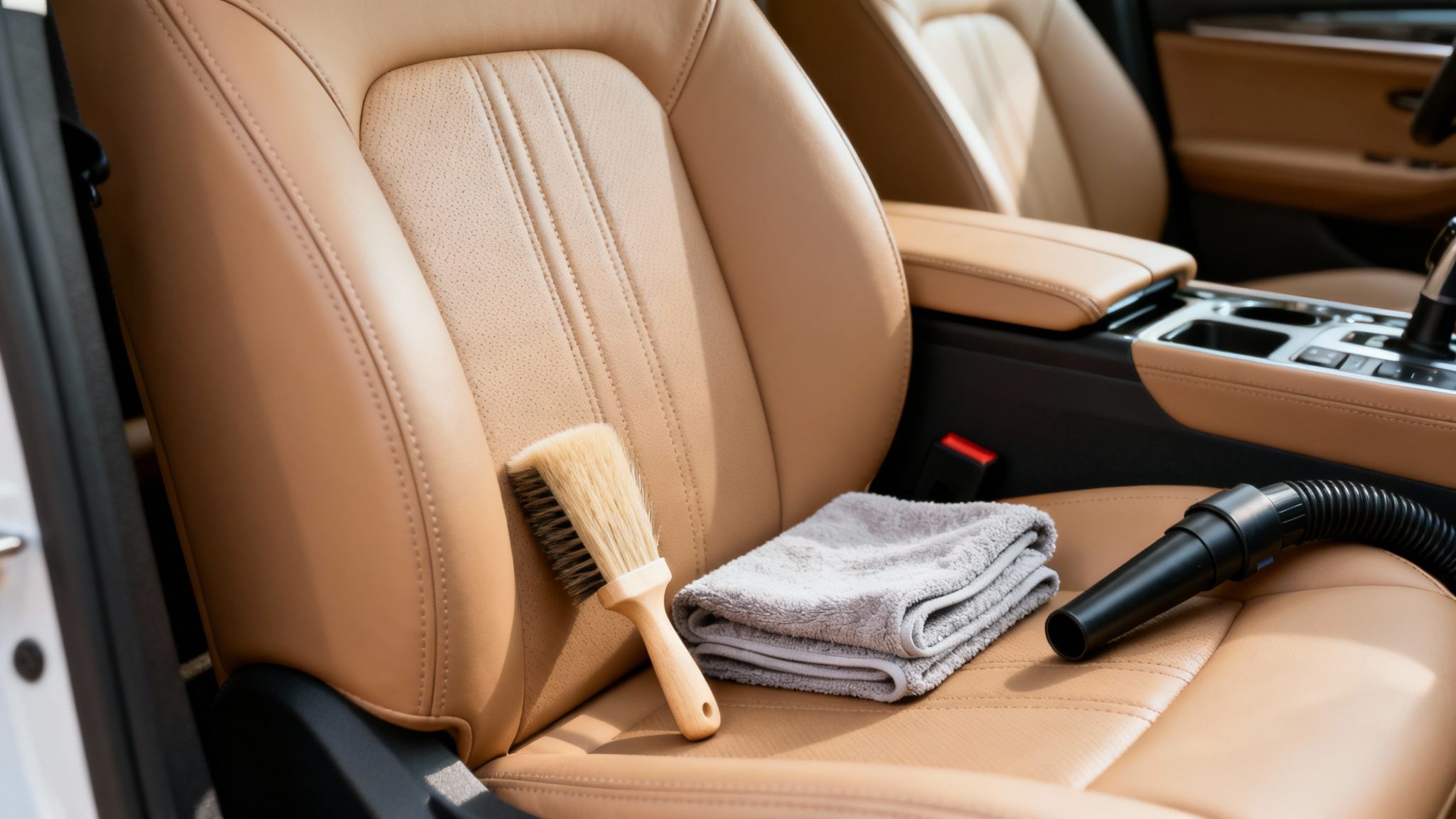
Let's face it, leather seats are a huge part of a car's appeal. They add a real touch of class and comfort. But life happens. That morning coffee sometimes sloshes over, the kids track in who-knows-what, and daily commutes leave their mark. Before you know it, that pristine leather looks tired and dirty.
Keeping them clean isn't just about looks, though. It’s about protecting your investment and stopping that premature wear and tear in its tracks.
A huge mistake we see people make is reaching for whatever household cleaner is under the sink. Products like all-purpose sprays, vinegar, or even dish soap are a disaster waiting to happen for automotive leather. They’re way too harsh and can strip away the protective top coat, which is the fast track to dryness, cracking, and even permanent discoloration. As professionals, we can't stress this enough: stick to products made for the job.
The Professional Method vs Common Mistakes
The real secret to making leather last is simple: use the right products and a gentle touch.
A dedicated, pH-neutral leather cleaner is designed specifically to get into the leather's pores and lift out dirt, body oils, and grime without drying out the material. When you pair that with a soft-bristled brush, you create a gentle foam that does the heavy lifting for you, breaking down all that gunk safely. This is a world away from scrubbing with an abrasive sponge or an old rag that can leave fine scratches all over the surface.
Key Takeaway: Here's a pro tip: shiny leather is almost always dirty leather. A truly clean leather seat should have a rich, satin, or matte finish—not a greasy gloss. That shine you’re seeing is usually just a buildup of body oils and dirt.
Here's a quick look at why using industry-approved methods makes all the difference for your leather's longevity and appearance.
Professional vs Common At-Home Methods
Just understanding these differences is half the battle. If you've ever felt a little overwhelmed by it all, or if you're looking at your seats right now and noticing they're looking worse for wear, our team is here to help.
For a flawless finish without any of the guesswork, you can check out our professional interior detailing services—we come right to your driveway. You can see the quality of our work for yourself and read what other Central PA residents are saying by visiting our Google Business Profile.
Assembling Your Detailing Toolkit
Before you even think about touching your leather seats with a cleaner, let's talk about tools. Having the right gear isn't just a suggestion—it's the secret sauce to getting that flawless, professional finish without accidentally ruining your interior.
When you're learning how to clean leather car seats, using the wrong products is the quickest way to cause damage that you just can't undo. Think of this as your pre-flight checklist for a successful detail.
Please, step away from the all-purpose cleaners and abrasive kitchen sponges. We've seen the damage they can do. These harsh products will strip the leather's protective topcoat, which inevitably leads to drying, cracking, and fading. Instead, your toolkit should be filled with items designed specifically for the delicate nature of automotive leather.
Your Essential Cleaning Arsenal
To do the job right, you’ll want to gather a few key supplies. Each one has a specific job in safely lifting away grime and bringing your leather back to life.
- Vacuum with a Soft Brush Attachment: This is always your first move. The soft brush gently gets dust and crumbs out of tight seams and creases without scratching the surface.
- Fresh Microfiber Towels: You can never have too many of these. Their soft, absorbent fibers are perfect for wiping away cleaner and buffing in conditioner without leaving linty fuzzballs everywhere.
- Soft-Bristled Leather Brush: A dedicated leather brush is a game-changer. Its bristles are just right—soft enough to work the cleaner into a gentle foam that lifts dirt from the grain, but not so stiff that they cause damage.
- pH-Balanced Leather Cleaner: This is non-negotiable. A pH-neutral formula is tough on body oils and dirt but gentle enough that it won't harm the leather's delicate finish.
- Premium Leather Conditioner: Look for a good one, preferably with UV protection. A quality conditioner puts essential moisture back into the leather and, more importantly, shields your seats from the sun's brutal rays.
The demand for these kinds of specialized products has exploded. The global leather cleaner market was valued at around USD 1.1 billion in 2023 and is expected to more than double by 2033. That really tells you how much people understand that proper maintenance preserves the value and look of their cars. You can dig into more of these market trends over at DataHorizzon Research.
Why Professional-Grade Tools Matter
Using professional-grade tools means you're treating your leather with the respect it deserves. Cheap, low-quality towels can be surprisingly abrasive, and the harsh chemicals hiding in household cleaners can permanently damage the material. When you see our team at The Mobile Buff on a job, you’ll see we only use industry-approved, top-shelf products. It's how we get those safe, stunning results, every single time.
We often get calls from clients around the Harrisburg area who have accidentally damaged their seats with the wrong products. It’s an easy mistake to make, but trust me, it’s a costly one to fix. Investing in the right toolkit from the get-go will save you a world of headaches later on.
If hunting down all these supplies feels like a chore, or if you just want to make sure your vehicle gets the expert treatment it deserves, we’re here to help. Our mobile detailing service comes right to your door, fully equipped with everything needed for a perfect clean.
See what your neighbors are saying about our work on our Google Business Profile and book your appointment today.
The Gentle Cleaning Process, Step by Step
Okay, you've got your gear lined up and you're ready to go. Let's walk through the actual cleaning process. This is the exact method we use at The Mobile Buff to bring leather interiors back to life safely, and it’s all about being patient and methodical.
The single most important rule is to work in small, manageable sections. Think one seat bolster or a single headrest at a time. This keeps your cleaner from drying on the surface before you can wipe it off, which is a surefire way to get streaks and residue. A hurried job is almost always a sloppy one.
First Things First: A Serious Vacuum
Before any cleaner even thinks about touching your seats, you need to vacuum like you mean it. Don't just give the seats a quick once-over. Grab your soft brush attachment and really get into the seams, stitching, and every little crevice. This is where all the abrasive dirt and grit love to hide.
If you skip this, you’re basically turning your cleaning brush into sandpaper. As you scrub, you’ll be grinding those tiny, sharp particles into the leather's finish, creating micro-scratches that will dull the surface over time. Trust us, taking your time here is the foundation for a professional-level clean.
How to Apply Cleaner the Right Way
Here’s a pro tip that makes a world of difference: never spray leather cleaner directly onto the seat. It's a super common mistake that leads to oversaturation, letting the cleaner seep into perforated holes or soak the foam underneath.
Instead, lightly mist the cleaner onto your soft-bristled leather brush. This little change gives you total control. It lets the brush whip the cleaner into a gentle foam that lifts dirt right out of the leather’s grain without ever waterlogging it.
Gently work the cleaner in small, overlapping circular motions. You don't need a ton of elbow grease here—let the foam do the heavy lifting. You should literally see the grime being pulled from the surface and getting trapped in the lather. That’s your sign that it’s working.
Wiping Away the Dirt and Grime
As soon as you’ve worked the cleaner into a nice foam and you see it lifting the dirt, immediately grab a clean, dry microfiber towel. Gently wipe away all the foam and residue from that section. You’ll probably be shocked at how much dirt comes off, even on seats that looked pretty clean to begin with.
Remember to flip your towel to a fresh, clean side for each new section. This simple habit prevents you from accidentally transferring all that grime right back onto the leather. This two-part rhythm—agitate, then wipe—is what separates a quick wipe-down from a deep, restorative clean.
This simple infographic really breaks down the essential tools for the job.
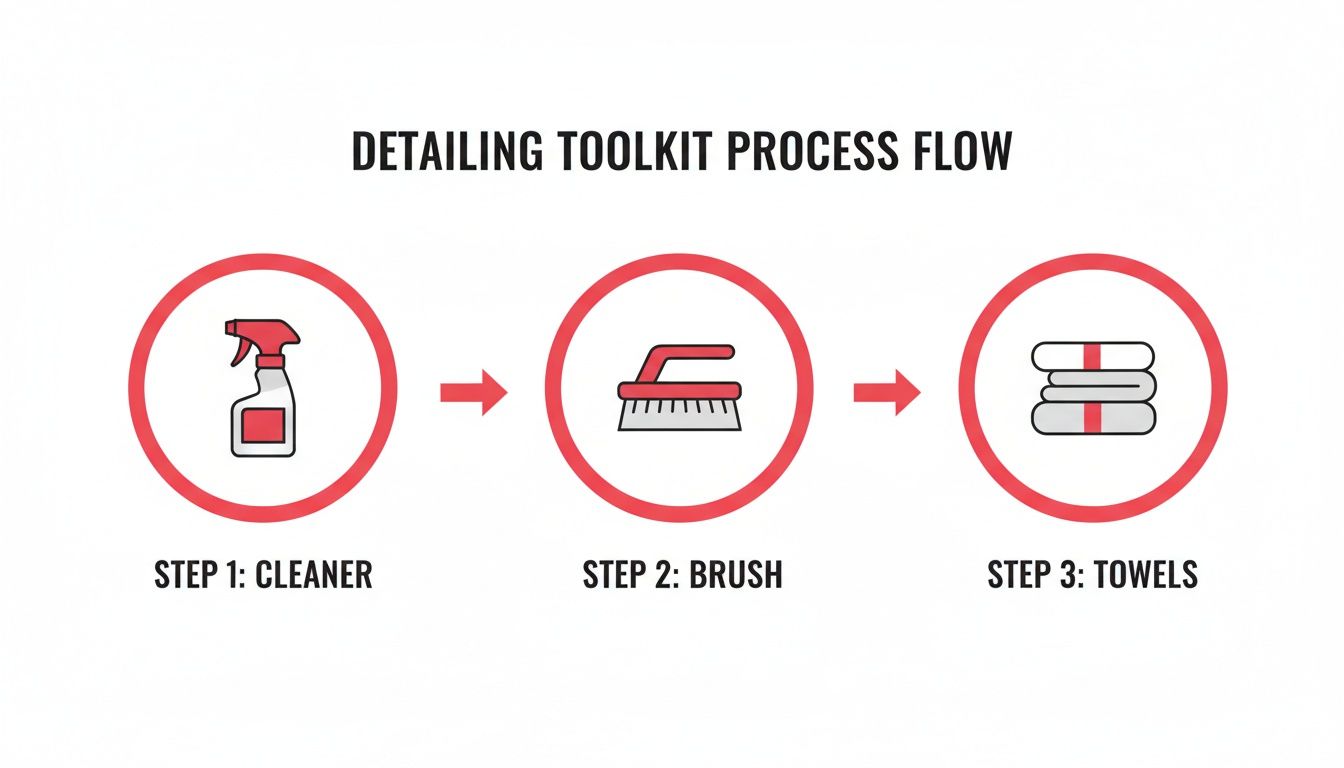
It’s not about having dozens of complicated products. It’s all about using the core three—cleaner, brush, and towels—in the right order to get fantastic results.
Now, if you run into stubborn spots or old stains that just won't budge, your first instinct might be to scrub harder. Don't do it! That’s a fast track to damaging the leather. Tough stains like ink or dye transfer from jeans often need very specific treatments. For those tougher jobs, you might want to explore professional stain removal services, where we use targeted solutions to dissolve the stain without harming your leather.
It’s no secret that people love high-quality leather interiors, and the market for maintaining them has exploded. The global automotive interior leather market was valued at about USD 36.95 billion in 2024 and is expected to climb to USD 68.44 billion by 2033. This just goes to show how much drivers value their leather and why protecting that investment with proper care is so important.
If you’ve followed these steps and still feel like your seats aren't quite there, or if the job just feels too big to tackle on your own, don't hesitate to give us a call. We bring all the expertise and professional-grade tools right to your driveway.
Conditioning to Protect Your Investment
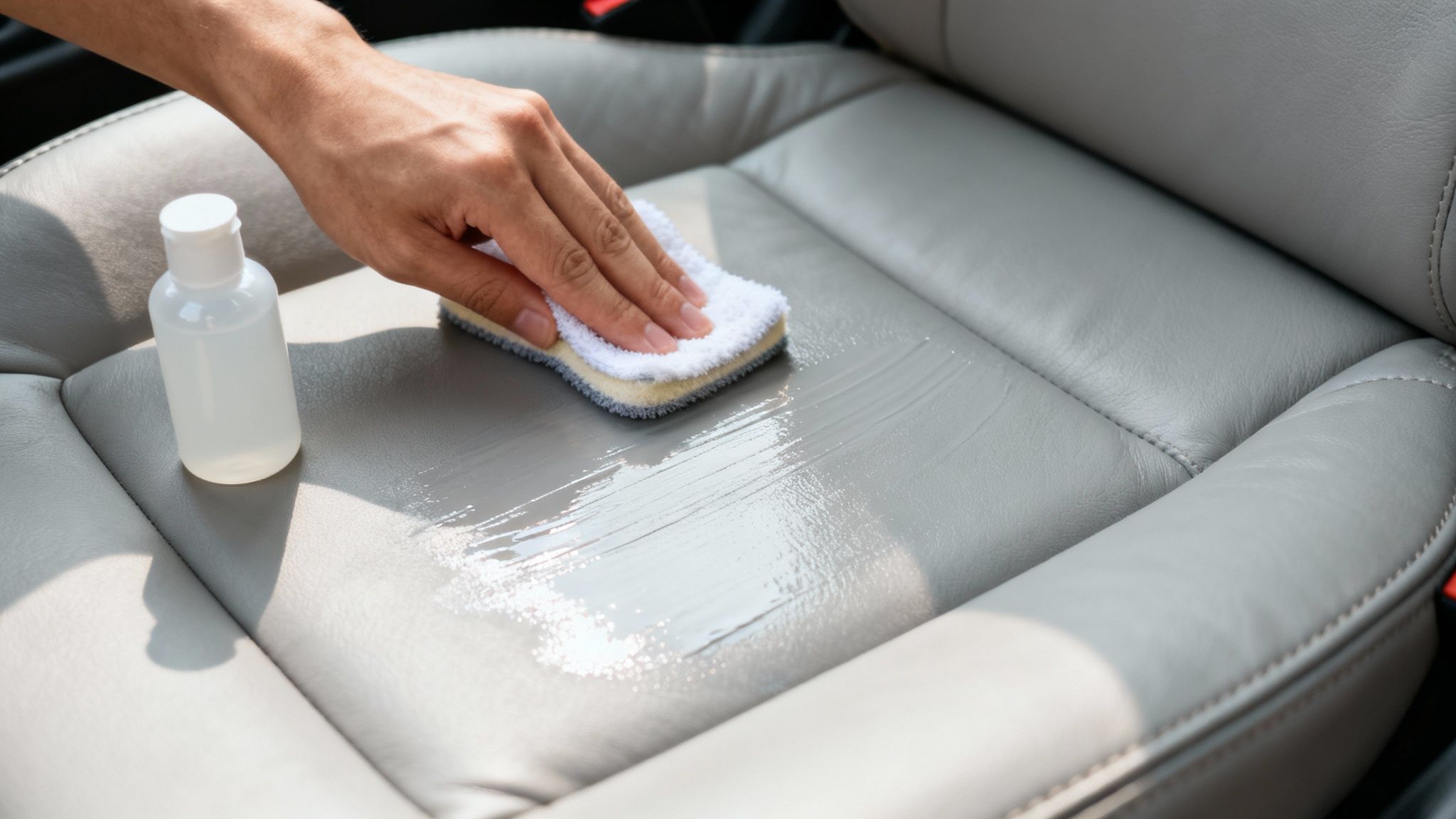
Getting your leather seats spotlessly clean is a great feeling, but the job isn't quite finished. Think of it like washing your hair—you wouldn't just skip the conditioner, right? The same logic applies here. Conditioning is that crucial final step that truly protects your car's interior for the long haul.
This whole process is about putting back the essential oils that keep the leather soft and supple. Without that moisture, leather slowly dries out, gets brittle, and eventually starts to crack. You'll see it first in the high-traffic areas or spots that get baked by the sun.
Applying Conditioner for a Professional Finish
First things first: make absolutely sure your seats are 100% dry from the cleaning stage. Slapping conditioner onto damp leather is a recipe for a splotchy mess, as it can trap moisture underneath.
Once you’re good to go, grab a quality leather conditioner and a fresh microfiber applicator pad.
When it comes to application, less is definitely more. Squeeze a small, dime-sized dollop of conditioner onto your pad, never directly onto the seat itself.
Now, gently massage the product into the leather using small, overlapping circular motions. We like to work in manageable sections, just like with the cleaner, to make sure we don't miss any spots. This methodical approach really helps the conditioner work its way deep into the leather's pores.
Pro Tip: Don't rush this part. Let the conditioner sit for a few minutes after you've applied it. This "dwell time" is where the magic happens, as the leather soaks up all those nourishing ingredients.
After letting it penetrate, grab a separate, clean microfiber towel and give the whole surface a light buff. This is a critical final touch that removes any leftover product and prevents that greasy, sticky feeling nobody wants. You're looking for a rich, non-shiny matte finish that feels soft and smooth.
Why UV Protection is Non-Negotiable
Here’s something a lot of people overlook: not all conditioners are created equal. For a car, choosing a product with built-in UV protectants is a must. Your interior is constantly getting blasted with harsh UV rays that fade the color and speed up the aging process. A good conditioner acts like sunscreen for your seats.
It seems more and more people are catching on. The global market for leather care products is expected to jump from USD 3.9 billion in 2024 to USD 5.9 billion by 2034. If you're curious, you can discover more insights about leather care trends and see why this is becoming such a big deal. It just goes to show how vital proper maintenance is.
If your seats are already showing their age, or if you just want to guarantee a perfect, professional finish, we’re here to help. At The Mobile Buff, we use premium, industry-grade conditioners to restore and protect your vehicle's interior. See what your neighbors think by checking out our Google Business Profile.
Ready for seats that look and feel brand new? Book your professional interior detail online today!
Knowing When to Call in the Experts
While this guide gives you the confidence to tackle routine leather care, some messes are best left to the pros. Honestly, knowing when to put the brush down and pick up the phone is just as crucial as knowing the cleaning steps themselves. Some jobs just require a level of skill and equipment you won't find in the average garage.
Think about a leaky pen that left a nasty ink blotch, or the stubborn blue haze from dark denim that seems to have permanently bonded with your light-colored leather. These are the moments where more scrubbing isn't the answer. In fact, getting too aggressive can cause permanent damage, stripping the color right off your seats.
Challenges Best Left to Professionals
Certain situations really do demand an expert touch to avoid a costly, heartbreaking mistake. A professional detailer has an arsenal of specialized tools and commercial-grade products formulated for these exact nightmare scenarios.
Here are a few situations where calling for backup is your best bet:
- Deep-Set Stains: We're talking about ink, makeup, grease, or dye transfer that has had time to really settle in. These require very specific treatments.
- Perforated Leather Spills: If liquid has seeped down into those tiny holes, getting it out without professional extraction tools is next to impossible.
- Mold or Mildew Growth: This isn't just a surface stain; it points to a deeper moisture issue and needs professional remediation to be eliminated safely.
We’ve seen it all—from spilled paint to melted crayons. Trying to fix these with the wrong products almost always makes the problem worse. A professional can assess the specific type of stain and leather, then apply the correct, targeted solution without causing more harm.
A seasoned detailer can use something like a gentle steam cleaner to lift grime from perforated leather or use specific solvents to dissolve an ink stain without touching the surrounding area. Our full interior detail service is designed to handle these exact challenges. We bring the right tools and expertise directly to you, ensuring a safe and flawless restoration.
For those tough jobs that need that expert touch, we're here to help. You can see the quality of our work for yourself and check out what our clients have to say by visiting our Google Business Profile.
Don't risk damaging your beautiful leather interior. If you're staring down a stain that seems unbeatable, contact The Mobile Buff today, and let our experts bring your seats back to pristine condition.
Answering Your Top Leather Care Questions
Over the years, we've heard just about every question you can imagine when it comes to leather seats. We've put together answers to the most common ones we get, so you can tackle your car's interior with the confidence of a pro.
Getting the technique right is everything. It's the difference between a beautiful, lasting finish and accidentally causing damage, especially when you're dealing with tricky stains or different types of leather.
How Often Should I Really Be Cleaning and Conditioning?
For most daily drivers, a deep clean and condition every 3 to 6 months is a great rhythm to get into.
But that's just a starting point. If you have light-colored leather (like beige or white) that shows every little mark, or if your car is the family taxi for kids and pets, you'll want to lean towards cleaning more often. Think of it like this: consistent, gentle care is way better than letting grime build up until it becomes a major project. Body oils and dirt are the enemies of your leather's protective topcoat.
What's the Deal with Perforated Leather?
Ah, perforated seats—great for cooling, but a little trickier to clean. The golden rule here is to never, ever spray cleaner directly onto the seat.
You risk getting moisture trapped in all those little holes, which can lead to musty smells or even damage the heating and cooling elements underneath. Instead, lightly mist a pH-balanced cleaner onto your soft brush or a microfiber towel. Work the product into a foam on the brush before you even touch the seat. This gives you all the cleaning power without soaking the surface.
Speaking of keeping things fresh, a clean interior includes clean air. You might find our guide on how to clean car air vents useful for tackling that job, too.
If there's one thing we could tell every car owner, it's this: stay away from the Magic Eraser on leather. We've seen the damage it causes. It's basically fine-grit sandpaper and will strip the finish right off your seats, and there's no coming back from that.
Can I Just Use Vinegar or Other Household Cleaners?
We get this question a lot, and the answer is always a hard no. Please don't use products like vinegar, dish soap, or all-purpose sprays on your car's leather.
These cleaners are way too harsh and will throw off the delicate pH balance of your leather's finish. The acid in vinegar can literally eat away at the topcoat, and soaps leave a sticky film that becomes a magnet for more dirt. It's a classic case of the "fix" making the problem worse. Always invest in a cleaner made specifically for automotive leather.
Sometimes, even with the best DIY spirit, a job calls for a professional eye to get it done right without the risk. If you’re around Central Pennsylvania and want your interior to look and feel factory-fresh, The Mobile Buff is ready to help. Our team comes to you with the right tools and expertise to make your leather seats look incredible.
Ready for seats that feel as good as they look? Book your mobile detailing service online today!

