


Cleaning suede car seats is all about a delicate touch and the right tools. The real secret? You need a specialized suede brush and a dedicated cleaner. And here’s a pro tip we live by: never spray the cleaner directly onto the seat. Always apply it to a towel first to avoid soaking the material and causing damage. This simple, industry-approved step is what separates a DIY job from a professional one, ensuring you lift the grime without hurting those sensitive fibers.
Why Suede Seats Need a Specialist's Touch

That luxurious, velvety feel of suede is incredible, isn't it? But that beautiful texture is exactly what makes it so tricky to maintain. Unlike smooth leather or tough fabric, suede has an open, napped finish that practically invites dust, body oils, and spills to settle in.
It’s tempting to grab a random household cleaner or a stiff brush, but that’s one of the worst mistakes you can make. As professional detailers, we've seen the unfortunate results: ugly water spots, stiff and matted patches, and even discoloration from the wrong chemicals. We know that understanding the material you're working with is the first, most critical step in doing the job right and avoiding costly damage.
Suede vs. Alcantara: What's the Difference?
Before you start, it’s vital to know what you're actually cleaning. A lot of modern cars have seats that look and feel like suede but are actually a synthetic microfiber called Alcantara. The distinction matters because your cleaning method should be tailored to the material.
- Genuine Suede: This is the real deal, made from the underside of animal hide. It's unbelievably soft and breathable, but it's also highly absorbent and stains very easily. It requires the absolute gentlest care.
- Alcantara: This is a brand-name synthetic material made from polyester and polyurethane. It does a fantastic job of mimicking suede's look and feel, but it was engineered to be far more durable, stain-resistant, and easier to clean.
Here's a quick test we use in the field: Find a hidden spot (like under the seat) and place a single, tiny drop of water on it. Natural suede will absorb it almost instantly. Alcantara, on the other hand, will often let the bead of water sit on the surface for a moment before it soaks in.
No matter which material you have, the golden rule for pros is always the same: start with the least aggressive, industry-approved method first.
Using the wrong products or techniques can lead to damage that’s expensive—or impossible—to fix. When you see the flawless interiors on our Google Business Profile, that finish comes from knowing the material and using the right professional tools every single time. If you're feeling hesitant, our interior detailing services are designed to safely bring your seats back to life.
The Pro Method for Routine Suede Cleaning
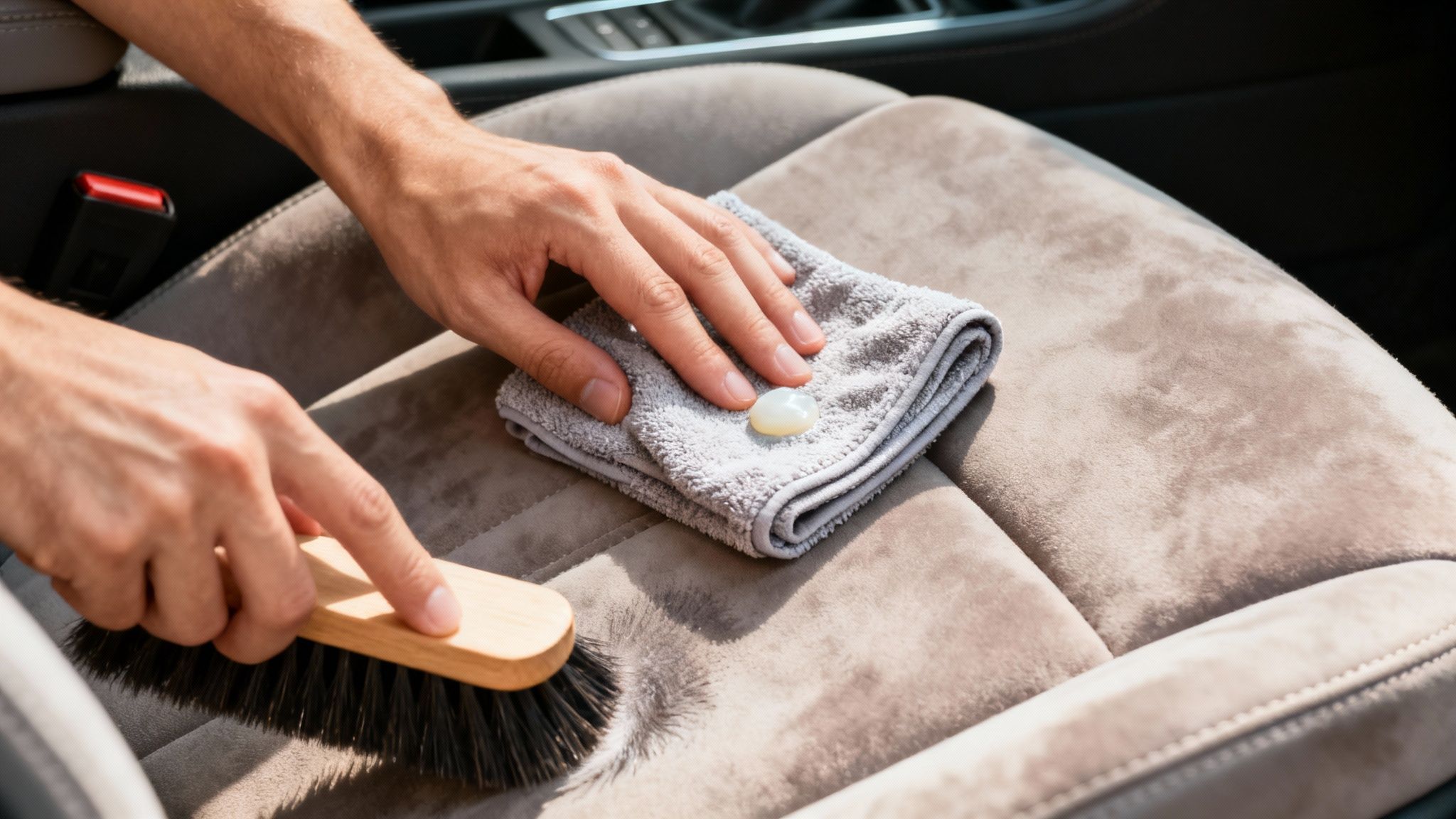
Alright, let's get down to the nitty-gritty. The real secret to keeping suede or Alcantara seats looking factory-fresh isn't some magic product—it's consistent, routine care. This is about the regular upkeep that stops dirt, dust, and body oils from settling in and becoming a real problem. Think of it as a quick refresh every so often. Doing this maintains that signature soft, velvety feel and prevents the fibers from getting matted down and grimy.
First, Always Start with a Dry Clean
Before a single drop of cleaner touches that fabric, you have to get rid of all the loose debris. Crumbs, dust, and pet hair all need to go. This step is absolutely non-negotiable in professional detailing. If you skip the dry prep, you're just going to turn all that loose dirt into a muddy paste the second you add moisture, creating a much bigger headache.
Your go-to tool here is a high-quality, soft-bristled suede brush. We can't stress "soft-bristled" enough. A stiff brush will abrade the delicate fibers, leaving your beautiful seats looking frayed and worn out.
Start at the top of the seat and gently brush the entire surface in one consistent direction. This first pass lifts the nap and sweeps away the obvious debris. Once that's done, go back over the whole seat again, but this time brush in the opposite direction. This back-and-forth motion is fantastic for dislodging stubborn particles the first pass left behind. Consistent brushing with the right tool is a simple habit that will save you from needing a heavy-duty deep clean later on. The experts at Chemical Guys have some great insights on this if you want to dig deeper.
Applying Suede Cleaner the Right Way
With the dry prep out of the way, it's time for a light wet cleaning using a dedicated suede/Alcantara cleaner. This is where most DIY attempts go wrong. The absolute key here is to control the amount of moisture you're introducing to the seat.
Pro Tip: Never, ever spray a suede or Alcantara cleaner directly onto the seat. This is a one-way ticket to oversaturation, which leads to water spots, a stiff texture, and sometimes permanent discoloration.
Instead, use the same technique the pros do:
- Take a clean, high-quality microfiber towel and lightly mist it with your dedicated suede cleaner. The goal is a slightly damp towel, not a soaked one.
- Gently wipe the seat using consistent, overlapping motions. There's no need for aggressive scrubbing; let the cleaner and the microfiber do the work.
- Grab a second, completely dry microfiber towel and immediately blot the area to pull up the excess moisture and dissolved dirt.
This method allows the cleaner to work on surface grime without soaking deep into the material where it can cause damage. We use similar principles for other delicate surfaces, which you can read about in our guide on how to clean other types of car seats at home. For that perfect, uniform finish, let the seat dry completely and then give it one final, light brush-out to lift the nap and restore that beautiful, velvety texture.
Removing Tough Stains from Suede and Alcantara
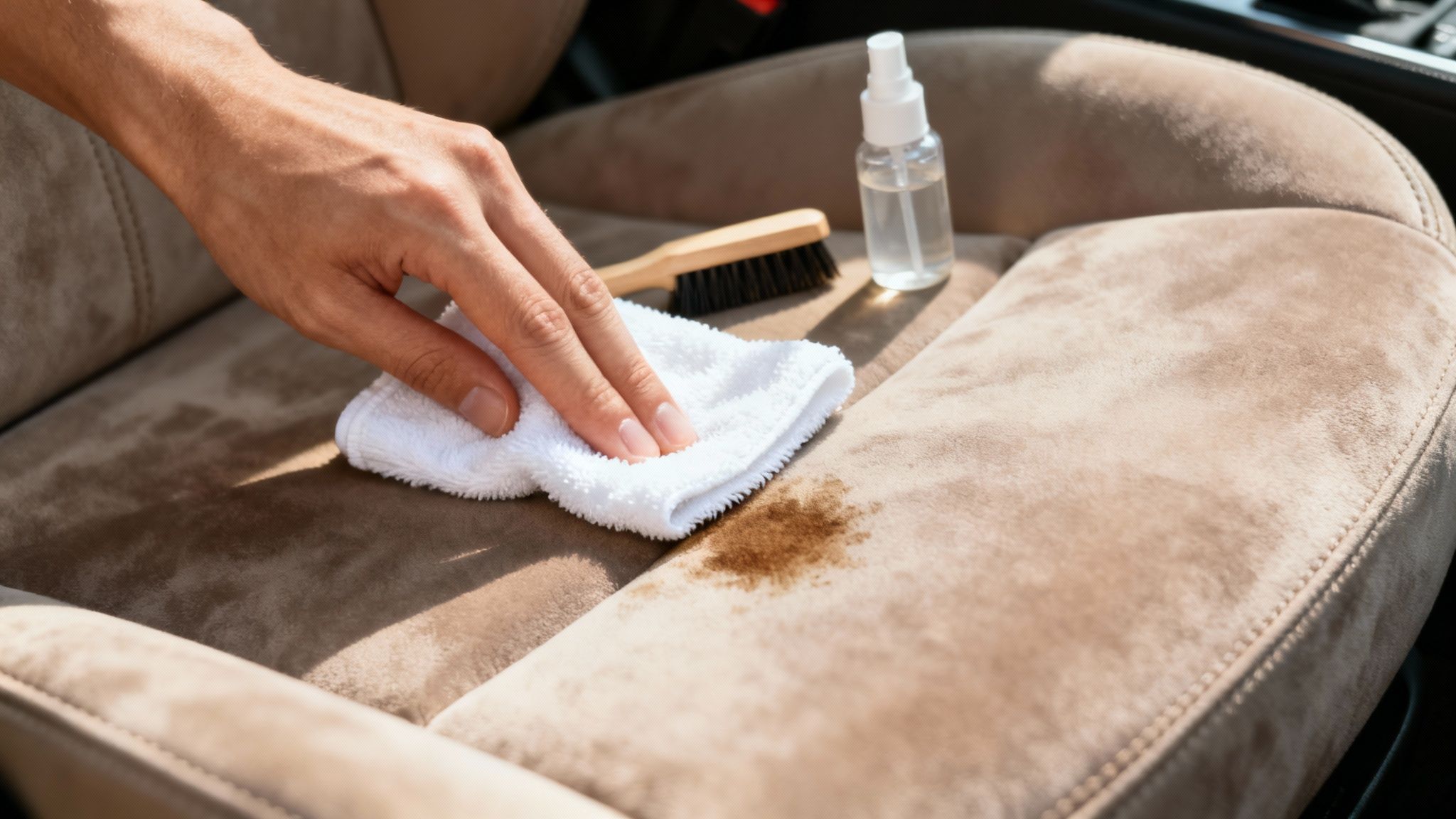
It’s that heart-sinking moment every car owner knows. A sharp turn sends coffee splashing, or a leaky pen leaves a dark streak on your otherwise perfect seats. Accidents happen, but they don't have to leave a permanent mark on your beautiful interior.
The secret to beating a tough stain is acting fast—and smart. A frantic scrub with the wrong cleaner can turn a small spot into a huge, permanent headache. As professional detailers, we’ve seen just about every spill imaginable, and a calm, methodical approach is always your best bet.
The Blot-and-Lift Method
When a spill happens, your first instinct is probably to rub it out. Don't do it. Rubbing is the absolute worst thing you can do, as it just grinds the stain deeper into those delicate fibers and can ruin the soft nap of the material.
Instead, we use a professional technique called the blot-and-lift method. It's simple and effective.
- Act Immediately: Grab a clean, dry microfiber towel and gently blot the fresh spill. Your goal is to soak up as much liquid as you can without pushing down hard.
- Apply Cleaner Correctly: Now, take a separate, clean microfiber towel and lightly mist it with your suede cleaner. Never spray the cleaner directly onto the seat itself.
- Blot the Stain: Press the damp part of the towel onto the stain and hold it there for a few seconds. When you lift the towel straight up, you should see the stain starting to transfer onto the cloth.
- Repeat with a Clean Section: Move to a clean, damp spot on your towel and repeat the process. Keep blotting gently until the stain stops transferring.
This patient approach works by drawing the stain out of the fibers instead of forcing it further in.
Handling Different Types of Spills
Not all stains are created equal. While a good pH-balanced suede cleaner can handle most things, some messes require a more specialized approach that is best left to professionals.
For stubborn dry residue, a dedicated suede eraser can sometimes be effective. It works like a gentle abrasive, crumbling and lifting away the residue without hurting the fibers. Just make sure the seat is completely dry before you use it, and always follow up with a quick pass of a soft brush.
Acting quickly with professional methods like the blot-and-lift can be successful, but some stains are simply too stubborn for DIY solutions. Industry guides, like these detailed cleaning tips from Stoner Car Care, always stress blotting over rubbing and letting the right cleaner do the work.
When to Stop and Call for Help
Sometimes, you have to know when to call it a day. If a stain isn't budging after a few gentle attempts, or if you're dealing with something like ink, dye, or grease, it’s time to stop. Pushing it further with the wrong product could set the stain permanently.
That’s where we come in. Our specialized stain removal services are built for these exact scenarios. We have the professional-grade tools and experience to tackle deep-set stains safely, without risking your valuable interior. Don't turn a small problem into a costly mistake—let us handle the tough stuff.
Finishing Touches: Drying, Brushing, and Protecting Your Seats
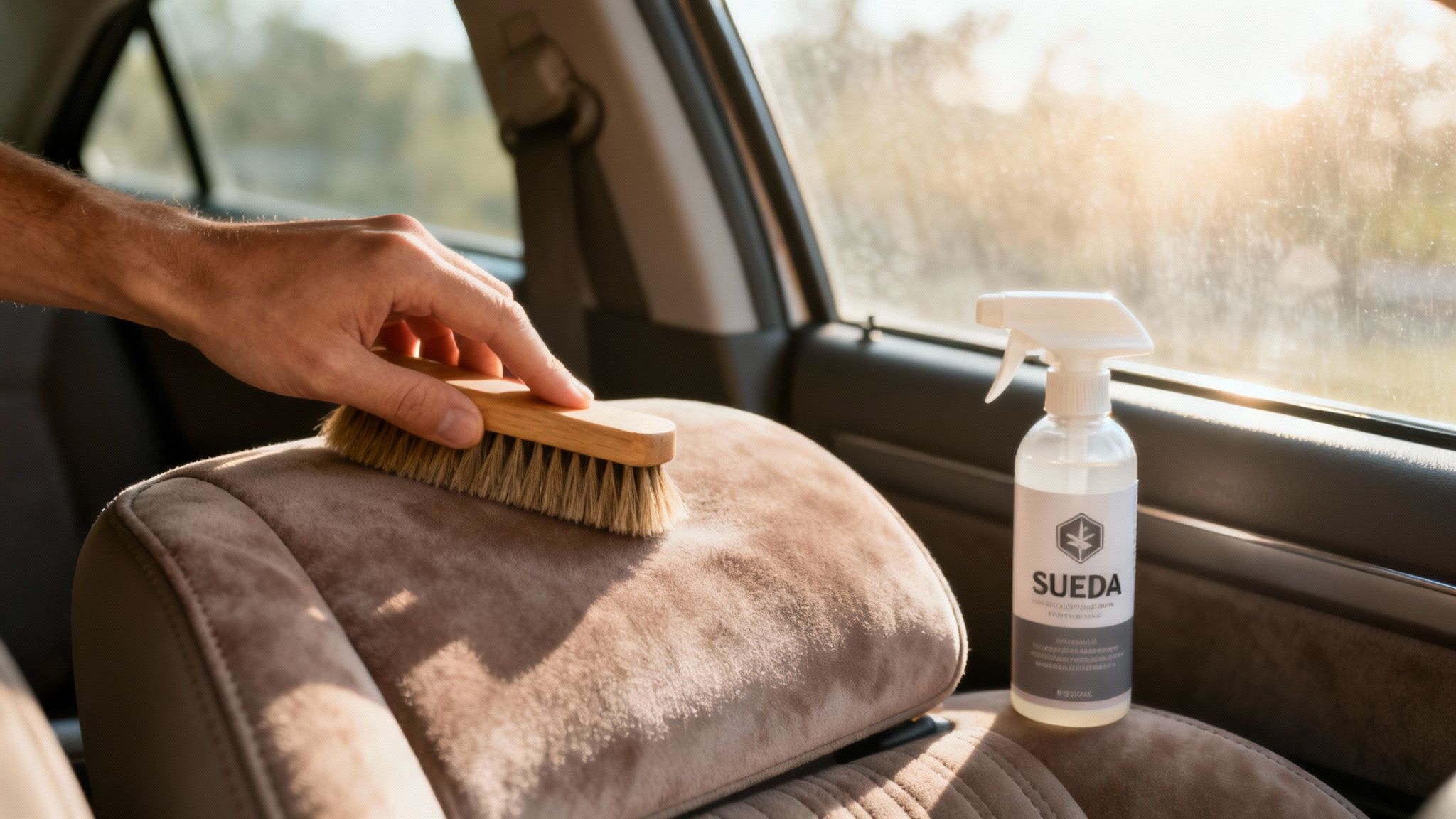
You've put in the work and your seats are looking clean, but don't call it a day just yet. What you do after the cleaning is what really locks in that fresh look and makes all your hard work last. This is where you restore that signature suede texture and protect your investment from future accidents.
The number one mistake we see is getting impatient with drying. It’s tempting to grab a hairdryer or park the car in direct sun to speed things up, but that’s a recipe for disaster. Intense heat can leave your soft, delicate suede feeling stiff, brittle, and sometimes even shrunken. It's the fastest way to undo everything you just accomplished.
Restoring That Velvety Suede Nap
So, what's the right way to do it? Let them air-dry. Just open the car doors, make sure you're in a shady, well-ventilated spot (like an open garage), and let nature take its course. This gentle, even drying is key to keeping the material soft and supple.
Once the seats are 100% dry to the touch—and we mean completely dry—it's time to bring back that famous suede feel. Grab your soft-bristled suede brush and gently work it over the entire surface. This quick step lifts and resets the fibers (known as the "nap"), getting rid of any matting from the cleaning process and leaving you with that uniform, luxurious finish.
The Final Step: An Invisible Shield
Now for the game-changer: protection. Using a high-quality suede protectant spray is absolutely essential. Think of it as an invisible shield for your interior. A good spray creates a hydrophobic barrier, causing liquids to bead up on the surface instead of immediately soaking in. This gives you a crucial window to grab a towel and blot the spill away before it becomes a stain.
This is a non-negotiable step in any professional detail, especially if you have kids or pets. Properly treating your seats after a deep clean can boost their stain resistance significantly. Most quality protectants will guard against spills for up to six months, giving you serious peace of mind. If you want to dive deeper into how these products work, you can explore some of the industry-standard testing protocols.
Taking the time to dry and protect your suede properly is what separates a decent DIY job from a truly professional result. If you'd rather leave it to the experts to get that perfect finish, we’re here to help. See the results our clients rave about on our Google Business Profile, then give us a call to book a flawless interior detail.
Got Questions About Suede Car Seat Care? We've Got Answers.
Even with the best guide, working on a delicate material like suede can feel a little nerve-wracking. Over the years, we've heard just about every question in the book from our clients, and a few keep popping up. To help you tackle your seats with total confidence, we've pulled together some straight-to-the-point answers from a professional's perspective.
Can I Just Vacuum My Suede Seats?
Please don't! It’s a common temptation, but a standard vacuum is way too aggressive for suede. The powerful suction and—even worse—the stiff bristles on most attachments can tear at the delicate nap. You’ll end up with frayed spots, patchiness, and a texture that’s permanently ruined. The only tool you should ever use for dry debris is a soft-bristled suede brush. It’s designed to gently lift dirt out of the fibers without causing any damage.
What’s the Difference Between Cleaning Suede and Alcantara?
This is a great question, and it's one we get all the time. They look and feel almost identical, but there’s a key difference: genuine suede is a natural hide, while Alcantara is a man-made synthetic microfiber. That engineering makes Alcantara more durable and a bit more forgiving with moisture.
Here's the good news: the professional cleaning process is nearly identical for both.
- Gentle brushing is essential for both materials to keep the nap fresh.
- Stick with a pH-balanced cleaner that’s specifically marked as safe for both suede and Alcantara.
- The "spray the towel, not the seat" rule is your best friend for both.
Pro Tip: Treat Alcantara with the same gentle care you'd give to genuine suede. If you make that your habit, you’ll never have to worry about damaging either one.
How Often Should I Get My Suede Seats Professionally Cleaned?
Honestly, if you keep up with routine care, you won’t need us very often. A quick, light brushing every week or two does wonders. A full clean with a dedicated product might only be needed once or twice a year, depending on use.
The time to call a pro is when you're facing a stubborn stain that just won't budge or if the seats have become heavily soiled over time. Trying to force a deep-set stain out yourself often just makes it spread and set in permanently. For our friends in the Harrisburg area, you can see the magic we work on even the most neglected interiors on our Google Business Profile. When in doubt, just give a professional a call.
When to Call in a Professional Detailer
Even with the best DIY guides, there are times when calling in a professional is the smartest move you can make. It's one thing to handle routine upkeep, but it's another thing entirely to tackle a serious problem. Knowing when to put down the brush and pick up the phone can save you from a costly, permanent mistake.
Think of it this way: regular brushing and light cleaning are like daily maintenance. But a deep-set stain or years of built-up grime? That's a major restoration that calls for specialized tools and a whole lot of experience.
Signs You Need an Expert Touch
Some messes can go from bad to worse in a hurry if you don't have the right approach or professional-grade products. Trying to power through a tough stain with DIY methods often ends up setting it permanently or damaging the delicate suede fibers beyond repair.
You should call a pro if you're up against any of these:
- Deeply Set-In Stains: That coffee spill from last month? If a stain has been sitting for a while or just won't budge with gentle blotting, it has likely bonded deep into the fibers.
- Heavy Soiling: We're talking about that widespread, dingy look from years of use, especially on the driver's seat. This requires a lot more than just a simple spot treatment.
- Water Damage: Big, ugly watermarks or that stiff, crunchy feeling from a past cleaning attempt need careful rehydration and specific restoration techniques.
- Unknown or Chemical Spills: Ink, grease, dye, or mystery spills are a minefield. They can react unpredictably with over-the-counter cleaners and cause permanent discoloration.
A professional detailer doesn’t just clean; we diagnose the problem first. We understand the chemistry behind different stains and how materials like suede and Alcantara will react, letting us choose the right solution to fix the mess without harming your seats.
Our full professional interior detailing services are built for exactly these tough situations. We have the hands-on experience to safely bring even the most neglected suede interiors back to life.
For our neighbors here in Central Pennsylvania, from Harrisburg to Carlisle, help is just a phone call away. Don't risk a permanent mistake on your beautiful seats. Check out the incredible transformations we've done for our clients on our Google Business Profile—you’ll see what a true professional touch can do.
Ready to restore your car's interior to its former glory without lifting a finger? Don't risk damaging your delicate suede seats. Contact The Mobile Buff today and let our mobile detailing experts bring that showroom shine right to your driveway. Book your appointment now at https://themobilebuff.com

