


It happens. That gut-wrenching moment when a kid gets carsick, a pet has an accident, or a fun night out takes a turn for the worse. When vomit gets in your car, what you do in the first 5-10 minutes is absolutely crucial for preventing a smell that haunts you for weeks.
As professionals, we know the trick is to act fast, but also to act smart. Your goal is to get the physical mess out immediately without accidentally making things a whole lot worse.
Your First Moves After a Car Vomit Incident
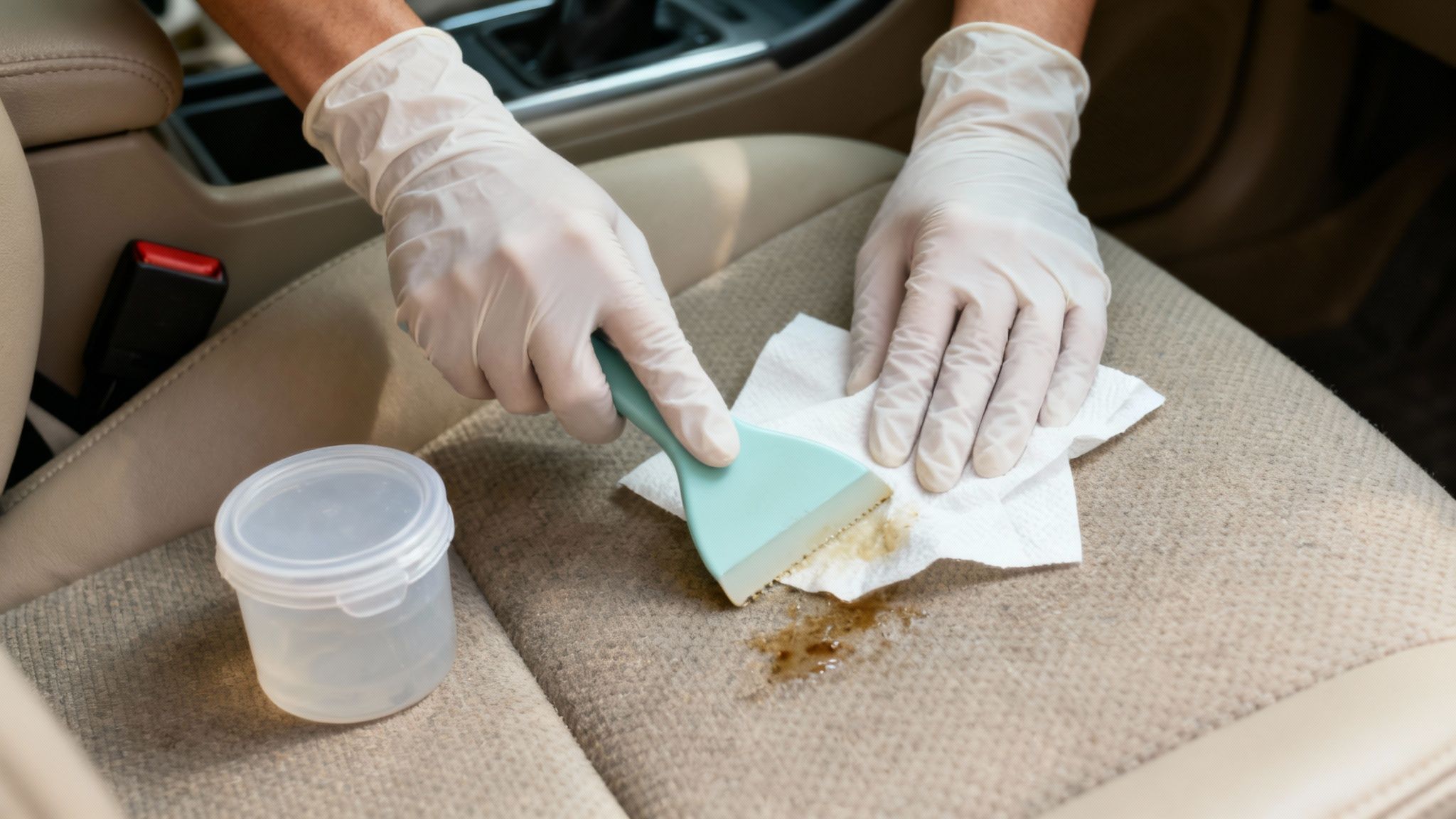
Panic is a normal reaction, but your actions in the immediate aftermath will decide if this is a manageable cleanup or a lingering nightmare. Vomit is incredibly acidic and packed with bacteria that immediately start to work on your car's interior, seeping deep into foam cushions and eating away at fabric dyes.
This first phase isn’t about deep cleaning. It’s about professional-grade damage control.
Contain and Remove—Don't Scrub!
Resist the urge to grab a wet rag and start scrubbing furiously. We see the damage this causes all the time. It’s the single biggest mistake you can make. Scrubbing grinds the acidic particles and odor-causing bacteria deeper into the fabric fibers and seat foam, making the smell nearly impossible to remove later.
As the pros at Turtle Wax and other detailing experts will tell you, a gentle lift-and-blot approach is the only way to go.
Here's the professional method:
- Gear Up: First things first, put on a pair of disposable gloves. You're dealing with biohazardous material, so protect yourself.
- Scrape and Lift: Find something with a flat edge—a plastic scraper, a spatula, even a stiff piece of cardboard—and gently scrape away as much of the solid material as you can. Lift it up and away.
- Blot, Never Rub: Once the solids are gone, grab a stack of paper towels or a dry, absorbent cloth. Press down firmly on the wet area to blot the liquid. Your goal is to pull the moisture up and out of the material, not push it further in.
Pro Tip: We always recommend keeping a "Car Sick Kit" in the trunk. Just a small bag with gloves, a few trash bags, paper towels, and an old plastic spatula can turn a potential disaster into a minor inconvenience.
Get the Air Moving Immediately
As soon as you’ve contained the mess, get all the doors and windows open. Fresh air is your best friend right now. This does two things: it helps clear out that initial, overwhelming odor and starts the drying process, preventing that acidic moisture from settling into the air and other surfaces.
If you’re at home, stick a box fan in the doorway of the car to really get the air circulating.
Taking these steps correctly makes the real cleaning process much more effective. If the situation feels too big to handle or you just want to ensure it's done right the first time, our expert team is here to help. You can easily schedule a professional interior detailing service with us and we'll take care of the rest.
Immediate Actions vs. Common Mistakes
To make it crystal clear, here’s a quick-reference table comparing the right moves with the common pitfalls we see all the time.
Getting this initial response right is half the battle. By avoiding these common errors, you set the stage for a successful deep clean and prevent a temporary problem from becoming a permanent stench.
Why DIY Fixes for Vomit Smell Don't Work
When that awful, gut-wrenching smell of vomit hits your car, it’s tempting to reach for a quick fix from the internet. You've probably heard the classic home remedies: sprinkle baking soda, spray some vinegar, or maybe even scatter coffee grounds. It feels like you're doing something, right?
As professionals, we can tell you these pantry staples are ultimately just a band-aid on a serious biological problem. They don't get to the heart of what's causing that relentless odor, and in some cases, they can make it worse.
Think of it this way: baking soda and vinegar work by either absorbing surface-level smells or covering them up with an even stronger scent. They’re a temporary mask that fails to address the real culprit.
The Science Behind That Never-Ending Smell
Vomit isn't just a gross smell—it’s a biohazard cocktail of stomach acids, bacteria, and partially digested organic material. When it hits porous surfaces like your car's fabric seats or carpets, it doesn't just sit there. It immediately starts soaking deep into the foam padding and fabric weave.
Once it's down there, it becomes a five-star resort for odor-causing bacteria. This is exactly where DIY solutions fail miserably. They simply can’t penetrate deep enough to stop the source.
- Baking Soda: It's great at absorbing loose odors on the surface, but it has zero power against the bacteria throwing a party deep inside your seat cushions. It can also create a pasty residue that's difficult to remove.
- Vinegar: While it can neutralize some smells, its own powerful aroma often just mixes with the vomit odor, creating a whole new, uniquely unpleasant smell. Not an upgrade.
- Air Fresheners: Honestly, these are the worst offenders. All they do is spray a thin layer of cheap perfume over decaying organic matter. Gross.
The result is predictable. The smell comes roaring back, especially on a warm day when the heat and humidity send that bacterial growth into overdrive. You think you've fixed it, but a week later, you open your car door and get hit with that same foul stench.
The Pro-Grade Solution: Fighting Biology with Biology
As professional detailers, we know you can't fight a biological mess with a household cleaner. You need to fight biology with biology. That’s why we exclusively use professional-grade enzymatic cleaners.
These aren't just soaps or detergents. They are powerful, bio-active formulas loaded with specific enzymes engineered to hunt down and destroy organic waste.
An enzymatic cleaner is like a guided missile for smells. Its enzymes seek out the exact protein molecules in the vomit, lock onto them, and completely break them down into harmless, odorless things like carbon dioxide and water. It doesn't just mask the smell—it chemically obliterates the source.
That’s the game-changing difference. While a home remedy might seem like a quick fix, it just masks odors instead of pulling them out from deep within the fabric, often leading to a call for professional help anyway. You can read more about why these surface treatments fail in this detailed guide on removing vomit smell from a car.
Sometimes, the smell can even work its way into your car's HVAC system, creating a whole other level of headache. If you turn on the air and get a whiff of the problem, you'll need to learn how to properly clean car air vents.
When you’re dealing with something that has soaked into the very core of your car's interior, a temporary fix is just a waste of time. You need a permanent solution that gets to the root of the problem.
If you're done with quick fixes and want that smell gone for good, we're the team to call. Check out what our customers say on our Google Business Profile, and let us schedule a professional odor removal service that actually works.
The Pro-Grade Deep Cleaning and Extraction Method
Alright, you’ve handled the initial emergency. Now it’s time to go deeper and make sure that smell is gone for good. This is where we shift from damage control to a full-on professional assault, using a one-two punch of a powerful chemical breakdown followed by a thorough mechanical removal.
First up is our secret weapon: a professional-grade enzymatic cleaner. As we touched on earlier, this isn't just soap. Think of it as a team of microscopic "Pac-Men" designed specifically to hunt down and devour the organic proteins in vomit. The key here is to be generous—you need to completely saturate the affected area so the cleaner can get to work.
But spraying it on is only half the battle. The most crucial part of the process is dwell time. You have to give those enzymes a chance to do their thing.
Why Dwell Time Is Non-Negotiable
Just spraying and wiping is a waste of time and product. The enzymes need time to break down the complex, stinky compounds into simple, harmless stuff you can easily remove. Rushing this step is like taking a cake out of the oven after five minutes; it just isn't going to work.
In the pro detailing world, we know that a proper dwell time for a good enzymatic cleaner is anywhere from 10 to 30 minutes. This gives the formula enough time to soak deep into the fabric and padding, reaching every last molecule of the contamination. During this waiting period, the cleaner is literally eating the source of the smell.
This flow chart really shows the difference between just covering up a smell and truly eliminating it.
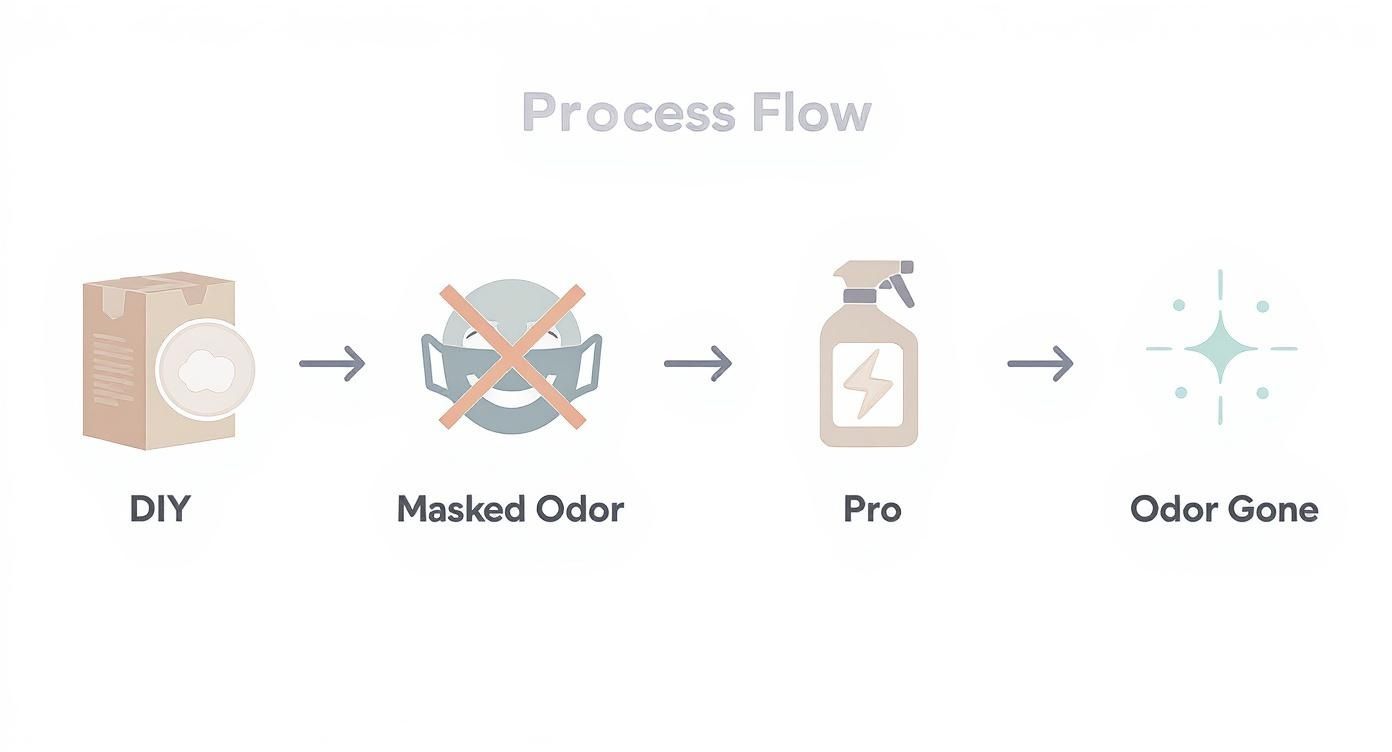
As you can see, most DIY attempts just mask the odor, which always comes back. A professional enzymatic treatment, on the other hand, destroys it at the source.
The Power of Hot Water Extraction
Once the enzymes have done their job neutralizing the organic gunk, it's time to physically yank every last trace of it out of your car's interior. This is where the real workhorse of auto detailing comes into play: the hot water extractor. This machine is so much more than a shop vac.
A hot water extractor does two critical things at once:
- It blasts a high-pressure stream of hot water and a cleaning solution deep into the upholstery fibers, right down to the seat foam.
- A split-second later, its powerful vacuum sucks all of that water back out, along with the dissolved mess, leftover cleaner, and nasty bacteria.
This process essentially flushes the area from the inside out. Our professional machines heat water to over 200°F (93°C), which not only deep cleans but also sanitizes, killing any lingering bacteria on contact. It’s like hitting the reset button for your car's interior.
This deep flushing and extraction is what separates a real professional job from a surface wipe-down. Our own interior shampoo service is built around this exact method to ensure we remove stains and odors at their source, not just hide them.
If you’ve tried everything and that smell is still there, it’s a sure sign the contamination has soaked in too deep for DIY methods. Don't let the odor win. Let our experts bring your car's interior back to life, smelling fresh and clean.
Proper Drying and Final Odor Neutralization
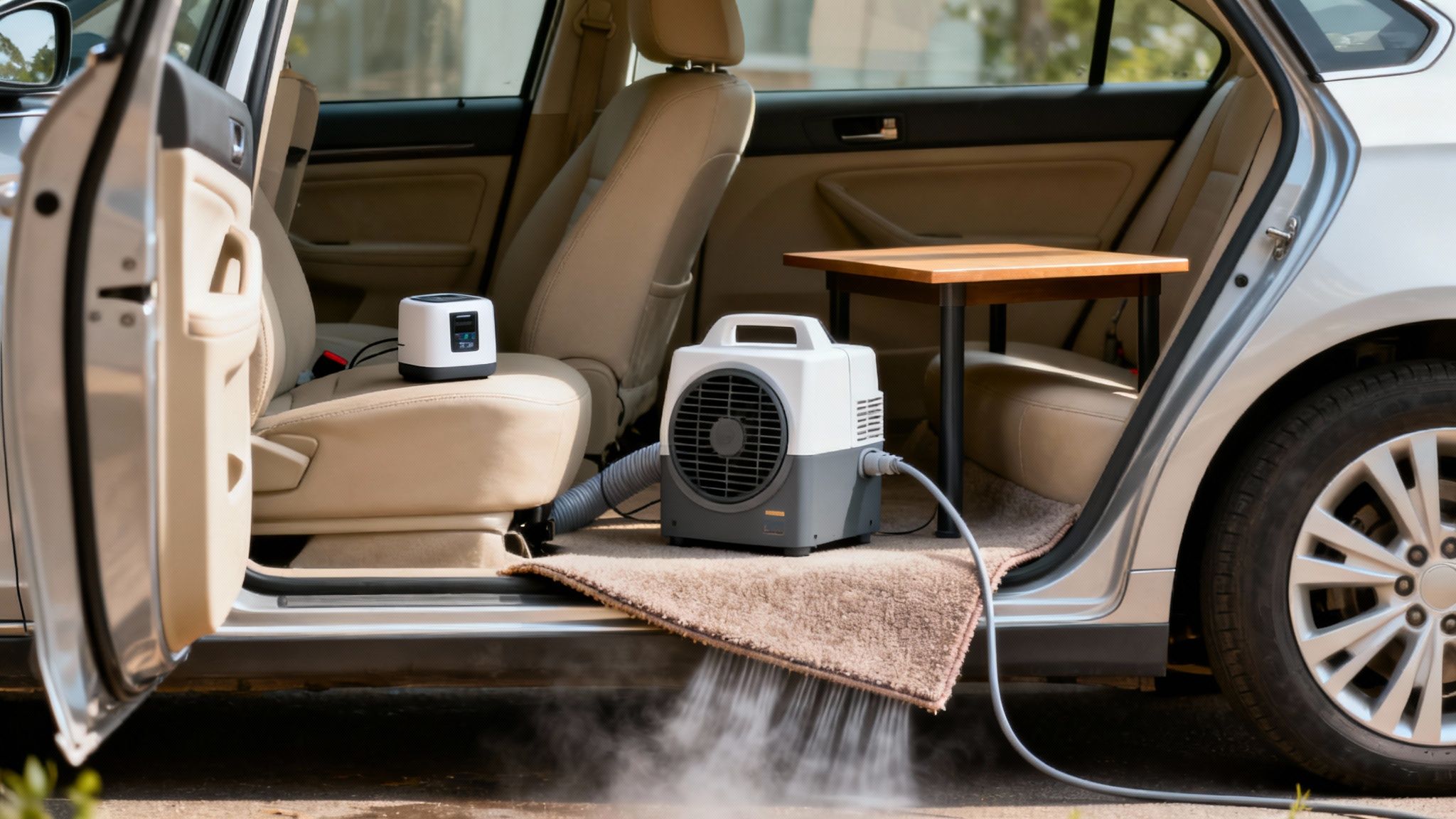
You've cleaned and extracted. It feels like you’ve won the war, but a silent enemy is waiting to strike: moisture. Getting your car's interior completely, unequivocally bone-dry is every bit as important as the cleaning itself.
Leaving carpets or seat foam even a tiny bit damp is like rolling out the welcome mat for mold and mildew. Before you know it, you've traded one awful smell for a musty, stubborn new one. This is a classic rookie mistake that professionals know how to avoid.
Simply cracking a window and crossing your fingers isn’t going to cut it. To truly remove vomit smell from car surfaces for good, your drying strategy needs to be deliberate and aggressive.
Speeding Up the Drying Process
The name of the game is airflow. You need to get as much air as possible moving across every single surface you treated. In our mobile detailing vans, we use high-powered air movers—you might know them as "carpet blowers"—along with commercial dehumidifiers. This tag-team pulls moisture right out of the fabric and the air, shrinking drying time from a couple of days to just a few hours.
Here's how you can replicate the principle at home:
- Park in direct sunlight: Mother Nature’s hair dryer is surprisingly effective. The sun's heat will do a lot of the heavy lifting for you.
- Get the fans going: Don't just use one. Set up several fans to create a powerful cross-breeze through the car with all the doors open.
- Fire up the AC: If it’s a humid day, run your car's air conditioner on its highest setting with the windows cracked. The AC system is a natural dehumidifier and will help pull moisture out of the cabin.
The Paper Towel Test: Here’s a simple trick to check for dryness. Take a clean, dry paper towel and press it firmly into the thickest part of the carpet or seat you cleaned. Hold it there for about 10 seconds. If it comes away with any hint of moisture, it’s not dry yet. Keep at it.
Delivering the Final Knockout Blow
Once you're 100% certain the interior is dry, it’s time to land the final punch. This last step ensures that not a single rogue odor molecule survives to haunt you later. This is where professional detailers go way beyond a dangling air freshener. We use advanced treatments that hunt down and obliterate odors that have gone airborne or settled into nooks and crannies.
One of the most powerful tools in our arsenal is a chlorine dioxide (ClO2) vapor system, which you might hear called a "Bio Bomb." This isn't a spray. It’s a gas-releasing agent that we activate inside the sealed vehicle.
The gas permeates the entire cabin and, most importantly, circulates through your HVAC system. It neutralizes odors on every surface it touches—from the headliner all the way down to the deepest parts of your air vents. It's a total reset, guaranteeing your car doesn't just look clean but smells genuinely fresh.
Don’t let a lingering smell take over your car. If you’ve tried everything and still catch a whiff of that unpleasantness, it’s time to bring in the pros. See what our clients have to say on our Google Business Profile, and then give us a call for a professional odor removal service that promises a fresh start.
When You Need to Call in a Detailing Expert
Let's be honest. Sometimes a mess is more than just a mess—it’s a biohazard situation that has spiraled out of control.
While you can handle a small, contained incident on a vinyl floor mat, there are definite red flags that signal it's time to put down the paper towels and call a professional. Pushing past the limits of DIY solutions can risk permanent damage and turn a bad smell into an unbearable one that never leaves.
Recognizing when you're out of your league is the key. The moment you realize the vomit has soaked through the fabric and into the thick foam of a car seat, you're officially in professional territory. That foam acts like a sponge, trapping acidic, odor-causing bacteria far beyond the reach of any spray bottle or home shop vac.
This is where consumer-grade equipment simply can't compete. Our professional hot water extractors have the immense suction power needed to pull liquid and contaminants from deep within that padding—something a standard wet/dry vac could never dream of achieving.
When the Situation Demands a Pro
Certain scenarios just dramatically ramp up the complexity of the cleanup. If you’re facing any of these, your best and safest bet is to get an expert on the phone immediately.
- Deep Saturation: The vomit wasn't just on the seat but soaked through it, reaching the dense foam cushion or the carpet padding underneath.
- Contaminated Air Vents: This is a worst-case scenario. If any liquid got into your HVAC system, turning on the air will just blast that foul odor throughout the entire car, every single time.
- Perforated Leather Seats: Leather is delicate enough, but perforated leather is a minefield. Those tiny holes are a direct path for liquid to seep into the foam beneath, trapping the smell and making it impossible to clean from the surface without causing damage.
Trying to flush out deeply saturated foam or, worse, spraying liquids into your vents will only spread the problem. You can easily end up with mold, mildew, and even electrical issues. It's a risk that's just not worth taking.
The Right Tools for a Tough Job
Our team comes equipped with specialized tools and knowledge to tackle these exact situations. We use targeted odor removal techniques that neutralize smells at a molecular level and high-temperature steam that sanitizes deep within fabric fibers. We have the right solution for the job.
If you're in Central PA and have decided it's time to let a professional handle it, you can see what our clients think by checking out our Google Business Profile.
Don't let a bad situation get worse. If you're staring down a stubborn vomit smell that just won't quit, let us bring our expertise right to your driveway. Contact The Mobile Buff today to schedule your mobile detailing service and get your car smelling fresh and clean again!
Still Have Questions About Car Vomit Cleanup?
Look, even with the best guide, tackling something as nasty as car vomit is bound to leave you with a few questions. It’s a stressful situation, and the last thing you want to do is make it worse. We get it. Our professional detailers hear these questions all the time from car owners who are in the exact same spot you are right now.
Let's clear up some of the most common concerns.
If I Just Ignore It, How Long Will the Vomit Smell Actually Last?
This is the one time we wish we had better news. If you don't remove the source, that smell can stick around forever. Seriously. Vomit is packed with bacteria that will just keep multiplying deep down in your car's upholstery and foam padding.
You might notice it fades a bit on a cold day, but as soon as the weather warms up, it'll come back with a vengeance. The only way to permanently kill the smell is to physically extract every last bit of the contamination.
Can I Just Use an Ozone Generator to Kill the Smell?
Ozone generators are incredibly powerful, but they are not a cleaning tool. Think of them as the final step in the process, something a trained professional uses after all the physical gunk has been completely scrubbed and extracted.
Using an ozone machine before you’ve cleaned up the source is like spraying air freshener on a pile of garbage—it might mask the smell for a minute, but it won’t fix the underlying problem. Plus, using one incorrectly can be dangerous to your health and can even damage the plastic and rubber inside your car. It's a finishing tool, not a cleaning solution.
Key takeaway: Odor-killing tools like ozone generators or chlorine dioxide systems are designed to zap the last few microscopic odor molecules out of the air. They can't do anything about the biological mess soaked into your seats.
What's the Right Way to Clean Vomit Off Leather Seats?
Cleaning leather is a whole different ball game than fabric. You need to be gentle. Start by carefully wiping up any solids, then grab a pH-balanced leather cleaner and a soft, clean microfiber towel.
Whatever you do, don't use an enzymatic cleaner meant for carpets on your leather. It's far too aggressive and can strip the protective topcoat, leading to permanent discoloration or damage.
If you have perforated leather seats, this is where you need to stop and call a pro. Those tiny holes are like a superhighway for liquid to seep straight into the foam cushion underneath. Once it's in there, you simply can't clean it from the surface. For a look at how we handle these tough jobs, check out what our clients are saying on our Google Business Profile.
Will a Standard Interior Car Wash Fix the Smell?
Unfortunately, no. A regular interior detail at a car wash just scratches the surface. They'll vacuum the carpets, wipe down the dash, and clean the windows, but they aren't equipped for biohazard situations.
These services don't include the specialized enzymatic cleaners and hot water extraction machines needed to pull contaminants out from deep within the fibers of your seats and carpets. You have to specifically ask for a biohazard, heavy-duty stain removal, or dedicated odor elimination service.
Don't let a horrible smell take over your car. If you're ready to get this handled professionally and have your car feel fresh and clean again, The Mobile Buff is here to help. Visit our website to book your professional interior detailing and odor removal service today.

