


Ever look at your car and feel like its eyes are getting old? That hazy, yellowed, or foggy film that creeps over your headlights is a classic sign of aging, and it happens to just about every vehicle on the road. It’s not just a cosmetic issue, either—it’s a major safety hazard.
Think about it this way: foggy headlights are like trying to see through a dirty window at night. A groundbreaking study found that cloudy, deteriorated headlights can produce as little as 20% of the light that new ones do. That's a jaw-dropping 80% drop in visibility, which dramatically shrinks the time you have to react to people, animals, or obstacles in the road ahead. Here in Central Pennsylvania, our sunny days can actually speed up this process, making it an even more common problem for local drivers.
The Real Reason Your Headlights Turn Yellow
So, what’s actually going on here? Modern headlights are made from a tough plastic called polycarbonate. When your car is new, this plastic is protected by a special UV-blocking clear coat applied at the factory. This coating is like a strong sunscreen, shielding the lens from the sun's harsh rays and the grit of the road.
But that protective layer doesn't last forever. Over time, a few key culprits team up to break it down:
- The Sun's UV Rays: This is enemy number one. Constant exposure to sunlight causes a chemical reaction, known as oxidation, that turns the protective coat brittle and yellow. It’s essentially a permanent sunburn for your headlights.
- Pitting and Scratches: Every drive is a tiny battle. Sand, gravel, and road debris kicked up by other cars act like fine-grit sandpaper, creating micro-scratches and pits that scatter light and make the lens look cloudy.
- Road Chemicals and Grime: From road salt in the winter to acid rain and other pollutants, the chemical cocktail on our roads slowly eats away at the headlight's protective finish, leaving the plastic underneath vulnerable.
Once that factory clear coat is gone, the raw polycarbonate plastic is exposed to the elements. This softer material oxidizes much faster, leading to that ugly, foggy look that not only ruins your car’s appearance but seriously compromises your safety on the road.
Understanding the why behind foggy headlights is the first step to fixing them the right way. We've seen it all when it comes to headlight damage, and we believe in empowering car owners with knowledge. You can explore more of our insights and see how we tackle this problem by checking out our other posts on headlight restoration. An informed driver is a safer driver, after all.
Here’s a quick breakdown to help you spot what’s going on with your own headlights.
Quick Guide to Foggy Headlight Causes
Each of these issues requires a different approach to fix properly. Simply polishing the outside won't help if the problem is moisture trapped inside.
Feeling like your headlights just aren't cutting it anymore? Let's get you seeing clearly and driving safely again. The team at The Mobile Buff is here to help drivers all over Central Pennsylvania restore their headlights to factory-fresh clarity.
The Four Main Culprits Behind Cloudy Headlights
Alright, so you know that your headlights are getting foggy, but let's get into the why. It's rarely just one thing; think of it more like a team of troublemakers all working together to mess with your car's vision. Once you understand who the culprits are, it's much easier to see what's happening to your own vehicle and why a quick wipe-down just won't cut it.
This little map gives you a great visual of the main environmental factors that are constantly attacking your headlights.
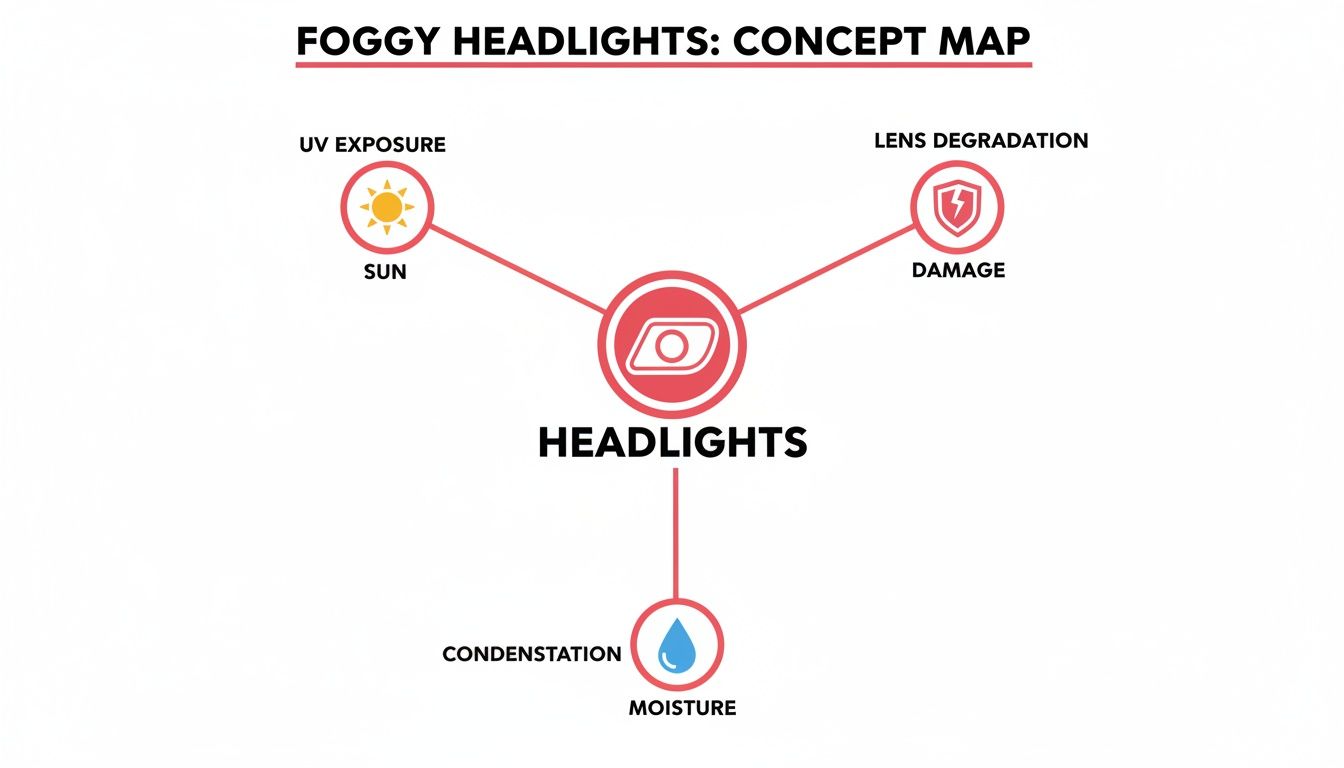
As you can see, the big three are the sun, physical damage, and moisture. Each one plays a key role in turning your once-crystal-clear lights into a cloudy, unsafe mess.
The Sun's Unrelenting UV Assault
The number one enemy of your headlights is the big, bright star we see every day: the sun. Think of the original factory clear coat on your polycarbonate headlights like a powerful layer of sunscreen. Its entire job is to block and absorb nasty ultraviolet (UV) radiation.
But just like the sunscreen you put on your skin, that protection doesn't last forever. Constant, daily exposure to UV rays kicks off a chemical breakdown process called oxidation. This process literally shatters the molecular bonds in the clear coat, causing it to turn that ugly, hazy yellow color and stop light from getting through.
You're essentially looking at a permanent "sunburn" on your headlights. Once that protective barrier is gone, the much softer polycarbonate plastic underneath is left wide open to the elements, and the fogging gets worse, and fast.
Moisture and Condensation from Failed Seals
Ever look at your headlight and see fog or even tiny water droplets on the inside of the lens? That’s a dead giveaway that your headlight's seal has failed. The entire headlight assembly is designed to be a completely watertight unit to keep the bulb and all the electronics safe and dry.
With time, the rubber or silicone gaskets that form that seal get old. They become brittle from heat cycles, crack from the cold, and eventually shrink. This creates tiny openings for moisture from rain, humidity, and car washes to sneak its way inside.
And once that water is in, it’s trapped. As temperatures change, it turns into condensation on the inside of the lens, creating a fog that you can’t possibly wipe away. Not only does this scatter the light beam into a useless glare, but it can also lead to electrical problems and premature bulb failure.
Physical Damage from Road Debris
Your headlights are right on the front lines, taking a beating every single time you drive. They’re constantly bombarded by a storm of tiny projectiles that cause real, physical damage over thousands of miles.
- Pitting: Think of small rocks, sand, and gravel kicked up by the car in front of you. Over time, it's like a slow-motion sandblaster, creating thousands of microscopic pits in the lens.
- Scratches: Harsh road salt, aggressive ice scrapers, and even using the wrong cloth to wash your car can leave a spiderweb of fine scratches.
Each one of those tiny pits and scratches acts like a prism, bending and scattering the light in every direction except straight ahead. This "sandblasted" look is a huge reason for the hazy appearance and dramatically cuts down how far your lights can actually shine.
Chemical Contamination and Grime
Finally, you have the chemical warfare happening on our roads every day. Your headlights are exposed to a nasty cocktail of stuff that slowly eats away at their protective coating.
This includes acid rain, degreasers used when cleaning the engine, and especially the road salt we see all winter here in Central Pennsylvania. This constant chemical attack etches the surface, weakening the clear coat and making it way more vulnerable to UV oxidation and all that physical damage. To see some before-and-after magic and what our clients have to say, feel free to check out The Mobile Buff's Google Business Profile.
Ready to fight back against these culprits and get your car’s night vision back?
The Hidden Dangers of Driving with Dim Headlights
We've all seen them: cars with those yellow, cloudy headlights that just look old and neglected. But this is so much more than a cosmetic problem—it's a serious and often underestimated safety hazard.
Imagine trying to drive down a dark road while wearing smudged sunglasses. That's exactly what it's like when your headlights are severely oxidized. Your ability to see what's ahead is dangerously compromised.
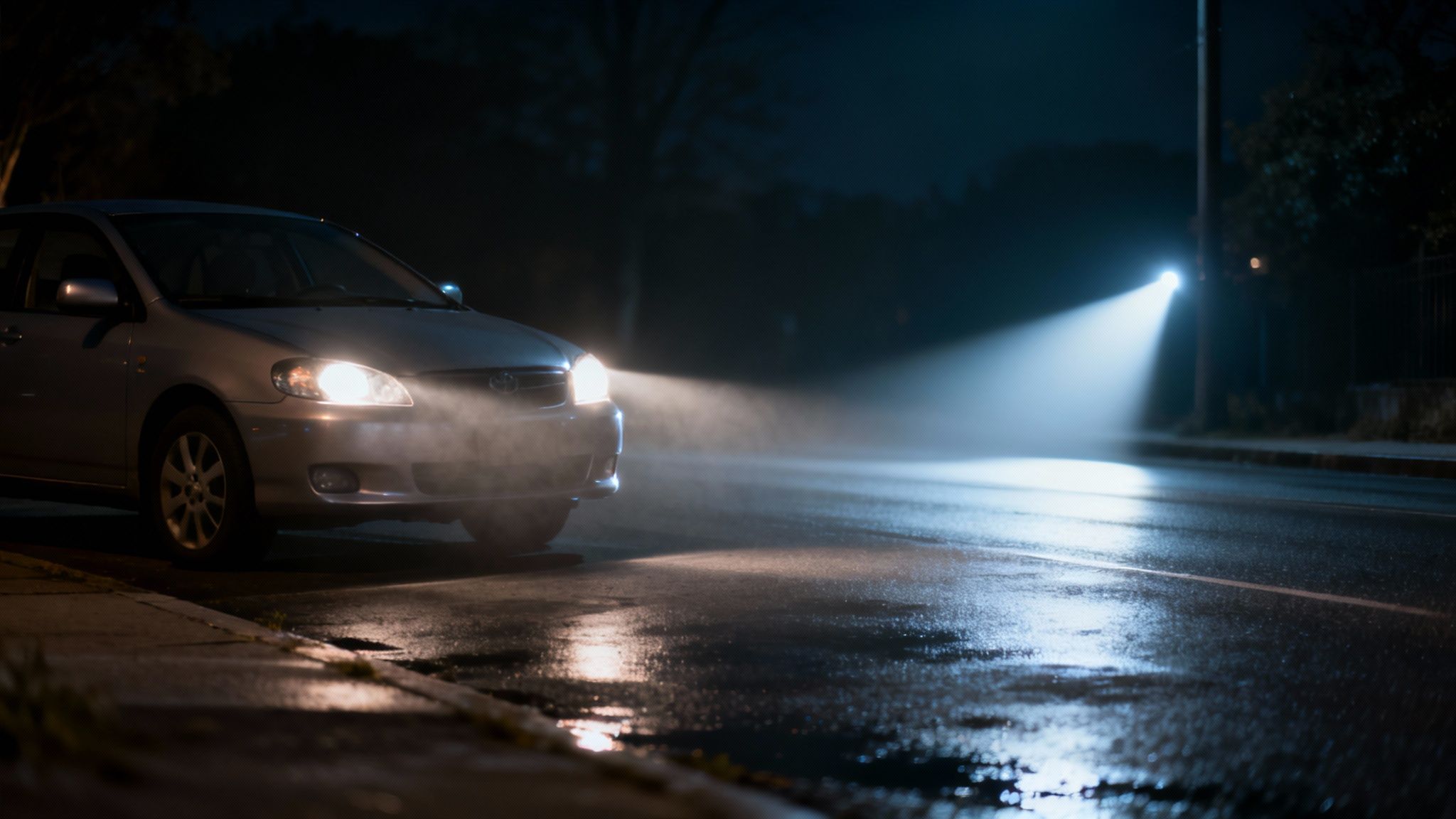
This isn't just a feeling; it's a measurable fact. Studies have shown that heavily hazed headlights can cut your light output by as much as 80%. This massive drop in brightness shrinks your field of vision and gives you far less time to react to the unexpected.
Reduced Reaction Time and Night Vision
Safe night driving is all about how far down the road you can see. With crystal-clear headlights, you can spot a deer on the shoulder or a stalled car from a safe distance, giving you plenty of time to slow down and avoid it.
But when your headlights are foggy, that same obstacle might not appear in your line of sight until you're right on top of it. Your reaction time gets slashed from a few comfortable seconds to mere milliseconds—and that can be the difference between a near-miss and a serious accident.
Simply put, if your light output is compromised, your ability to brake, swerve, or react in time is compromised right along with it. This puts you, your passengers, and everyone else on the road in danger.
Creating Dangerous Glare for Others
Here’s the ironic part: dim, foggy headlights can actually create more blinding glare for oncoming traffic. A new headlight lens is engineered to focus light into a precise, controlled beam. It’s designed to light up the road for you without blinding other drivers.
When that lens gets covered in haze and scratches, it shatters the focused beam. The light scatters in every direction, creating a diffused, uncontrolled glare. So, even though your lights feel incredibly weak from the driver's seat, they can be blinding to the person driving toward you, making a dangerous situation even worse.
For those of us driving in Central Pennsylvania, our unpredictable weather and road conditions make clear visibility an absolute must. If you're worried about your night vision, check out what other local drivers have to say about our work on The Mobile Buff's Google Business Profile.
Don't wait for a close call to take action. Restoring your headlights isn't just about appearances—it's one of the most critical safety investments you can make for your vehicle. Let us bring back the clarity and safety you need to drive with confidence.
How to Keep Your Headlights Clear and Bright
So, you know what makes your headlights go foggy, but what can you do about it? The good news is that you can get ahead of the problem. A little proactive care goes a long way, and it’s always easier (and cheaper) to prevent the haze than to fix it later.
Think of it like dental hygiene for your car. You don't wait until you have a cavity to start brushing, right? The same idea applies to your headlights. A few simple habits can make a huge difference in keeping them crystal clear for years.
Simple and Effective Prevention Strategies
The secret to keeping your headlights looking brand new is building a solid defense against the two biggest culprits: UV rays and road gunk. The best prevention comes from consistent, professional care.
Here are a few pro tips that actually work:
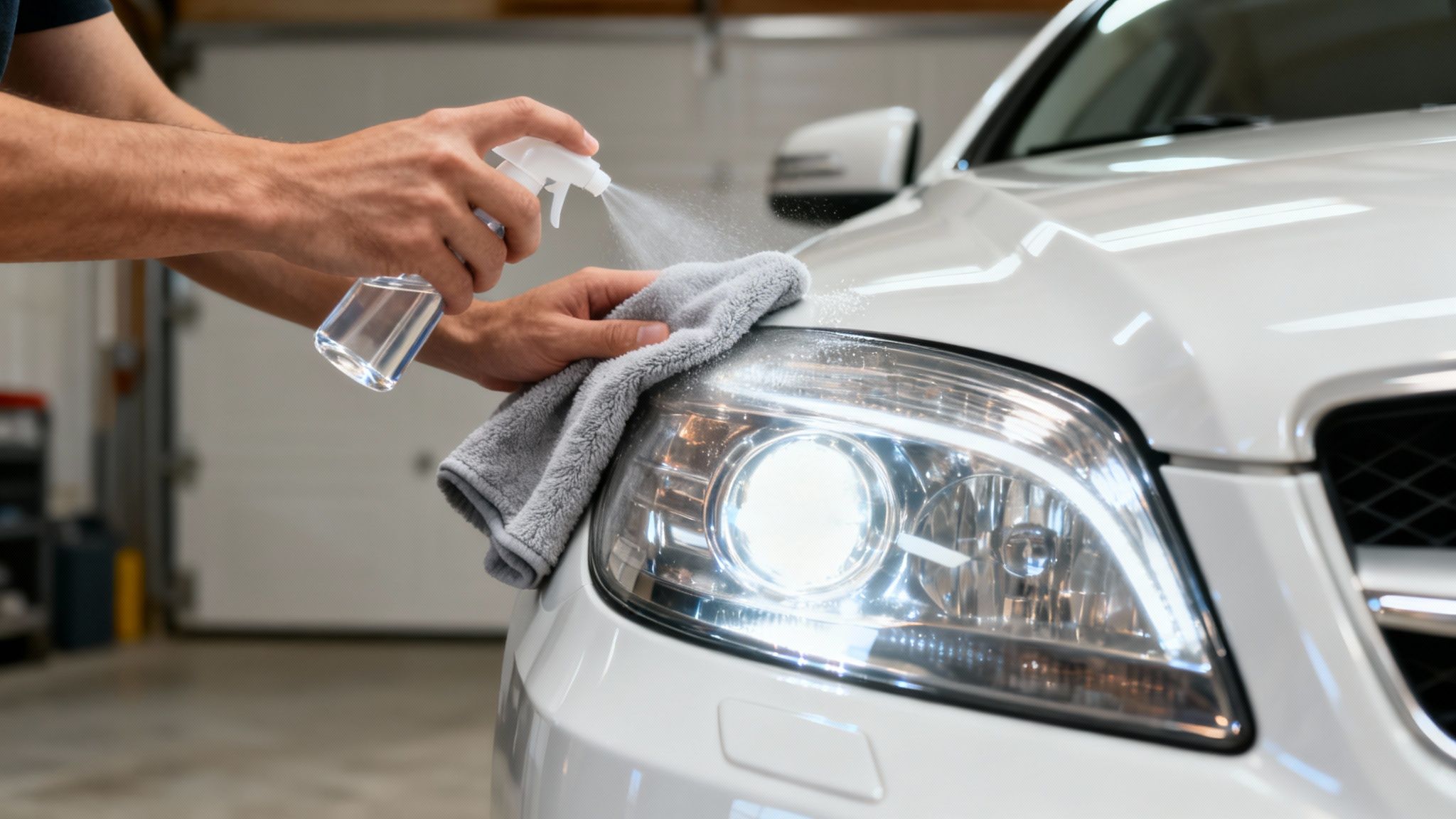
- Wash Them Regularly: When you wash your car, don't forget the headlights! Use a quality car wash soap and a soft microfiber mitt to gently scrub away corrosive stuff like road salt, bug splatters, and bird droppings. Getting that grime off quickly stops it from eating into the protective clear coat.
- Park in the Shade: This is the easiest one on the list. Whenever you can, park in a garage, under a carport, or even in the shade of a large tree. Limiting direct sunlight is the single most effective way to slow down that UV-driven oxidation we talked about.
- Apply a Professional Sealant: This is the ultimate armor for your headlights. A high-quality UV protectant sealant is like a powerful, long-lasting sunscreen. It creates a tough barrier that shields the lens from the sun’s harsh rays and all the other environmental junk that gets thrown at it.
A professional-grade sealant isn't the same as a coat of wax. It's a specific chemical formula made to bond directly with the polycarbonate, offering serious, long-term UV protection that temporary coatings just can't touch.
These simple steps put you in control, helping you maintain your car's look and, more importantly, its safety on the road. For a deeper dive into cleaning methods, check out our guide on the best way to clean foggy headlights.
Of course, if your headlights are already looking cloudy, it might be too late for prevention alone. For drivers in Central PA who want a guaranteed fix, The Mobile Buff is here to help. See what your neighbors are saying on The Mobile Buff's Google Business Profile, and let's get your headlights shining like new again.
DIY Kits Versus Professional Headlight Restoration
So, you’ve noticed your headlights are looking a little worse for wear—foggy, yellowed, and just plain dim. Now you’re at a crossroads. Do you grab one of those all-in-one DIY kits from the auto parts store, or is it time to call in a pro? It's a classic debate between a quick fix and a real, lasting solution.
The DIY kit on the shelf looks tempting, I get it. It’s cheap, and it promises to clear up that frustrating haze in an afternoon. But as detailing professionals, we’ve seen the disappointing results time and time again. The real issue is what these kits don't do, and that's where the problem starts.
The Downside of DIY Headlight Kits
Most DIY kits give you some abrasive pads or a bit of sandpaper to scrub off that yellowed, oxidized top layer. This removes the ugly surface oxidation and can make your headlights look better temporarily. But here’s the critical flaw: you’ve also just stripped away whatever was left of the original factory UV protective coating.
Think of it like sanding a piece of wood but never applying any varnish or sealant afterward. You’ve exposed the raw material, leaving it completely defenseless against the elements.
Without a new, tough UV-blocking layer to take its place, the polycarbonate lens is now wide open to the sun's assault. That fog and haze will come roaring back, often faster and even worse than before. You've essentially just reset the clock on the damage, but now the countdown is much shorter.
Why a Professional Restoration is Different
This is where calling in an expert changes the entire game. A professional service isn't just a quick polish; it’s a full-blown restoration process designed for one thing: long-term, crystal-clear results. At The Mobile Buff, we use a meticulous, industry-proven method that a simple box kit just can’t touch.
Here’s what sets a professional job apart:
- Multi-Stage Wet Sanding: We don’t just take a single abrasive pad to the lens. We use a progression of different sandpaper grits to carefully and systematically remove every bit of oxidation, grime, and minor pitting without harming the polycarbonate itself. It's a precise, methodical process.
- Precision Machine Polishing: Once the damaged layer is gone, we use professional machine polishers to bring the lens back to a perfectly smooth, glass-like finish. This isn't just for looks; it's essential for restoring the optical clarity your headlights need to project a sharp, focused beam down the road.
- Durable UV Sealant Application: This is the absolute game-changer. We apply a professional-grade ceramic or polymer sealant that forms a chemical bond with the lens. This creates a hard, durable new barrier that provides serious, long-lasting protection against UV rays and all the gunk the road throws at you.
When you're deciding what to do, it helps to see a direct comparison.
DIY Headlight Kits vs Professional Restoration
Ultimately, choosing a professional service is an investment in your safety and your vehicle's appearance. Our headlight restoration service isn't about a temporary shine; it's about bringing a critical safety feature back to its factory-spec performance for years to come.
Don't get stuck in a cycle of re-doing your headlights every few months. If you’re in Central PA and tired of that haze coming back, let us show you what a true restoration looks like. You can even see what your neighbors think of our work over on The Mobile Buff's Google Business Profile. Let’s get your lights bright, clear, and ready for the road.
Answering Your Top Questions About Foggy Headlights
You've got the lowdown on why headlights turn cloudy and why getting them fixed is a huge deal for your safety. But hey, it's natural to still have a few questions floating around. Let's tackle some of the most common ones we hear from drivers right here in Central Pennsylvania.
"I Used a DIY Kit, and the Fogginess Came Right Back. What Gives?"
Ah, the classic story. We hear this one all the time, and it's a totally frustrating experience. Here’s the deal: those store-bought kits do a decent job at the first step, which is sanding off that yellow, oxidized gunk. Your headlights look great... for a month or two.
The problem is what they don't do. When you sand the lens, you're also removing the original factory UV hard coat. Those little kits almost never include a professional-grade sealant to replace it. So, you're left with raw, unprotected plastic completely exposed to the sun. The oxidation comes roaring back, often faster and worse than before.
"My Headlights Are Foggy on the Inside. Can You Fix That?"
That's a whole different beast. When you see condensation or a hazy film on the inside of the lens, it's a sign that the seal around the headlight housing has failed. A tiny crack or a worn-out gasket is letting moisture sneak in from rain and car washes, and it's getting trapped.
Our restoration process is all about fixing external surface damage—the yellowing, pitting, and scratches on the outside. Internal fogging means the headlight assembly itself has a leak, and the best long-term solution is usually to have the unit repaired or replaced to get that watertight seal back.
"How Long Will a Professional Restoration Actually Last?"
This is where the real value comes in. When done right, a professional restoration from The Mobile Buff can last for years. The secret sauce is the professional-grade, UV-cured sealant we apply as the final, crucial step.
This isn't some temporary wax or polish. It’s a durable, chemical-resistant coating that acts like a new factory clear coat, providing serious, long-term protection from the sun and road grime. It’s an investment that pays for itself in safety and peace of mind, easily outlasting any quick fix from a DIY kit.
Your safety is far too important to gamble with temporary fixes. Stop struggling to see what's ahead. Contact The Mobile Buff today to book your professional headlight restoration and get back to driving with clarity, confidence, and total peace of mind!

