


You just drove home with that fresh ceramic-coated shine, and now every raindrop, pollen speck, and road film trace feels a lot more noticeable. That's normal. The coating looks dramatic on day one, but ceramic coating maintenance is what keeps that gloss, slickness, and water-beading behavior working in everyday conditions, especially here in Central Pennsylvania where salt, pollen, and hard water can show up fast.
A coating doesn't fail because it was installed wrong every time. More often, it fades because the wash routine got inconsistent, the car sat too long after winter driving, or contaminants were left to build up on the surface. The good news is that a smart maintenance plan isn't complicated. It's just repeatable, careful, and built around the way your car gets used.
Your New Coating Needs a Game Plan
That first week after a coating install can fool people. The car looks so clean that it feels tough enough to ignore. In reality, coated paint still takes the same abuse from road film, brake dust, tree pollen, and weather, so the finish needs regular attention to keep performing the way it should. A maintenance guide from Tint World recommends keeping up with regular washing every 2 to 4 weeks.
Why the shine changes faster than you think
A coated vehicle can look great and still be collecting contamination. Once that buildup sits too long, water behavior starts to weaken, and the car may not shed water the way it did when it was freshly maintained. That same guide recommends a tighter wash rhythm of every 14 to 21 days with pH-neutral, non-ionic shampoos, and a maintenance spray every 60 to 90 days to restore beading and slickness Tint World.
Practical rule: the coating is part of the protection, not the whole maintenance plan.
That mindset matters. A coating is not a “wash it whenever” upgrade, and it is not a one-time miracle layer either. It works best when you treat it like a protected surface that still needs a routine, just less aggressive than bare paint.
For drivers who want a local reminder of how often a vehicle should get attention, a practical schedule matters more than a casual habit. A consistent plan tied to your commute, weather, and parking conditions will do more than occasional hero washes ever will. If your car lives outside, that schedule needs to be even more disciplined than if it sleeps in a garage. For a Central Pennsylvania perspective on timing, see how often to wash your car in Central PA.
The Foundation Your Weekly Wash Routine
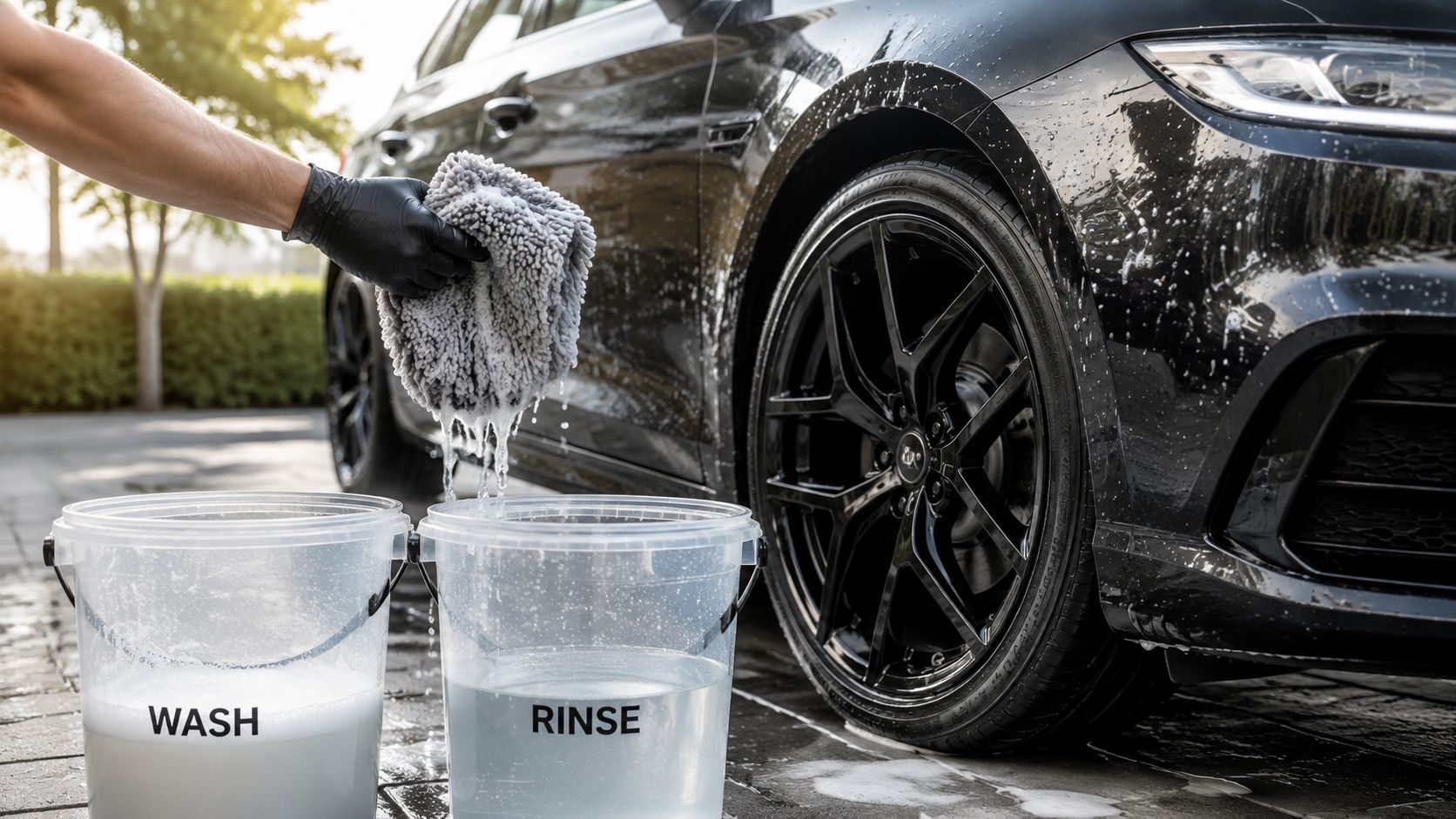
The safest routine starts with a plain, controlled hand wash. A practical benchmark is to wash ceramic-coated vehicles every 1 to 2 weeks, or at minimum twice per month, using a pH-neutral shampoo and the two-bucket method Dr. Beasley's ceramic coating maintenance guide. That schedule keeps contamination from sitting long enough to interfere with slickness.
What the two-bucket method actually does
One bucket holds your soapy wash solution. The other holds clean rinse water, and both should use grit guards so dirt falls away from the mitt instead of being dragged back across the paint Gtechniq maintenance guide. After each pass on the panel, the mitt gets rinsed in the clean-water bucket first, then reloaded with soap.
That sounds simple, and it is. The value is in the friction you avoid. Swirls don't come from one dramatic mistake most of the time, they build from repeated contact with trapped grit, especially when a wash mitt stays dirty or a harsh soap is used.
A few habits matter just as much as the buckets themselves:
- Use a pH-neutral shampoo. Harsh detergents can be too aggressive for coated finishes.
- Rinse the mitt often. Clean paint starts with clean wash media.
- Work top to bottom. The lower panels usually carry the heaviest grime.
- Dry carefully. Don't let leftover water air-dry if you can avoid it.
For a local wash-frequency reference, see this practical guide on how often to wash your car in Central PA.
What not to do
Automatic brush washes are the easy choice when time is tight, but they're also the kind of shortcut that can wear down the finish faster. Strong soaps, dirty mitts, and rushed drying all work against the coating. If a wash method relies on scrubbing harder to look clean, it's probably the wrong method for coated paint.
Keep the wash gentle enough that the coating stays slick, not stripped.
That's the part many owners miss. The coating isn't just about water beading, it's about reducing the amount of mechanical abuse your paint sees over time. A controlled hand wash preserves that benefit better than convenience-first cleaning ever will.
Going Deeper with Decontamination
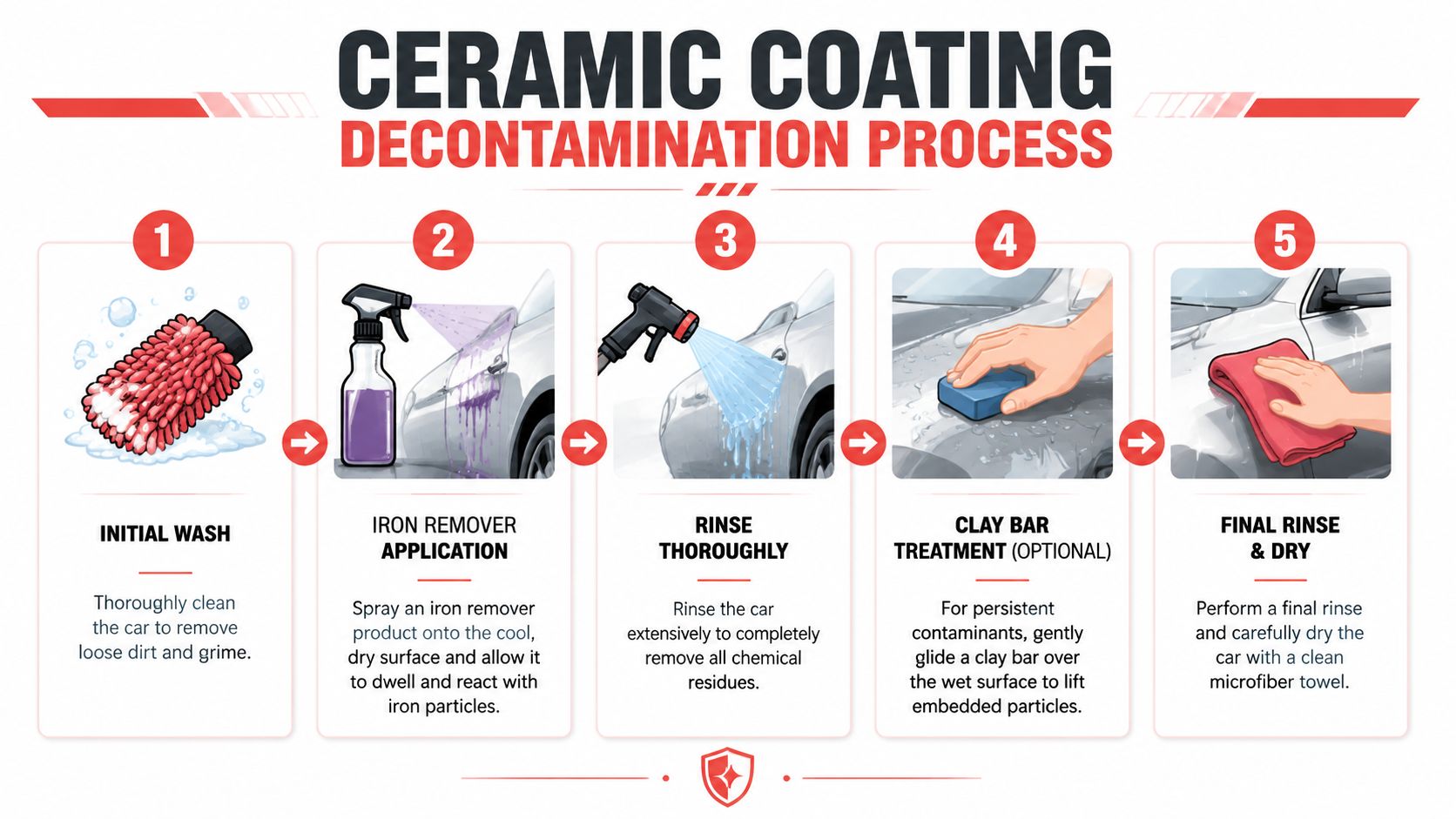
Even a well-washed coating can start to feel rough. That usually means bonded contamination, especially brake dust and industrial fallout, has settled into the surface and needs chemical removal, not heavier scrubbing. A dedicated iron remover is the safer option after a regular wash, and a full decontamination and inspection at least once a year is a good rule of thumb Nasiol nanoblog.
Why iron remover beats forcing the issue
Iron particles are tiny, but they're stubborn. They can make the paint feel gritty and can interfere with water behavior, even if the car still looks clean from a distance. That's why a chemical decon step matters, it targets the contamination without forcing abrasive contact across the coating.
A traditional clay bar is not the first choice here. One maintenance guide warns against using traditional clay bars on ceramic coatings, and that advice makes sense because clay can create unnecessary marring when the surface is already protected and you're trying to preserve that finish. If the paint feels like sandpaper, it's telling you the surface needs decontamination, not harder washing.
A safe professional sequence
A controlled decon process stays straightforward:
- Wash the car thoroughly.
- Apply iron remover to the cool, dry surface.
- Let the product work as directed.
- Rinse completely.
- Inspect the surface under good light.
That order matters because you don't want to lock dirt into the finish or chase contamination around the panel. For owners who want a deeper explanation of clay work and why it isn't a casual shortcut, this clay bar treatment guide is worth a look.
The key takeaway is simple. If the coating feels tired or rough, don't attack it with extra pressure. Use the right chemical step first, then let a professional inspect whether the surface just needs decon or whether it's time for more advanced corrective care.
Ceramic Coating Care in Central Pennsylvania Seasons
Central PA puts a different strain on a coating every few months. Winter roads bring salt and slush, spring drops pollen across every panel, and summer heat can bake bugs and grime onto the surface before you get a chance to wash it off. Good maintenance has to match the season, not just the calendar.

Winter salt needs faster attention
Winter is the season where routine care pays off fastest. Regular rinsing helps remove road salt and undercarriage contamination before they settle into seams, lower panels, and wheel areas, and that keeps the coating's finish in better shape Veteran Detail. That matters in Pennsylvania because salt does not just sit on the paint, it works into the places that are easy to miss.
The undercarriage is easy to overlook, but it is where winter residue lingers longest. A quick rinse after a salty drive is far better than waiting until the car looks dirty. If the roads have been heavily treated, getting the salt off sooner gives the coating a better chance to keep doing its job.
Pollen, bugs, and water spots call for restraint
Spring and summer in this region can coat a car with yellow pollen and baked-on insect residue almost overnight. Those contaminants need prompt removal, but they do not need aggressive scrubbing. A pH-neutral wash and a careful pre-rinse are safer than trying to force everything off with pressure and friction.
Hard water is the other local headache. Leftover water can leave mineral spots, and filtered or deionized water can help reduce that risk Veteran Detail. That matters for owners who rinse in direct sun or let the car air-dry after washing.
In this climate, the safest routine removes contamination quickly without adding scratches.
Central Pennsylvania drivers also have to pay attention to sunlight and timing. Washing in cooler conditions helps reduce spotting, and drying the vehicle well matters just as much as the soap choice. A coating helps, but it will not erase the damage from leaving bug residue or mineral-rich water on the finish for too long.
Troubleshooting Spots Stains and Other Surprises
A bird dropping on the hood, a white ring from sprinkler spray, or a streak of sap near the windshield can all feel urgent. They are, but the fix still needs to be calm and careful. The goal is to remove the contaminant before it bonds harder or leaves a mark, without digging into the coating with aggressive rubbing.
What to do first
If the mess is fresh, flush it with clean water and lift it gently with a soft microfiber towel. Don't grind at it dry, especially if the residue has already started to harden. For mineral spotting, a careful wash is the first move, since leftover water can leave deposits that become harder to remove later.
If the spot won't release easily, stop there and get professional help. That's especially true for sap, etched bird droppings, or marks that seem to sit in the finish instead of on top of it. The wrong hand pressure can turn a small issue into visible marring.
What solves the problem better than rubbing harder
Ceramic-coated paint still needs contamination control, but control beats force every time. Use proper wash chemistry, treat the area as soon as practical, and avoid the instinct to “scrub until it's gone.” That approach is how good coatings get damaged.
A simple rule works well here:
- Fresh contamination gets rinsed quickly.
- Stubborn residue gets treated with the right product.
- Anything that still looks wrong gets evaluated professionally.
That's the part most owners appreciate after living with a coated vehicle for a while. The finish doesn't need drama, it needs consistency. When a spot is beyond a quick safe fix, a pro can inspect it under proper lighting and decide whether the issue is surface contamination, spotting, or a problem that needs correction.
Know When to Call Your Local Pro
Home maintenance handles the routine, but a coating benefits from periodic professional attention. Multiple sources converge on a 3 to 6 month cadence for ceramic boosters or topper products, and they also recommend periodic professional inspections, including an annual check-up, to assess performance EveryDetailMe. That cadence gives the coating a better chance of staying slick instead of drifting into neglected territory.
What a professional visit adds
A proper maintenance appointment can confirm whether the coating is still behaving the way it should. If the water no longer beads well, if the finish feels dull after washing, or if contamination keeps returning, it's time for a closer look. That check can tell you whether the issue is surface buildup, booster wear, or a deeper maintenance need.
A pro service also handles the details that are easy to skip at home. That includes careful washing, drying, inspection under bright light, and applying boosters or toppers in the right conditions. If you want a mobile option in Central PA, The Mobile Buff's detailing schedule guide is a useful reference for planning visits around your vehicle's needs.
Why professional help is often the safer long-term move
Ceramic coating maintenance looks simple from a distance, but the details matter. The wrong soap, poor drying, or missed contamination can slowly undermine the finish even when the car still looks decent. A professional maintenance visit reduces guesswork and helps protect the time and money already invested in the coating.
If the coating is no longer acting like a coating, don't wait for the problem to get bigger.
The Mobile Buff can handle ceramic coating maintenance as part of a mobile detailing appointment in Central PA, including driveway service for drivers who'd rather not gamble on shortcuts. If your car needs a maintenance wash, a booster application, or a professional check because the beading has changed, reach out now and get the coating back on a proper care schedule.
A CTA for The Mobile Buff.

