


Your car probably doesn't look as dirty as it really is until the sun hits it just right. Then the film on the paint shows up, the brake dust starts shouting, and the interior tells the truth about school pickups, coffee runs, dog rides, and Pennsylvania backroads. That's usually when people start searching for a mobile car detailing kit and realize very quickly that pro-level results take more than a bucket, a sponge, and a few bottles from the auto parts aisle.
A real mobile setup is a system. It has to clean safely, work consistently, and handle the kind of conditions drivers in Harrisburg, Mechanicsburg, Carlisle, Newport, and the surrounding parts of Dauphin and Perry counties deal with every week. Salt residue, muddy shoulders, pollen, pet hair, spilled drinks, and neglected interiors don't care whether your tools are “good enough.” They expose weak equipment fast.
That's also why this topic matters more now. The global mobile car wash and detailing market was valued at USD 126.3 billion in 2025 and is projected to surge to USD 136.9 billion in 2026, driven by demand for convenient service delivered by well-equipped mobile units, according to Future Market Insights on the mobile detailing market. Convenience is only half the story, though. The other half is what the kit has to do in the field, on real vehicles, without cutting corners.
Beyond the Bucket What a Pro Kit Really Means
A proper mobile car detailing kit isn't a random collection of supplies. It's an organized working setup built to wash, decontaminate, correct, protect, and restore a vehicle on-site without gambling with the finish. That's the line between hobby cleaning and professional detailing.

The difference between supplies and a system
Most beginners think in terms of items. Soap. Towels. Vacuum. Maybe a pressure washer. A pro thinks in workflow. How does the dirt come off safely? How do you avoid dragging grit across black paint? How do you manage water when a rural property has no usable spigot?
That's where the “bucket and bottles” mindset breaks down. A mobile setup has to include water management, tool storage, safe wash media, dedicated chemical categories, power planning, and interior extraction capability. If one part is weak, the rest of the job slows down or falls apart.
Practical rule: If your setup can't produce repeatable results on a neglected daily driver in a driveway with limited access to water or power, it's not a professional kit yet.
What Central Pennsylvania changes
Central PA adds its own pressure test. In town, access is usually easier. Out in Perry County or on more rural properties, relying on customer water can become a bad bet. That's why a self-contained setup matters more than many generic guides admit. For solo operators, a 50 to 100 gallon water tank paired with a 12V pump is the recommended threshold for keeping consistent pressure and avoiding service interruptions, as outlined by Detailing Web Studio's mobile detailing equipment setup guide.
If you're exploring the business side of this, this breakdown of steps for a mobile detailing startup is useful because it connects the gear list to actual operations instead of treating the kit like a shopping spree.
There's a similar distinction on the service side. A customer might say they need a wash. Their vehicle may need pre-rinse, foam, contact wash, decontamination, interior extraction, and odor treatment. That's why understanding the full stack of tools matters more than buying one or two headline products. If you want a closer look at what belongs in a real exterior-focused setup, this guide on mobile car detailing supplies is a solid companion read.
What a real kit has to accomplish
A pro kit should let you handle jobs like these without improvising:
- Paint-safe exterior cleaning with proper wash media, grit control, and rinsing power.
- Interior recovery for sand, crumbs, spills, pet hair, and odor sources.
- Protection work with the right prep before wax, sealant, or ceramic products.
- Mobile independence so the job doesn't depend on ideal site conditions.
That's what “professional” means here. Not more bottles. Better process.
The Foundation of Your Professional Toolkit
Hardware decides whether the job feels controlled or chaotic. Good technique matters, but weak equipment forces bad compromises. You spend more time fighting your setup than cleaning the vehicle.
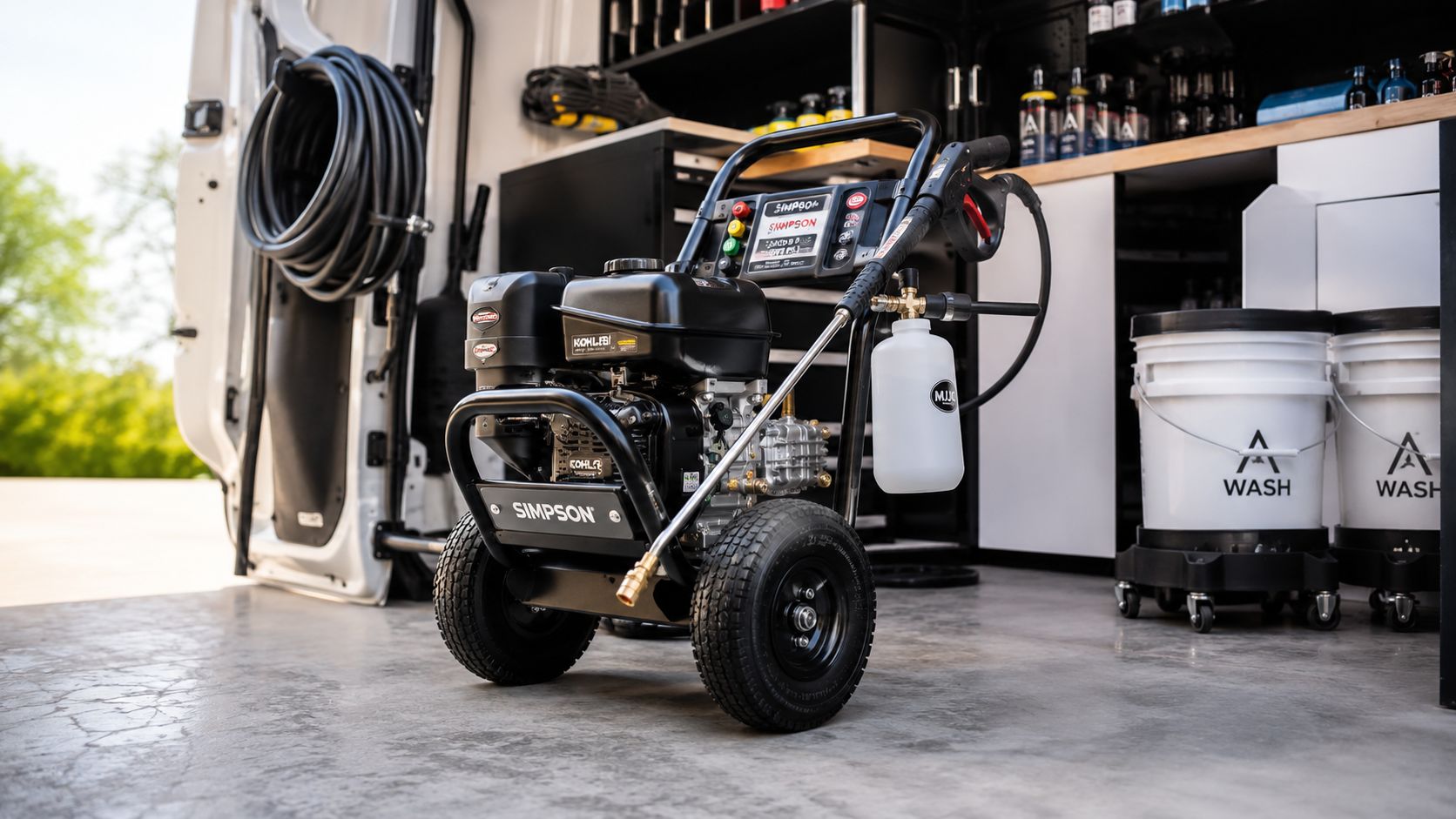
The pressure washer is the anchor
For premium results, a pressure washer in the 2.0–2.5 GPM and 2,500–3,000 PSI range is considered essential, and a hot-water extractor or steam cleaner belongs in the same conversation. The same source notes that 95% of top-tier operators offer carpet shampoo and upholstery extraction in full-service packages, according to Fresh Layer's overview of professional mobile detailers. Those specs matter because they balance cleaning power with safety.
Too little flow leaves you rinsing forever and wasting time. Too much pressure in untrained hands creates risk around trim, delicate areas, and already compromised surfaces. The target is controlled force, not brute force.
Consumer tools usually fail in the same ways
Store-bought starter machines often look fine on paper, then struggle on real work. The usual problems are weak flow, poor hose quality, short duty cycles, and fittings that don't hold up to repeated use. That's frustrating on a maintenance wash and a complete liability on a heavily soiled vehicle.
A professional foundation usually includes:
- Pressure washer with proper output for pre-rinse, foam cannon use, and controlled rinsing.
- Wet/dry vacuum with strong attachments for seats, rails, mats, trunks, and tight interior gaps.
- Extractor or steam capability for fabric and deeper interior recovery.
- Cordless or cord-managed polishers that can work all day without becoming a hassle.
- Portable lighting so defects, residue, and missed areas don't hide in shade.
Cheap tools don't just slow you down. They make you think your technique is the problem when the equipment is the bottleneck.
One tool choice affects the whole workflow
A strong setup also saves steps. Better rinse power improves your pre-wash. Better vacuum suction shortens interior prep. Better lighting catches residue before the customer does. That's why experienced detailers build around core performance first, then fill in around it.
This walk-through gives a useful visual on how serious operators think about setup and tool selection:
The core hardware blueprint
| Tool | What it needs to do | What goes wrong if it's underpowered |
|---|---|---|
| Pressure washer | Remove grime safely and feed a foam cannon properly | Slow rinsing, poor cleaning, wasted labor |
| Vacuum | Pull debris from carpet, seams, and mats | Dirt left behind in edges and under seats |
| Extractor or steam unit | Restore fabric and lift embedded contamination | Interiors look cleaner but still smell and stain |
| DA polisher | Correct paint safely and finish evenly | Haze, uneven correction, poor gloss |
| Lighting | Expose defects and residue | Missed spots, streaks, unhappy customers |
That's the backbone. Once that's right, the chemicals and technique can do their job.
Choosing Your Arsenal of Chemicals and Protectants
The chemical side of a mobile car detailing kit is where a lot of DIY setups go off track. People either buy too much and overlap products, or they buy too little and try to force one cleaner onto every surface. Neither works well.
Professional detailing uses dedicated chemistry for a reason. Paint, wheels, glass, carpets, leather, plastic, and tires don't respond the same way. The right product makes the job safer, faster, and more predictable.
Wash chemistry has one job first
Before shine, before protection, before tire dressing, the first job is safe soil removal. That starts with a proper pre-rinse and foam stage, then a lubricated contact wash. The approved exterior methodology is a seven-step process, and the two-bucket hand wash method with grit guards can reduce paint damage by up to 90% compared to unsafe single-bucket washing techniques, based on Harry's Financial's detailing methodology breakdown.
That's why pros lean on a straightforward chemical lineup:
- pH-neutral shampoo for regular contact washing.
- Foam pre-wash to soften and lift surface grime before mitt contact.
- Dedicated wheel cleaner for brake dust and road film.
- All-purpose cleaner for appropriate non-delicate interior and jamb work.
- Glass cleaner meant for automotive surfaces.
- Tire and trim dressing for finishing, not cleaning.
Decontamination is where amateur kits stop
A vehicle can look clean and still feel rough. That roughness is bonded contamination. Professional kits solve that with dedicated decon steps, not more scrubbing. Clay bars, iron removers, and the right lubricant matter because protection only performs as well as the prep underneath it.
A short comparison makes the trade-off clear:
| Product type | Best use | Bad habit to avoid |
|---|---|---|
| Wash soap | Routine contact wash | Using dish soap or harsh household cleaners |
| Iron remover | Bonded contamination before protection | Spraying it blindly on every surface |
| Clay bar | Smoothing paint before polishing or protection | Claying dry or on a dirty panel |
| Wheel cleaner | Brake dust and wheel grime | Using aggressive chemistry on every finish |
| Sealant or wax | Final protection | Applying over poorly cleaned paint |
If the surface isn't properly washed and decontaminated first, the protectant won't rescue the result. It just seals in weak prep.
Protectants should match the job
Not every vehicle needs the same last step. Some owners want a maintenance gloss and easy washability. Some want stronger long-term protection. A seasoned detailer chooses wax, sealant, or ceramic-style protection based on the vehicle's condition, owner expectations, and maintenance habits.
That's why professional kits aren't just bigger. They're more selective. Each bottle needs a reason to be there.
Mastering Interior Restoration and Odor Removal
Interiors separate casual cleaning from actual detailing. Plenty of cars look decent from outside and still carry stains in the seats, pet hair in the carpet backing, odor trapped in the fabric, and grime packed into the plastics. A vacuum helps. It doesn't finish the job.
Tidy is not restored
This matters most for family vehicles, commuter cars, and anything that transports pets. Crumbs, drink spills, tracked-in dirt, skin oils, and embedded hair settle into layers. Wiping the visible surfaces can make the cabin look better for a day, but it doesn't solve what's below the surface.
That's why an extractor is not optional in a professional mobile car detailing kit. It's required to remove deep-set spills and pet hair from fabric that vacuuming alone cannot resolve, which is what separates a quick clean from a true interior transformation, according to Titan Coatings on mobile detailing equipment.
The professional interior stack
A serious interior setup usually includes several categories of tools working together:
- Vacuum with crevice and brush tools for dry debris removal first.
- Extractor for seats, carpets, and fabric mats where contamination sits below the top layer.
- Steam cleaner for tight areas, plastics, and selected hard surfaces.
- Interior brushes and microfiber towels to agitate and lift soil without marring surfaces.
- Odor treatment products used after the source has been cleaned, not instead of cleaning.
A lot of people ask about odor bombs or ozone-style treatments first. That's backward. If pet odor is sitting in seat foam or carpet padding, the source has to be cleaned before any odor treatment has a fair chance to work.
A cabin doesn't smell clean because it got fragranced. It smells clean because the contamination was removed.
Pet hair and odor work is technical
Pet hair is one of the most underestimated jobs in mobile detailing. It wraps into carpet fibers, sticks to seat fabric, and collects under rails and in cargo areas. The same goes for odor. The surface smell is the symptom. The source is usually deeper.
That's why pros follow a layered process instead of a shortcut:
- Dry removal first with vacuuming, brushing, and hair-lifting tools.
- Targeted cleaning on plastics, leather, vinyl, and trim.
- Extraction or deeper fabric cleaning where spills, hair, and odor live.
- Final odor treatment only after the source material is out.
If you're comparing tools for this kind of work, this guide to a car interior cleaning kit helps show why interior detailing needs its own dedicated setup rather than leftover exterior tools.
Why DIY interior work often disappoints
Most home vacuums don't have the suction pattern, attachments, or extraction ability to handle a badly used vehicle. Spray-and-wipe cleaning can also push residue around if the wrong product is used on the wrong material. Interior detailing isn't just labor. It's method, dwell time, agitation, extraction, and careful finishing.
That's why interiors often take more judgment than exteriors.
Your First Detail Workflow and Pro Tips
The order of operations matters as much as the tools. Good detailers don't move randomly around a vehicle. They build a sequence that protects the finish, avoids rework, and keeps the job efficient from first rinse to final towel pass.
The business case for that discipline is strong. In the United States, the Car Wash & Auto Detailing industry has a market size of $18.7 billion in 2026, and the on-demand mobile detailing segment is projected to grow at a CAGR of 6.9% from 2025 to 2030, according to IBISWorld's industry profile. Operators who work cleanly and consistently stand out because efficiency and quality have to live together.
Sequence protects results
A pro workflow prevents the same contamination from touching the vehicle twice. Wheels get handled early so brake dust doesn't splash onto a freshly washed panel. The top-down wash sequence keeps dirt moving off the vehicle instead of around it. Interior recovery usually follows exterior correction or protection planning so the vehicle can be finished as a complete package.

A practical field workflow
Here's the rhythm most sound mobile details follow:
- Site assessment first. Check water access, sun exposure, wind, vehicle condition, and where you can stage tools.
- Wheels and tires early. They're the dirtiest area and can throw contamination.
- Pre-rinse and foam. Loosen as much grime as possible before touching paint.
- Safe contact wash. Use proper buckets, mitts, and panel order.
- Decontamination and correction decision. Not every car needs the same level of work.
- Protection step. Lock in the finish after prep is done.
- Interior restoration. Dry work first, then wet work, then finishing touches.
- Final inspection. Glass, jambs, tire dressing, touch-ups, and residue check.
Central PA realities that change the workflow
In Central Pennsylvania, weather and location often dictate your timing. Pollen season changes how often wash media need rinsing. Rural driveways can mean dust, gravel, and limited hose options. Summer heat can force you to move faster on chemicals and protectants so they don't flash badly on warm panels.
That's also why self-contained water matters operationally. If the customer's hookup is weak or missing, your whole day can get thrown off unless your setup is built for independence.
The best workflow is the one that still works when the driveway isn't perfect, the vehicle is dirtier than expected, and the clock is moving.
A simple prep checklist beats scrambling
A mobile detail goes smoother when your setup is staged the same way every time.
| Before you start | Why it matters |
|---|---|
| Confirm water plan | Avoids delays at the property |
| Separate wheel tools from paint tools | Prevents cross-contamination |
| Stage chemicals by task order | Saves walking and guesswork |
| Keep clean towels isolated | Protects the finish |
| Inspect in changing light | Finds what shade can hide |
If you want a service-style framework you can compare against your own routine, this car detailing checklist is useful for tightening the sequence.
And if you're checking local coverage and convenience, you can always find us on Google.
The Pro Difference Your Car Deserves
At this point, the pattern is pretty clear. Building a professional mobile car detailing kit means more than buying tools. You need the right wash method, the right hardware, the right chemicals, a water plan, interior extraction capability, correction knowledge, and enough practice to use all of it safely. That's a serious investment in time, money, and repetition.

Why pro results are hard to fake
Most disappointing DIY details fail in one of three places. The wash process adds marring. The interior looks better but still holds odor. The protection step goes onto a surface that wasn't properly prepared. None of those mistakes are dramatic in the moment, but they show up later in the sun, in the smell of the cabin, or in how short-lived the result feels.
Professional work avoids that by treating detailing like a chain. Every link matters. The rinse affects the wash. The wash affects decontamination. Decontamination affects correction. Correction affects protection. Interior cleaning affects odor control. When the chain is strong, the vehicle doesn't just look better for an hour. It feels properly cared for.
Hiring the service is often the smarter move
For busy drivers in Central Pennsylvania, especially parents, pet owners, commuters, and anyone preparing a vehicle for sale, doing this yourself can turn into a long weekend of buying, testing, adjusting, and still second-guessing the result. That's before you deal with water supply, tool storage, pet hair removal, stain extraction, or headlight restoration.
There's nothing wrong with understanding what goes into a real kit. In fact, it helps you judge the quality of the service you're paying for. But frequently, the smartest use of that knowledge is recognizing when the better option is to let trained hands bring the full setup to the driveway and do it right.
A professional detail isn't expensive because of one bottle or one machine. It costs what it costs because every part of the process has to work together.
If you'd rather skip the trial-and-error and get professional results at home or work, book with The Mobile Buff. We bring the equipment, the process, and the experience directly to your driveway across Central Pennsylvania so your vehicle gets the level of care it needs.

