


That warm summer sun might feel amazing, but it’s public enemy number one for your car's paint. The single best way to protect it is to create a tough, physical barrier between your car’s finish and those harsh ultraviolet (UV) rays. Think professional-grade ceramic coatings, paired with smart habits like parking in the shade and keeping it clean.
Without that protection, you're essentially letting the sun bake the life right out of your paint, turning that deep, glossy color into a dull, chalky shadow of its former self.
Why the Sun Is Your Paint's Silent Enemy
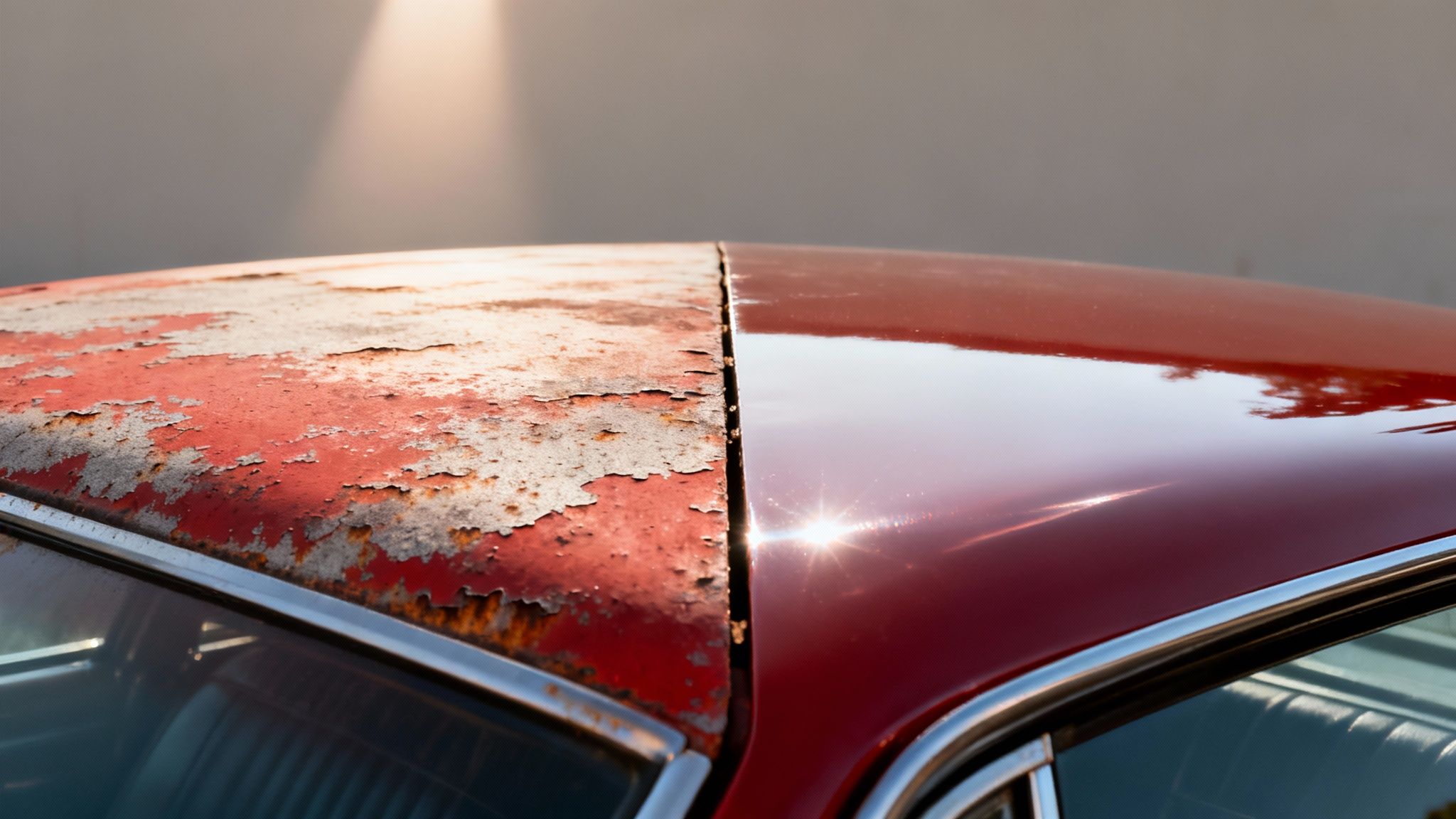
It’s easy to miss sun damage as it’s happening. Unlike a sudden scratch or a parking lot ding, this is a slow burn—a gradual process that silently steals your car's shine and value day after day. But don't be fooled by its subtlety; the sun is one of the most destructive forces your vehicle will ever face.
Think of your car's paint job as a multi-layer system. The top layer, the clear coat, is its first and most important line of defense. It's there to provide that beautiful gloss and shield the color underneath from the elements. But it’s not invincible.
The Science of Fading Paint
The main culprit here is ultraviolet (UV) radiation. These invisible rays are powerful enough to punch right through the clear coat and start a chemical breakdown of the pigments in the paint itself. This process, known as oxidation, is what drains the color and makes it look washed out.
A once-brilliant red can start looking pink and lifeless, while a deep, rich black turns into a hazy, disappointing gray. The sun's energy is literally breaking apart the molecular bonds that give your paint its vibrant color, leaving a weak, chalky surface in its place.
At a microscopic level, UV radiation is like millions of tiny hammers constantly chipping away at the integrity of your car's finish. Over time, this relentless assault leads to visible and often irreversible damage.
And this is much more than just a cosmetic problem. Once the clear coat is compromised, the colored base coat is left exposed and vulnerable to everything else—moisture, bird droppings, road salt—which can quickly lead to rust and corrosion.
How Heat Puts the Damage in Overdrive
While UV rays are the primary threat, heat acts as a powerful catalyst, making everything worse. On a hot summer day, the surface of a dark-colored car can easily soar past 190°F. This extreme heat turbocharges the chemical reactions started by the UV rays, essentially baking the damage right into your finish.
Think of it like cooking: the heat speeds up the process dramatically. The clear coat fails much faster than it would from UV exposure alone. This tag team of intense light and heat is what causes those telltale signs of severe sun damage:
- Dullness and Fading: The first sign is always the loss of gloss and vibrancy.
- Chalky Residue: A powdery film you can feel on the surface as the paint oxidizes.
- Clear Coat Peeling: The final stage, where the protective layer cracks, flakes, and peels away entirely.
This isn't just limited to your paint, either. Those same UV rays are responsible for other common issues, which is why it's so important to understand what causes foggy headlights and how to stop it.
Ultimately, preventing this damage is far easier and cheaper than trying to fix it later. You can't stop the sun from shining, but you can absolutely give your vehicle the armor it needs to fight back.
Your First Line of Defense: Simple Parking Habits
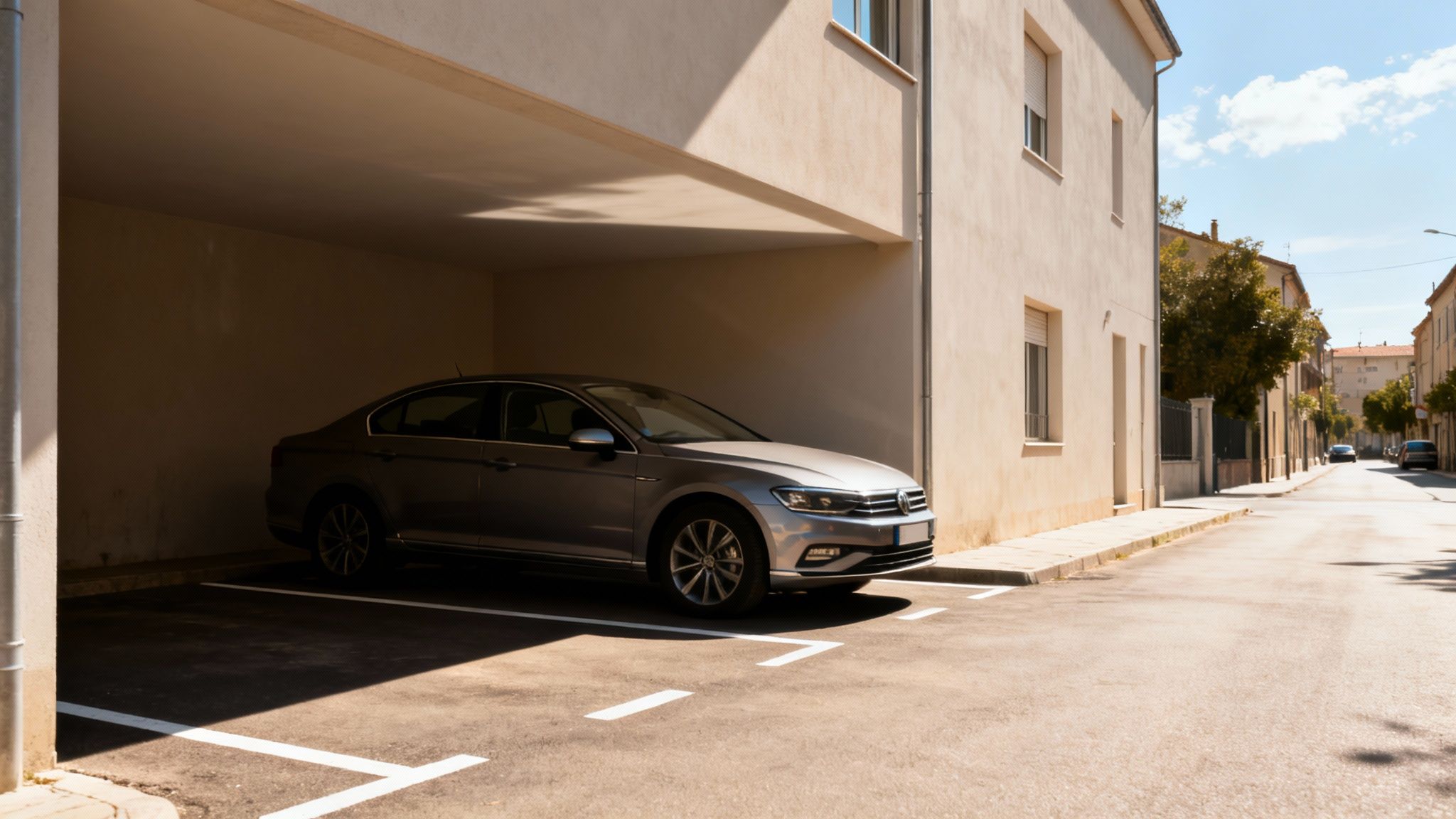
Often, the most effective way to protect your car's paint from sun damage costs nothing at all. Before you even start thinking about waxes and high-tech coatings, where you park every day makes a huge difference. Consistently keeping your car out of direct sunlight is the bedrock of any solid paint protection plan.
Of course, a garage is the ultimate solution. But let's be realistic—that's not an option for everyone, especially with all the street and lot parking we have around Harrisburg and Carlisle. The good news? You don't need a garage to be smart about it.
Think Like a Sundial
Even if you don't have a covered spot, you can seriously cut down on UV exposure just by watching the sun's path. When you park in the morning, think about where the sun will be during its most intense afternoon hours.
Use what’s around you. Buildings, big trees, and other structures can be your best friends. Parking on the east side of a tall building, for instance, might mean your car gets some morning sun, but it will be nicely shaded during that harsh afternoon bake. It’s a small habit that adds up to hours of saved paint every single week.
Your car's paint is always under assault. Even on cloudy days, up to 80% of the sun's UV rays can cut right through the clouds. Making shade a priority isn't just for bright, sunny days—it’s a critical year-round habit for keeping your finish looking new.
This simple act of "reading the sun" turns any random parking spot into a tactical move against paint fade and oxidation.
Choosing the Right Car Cover
If your car sits for long stretches, a good car cover is your next best bet. I have to stress the word good here, because the wrong one can do more harm than good. The most important feature? Breathability.
A cheap, non-breathable plastic or vinyl cover essentially turns into a mini-greenhouse. It traps heat and moisture right against your paint, which can lead to blistering, a hazy clear coat, and even mold. You’re basically creating a humid, paint-destroying ecosystem.
What you need is a high-quality cover made from a multi-layer, breathable fabric. These materials are engineered to block UV rays and shed water while still letting any trapped moisture or condensation evaporate. This is key to preventing the damage that comes from a sealed-in, damp environment.
Here’s a quick checklist for a quality car cover:
- Breathable Fabric: This is non-negotiable for letting moisture out.
- Soft Inner Lining: Look for a fleece or cotton-like interior that won't leave fine scratches on your paint.
- UV Protection: The material should be specifically treated to block damaging ultraviolet radiation.
- Snug Fit: A custom or semi-custom fit is crucial. It stops the cover from flapping in the wind, which can grind trapped dust and dirt right into your finish.
Using a cover is a commitment, though. Your car needs to be completely clean before you put the cover on. If it's not, you've just wrapped your vehicle in a giant sheet of low-grade sandpaper. But for long-term outdoor storage, the right cover is an invaluable shield. We see the results of smart parking and covering habits all the time—just look at the vehicles we maintain on our Google Business Profile.
Building a Foundation with a Proper Wash
Think about it this way: you wouldn't hang a picture on a dirty wall, so why would you try to protect dirty paint? Applying wax or sealant over a gritty surface is one of the biggest mistakes you can make. All you're doing is trapping those tiny, abrasive particles right against your clear coat, essentially sealing in the enemy.
The first real step in protecting your car from the sun is creating a perfectly clean slate. I'm not just talking about a quick rinse—this is about prepping the surface so that your chosen protectant can actually bond to the paint and do its job.
Why You Should Ditch the Drive-Thru Wash
We get it. The automatic car wash is fast and easy. But from a professional standpoint, that convenience comes at a steep price. Those giant, spinning brushes are notorious for wrecking paint. They scrub dirt and grit from hundreds of other cars into your vehicle's delicate clear coat, leaving behind a web of fine scratches and swirl marks that kill your car's shine.
A professional, gentle hand wash is the only industry-approved method for safely cleaning your vehicle. It’s the difference between a thoughtful cleaning and a brute-force scrubbing. While a drive-thru might look like it's getting the car clean, it's often causing long-term damage for a short-term fix.
The Pro's Secret: The Two-Bucket Method
The gold standard in the detailing world is the two-bucket method. It’s a simple technique that makes a massive difference in preventing scratches during the wash process.
Here’s the breakdown:
- Bucket #1 (Wash Bucket): This one gets your high-quality, pH-neutral car shampoo and water. Using a pH-neutral soap is key because it cleans without stripping off any wax or sealant you already have on there.
- Bucket #2 (Rinse Bucket): This is just plain, clean water. Its entire job is to be the "dirty" bucket.
After washing a small panel on your car, you dunk your gritty wash mitt into the rinse bucket first, swirling it around to release all the dirt. Then you dip it back into your soapy wash bucket. This simple process keeps the abrasive grit out of your clean soap, so you aren't just rubbing dirt all over your car.
The core philosophy of a professional wash is to touch the paint as little as possible, and when you do, to make sure what you're touching it with is immaculately clean. The two-bucket method is how we live by that rule.
The Step You Can't Afford to Skip: Clay Bar Decontamination
Even after the perfect wash, your paint still isn't 100% clean. Don't believe me? Put your hand inside a thin plastic sandwich bag and gently glide it over your car's hood. Feel that gritty texture? Those are bonded contaminants—things like tree sap, industrial fallout, and brake dust that have literally baked onto your clear coat.
A clay bar treatment is how we solve this. Using a special automotive clay and a lubricant spray, we glide the bar across the paint. The clay is tacky enough to grab and pull these embedded particles out of the clear coat, leaving behind a surface that’s as smooth as glass. For a closer look at tackling other stubborn issues, check out our guide on removing water spots from car paint.
If you skip this, you're just applying wax over a bumpy, contaminated surface. Your protection won't last as long, and you'll never get that deep, liquid-looking gloss you're after.
This is the level of prep work we bring to every single car. If you're near Harrisburg and want this done right, see the kind of results we deliver on our Google Business Profile.
Choosing Your Armor: Wax, Sealant, or Ceramic Coating?
Alright, your car's surface is now perfectly prepped and as smooth as glass. This is the moment where all that hard work pays off. It's time to choose the right shield to lock in that shine and give your paint a fighting chance against the sun's relentless attack.
When it comes to protecting your car's paint from sun damage, you've really got three main contenders: traditional waxes, modern paint sealants, and the undisputed heavyweight champion, ceramic coatings.
Think of it like choosing a jacket for a storm. Wax is a light windbreaker—it looks good for a bit but won't hold up in a downpour. A sealant is more like a sturdy rain jacket, offering reliable protection for a season. But a ceramic coating? That's your full-on, hardshell technical gear, built to withstand anything the elements throw at it for years.
The Old-School Charm: Traditional Waxes
For decades, carnauba wax was the gold standard for car guys everywhere. It's an all-natural product from Brazilian palm trees, and nothing quite beats the deep, warm, wet-look gloss it gives your paint. There's a real sense of satisfaction that comes from hand-applying a quality paste wax on a Saturday afternoon.
But here's the catch: its beauty is temporary. Being an organic product, carnauba breaks down pretty quickly under heat, rain, and constant UV exposure. In a hot Central PA summer, you’ll be lucky to get 4-6 weeks of real protection before you need to do it all over again. It offers some UV resistance, but it’s easily the least durable option out there.
The Modern Workhorse: Synthetic Paint Sealants
Stepping up the ladder, we find synthetic paint sealants. These are polymers created in a lab with one goal: to do everything wax does, but do it better and for much longer. Instead of just sitting on the paint like wax, a sealant actually creates a chemical bond with the clear coat, forming a much tougher, more resilient shell.
This polymer barrier gives you way better protection against UV rays, acid rain, and road grime. A single, proper application can easily last 4 to 6 months, which makes it a far more practical choice for a daily driver. The shine is different, too—often described as sharper and more reflective, giving the paint an almost glass-like finish.
The Ultimate Defender: Ceramic Coatings
This quick decision tree shows you the essential prep work that has to happen before you even think about applying protection. It’s the foundation for everything else.
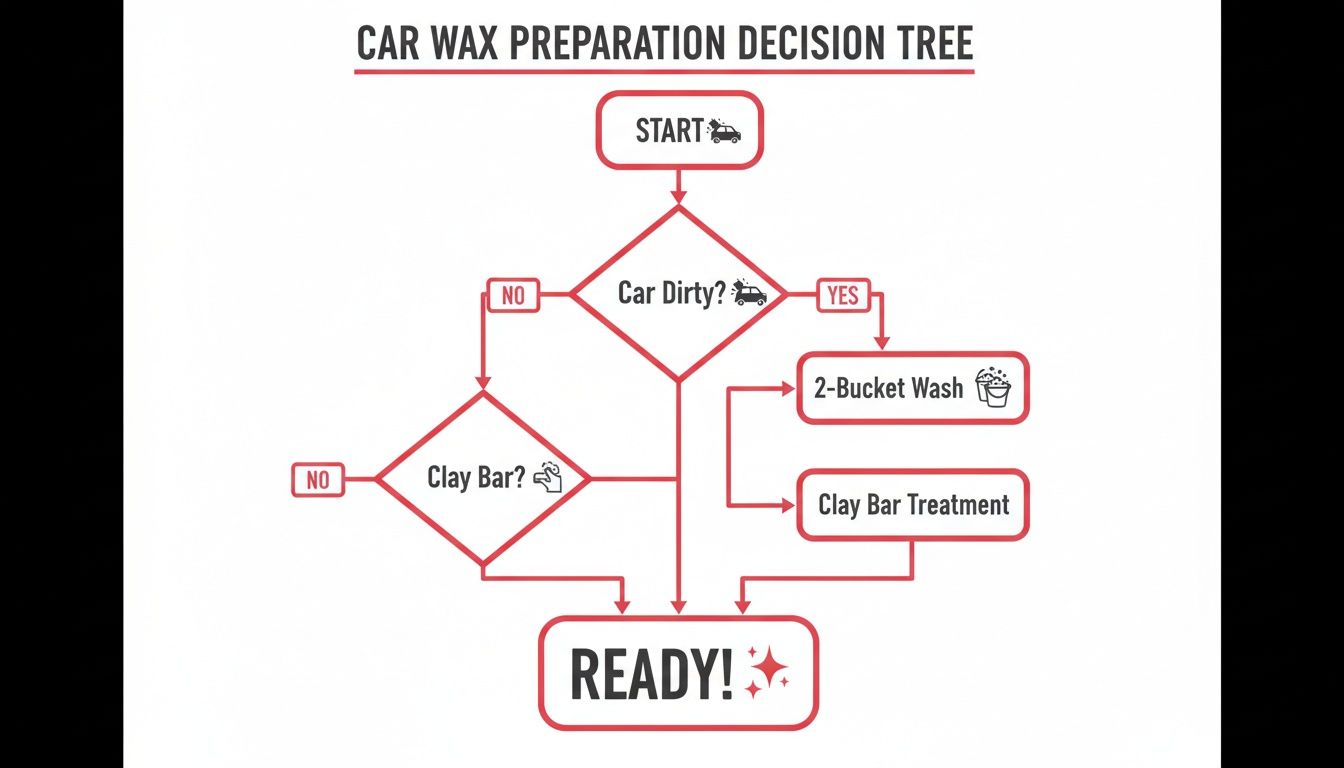
As you can see, getting the surface perfectly clean and decontaminated isn't optional—it's the only way to ensure your chosen protection will bond correctly and last.
Now, for the top of the paint protection pyramid: the professional-grade ceramic coating. This isn't just another layer on your car; it's a semi-permanent transformation of your car's surface. At its core is silica dioxide (SiO2), a liquid polymer that, once applied, cures into an incredibly hard, transparent layer of glass.
This hardened shell is insanely durable, resistant to chemicals, and offers the absolute best UV protection you can get. It's much harder than your factory clear coat, which also means it provides a serious defense against light scratches and swirl marks.
A professional ceramic coating is the single best investment you can make for long-term paint preservation. It creates a sacrificial barrier that takes all the daily abuse—from UV rays to bird droppings—so your original paint doesn't have to.
One of its most famous traits is its hydrophobicity. Water beads up and flies off the surface, taking dirt and grime along for the ride. This "self-cleaning" effect means your car stays cleaner, longer, and is a breeze to wash. A professional application won't last for months; it will last for years.
Comparing Paint Protection Options
To make the choice a little easier, here's a quick breakdown of how these three options stack up against each other.
Ultimately, while wax offers a classic shine and sealants provide a great middle-ground, nothing comes close to the robust, multi-year shield of a professionally installed ceramic coating.
The Dangers of DIY Ceramic Coatings
With the explosion in popularity of ceramic coatings, the market is now flooded with "DIY" kits. While the low price is tempting, applying a true ceramic coating is a highly technical process where the margin for error is razor-thin. Unlike wax or sealant that you can just wipe off, a botched coating job is a nightmare to fix, often requiring aggressive machine polishing to remove.
Here are a few common DIY disasters we see all the time:
- High Spots: These are dark, oily-looking patches where the coating wasn't leveled correctly and cured unevenly. They are very noticeable.
- Uneven Application: Streaks and blotches that become a semi-permanent, ugly feature of your car's finish.
- Improper Prep: Trapping tiny scratches, swirls, or contaminants under the coating, where they get magnified and sealed in for years.
Getting that advertised durability and jaw-dropping gloss requires a surgically clean environment and meticulous prep work. For most cars, this includes a full paint correction to get rid of any existing imperfections first. This is absolutely a job best left to trained, experienced professionals. You can see the flawless results we achieve for our clients across Harrisburg and beyond right on our Google Business Profile.
Keeping Your Car's Armor in Top Shape
Getting a high-quality wax, sealant, or ceramic coating on your car is a huge win against the sun. But that protective shield isn’t a "set it and forget it" deal. If you want to get the years of defense you paid for, you need a simple, smart maintenance plan. The right care keeps that armor strong, preserving that deep gloss and powerful UV protection.
The great news? Maintaining a protected car is a walk in the park compared to caring for one without that shield. Your main goal is just to clean the surface gently, avoiding any harsh chemicals or abrasive techniques that could wear down that protective layer before its time.
Building a Smart Washing Routine
How often you should wash your car really comes down to your local environment and driving habits here in Dauphin or Cumberland counties. A good rule of thumb is a proper hand wash every one to two weeks. This simple step keeps nasty stuff like bird droppings, bug guts, and road grime from sitting on your paint and eating through your protection.
When it's time to wash, just stick to the basics we talked about earlier: the two-bucket method and a good pH-neutral car shampoo. Aggressive, acidic, or alkaline soaps are the enemy—they'll slowly chew through waxes and sealants, dramatically cutting their lifespan short. Even a rock-solid ceramic coating can be weakened over time by the wrong chemicals.
Think of your car's coating like the non-stick surface on a brand-new skillet. You wouldn't take steel wool to it, would you? The same idea applies here. Gentle, consistent cleaning with the right stuff is the secret to making it last.
Giving Your Ceramic Coating a Boost
If your car is protected with a ceramic coating, you can take its maintenance to the next level. The market for car sun protection products is exploding, which just goes to show how seriously people are taking UV damage. The global market is growing at a massive 15.60% CAGR, with North America expected to be a $1.9 billion market by 2025. This incredible demand has spurred the creation of some fantastic maintenance products made specifically for coatings. You can learn more about these market trends and see just how fast the industry is evolving.
Many of the top detailing brands now have SiO2-infused products that are perfect for coated cars. Think of them as "boosters" or "toppers" for the protection you already have.
- SiO2-Infused Detail Sprays: These are perfect for a quick wipe-down after a wash or for safely lifting light dust. They leave behind a slick layer of protection that seriously amps up your coating's water-beading magic.
- SiO2-Infused Shampoos: These specialty soaps do double duty—they clean your car while laying down a fresh, thin layer of silica protection. It's like recharging your coating every time you wash.
Using these products is like adding a fresh coat of paint to a shielded wall—it reinforces the main defense and keeps it looking sharp.
Your Local Maintenance Schedule
For the average driver here in Central PA, a practical routine is what gets results. You don't need to dedicate every weekend to detailing.
Here’s a simple plan that works:
- Weekly: Do a quick walk-around. Spot any bird droppings or bug splatter? Get them off safely with a quick detail spray and a clean microfiber towel before they have time to cause damage.
- Every 2 Weeks: Give it a proper two-bucket hand wash. Use a pH-neutral or, even better, an SiO2-infused shampoo.
- Every 3-6 Months: This is a good time to check in on your protection. If you have a sealant, it might be time for a fresh coat. For ceramic coatings, a professional decontamination wash can pull out any embedded gunk and bring back that slick, hydrophobic performance.
Of course, the easiest way to manage all of this is to let us do it for you. We see the difference consistent care makes every single day on our clients' vehicles, and you can see the results for yourself on our Google Business Profile.
Got Questions About Sun Damage? We've Got Answers
When it comes to protecting your car's paint from the sun, there's a ton of information floating around. It's easy to get mixed up about what actually works, what’s just a myth, and when it’s time to bring in the pros. As the go-to mobile detailing crew in Central PA, we’ve heard just about every question you can imagine.
So, let's clear the air. We’ve put together some straight, professional answers to the questions we get asked most often. Our goal is to help you feel confident about how you care for your car.
Is It Too Late to Protect My Car If the Paint Is Already Fading?
That's a great question, and the answer is usually no! It really comes down to what kind of damage we're looking at.
If your car's paint is suffering from light to moderate oxidation—that cloudy, chalky look that makes your color look lifeless—then a professional paint correction can make a world of difference. We carefully polish away that damaged top layer of the clear coat to bring back the fresh, glossy paint underneath. Once that shine is back, we lock it in with a durable ceramic coating so the fade doesn't return.
However, if the clear coat is physically cracking or peeling, the damage has gone too far for polishing. At that point, a repaint is the only real fix. This is exactly why being proactive with protection is so crucial—it saves you from a massive repair bill down the line.
How Often Should I Wax My Car for Sun Protection?
With traditional products, consistency is everything. A classic carnauba wax looks fantastic, but it just doesn't last, especially in a hot Pennsylvania summer. To keep a solid UV barrier, you’ll be reapplying it every 4-6 weeks.
You can get a bit more life out of a synthetic paint sealant, which usually buys you 4-6 months of good protection. They’re both decent options, but you absolutely have to stick to a strict schedule to keep that shield against the sun active.
For a true "set it and forget it" solution, nothing beats a professional ceramic coating. A single application protects your car for years with a harder, more resilient, and far more effective UV barrier than any wax or sealant on the market.
Can a Cheap Car Cover Damage My Paint?
Oh, absolutely. We see the unfortunate results of this all the time. A cheap, non-breathable car cover made from something like plastic or vinyl is one of the worst things for your paint. It traps heat and moisture right against the surface, which can make your clear coat look cloudy or even cause it to blister.
Even worse, if you put that cover on a car that isn't perfectly clean, you've just wrapped your vehicle in a giant sheet of low-grit sandpaper. Every time the wind blows, the cover shifts and grinds all that trapped dirt into your finish, leaving behind a mess of fine scratches. If you're going to use a cover, invest in a high-quality, breathable one and only ever put it on a spotless car.
Does a Ceramic Coating Mean I Never Have to Wash My Car?
This is easily the biggest misconception about ceramic coatings! A coating makes your car a dream to clean and helps it stay looking fresh longer, but it's not a magical self-cleaning force field. You still need to wash off everyday grime like dirt, pollen, and the dreaded bird droppings.
The real magic is how easy that wash becomes. Dirt and grime slide right off the slick, hydrophobic surface with almost no effort, and drying is a breeze. Think of it as armor—you still have to wipe your armor clean for it to perform its best. We take a lot of pride in our work, and you can see the slick, glossy results for yourself on our Google Business Profile.
Time to Give Your Car the Protection It Really Needs
We've walked through all the ways to keep the sun from wrecking your car's paint. Smart parking and regular, professional washing methods all make a huge difference. But if you’re looking for that next level of defense, something that stands up to the elements day in and day out, it's time to consider a professional-grade protective layer.
When it comes to serious, long-term UV protection, nothing we've seen in our years of detailing beats a professionally installed ceramic coating. It's the best money you can spend to protect your car’s finish and keep its value from tanking.
Think of it as a permanent, ultra-hard glass shield for your paint. It’s hydrophobic, so water and dirt just slide right off, and it creates an incredible barrier against the sun's damaging rays for years, not just a few weeks. We see the difference it makes every single day on vehicles all over Central Pennsylvania. If you want to see for yourself, check out some of our recent projects on our Google Business Profile.
Here's the bottom line: Investing in professional paint protection now is a whole lot cheaper than a new paint job down the road. It’s about being proactive to keep your car looking great and holding its value.
If you're ready to get that brilliant, just-detailed shine and truly armor your car against the sun, we're here to help. Let's work together to keep it looking fantastic for years to come.
Ready to give your car the ultimate shield against sun damage? Get in touch with us at The Mobile Buff today. Head over to https://themobilebuff.com to find the right protection package for your vehicle and book your appointment.

