


Professional paint correction cost usually falls between $500 and $2,500+ in the U.S. for a full vehicle, and the final price depends mostly on your paint condition, your vehicle's size, and how many polishing stages it takes to get the result you want. If you're in Central Pennsylvania and comparing a mobile detailer to a shop, the same basic pricing logic still applies, but convenience, setup conditions, and service approach all matter.
If you've had that moment where your car looked clean in the driveway, then suddenly looked rough in direct sun, you already understand why paint correction gets so much attention. Swirl marks show up like spiderwebs. Water spots catch the light. Light scratches that seemed minor start to make the whole vehicle look tired.
For busy drivers around Harrisburg, Mechanicsburg, and Carlisle, the confusing part usually isn't whether the paint needs help. It's figuring out what you're paying for. Some quotes seem low. Some seem high. Some mention one-step, two-step, or “show-car” correction without explaining what those terms mean in plain English.
This guide breaks down what paint correction is, what affects the price, how mobile service fits into the equation in Central PA, and where professional work makes sense compared with trying to machine polish a vehicle yourself.
That "Perfect" Finish Is Hiding Under Swirls and Scratches
A lot of owners notice paint damage at the worst possible time. You wash the car, back it into the sunlight, and instead of a deep gloss, you see a haze of fine circular marks across the hood and doors. The paint isn't dirty. It's damaged at the surface.
That's the gap between a car that's merely clean and one that looks restored.

What most people are really seeing
Those marks usually come from everyday wear. Automatic car washes, rushed drying, old towels, hard water, and years of outdoor exposure all leave their signature behind. The paint still has potential, but the clear coat no longer reflects light evenly.
Paint correction is the professional process that brings that hidden finish back out.
It's not a fancy wash. It's not a glaze that temporarily fills defects. It's controlled machine polishing that removes or reduces imperfections in the clear coat so the finish looks sharper, darker, and more reflective again.
The best way to think about paint correction is simple. Cleaning removes dirt. Correction removes damage you can see after the dirt is gone.
Why the price range feels wide
Two vehicles can look similar from ten feet away and need very different work under inspection lights. One might need a light polishing pass to improve gloss and tame mild wash marring. Another might need compounding and refinement across every panel.
That's why pricing doesn't work well as a flat “per car” number. A compact sedan with lighter defects can land near the lower end of the market. A larger SUV with neglected paint can require far more machine time and far more restraint.
If you've been wondering why one quote sounds like a maintenance service and another sounds like restoration work, that difference usually comes down to the paint itself.
What Exactly Is Paint Correction
Paint correction is the process of leveling the clear coat with machine polishers, pads, compounds, and finishing polishes so surface defects become less visible or disappear. The closest analogy is refinishing wood furniture. You don't restore a scratched tabletop by wiping on more wax. You carefully smooth the damaged top layer, then refine the finish so it reflects light evenly again.
Cars work the same way.
It removes defects instead of hiding them
A wax or filler-heavy product can make paint look better for a short time because it masks minor imperfections. True correction goes further. It mechanically works the clear coat to address defects within that layer.
According to this paint correction methodology breakdown, common issues that can often be corrected include swirl marks, water spots, oxidation, and light scratches, as long as the damage remains within the clear coat rather than going deeper into the paint system.
That last part matters. If a scratch reaches beyond the clear coat into the base coat, correction stops being the right tool for the job. At that point, touch-up or repaint work may be the honest recommendation.
Why stages matter
Detailers talk about one-step and multi-stage correction because the process changes based on defect severity.
A single-stage correction is usually the right fit for lighter defects. The same source notes that this level of work generally offers about 50 to 65% improvement for light swirls using polish alone. A multi-stage correction adds a more aggressive compounding step to remove deeper oxidation and fine scratches, then follows with finer polishing to refine gloss, producing about 65 to 95% improvement depending on the condition and process in use.
The chemistry explains the difference. Compounds use larger abrasives to cut faster. Polishes use finer abrasives to refine the finish and restore clarity.
Practical rule: The more defect removal you want, the more carefully a detailer has to balance cut, finish quality, heat, pad choice, and paint safety.
The defects that usually respond well
Here's what often falls within correction territory:
- Swirl marks from washing: Fine circular scratching that dulls dark paint fast.
- Water spotting: Mineral deposits can etch or stain the surface and reduce gloss.
- Oxidation: Faded, chalky-looking paint often needs a stronger first step.
- Light isolated scratches: If they haven't gone too deep, machine correction can noticeably improve them.
If you're trying to sort out terminology before requesting a quote, this comparison of paint correction vs polish helps clarify why basic polishing and real correction aren't interchangeable.
Why inspection comes first
Good correction starts before the machine turns on. The vehicle gets washed, decontaminated, inspected under proper lighting, and tested to see how the paint responds. That approach mirrors a bigger maintenance principle in car care. It helps to compare proactive maintenance and reactive repairs because paint care works the same way. Early correction and protection are usually simpler than waiting until defects are heavier and options are narrower.
A serious detailer shouldn't promise perfection from photos alone. Paint tells the truth under lights, not in a shaded parking lot.
Breaking Down the Paint Correction Price Tag
A paint correction quote makes more sense once you know what is being priced. The charge is mostly labor, test spots, tool time, and restraint. Good correction is controlled abrasion, not a shiny product wiped onto the surface.
The national pricing baseline
As noted earlier, national pricing guides put full-vehicle correction in a wide range. That spread is normal because paint correction is not one fixed service. A sedan with light wash marring and soft paint can be a very different job from a black SUV with hard clear, etched water spots, and years of tunnel-wash damage.
Most quotes fall into a few recognizable service levels:
| Correction Stage | Best For | Defect Removal % | Estimated Cost (Sedan) |
|---|---|---|---|
| One-step correction | Light swirls and mild paint dullness | 50–65% | $500–$800 |
| Two-step correction | Moderate defects, better clarity, more refinement | 70–90% | $1,000–$1,500 |
| Three-stage or show-quality correction | Heavy defects or maximum finish improvement | 95%+ | $1,800–$2,500+ |
Price usually follows time. A one-step can fit into part of a day. A two-step often takes most of a day or longer. Show-level work can stretch well beyond that once the prep, polishing, inspection, and final wipe-down are done correctly.
What changes your quote
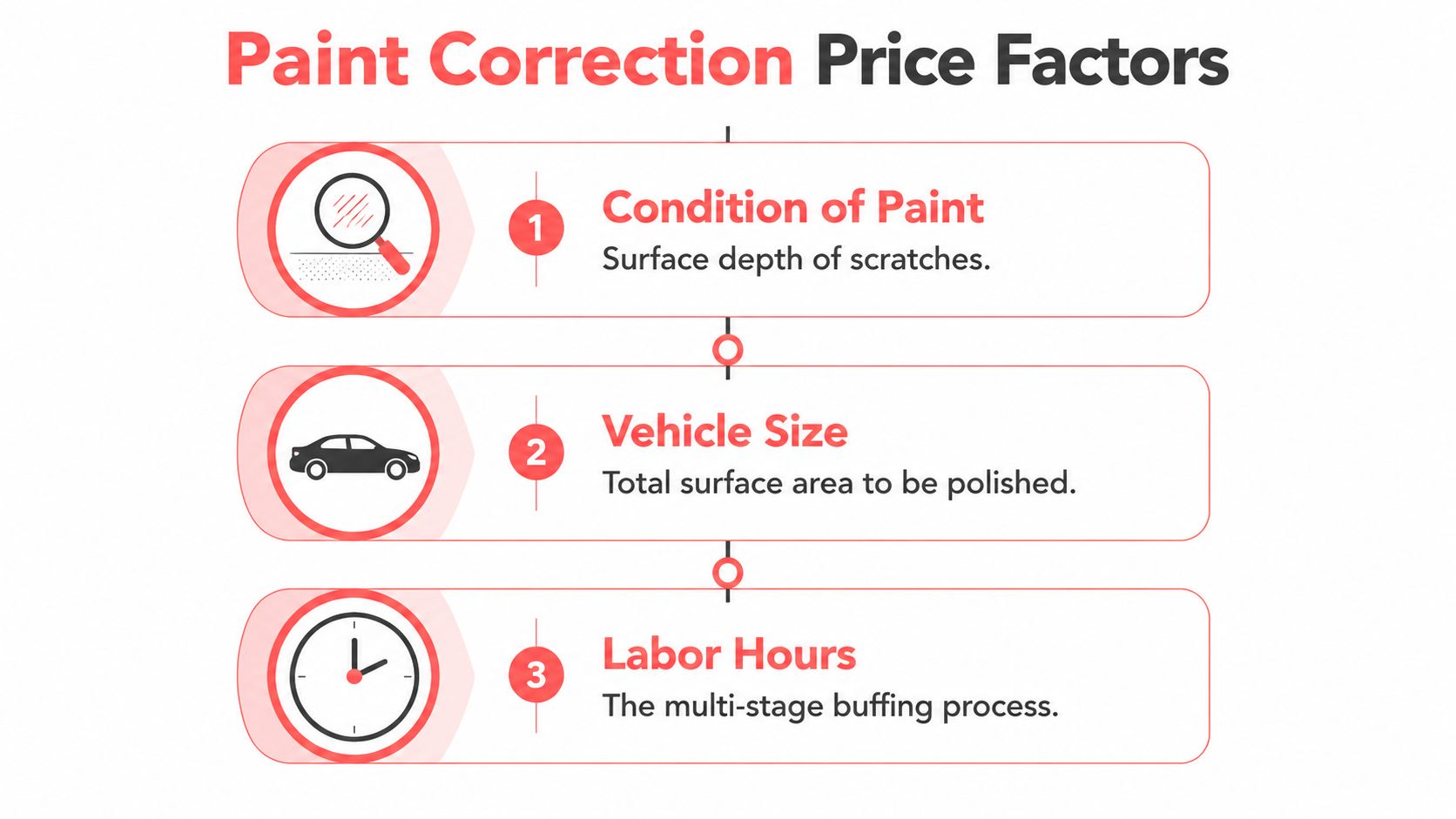
Three factors drive the number more than anything else.
- Vehicle size: More square footage means more passes, more edge work, and more time around badges, trim, and tight curves.
- Paint condition: Light swirls are straightforward. Etching, oxidation, sanding marks, and random deeper scratches slow the job down fast.
- End goal: Some owners want a clear improvement for a daily driver. Others want the highest finish quality the paint can safely support. That second goal takes more testing and more refining.
Paint type matters too. Some finishes correct quickly and finish nicely. Others fight back, haze easily, or need extra refinement to look right in direct sun. Two vehicles that look similar at first glance can price very differently once the machine work starts.
Why mobile service in Central PA can price differently
This matters a lot in Central Pennsylvania. A mobile detailer is not just bringing a polisher and a bottle of compound. The service includes travel, setup, power planning, weather calls, lighting strategy, and enough flexibility to work around a customer's driveway, garage, or office lot.
That convenience has value. If your car can be corrected while you work from home in Harrisburg, Camp Hill, Hershey, or Mechanicsburg, you save the drop-off, the pickup, and the time lost to a shop visit. For busy families and commuters, that is part of the purchase.
The trade-off is that mobile work has more variables. Direct sun, wind, cold mornings, surprise rain, and limited shade can all affect how the day is scheduled. A fixed shop has building overhead. A mobile operator has travel and setup overhead. Neither model is automatically cheaper. They are priced differently because the work environment is different.
In Central PA, I price correction based on what the car needs and whether the location supports safe, consistent results. If the setup is good, mobile service can be an efficient option. If the weather or lighting is wrong, the honest answer may be to reschedule or recommend a better environment instead of forcing the job.
A good quote reflects the car, the finish goal, and the working conditions on site.
How to think like a buyer
Ask what level of improvement you are paying for, how many polishing steps are included, and what kind of result is realistic for your paint. Those questions tell you more than a low headline price ever will.
It also helps to look at the car's background. Prior body work, unknown wash history, and old damage often explain why one vehicle needs much more correction than another. A quick review of ownership records and identifying gaps in basic car data can add useful context before you book.
If you want a realistic starting point before an in-person inspection, use this instant pricing calculator for detailing services. It helps set expectations, especially if you are comparing mobile convenience against a traditional shop quote in Central PA.
The Hidden Risks of DIY Paint Correction
DIY paint correction looks tempting for one reason. The result videos make it seem straightforward. A machine spins, the scratches fade, and the hood suddenly looks glossy. What you don't see is the judgment behind pad choice, polish selection, section size, pressure, arm speed, and how long the operator works one area before heat and abrasion become a problem.
That's why DIY correction has a narrow margin for error.

What goes wrong at home
The biggest mistake is treating machine polishing like aggressive waxing. It isn't. Every pass removes some material from the clear coat. If the operator chases deeper scratches too hard, the finish can go from dull to permanently damaged.
Common DIY problems include:
- Burn-through on edges and body lines: Sharp contours have less room for error.
- Holograms and haze: Poor technique can leave the paint looking worse in sunlight.
- Uneven correction: One panel looks sharp, the next looks cloudy because the process wasn't consistent.
- Trim staining: Compounds and polishes can lodge into textured plastic and leave residue that's hard to reverse.
Cheap tools can create expensive outcomes
A low-cost machine isn't automatically dangerous, but bargain tools paired with the wrong pad and compound combination can produce unpredictable results. Professional detailers rely on tested systems. They inspect under dedicated lighting, keep pads clean, watch panel temperature, and adjust their approach panel by panel.
That discipline matters most on darker paint, softer paint, and neglected paint.
If you're asking whether a scratch is “too deep,” that's usually the moment to stop experimenting and get the paint inspected first.
The real trade-off
DIY works best when the owner accepts limited improvement and practices on paint that won't be costly to redo. That's not most daily drivers people care about. If your vehicle matters to you, correction cost is often less about paying for polish and more about paying for restraint.
A professional doesn't just know how to remove defects. A professional knows when to stop.
That's a big difference.
Protecting Your Investment with Add-On Services
Paint correction makes the paint look right again. Protection helps keep it that way. Without a protective layer on top, freshly corrected paint goes right back into the same environment that caused the original damage.
That's why many owners pair correction with a longer-lasting protective service.
Why coating after correction makes sense
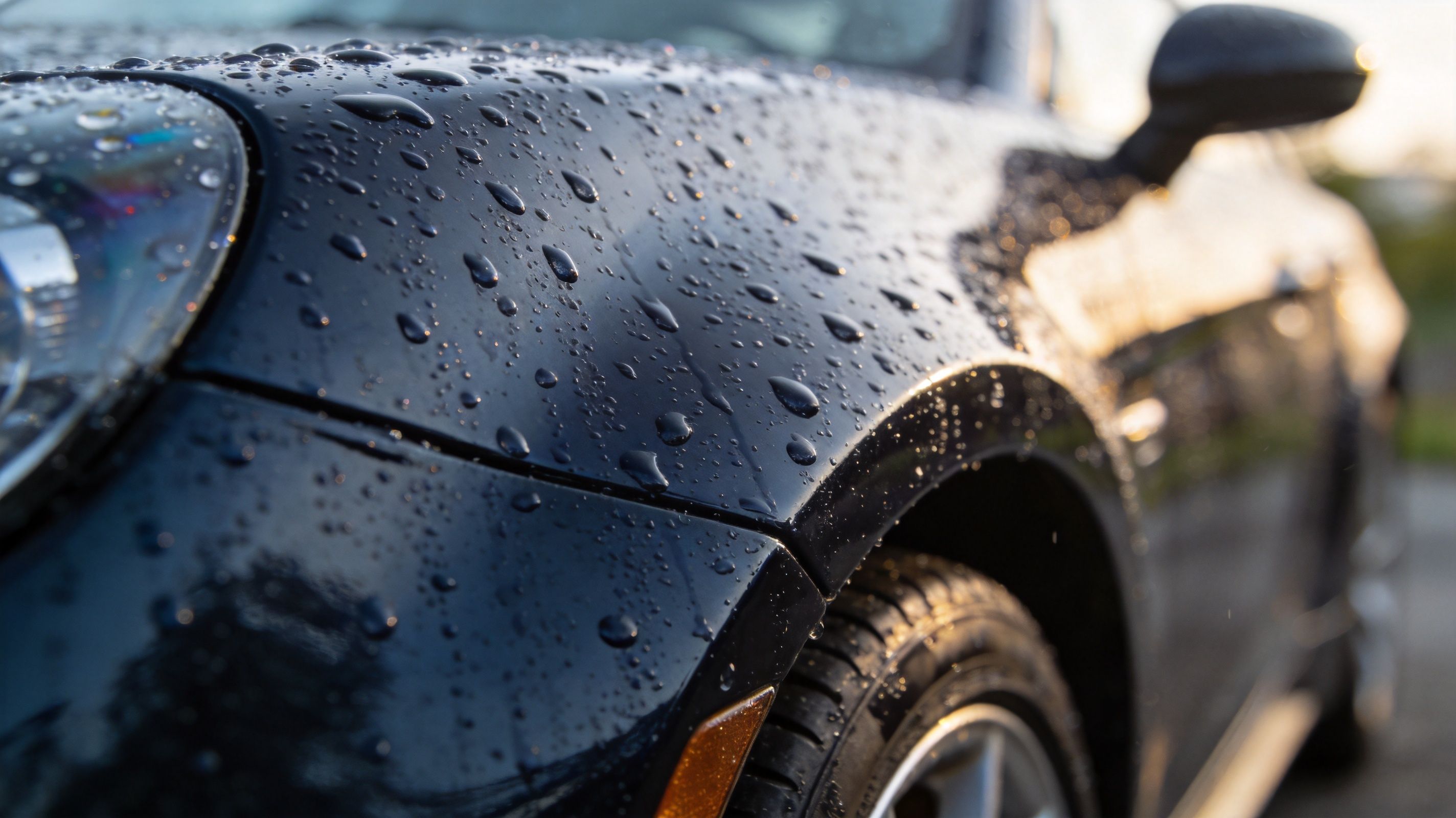
A ceramic coating doesn't replace correction. It preserves the benefit of it. The paint is cleaned, corrected, refined, and then protected so washing is easier and the finish stays glossier between details.
For most owners, the practical benefits are what matter most:
- Easier cleaning: Dirt releases more easily from a slicker surface.
- Better water behavior: Water beads and sheets more readily, which helps during routine maintenance.
- Stronger visual payoff: Corrected paint with protection on top tends to look deeper and sharper.
If you want a straightforward explanation of the service, this guide on what ceramic coating is is a good place to start.
Protection supports resale presentation
Exterior appearance also plays into value conversations, especially if the vehicle has had prior cosmetic issues or bodywork. If that's part of your situation, it's worth reading a guide to diminished value claims so you understand how condition, repair quality, and presentation can affect the way buyers and appraisers see a vehicle.
Corrected paint won't rewrite a vehicle's history, but it does improve how that history is presented.
A quick visual helps show why owners often pair correction with coating:
Don't overlook the rest of the vehicle
A glossy hood next to cloudy headlights is a mismatch. The same goes for polished paint on a vehicle with neglected trim or heavy contamination elsewhere. That's why correction often makes the most sense as part of a broader appearance plan, not a one-panel fix.
The best add-on services aren't random upsells. They protect the time and labor already invested in the paint.
How to Choose a Detailer in Central Pennsylvania
You get a quote from one detailer in Harrisburg, another in State College, and a third mobile detailer who can come to your home in Camp Hill. The prices are not even close. That usually does not mean one person is honest and the others are not. It means you need to find out what service you are buying.
Paint correction is one of those services where the process matters as much as the final gloss. A low quote can mean less prep, less inspection time, fewer polishing steps, or unrealistic promises about what can be fixed. A higher quote can reflect more labor, better lighting and tools, or the added logistics of bringing professional service to your driveway in Central PA.
Ask these before you book
Start with a few direct questions that get past the package name:
- What prep is included? Proper washing, decontamination, and surface prep should happen before polishing starts.
- How do you inspect the paint? Serious detailers use good lighting and test spots to see how the paint responds.
- What level of improvement is realistic? A good answer sounds specific, not flashy.
- Where will the work be done? Mobile correction needs enough space, decent weather, and a plan for sun, wind, and temperature.
- What protection is recommended after correction? Freshly corrected paint should not be left bare if you want the finish to last.
Those answers tell you a lot about whether the detailer is selling a result or just selling a package.
Mobile versus shop in this region
In Central Pennsylvania, convenience has a real cost, but it also has real value. A shop has fixed lighting, stable indoor conditions, and fewer weather interruptions. A mobile detailer has to plan around driveways, shade, power, water access, and the kind of Pennsylvania forecast that can change by the hour.
That does not make mobile service inferior. It means the detailer needs a tighter process.
Good mobile correction work depends on planning. If I am correcting paint outside or at a customer's home, I need to think through timing, panel temperature, available light, and how to keep the work area clean. The customer saves the time of dropping off a vehicle, arranging a ride, and losing a day to shop logistics. For busy owners in Central PA, that trade-off is often worth paying for.
The key question is simple. Are you paying for convenience alone, or for convenience plus skilled correction?
A strong mobile detailer should be able to explain how the job will be done on your property, not just what the finished car will look like.
Look for signs of professionalism
Photos help, but communication usually tells you more. A dependable detailer explains what can improve, what may remain, and why. That matters with deeper scratches, thin paint, repainted panels, and older vehicles that need a careful approach.
Look for clear estimates, realistic timelines, and a willingness to say no when a car is not a good candidate for aggressive correction. In this trade, honesty is a better sign than hype.
Local reputation matters too. If you want to see how customers in the area rate service quality and reliability, browse the Google Business Profile for a Central PA mobile detailing provider.
The best choice is usually the detailer who can explain the trade-offs in plain English, match the service to your vehicle, and do the work without turning your schedule upside down.
If your vehicle's paint has lost its depth, gloss, or clarity, The Mobile Buff makes it easy to get professional help without rearranging your week around a shop visit. Serving Central Pennsylvania with driveway-friendly detailing, transparent service options, and a practical approach to vehicle care, they can help you figure out whether your car needs a light enhancement or a deeper correction. Reach out to schedule service and get your finish looking the way it should again.

