


If you've got a dog that rides shotgun, naps in the back seat, or treats your cargo area like a second bed, you already know the problem. You vacuum the car, step back, and it still looks like the fur won.
That's because pet hair in a vehicle doesn't sit politely on top of the surface. It works its way into seat fabric, floor mats, trunk carpet, seat rails, and every little seam your home vacuum never had to deal with. A pet hair removal vacuum can help a lot, but only if you use the right tools and the right process for automotive interiors.
Why Pet Hair in Your Car Is a Different Beast
A common starting point is the vacuum already owned. That makes sense. It also explains the widespread frustration felt after spending an hour on a car seat and still seeing fur in the stitching.
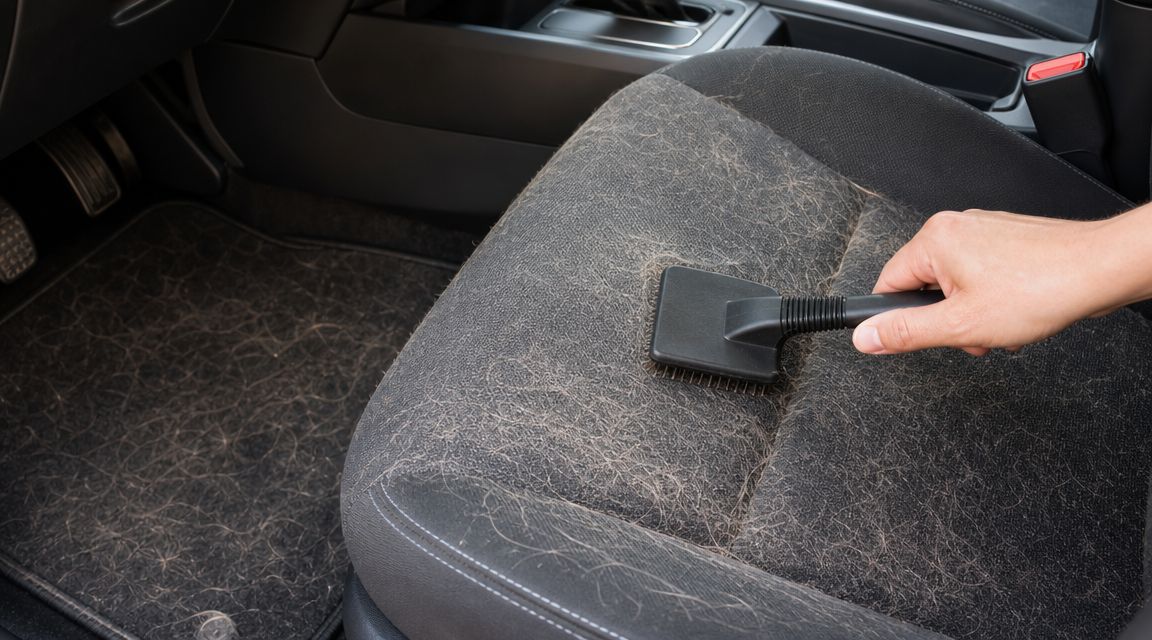
Cars trap hair differently than houses do
Your vehicle has a mix of surfaces packed into a small space. Cloth seats, low-pile carpet, rubber mats, plastic trim, seat tracks, door pockets, trunk liners, and sometimes leather or vinyl all hold hair in different ways. What works on a living room rug often falls short inside a car.
Mainstream vacuum advice usually focuses on floors in the home. Car interiors are different. They include fabric seats, floor mats, and narrow gaps where floor vacuums tend to underperform, and even a strong general-purpose vacuum can still leave hair in seams and textured plastics that need a more specific toolset and technique to avoid manual cleanup afterward, as noted in Good Housekeeping's discussion of pet-hair vacuum use cases.
Pet hair in a car usually isn't a suction problem first. It's an access problem and a surface problem.
The worst spots are rarely the obvious ones
A seat might look clean from the door opening but still have hair packed along the bolster, wedged beside the buckle receiver, and stuck in the carpet where the seat meets the floor. Long hair from double-coated breeds is especially stubborn because it twists into fibers instead of sitting loose on top.
Here's where DIY jobs usually stall:
- Seat seams and stitching: Hair catches and stays put.
- Trunk carpet: It gets ground in by paws, crates, and cargo.
- Floor mat edges: The border holds onto fur better than the center.
- Textured plastic: Hair clings and gathers where a wide vacuum head can't seal.
If you've been wondering why your household vacuum feels powerful in the kitchen but weak in the car, you're not imagining it. Vehicle interiors demand smaller tools, more agitation, and more patience.
Gathering Your Professional Detailing Toolkit
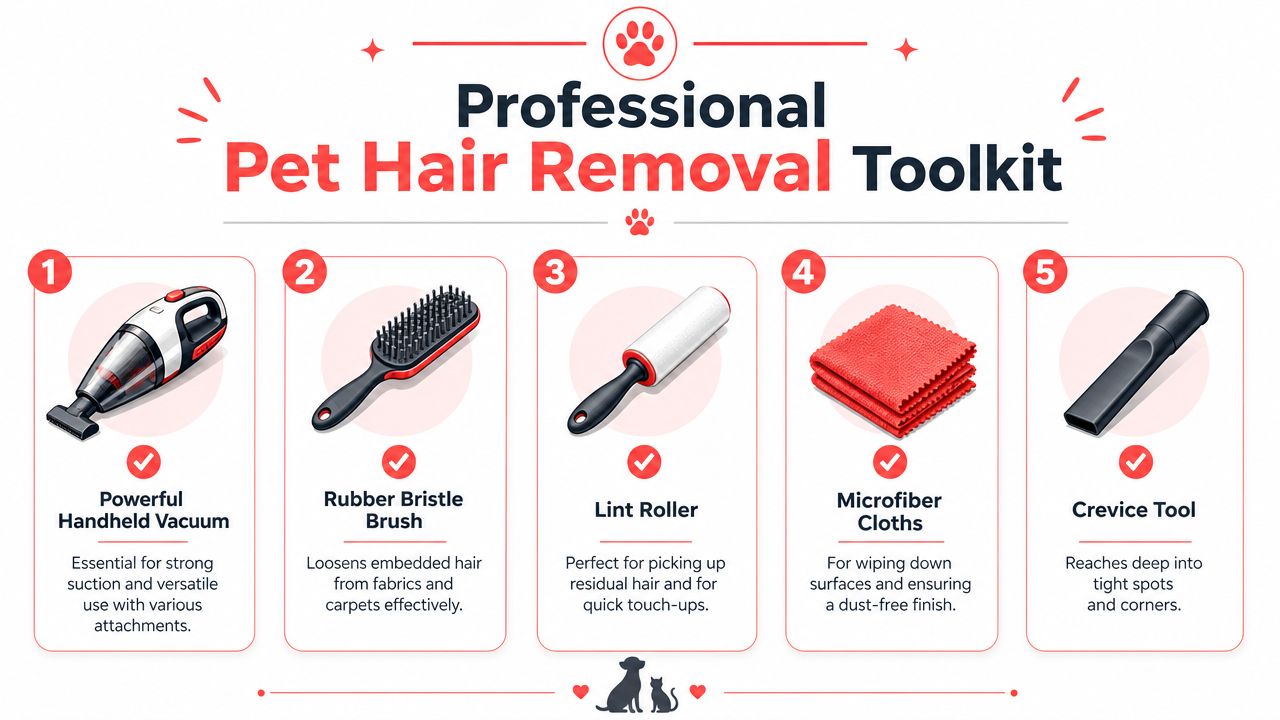
A good pet hair removal vacuum matters, but it's only one part of the setup. In real detailing work, the vacuum doesn't do the first job. It does the second and third job. First, you have to break the hair loose.
What the vacuum needs to do well
When you're choosing a vacuum for vehicle pet hair, skip the marketing language and look at practical use.
In a comparison test, a cordless Shark Stratos ran for just over 10 minutes on max power, while a cordless Dyson V8 lasted less than 7 minutes, and the reviewer found the Shark's dedicated pet tool worked better on pet hair in a car. That's a useful reminder that attachments can matter as much as raw suction, and short runtime on max power can cut a vehicle detail short if you're relying on cordless equipment alone, according to this pet-hair vacuum comparison video.
A car-friendly vacuum should have:
- A real crevice tool: Not a stubby add-on that can't reach under rails or beside the console.
- An upholstery or pet tool: You need something sized for seats, not just floors.
- Manageable runtime or corded consistency: Vehicle cleaning isn't one quick pass.
- Compact handling: Tight spaces punish bulky machines.
If you want a broader breakdown of what detailers look for, this guide on the best vacuum for car detailing covers the decision points well.
The non-vacuum tools that do the heavy lifting
Here, people save or waste time.
- Rubber bristle brush: This is the workhorse on carpet and cloth. It creates drag, bunches hair together, and pulls embedded strands toward the surface.
- Stiff interior brush: Useful on tougher carpeted areas and mats. You need controlled agitation, not random scrubbing.
- Lint roller: Good for the final pass and small leftovers on seats or headliners. For quick touch-ups between deeper cleanings, a reusable option like The Sofa Cover Crafter's lint roller can be handy.
- Microfiber towels: Not for removing embedded hair, but for wiping down trim and lifting loose static cling after vacuuming.
Practical rule: If the hair is woven into fabric, vacuuming first usually wastes time.
A lot of owners want one magic tool. There usually isn't one. The cleanest results come from pairing agitation tools with a vacuum that has the right attachments and enough usable power to finish the job.
The Pro Workflow for Maximum Hair Removal
Professional pet hair removal follows a repeatable pattern. Not because detailers like making things complicated, but because skipping steps leaves hair behind. The workflow is simple: loosen, lift, and extract.
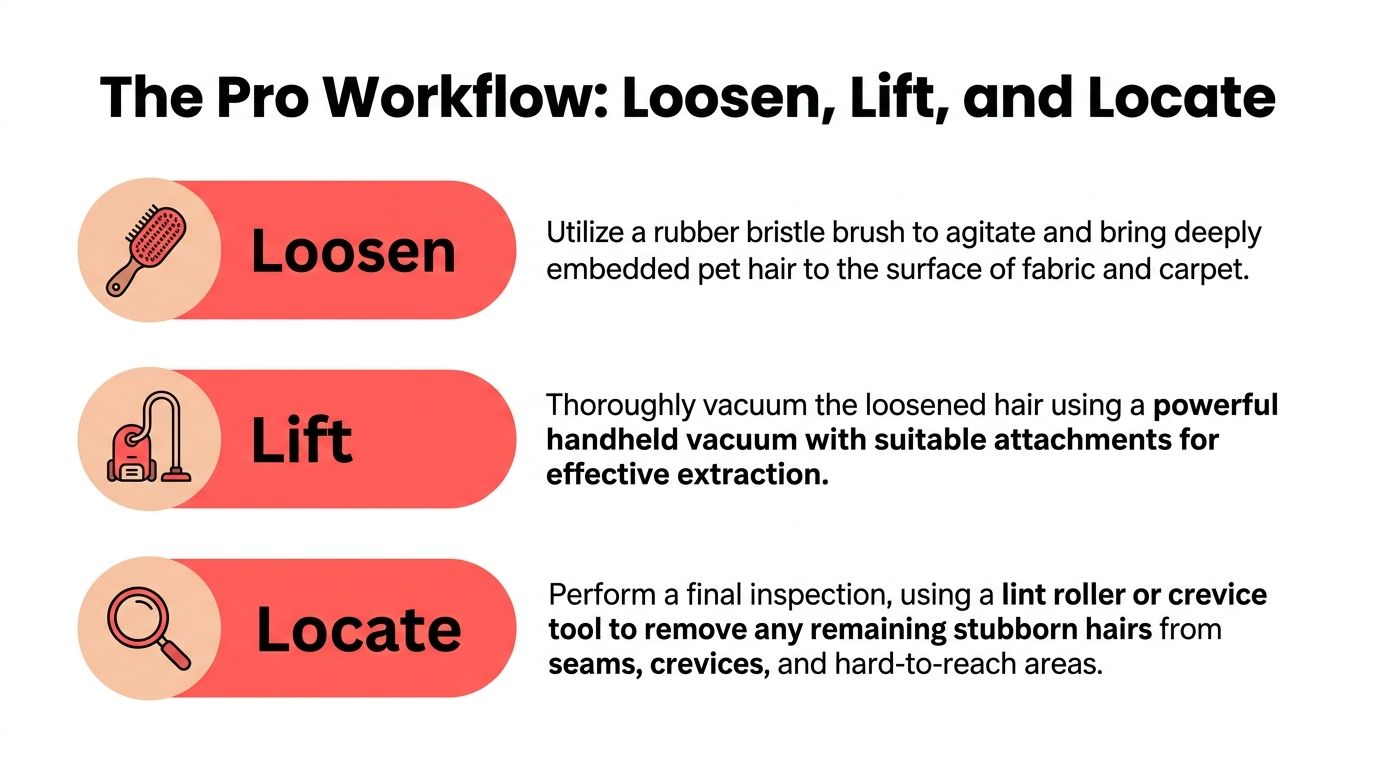
Loosen the embedded hair first
For embedded pet hair in carpet and upholstery, the effective workflow is to use a motorized brush roll or a manual agitation tool first, then move to a crevice or upholstery attachment for vacuuming. Brush agitation lifts hair from fibers, while suction-only cleaning makes more sense on hard surfaces. Adjustable suction also helps because you can back it down on delicate fabric and raise it on denser material, based on this expert guidance on what makes a vacuum effective for pet hair.
Progress begins with that first step. On car carpet and cloth seats, use short, controlled strokes with a rubber brush or another approved agitation tool. Work one section at a time until the hair starts gathering into visible lines or clumps.
Don't rush this part. If the hair hasn't been lifted out of the fibers, the vacuum is trying to pull through the fabric and the hair at the same time. That's inefficient and frustrating.
Lift it with the right attachment
Once the hair is sitting proud of the surface, switch to your pet hair removal vacuum. On seats, an upholstery tool or mini motorized head works well. On flat carpeted areas, use the tool that gives you the best seal without being too wide for the space.
A clean technique looks like this:
- Work in small zones: Finish half a seat bottom before moving on.
- Pull in one direction first: You want to collect the loosened hair, not scatter it.
- Overlap your passes: Missed strips are common around seat contours.
For anyone who likes seeing how equipment choice affects textile cleaning more broadly, this overview of deep cleaning equipment for rugs helps explain why agitation and extraction are usually paired rather than treated as separate worlds.
Extract what hides in the edges
The final pass is the difference between “mostly clean” and “detail clean.” Use the crevice tool around seat brackets, seam lines, seat belt anchors, console edges, and the transition points between plastic trim and carpet.
A lot of lingering pet hair isn't in the middle of the seat. It's hiding where two materials meet.
This is also the stage where you inspect under changing light. Move your angle. Open another door. Look from the rear footwell toward the front seat base. Hair that disappears head-on often shows up immediately from the side.
If you don't want to handle that process yourself, The Mobile Buff's pet hair removal service focuses on those exact trouble areas inside vehicle interiors.
Adapting Your Technique for Different Surfaces
The biggest mistake I see is using one method everywhere. Cars don't reward that. The same move that works on a cargo mat can be too aggressive for a cloth seat and pointless on vinyl.

Carpet and floor mats
Automotive carpet, particularly removable mats, can withstand more agitation than commonly assumed. Consequently, a firmer brush and repeated directional passes are effective. Hair often catches at the base of the fibers, so changing your brushing direction helps bring up what a single pass leaves behind.
For mats, pull them out of the car if you can. It gives you room to work and lets the vacuum tool sit flatter on the surface.
A quick comparison helps:
| Surface | Best first move | Main risk |
|---|---|---|
| Floor mats | Firmer agitation | Wasting time with suction only |
| Cargo carpet | Section-by-section brushing | Missing corners and trim edges |
| Seat base carpet | Small brush strokes | Fighting around rails and brackets |
Cloth seats versus leather and vinyl
Cloth seats need a lighter hand. The goal is to disturb the hair, not rough up the fabric. Short strokes with a rubber brush usually outperform aggressive scrubbing. If you go too hard, you can make the seat look worse even after the hair is gone.
Leather and vinyl are different. Hair usually sits on the surface or bunches in seams. A soft brush, crevice tool, and microfiber follow-up are safer than trying to grind away at it.
Use the least aggressive method that still moves the hair.
Later in the process, a visual demonstration can help with hand position and tool angle:
Tight spaces and overlooked trim
Cup holder edges, seat tracks, door pocket corners, and the gap between the console and seat all collect fur. These areas respond better to precision than force.
Use this checklist when you're finishing:
- Crevice-first around rails: Wide heads leave material behind.
- Check stitching lines twice: Hair blends into dark thread and fabric.
- Inspect textured plastics by touch: Sometimes you'll feel hair before you see it.
- Look under the seat from both sides: One angle almost never tells the whole story.
This is why vehicle pet hair removal takes longer than people expect. You're not cleaning one surface. You're cleaning transitions between surfaces.
When to Call for Professional Help
Some cars are perfectly reasonable DIY projects. Others turn into a half-day battle with a shop vac, a brush, and a sore back.
If the vehicle carries a shedding dog every day, has neglected trunk carpet, or needs to look sharp for resale, a pro detail is usually the more practical move. The same goes for long-haired breeds that drive hair deep into cloth seats and cargo liners. You can remove a lot on your own, but getting to the “nothing left in the seams” stage takes time and discipline.
Good reasons to hand it off
- You need a cleaner finish than DIY usually delivers
- Hair is packed into stitching, seat rails, and trunk carpet
- You don't have the attachments or agitation tools
- Your schedule matters more than spending your weekend vacuuming
There's also the reality that prevention only goes so far. Seat covers help. Regular grooming helps. Quick maintenance between rides helps. But once hair is embedded, maintenance and correction are two different jobs.
If you're local and want someone to handle the hard part, you can check The Mobile Buff on Google and see whether mobile service is the easier answer for your driveway, your schedule, and your vehicle.
Get Your Car Back with The Mobile Buff
A proper pet hair removal job isn't one quick vacuum pass. It's agitation, targeted vacuuming, edge work, seam work, and a final inspection under changing angles. That's why so many DIY attempts stall out at “better” instead of “done.”
Demand for specialized cleaning tools keeps growing. The global pet vacuums market was valued at about USD 1.0 billion and is projected to reach roughly USD 1.8 billion by 2033, with DataHorizzon Research estimating about 8.0% CAGR from 2024 to 2033, which points to steady demand for specialized pet-hair cleaning solutions, according to DataHorizzon Research's pet vacuums market outlook.
If you'd rather skip the trial and error, The Mobile Buff's pet hair removal service brings the tools, process, and elbow grease to your location in Central Pennsylvania. That means less mess in your garage, less frustration, and a better chance of getting your interior back to a condition you enjoy driving.
If your seats, carpets, or cargo area are still holding onto fur after repeated vacuuming, let The Mobile Buff handle it. Book your mobile detailing appointment and get professional pet hair removal done at your home or workplace.

