


You notice it right when you're settling in and your eye catches a brown coffee ring, a pet accident, or a mystery spot that wasn't there yesterday. You try a towel, maybe a store-bought spray, and the mark fades a little, then comes right back once the fabric dries. That's usually the point where an upholstery stain removal service starts to make sense, because the problem isn't the surface mark, it's what's sitting deeper in the fibers.
Why Stubborn Stains Need Professional Attention
A stubborn seat stain is usually a compound problem, with three layers of contamination working together. The color sits on the surface, residue has bonded to the fibers, and the backing or padding may have absorbed part of the spill. Once that happens, rubbing harder rarely helps. It usually spreads the soil, drives it deeper, and leaves a larger, duller patch behind.
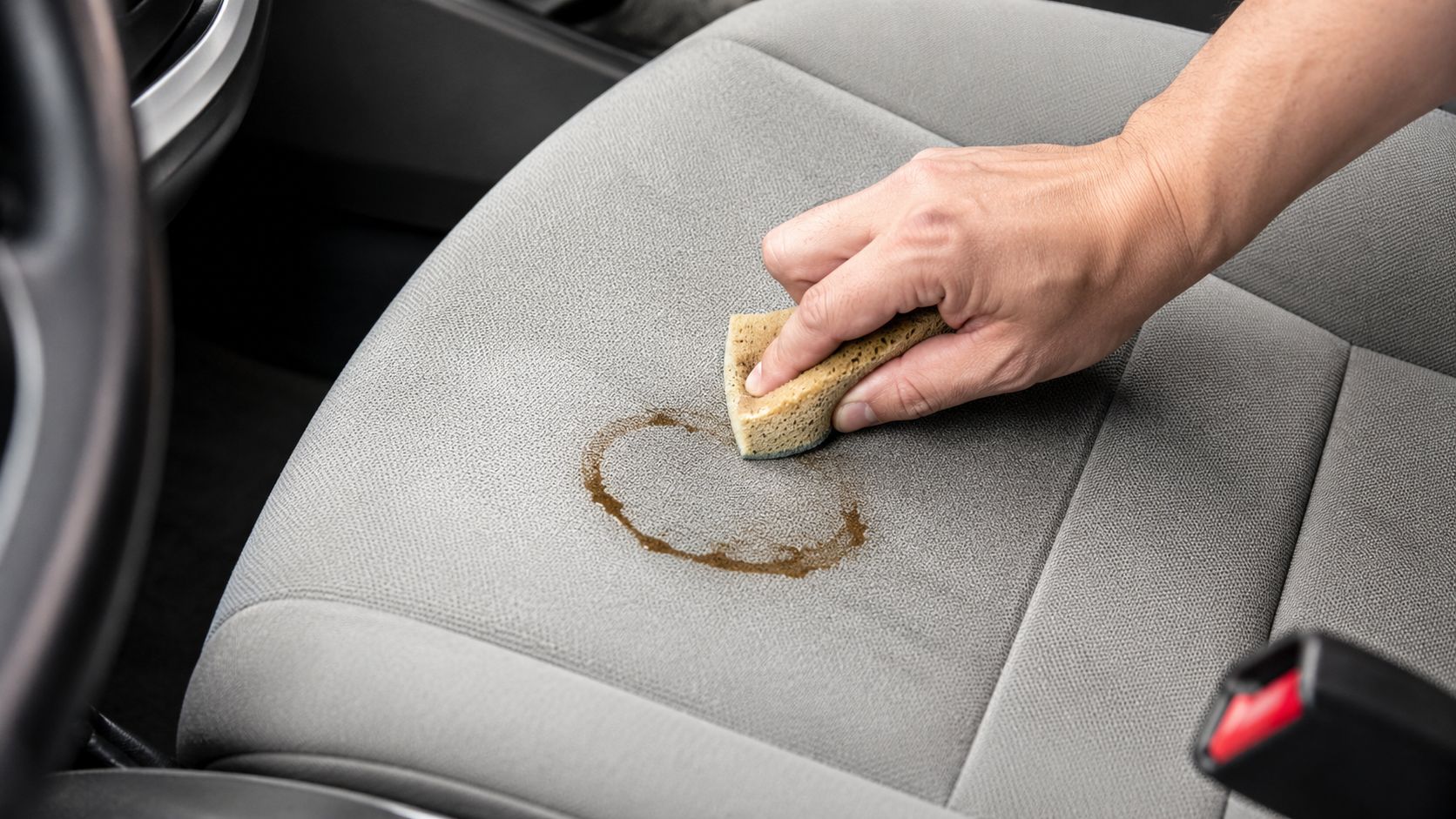
Why DIY often backfires
Home attempts fail for a few predictable reasons. The fabric gets over-wet, the stain is rubbed instead of blotted, or one cleaner gets used on every spill. A professional approach is stricter. It starts with a test in an inconspicuous area, avoids rubbing, and keeps moisture under control because saturation can push soils deeper and cause water rings or fiber damage (professional upholstery cleaning procedure).
Moisture management matters more than many owners expect. Professional work aims to place chemistry at the fiber surface without soaking the backing or filling. Too much liquid slows drying and can make the stain migrate, while too little will not loosen the residue enough for a clean removal.
Practical rule: If the stain got darker after your DIY attempt, you likely moved it, not removed it.
Fabric identification matters too. A synthetic seat, a delicate weave, and a natural fiber can all react differently to the same cleaner. That is why a real upholstery stain removal service does not begin with spraying. It begins with knowing exactly what is stained and what can safely be used on it.
The Professional Stain Removal Process Explained
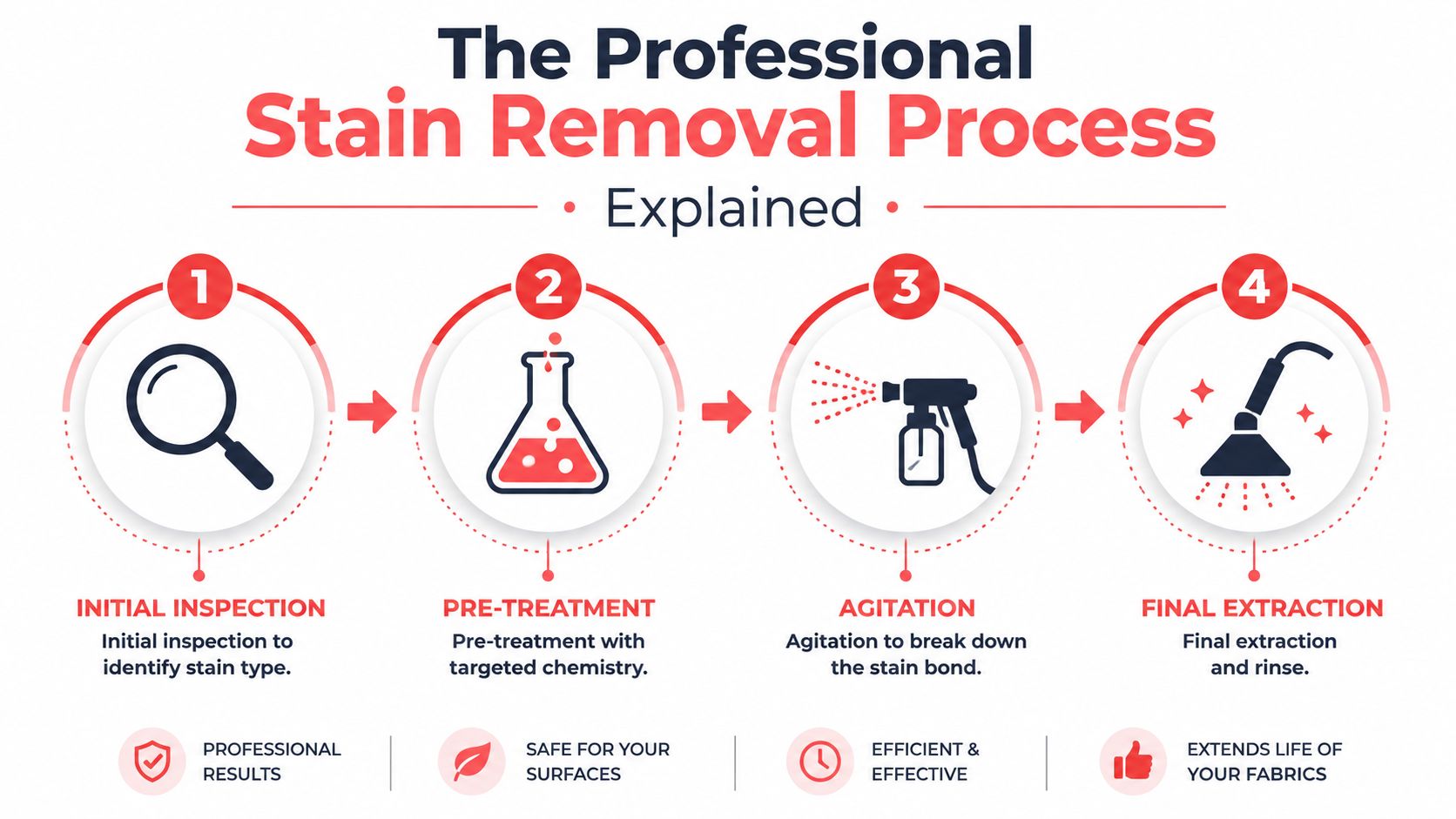
A proper appointment follows a deliberate sequence rather than a random approach. The technician inspects the fabric, identifies the stain type, applies targeted chemistry, allows dwell time, then extracts the residue with controlled moisture. That order is what separates a light surface improvement from a true removal attempt.
Inspection before chemistry
The first step is pre-inspection. A technician checks the fabric type, the stain's age, and whether the contamination looks like food, grease, beverage residue, or something else. That matters because the wrong chemistry can lock a stain in place or affect the fabric finish.
A careful inspection also tells the technician how much moisture the fabric can handle. Some materials tolerate a stronger flush and recovery, while others need a lighter touch to avoid browning, shrinkage, or texture change. A good cleaner reads the seat before a bottle ever comes out.
Pre-treatment and dwell time
Professional procedures commonly use a colloid stain remover before the main cleaning step, then allow it to sit for several minutes so the chemistry can loosen bonded residue before extraction or vacuuming. That dwell time is not wasted time. It is the period where the product starts breaking the bond between the soil and the fiber.
The product choice matters too. A technician may spot-treat the stain edge first, then work inward so the mark does not spread. That keeps the stain under control while the chemistry does its work.
Low-moisture extraction
The extraction step is where amateurs usually overdo it. The fabric gets cleaned with enough liquid to lift contamination, not enough to flood the backing. That keeps the soil from wicking back up as the seat dries and helps the fabric dry more evenly.
Controlled moisture also protects the filling and foam underneath the upholstery. If water gets driven too deep, drying slows down and odor can linger. Professional work aims to remove the stain without leaving the seat soggy.
The best-looking seat isn't always the one that got scrubbed the hardest, it's the one that stayed controlled from start to finish.
For a closer look at how technicians think about stain removal products, see this best stain remover for car upholstery guide. And if you want to see the process in motion, this walkthrough is helpful.
Matching Chemistry to Stain Type
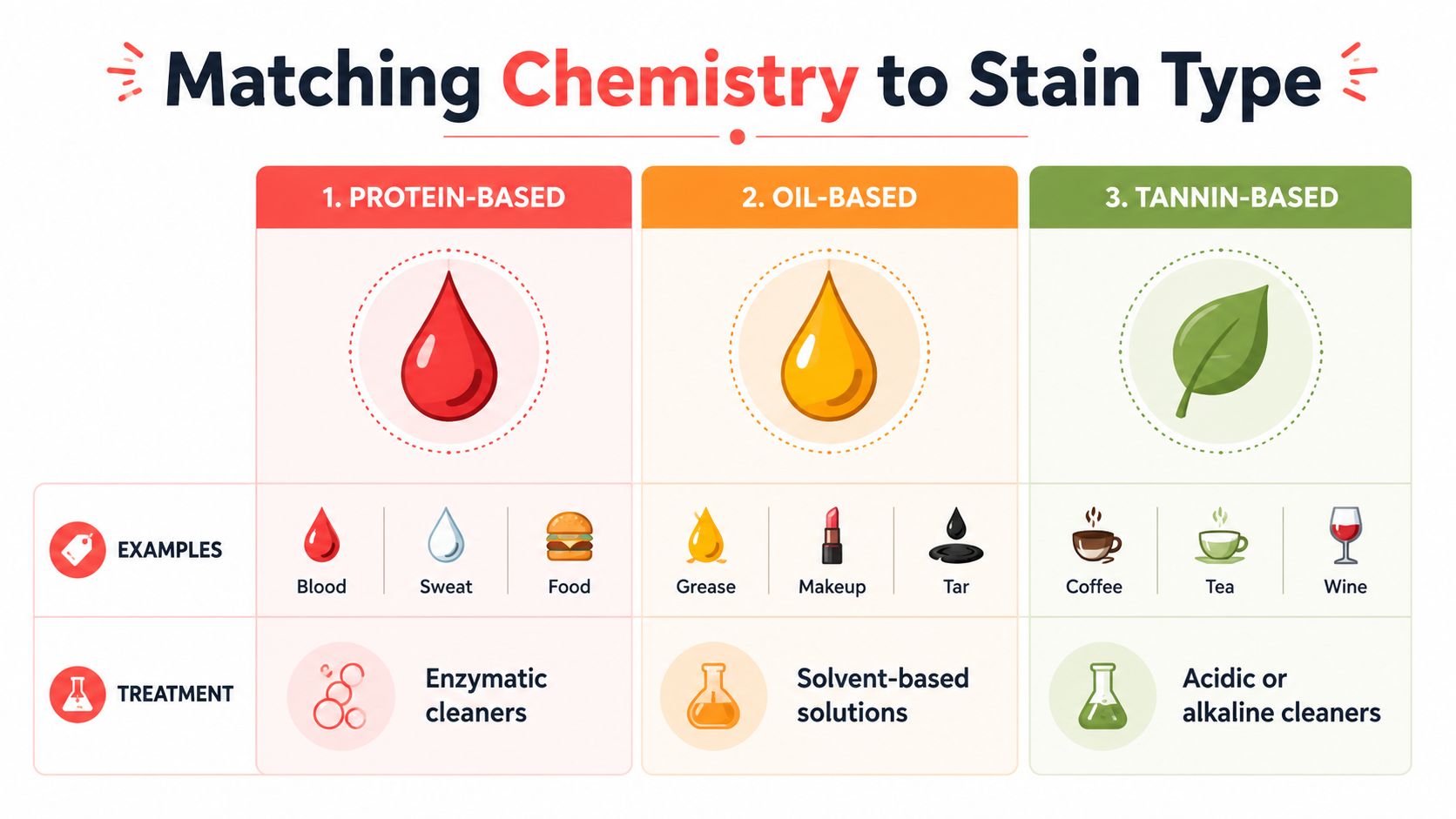
Not every stain responds to the same product, and that's where a lot of DIY jobs go sideways. A protein stain, an oil stain, and a tannin stain all behave differently once they hit upholstery fibers. Matching the chemistry to the soil type is the core skill behind professional stain removal.
Protein stains need different handling
Blood, sweat, and many food stains are protein-based. Industry guidance points to enzyme cleaners and cold-water extraction for this category because heat can set the stain permanently (professional stain removal techniques). If somebody hits a protein stain with hot water or aggressive scrubbing, the residue can bond harder to the fiber.
Oil stains need emulsification
Grease, cosmetics, and similar marks are oil-based. These respond better to solvent or degreasing chemistry followed by extraction, not wiping. The logic is simple. Oil has to be broken apart and physically removed, not just spread around.
Tannin stains need targeted spotters
Coffee, tea, and wine fall into the tannin category. Those stains are usually handled with acidic or pH-neutral spotters before rinsing. If the cleaner is too harsh, it can change the fabric color or leave a halo around the original spot.
A technician asks what caused the stain because that answer changes the whole treatment path. Timing matters too. Fresh residue is easier to release, while older stains often need repeated dwell and extraction cycles. That's one reason generic sprays underperform. They treat every stain as if it were the same.
Understanding Pricing and What Drives Cost
Upholstery cleaning is usually priced per piece, and stain treatment often appears as a separate line item. In the U.S., average upholstery cleaning is about $174 per piece, with typical ranges of $120 to $232, while stain removal or spot treatment commonly adds $25 to $80 per job according to national pricing benchmarks (upholstery cleaning cost guide). That structure tells you something important. Stain removal is labor and chemistry specific, not just a quick spray.
| Typical Upholstery Stain Removal Pricing | Average Cost | Typical Range |
|---|---|---|
| Upholstery cleaning per piece | $174 | $120 to $232 |
| Stain removal or spot treatment add-on | N/A | $25 to $80 |
What pushes the price higher
Delicate fabric usually needs more caution. Older stains often need more than one round of treatment. Multiple stain types on the same seat can also increase the time on site, because each one may need a different cleaner and more extraction passes.
Some providers bundle stain removal into a fuller interior service, while others itemize it separately. A bundled visit can make sense if the seats, carpet, and high-touch areas all need attention. If the stain is isolated, a targeted service may be the cleaner choice.
For a budgeting tool that helps you compare options before booking, try the instant pricing calc. It's a practical way to line up the service with the job instead of guessing from a phone quote.
How to Prepare for Your Stain Removal Appointment
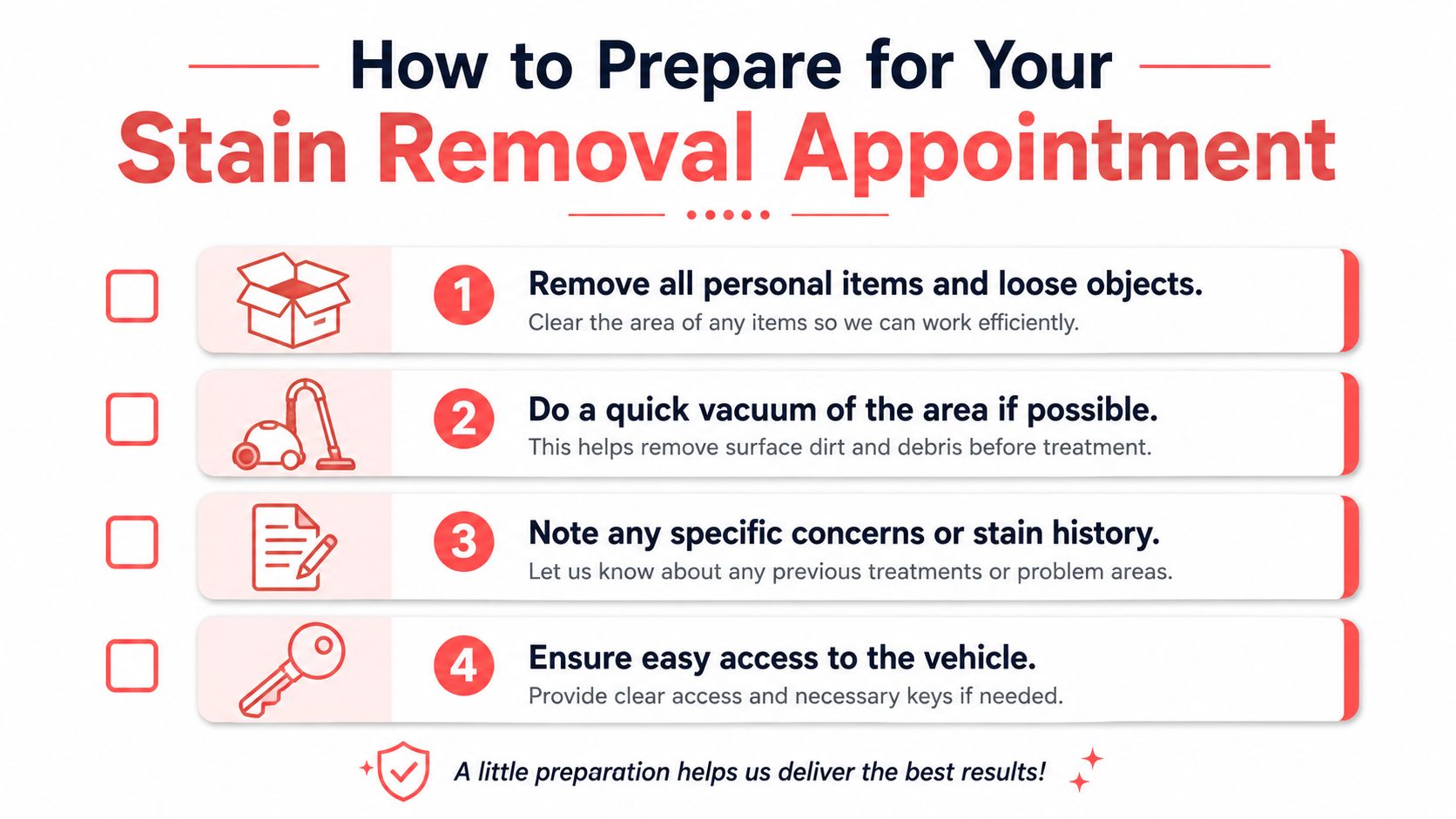
A little prep makes the visit smoother and helps the technician start with the right chemistry. Remove personal items, loose trash, and anything that blocks access to the seats or floor area. If you know what caused the stain, share it, because coffee, grease, and pet accidents don't get the same treatment.
Simple prep that helps
A quick vacuum helps clear loose grit before chemistry goes in. That matters because abrasive debris can interfere with stain removal and leave the fabric looking uneven. Parking in a shaded or covered spot is also smart when it's available, since it gives the technician a more controlled workspace.
If you schedule service for a fleet, family vehicle, or recurring interior maintenance, a cleaning service scheduling guide can help you think through timing and appointment management. For do-it-yourself spot care between visits, this how to clean car seats at home guide is worth reading, as long as you keep expectations realistic.
Most professional stain removal jobs need drying time after the cleaning step. The exact timeline depends on fabric, airflow, and how much treatment the seat needed. Plan to leave the area alone after service so the fibers can dry evenly and the results can settle in cleanly.
When Professional Stain Removal Is Not Worth It
Not every stained seat deserves a service call. If the furniture is heavily damaged, low value, or already near the end of its life, replacement or reupholstery can be the smarter choice. Independent consumer guidance also points out that some stains are permanently bonded or only partially reversible, which is why pre-inspection and fabric suitability checks matter so much (consumer stain removal guidance).
The honest decision point
A reputable provider won't promise a perfect outcome on every job. Delicate fabrics can limit what chemistry is safe, and set-in stains may only improve rather than disappear. That's not a weakness in the service, it's the reality of working with fibers, dyes, and age.
If you're trying to decide whether to clean or live with the mark, it helps to look at the whole piece, not just the stain. A cheap chair with old damage may not justify professional treatment. A newer seat with a single isolated spill often does.
For more general fabric-care context, these clean fabric sofa tips can help you judge whether a piece is worth saving. The key is honesty. The right provider should tell you when the job makes sense and when it doesn't.
Why Central PA Drivers Choose The Mobile Buff
In Central Pennsylvania, convenience matters as much as results. The Mobile Buff brings mobile detailing to your driveway in Harrisburg, Mechanicsburg, Carlisle, Newport, and surrounding Dauphin and Perry County areas, so you don't have to rearrange your day around a shop visit. That matters when the stain is on a daily driver, a family vehicle, or a work truck that can't sit around.
The service lineup includes interior work, exterior washes, headlight restoration, and stain-focused interior care, with flexible packages that can be paired to the job. If you're comparing local options, it's also worth looking at how providers present their service pages and booking flow, especially if you care about visibility and ease of scheduling, as discussed in these AI-driven carpet cleaning SEO strategies.
What stands out most is straightforward service, electronic billing, and appointments available seven days a week from 7am to 3pm. For drivers who want a practical, on-site upholstery stain removal service without dragging the vehicle across town, that kind of setup keeps the process simple.
If your seat stains are bothering you, book a visit with The Mobile Buff and let a mobile detailer handle the fabric with professional chemistry and controlled moisture. You'll get a clear assessment, a service plan that fits the stain, and on-site help without the shop-day hassle.

