


A lot of people reach for car interior cleaning wipes at the exact same moment. You slide into the driver's seat, notice dust glowing across the dash in the sun, fingerprints all over the screen, and a fresh spill in the cup holder. You don't want a full detailing session. You want the mess gone before the next errand.
That's where wipes earn their spot in the glove box. They're quick, easy to carry, and sold in portable retail packs, including a 30-count lint-free format shown in a mainstream retail listing for on-the-go use. For busy drivers, parents, pet owners, and anyone who eats lunch in the car more often than they'd like to admit, that convenience matters.
But convenience is where most advice stops. A professional detailer sees wipes differently. They're useful, but only when you use the right wipe on the right surface, in the right way, and with realistic expectations. Used well, they keep an interior presentable between details. Used poorly, they can leave streaks, residue, or surface issues you didn't have before.
The All Too Common Mess and the Quick Fix
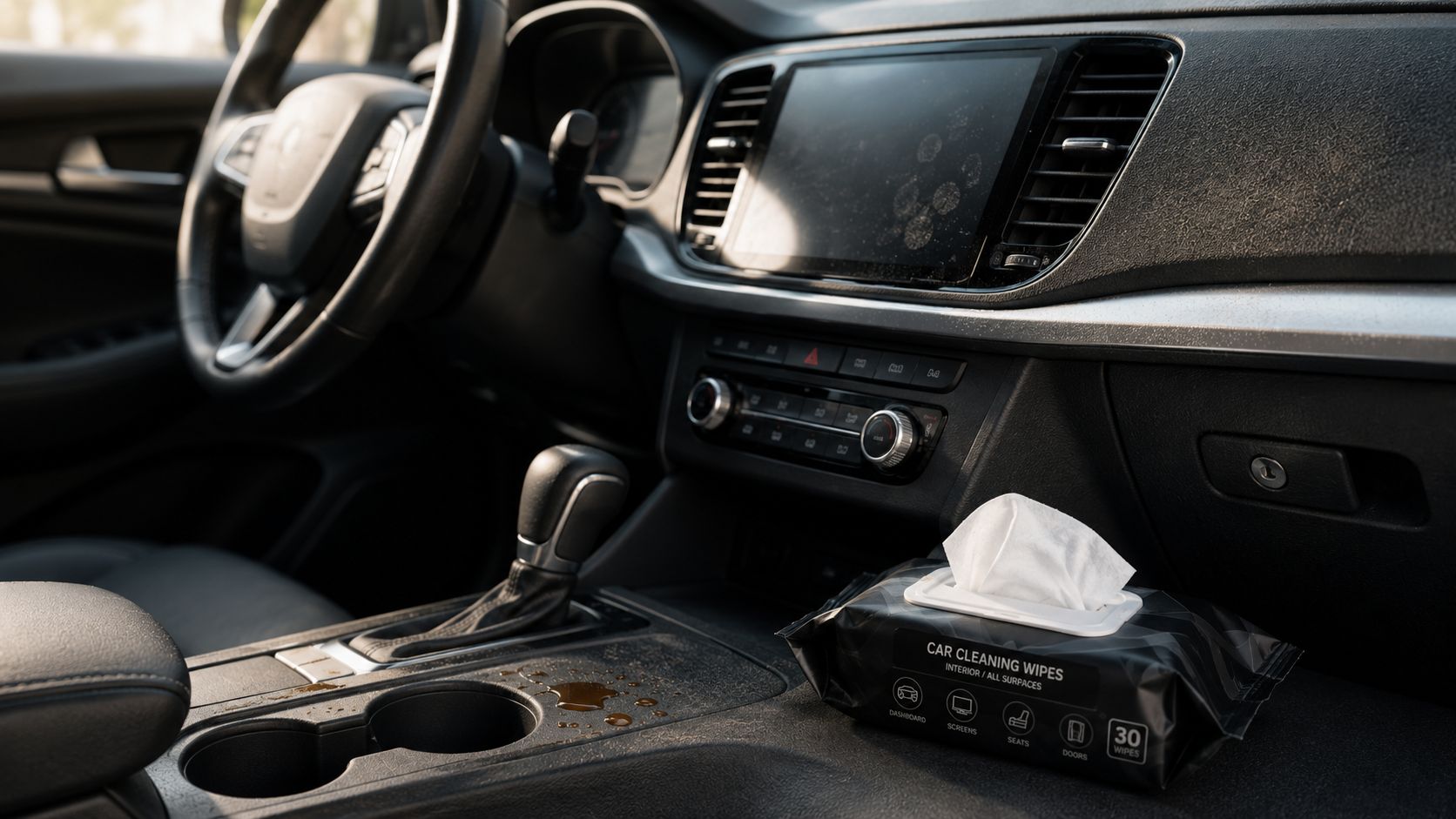
A common scene in mobile detailing is a car that isn't trashed. It's just constantly lived in. There's coffee on the console edge, dry dust packed around the shifter, a sticky ring in the cup holder, and a touchscreen covered in fingerprints from music changes and map taps.
That kind of mess is exactly why wipes became such a normal part of car care. They fit the rhythm of real life. You can keep them in the glove box, pull one out at a gas stop, and clean up the obvious problem before it turns into buildup.
Why people rely on wipes
Wipes solve small messes fast. That's their lane.
- Fresh spills: Good for catching a drink splash before it dries along the trim.
- Dusty hard surfaces: Handy on dashboards, center consoles, and door panel tops.
- Touchpoint grime: Useful on steering wheel buttons, cup holder lips, and trim around handles.
- Daily reset: A quick pass makes the cabin look cared for even when life is busy.
Practical rule: If the mess is fresh, light, and sitting on a hard surface, a wipe usually makes sense.
What wipes don't do is erase neglect. If grime has settled into texture, if residue is trapped in seams, or if the issue is odor, staining, or pet hair, a wipe-down only improves the look from a few feet away. It doesn't fully correct the problem.
That's the difference professionals care about. A wipe is a quick fix tool, not a miracle product.
What Are Car Interior Wipes Really For
The best way to think about car interior cleaning wipes is simple. They're for maintenance, not restoration.
Professional guidance treats interior wipes as a targeted tool for routine upkeep, not a replacement for real cleaning. One industry source recommends a basic interior clean at least once a month to prevent buildup and notes that wipes work best as fast maintenance between deeper services, especially on spots like dashboards, vents, cup holders, and seams, as outlined in this professional guide to interior wipe use.
What they do well
Their biggest strength is control. A pre-moistened wipe gives you enough product to remove light grime without spraying cleaner around buttons, display edges, and tight trim gaps.
That matters in modern interiors, where one cabin can combine plastic, vinyl, leather, piano-black trim, screens, and electronics. Less loose liquid usually means fewer mistakes.
A wipe is a solid choice for:
- Removing light dust from hard surfaces before it turns greasy
- Cleaning fresh fingerprints off glossy panels
- Tidying cup holder rims and console tops after normal daily use
- Handling quick touch-ups before work, school pickup, or a weekend drive
What they don't replace
A deep interior clean uses different tools and a different goal. In professional work, the job often involves vacuuming crevices, agitating textured surfaces, extracting contamination from fabric, cleaning around buttons and vents with detail brushes, and treating specific materials with the right products.
A wipe can't do the same kind of work because it doesn't have the reach, dwell, agitation, or extraction.
Here's the honest dividing line:
| Situation | Wipes work | Wipes fall short |
|---|---|---|
| Light dust on dash | Yes | |
| Fresh fingerprints on trim | Yes | |
| Sticky residue in textured plastic | Sometimes | Often |
| Dirt packed into seams and vents | Yes | |
| Set-in fabric staining | Yes | |
| Lingering odor | Yes |
Wipes help you stay ahead of mess. They don't undo months of buildup.
If you use them with that expectation, they're useful. If you expect showroom results from a disposable wipe, you'll be disappointed.
Choosing the Right Wipe for Your Car Interior
The biggest mistake people make is assuming one wipe is safe for everything inside the vehicle. It isn't.
Industry guidance is clear that there's no all-purpose cleaner safe for all interior surfaces, and independent testing has shown that wipe performance can vary by product and by task. Experts also advise testing on an inconspicuous area first because ingredients can change gloss, residue, or the appearance of a material, as noted in this Auto Express review of interior wipe performance and compatibility.
Match the wipe to the material
A modern interior mixes more surfaces than people realize. Even within the front cabin, you may have soft-touch plastic, vinyl, leather seating, coated trim, clear gauge covers, glossy screen surfaces, and glass.
That's why surface compatibility matters more than “strong cleaning power.”
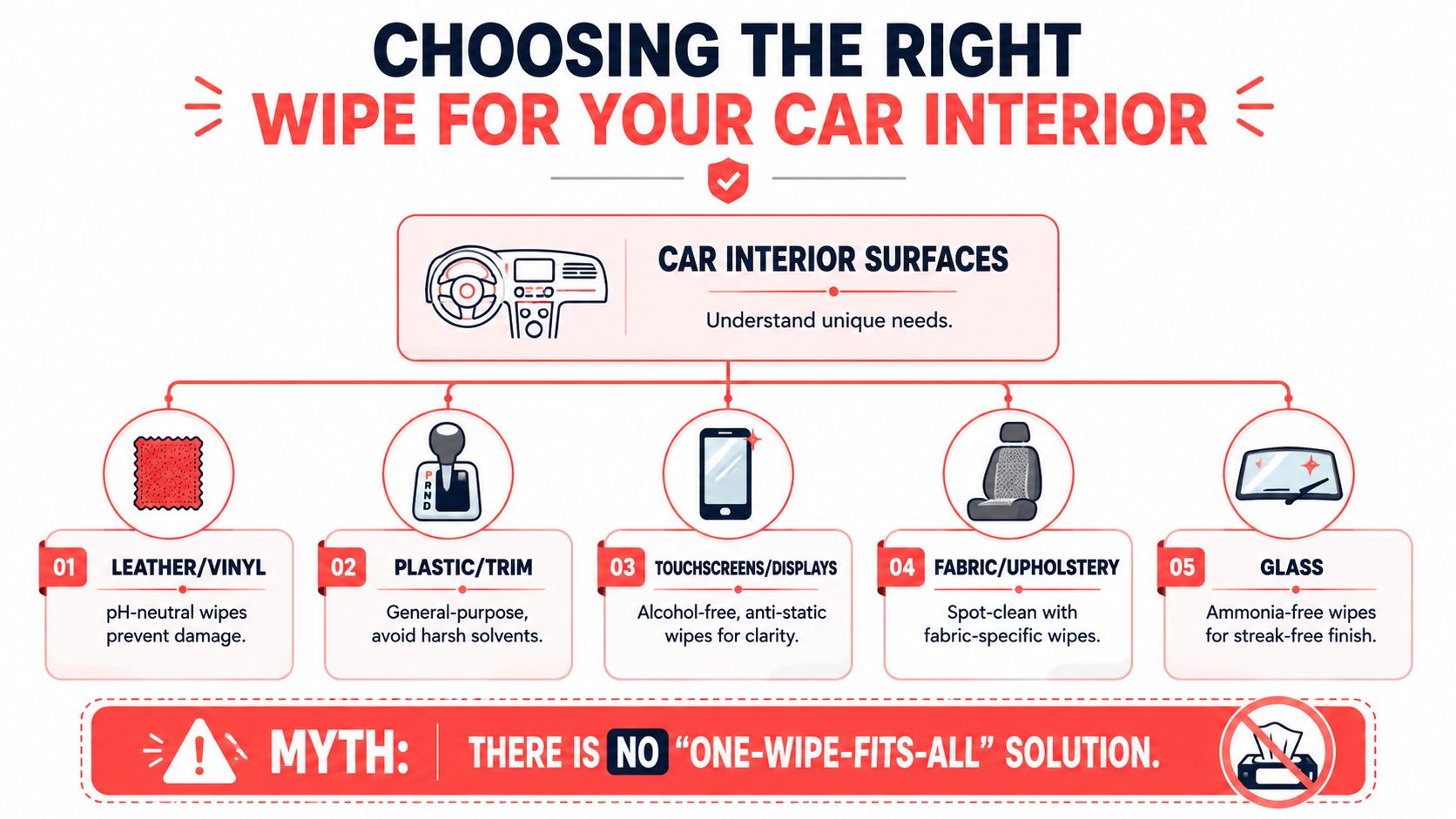
- Leather and coated leather: Use wipes that specifically say they're suitable for leather. Avoid guessing. If the label doesn't mention leather, don't use it there.
- Plastic and vinyl trim: Many general interior wipes are designed for these surfaces, but results still vary. Some leave a clean, natural finish. Others leave shine or residue.
- Touchscreens and glossy displays: Be careful here. These surfaces show streaks immediately, and too much moisture near edges and seams is never a good idea.
- Glass: Use glass-safe products when the label confirms it. Interior wipes that work fine on trim can leave a frustrating film on windows.
- Fabric and upholstery: Wipes have limited value here. They may help with a tiny fresh spot, but they aren't a real fabric cleaning method.
What to look for before you buy
The label should answer two questions. What surfaces is this for, and what finish does it leave behind?
If the product makes broad claims but doesn't clearly name the surfaces, skip it. The same goes for anything that sounds like it's trying to do every job in the car with one formula.
For readers who want a better cloth setup for routine upkeep, this guide to choosing a car interior cleaning cloth pairs well with wipe use because the cloth you follow with can affect the final finish almost as much as the cleaner itself.
The right wipe doesn't just clean. It avoids creating a new problem.
A simple selection mindset
Think in categories, not brands.
- Hard trim wipe for plastic and vinyl
- Screen-safe wipe for displays and glossy panels
- Leather-safe product when leather is involved
- Glass-specific cleaner when visibility matters
That sounds less convenient than a single canister. It is. It's also a lot safer.
The Professional Method for Using Cleaning Wipes
Users don't get poor results because wipes are useless. They get poor results because they use them on dirty surfaces without prep, scrub too aggressively, or keep wiping long after the sheet is loaded with grime.
The process matters.
The wipe-down sequence that works
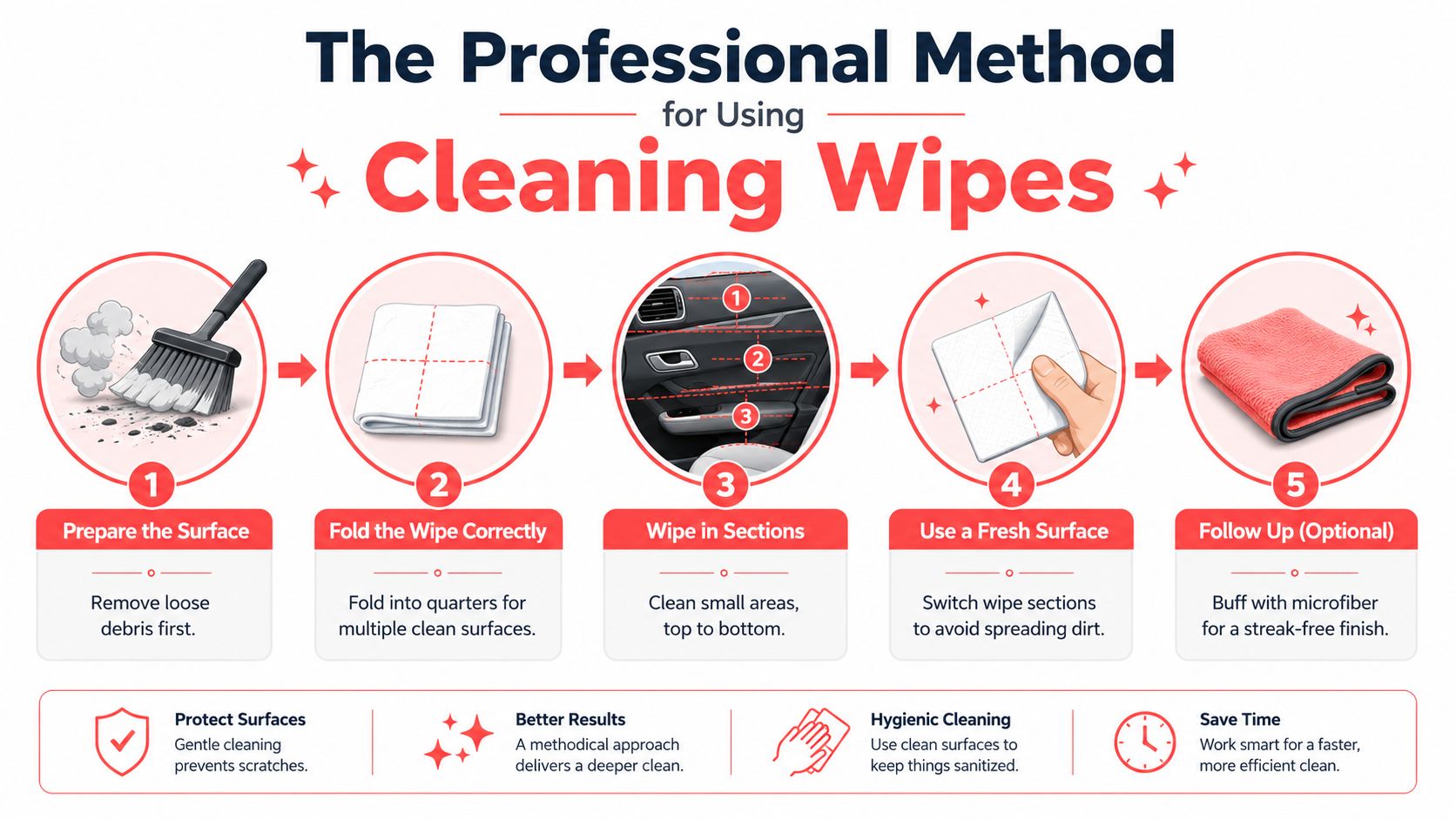
Start by removing loose debris. If dry grit is sitting on the panel, don't grind it around with a wet wipe. A quick vacuum, soft brush, or dry microfiber pass makes the wipe step cleaner and safer.
Then work like this:
Pick a small area first
Don't attack the whole dash at once. Clean one section, then move on.Fold the wipe
Folding gives you multiple usable surfaces instead of one dirty flat sheet.Use gentle, even strokes
Product guidance for hard, nonporous surfaces recommends gentle, even wiping and letting the surface air-dry, as explained in this Clorox guide to disinfecting car surfaces.Turn to a fresh side often
Once a section of the wipe looks dirty, stop using that side.Buff if needed with a clean microfiber towel
This is the step many people skip. A dry microfiber evens out moisture, removes leftover residue, and improves the final look.
Here's a quick visual walkthrough before you try it yourself.
Where to be especially careful
Use wipes only on hard, nonporous surfaces unless the product label clearly says otherwise. That's especially important around screens, switchgear, and instrument clusters.
For readers building a better at-home routine, a solid car detailing checklist helps keep wipe-downs in the right place instead of treating them like a full detail.
If you're using a product for disinfecting rather than basic cleaning, the surface has to stay visibly wet for the full label-specified contact time, which is often several minutes. In practice, that means a quick swipe and immediate dry-off may clean light smudges, but it won't meet disinfecting directions.
Use wipes to lift light soil. Don't use them like a scrub pad.
Wipes vs Professional Detailing What Wipes Cant Do
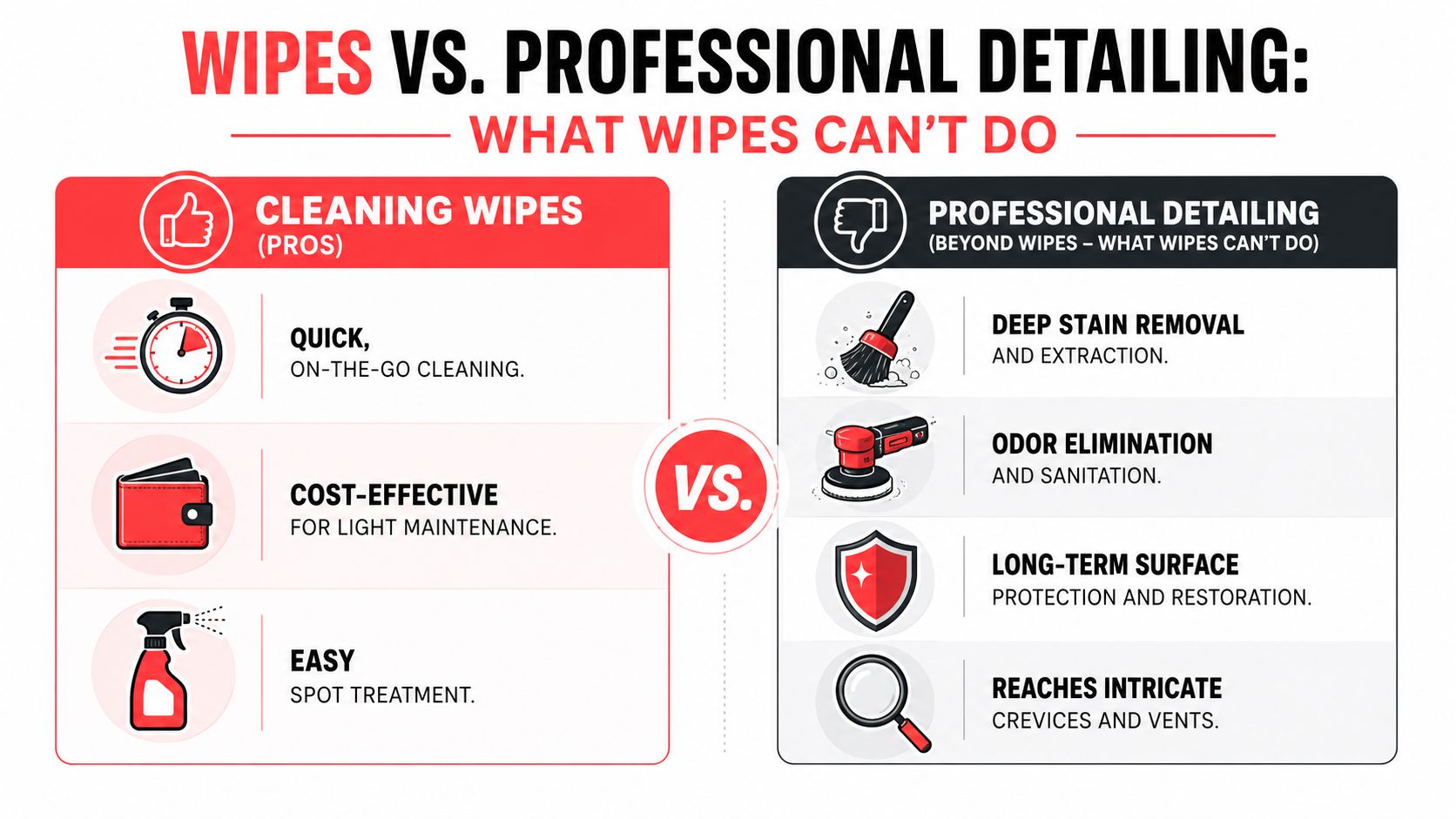
Wipes are great for small visible messes. Professional detailing handles the problems that stay behind after the wipe-down looks “good enough.”
That difference matters because many interiors don't look dirty from the doorway. They look dirty once you open the console, inspect the seams, smell the fabric, or run a finger across textured trim.
What wipes can handle
A wipe-down is useful when the problem is light and recent.
- Surface dust: Good for keeping dash tops and console surfaces presentable
- Minor smudges: Helpful on plastic trim, cup holder edges, and touchpoints
- Between-service upkeep: Useful when you're maintaining a car that already gets proper cleaning
What wipes can't fix
A professional interior detail goes after contamination below the surface and inside the places hands can't reach well.
| Issue | Wipes | Professional detailing |
|---|---|---|
| Fresh console spill | Good option | Usually not necessary |
| Fingerprints on hard trim | Good option | Usually not necessary |
| Set-in seat stain | Limited | Appropriate |
| Pet hair embedded in fabric | Poor fit | Appropriate |
| Odor that keeps returning | Poor fit | Appropriate |
| Dirt packed in vents, seams, and cracks | Limited | Appropriate |
The biggest misses I see from DIY wipe use are these:
- Stains in fabric and carpet: Wipes can smear the top layer but won't extract what's below.
- Persistent odor: If the cabin still smells off after surfaces look clean, the source usually isn't sitting on the dash.
- Heavy buildup in crevices: Console seams, vent slats, stitching lines, and seat tracks need more than a disposable sheet.
- Surface restoration needs: Faded trim, worn areas, and neglected interiors need a more complete process.
If you're in Central Pennsylvania and your car has crossed that line, it makes sense to check a local detailer's availability and reviews before the mess gets worse. You can see our service area and customer feedback on our Google Business Profile.
When Your Car Needs More Than a Wipe Call The Mobile Buff
Some interiors only need a quick reset. Others need proper correction.
If you're dealing with pet hair that won't lift out, sticky spots that keep grabbing dust, a smell that comes back after every air freshener, or seats and carpets that still look dirty after wiping the hard surfaces, it's time to move past DIY maintenance. That's where a full interior detailing service makes sense, especially when the work includes stain treatment, odor removal, and the tools needed to reach seams, vents, and fabric contamination properly.
Convenience matters too. Busy vehicle owners already juggle enough appointments, and if you're trying to simplify scheduling in general, it can help to compare leading scheduling tools so you're not wasting time chasing confirmations and reminders across different platforms.
For drivers around Harrisburg, Mechanicsburg, Carlisle, Newport, and nearby areas, The Mobile Buff provides mobile interior detailing, stain removal, pet hair removal, and odor removal with professional-grade Bio Bomb treatment. That's a different level of service than a canister of wipes because the goal isn't to freshen the obvious surfaces. The goal is to clean the interior thoroughly enough that it looks, feels, and smells right again.
If your car only needs a quick touch-up, wipes are a smart tool. If it needs a real interior reset, book a mobile detail with The Mobile Buff and get professional cleaning brought right to your driveway.

