


You notice the smudge on the screen, the dust sitting in the vents, and the fingerprint haze on the piano-black trim. So you grab whatever is nearby. An old T-shirt, a paper towel, maybe the same rag you used in the trunk last week. A minute later, the dust is streaked, the glass looks worse, and that glossy trim suddenly shows fine marks in the sunlight.
That's how a lot of interior damage starts. Not with aggressive scrubbing, but with the wrong cloth.
A proper car interior cleaning cloth isn't just a wipe-down accessory. It's part of the tool selection that decides whether you lift dust cleanly or drag grit across soft trim. It decides whether your windshield flashes clear or streaks in afternoon sun. It decides whether your touchscreen stays clean or develops that rubbed, hazy look people mistake for wear.
More Than Just a Rag The Right Cloth Matters
A customer will often point at a hazy screen or light scratches on piano-black trim and assume the material is fragile. Sometimes it is. Just as often, the problem started with a bad towel choice.
Interior work is all about surface control. One cabin can have hard textured plastics, soft clear gauge covers, coated leather, glossy trim, navigation screens, fabric seats, Alcantara-style inserts, and glass within arm's reach of each other. I do not treat those surfaces with one catch-all rag, because they do not fail the same way. A cloth that works fine on a door panel can leave lint on glass, drag on a screen, or put fine wash marks into gloss trim.
Microfiber became the standard because the fibers are split small enough to grab and hold soil instead of just pushing it around, as the International Carwash Association explains in its microfiber care guidance. Inside a vehicle, that matters more than people think. You need a towel that picks up dust and light residue with control, without over-wetting seams, loading up a screen with cleaner, or leaving debris behind.
A lot of drivers buy cloths the same way they buy kitchen towels. By pack size, softness in the package, or price. That usually leads to lint, streaks, and that rubbed-looking finish on delicate trim. If you are comparing general-purpose options first, resources on essential cleaning supplies for homes can help you spot basic quality, but automotive interiors demand a more selective approach.
Here's where the trade-off shows up in real work. Plush towels feel safer, but they can be too grabby on screens and gloss panels. Thin bargain towels slide easily, but many do not trap grit well enough to protect soft surfaces. The right result comes from matching the towel to the material and the job, not from buying “microfiber” as a category.
Cheap cloth choices usually create four visible problems:
- Lint on interior glass, especially along the windshield edges
- Smearing on screens and glossy trim, where residue gets spread instead of lifted
- Fine marring on piano-black and cluster lenses, caused by dry wiping or trapped grit
- Patchy cleaning on leather and vinyl, where body oils stay behind and dull the finish
That is why professionals sort towels by task before they start. Glass cloths stay for glass. Low-nap towels stay for screens and glossy trim. Softer general interior towels handle leather, vinyl, and plastics. If you are putting together your own supplies, this guide to a car interior cleaning kit shows how the cloth choice fits into the rest of the process.
A simple rule helps. If you do not know what a towel is made for, do not test it on the most expensive-looking surface in the car.
That judgment call is what separates a quick wipe-down from a clean interior that still looks right in direct sun.
Decoding Microfiber GSM Weave and Type
A towel can feel soft in your hand and still be wrong for the surface in front of you. On interiors, I judge microfiber by three things before I ever touch the panel: GSM, weave, and fiber type. That tells me how much bite, glide, absorbency, and lint risk I am dealing with.
What GSM actually tells you
GSM means grams per square meter. For interior work, it is a quick way to estimate how thick and dense the towel is, but it does not tell the whole story on its own.
Lower GSM towels usually give better control on slick surfaces because they do not bunch up or drag as much. Mid-range towels are the everyday workhorses for interior cleaning. High GSM towels add cushion and absorbency, but on glossy trim, cluster lenses, and screens, that extra fluff can smear residue or hold onto debris longer than you want.
A practical way to sort them:
- 200 to 250 GSM: good for glass, screens, and final wipes on gloss trim if the weave is tight and the towel is perfectly clean
- 250 to 320 GSM: a strong choice for dashboards, door panels, leather wipe-downs, and general interior cleaning
- 350 GSM and up: better reserved for absorbency-heavy jobs, not delicate interior finishing work
Composition matters too. The common detailing blend is polyester and polyamide, usually in ratios like 80/20 or 70/30. The higher the polyamide content, the softer and more absorbent the towel tends to feel. The Microfiber Wholesale guide to towel blends, sizes, and construction does a good job explaining why those differences show up in actual use.
Weave changes how the towel behaves
Weave is what separates a towel that clears a navigation screen cleanly from one that leaves a hazy film behind.
Terry weave
Terry microfiber has the familiar looped face. It grabs dust and light grime well, which makes it useful on textured plastics, door panels, kick panels, and many leather seats. I avoid it on piano black and gauge lenses unless I know the surface is already clean and I only need a very light final pass.
Waffle weave
Waffle weave manages moisture well and has a place on glass. Some detailers like it for interior windows because it can cut down on streaking during the first pass. I still prefer a flatter dedicated glass towel for the finishing wipe, especially around windshield corners where lint and drag show up fast.
Suede or ultra-flat weave
Suede-style microfiber and other ultra-flat weaves are the safest choice for infotainment screens, gloss black trim, and clear plastic instrument covers. They have very little nap, so they glide with less friction and leave fewer fibers behind. If a client asks for the best way to clean a car dashboard, this is usually the part they were missing. They had cleaner on hand, but not the right towel for the shiny or delicate pieces built into the dash.
Choosing cloth by surface
Professionals do not just buy “interior microfiber.” We build a towel set around the materials inside the car.
| Interior Surface | Recommended Cloth Type | Why It Works Best |
|---|---|---|
| Touchscreens | 200 to 250 GSM suede or low-pile microfiber | Low drag, low lint, better control on coated screens |
| Piano-black trim | Edgeless 200 to 300 GSM low-pile towel | Reduces friction and lowers marring risk |
| Interior glass | Tight-weave or dedicated glass towel, usually low- to mid-GSM | Clears residue without the heavy smear plush towels can leave |
| Dashboard plastics | 250 to 320 GSM terry microfiber | Enough grab to lift dust and skin oils from textured surfaces |
| Leather seats | Soft 250 to 300 GSM microfiber | Absorbs cleaner and lifted soil without feeling grabby |
| Fabric seats | Mid-GSM terry or utility microfiber | Better for blotting and controlled agitation on light spots |
| Vents and buttons | Small folded low-pile towel | Gets into narrow areas without leaving fuzz behind |
| Gauge cluster lens | Fresh, tagless suede or ultra-soft low-pile towel | Safer for soft clear plastics that scratch easily |
One more detail separates careful DIY work from professional work. Towel size affects control. A 16 x 16 towel is easier to fold into clean quarters and keep precise on small interior parts than a larger towel that flops over trim edges.
The same logic carries into larger cabin work and RV interiors. Many of the same towel choices apply in these seasonal RV cleaning tips, especially where clear plastics, vinyl, and glass sit close together.
Get the cloth choice right and the whole job gets easier. You wipe once, inspect, and move on. Get it wrong, and you spend the next twenty minutes chasing lint, haze, and fine marks that did not need to happen.
How to Clean Your Interior Without Causing Damage
You notice the damage after the car dries. The piano black trim has a faint gray haze, the gauge lens shows fresh swipe marks in the sun, and the windshield looks worse than it did before you cleaned it. In nearly every case, the problem is not the cleaner alone. It is the combination of the wrong towel, too much pressure, and a dirty face of microfiber being dragged across a delicate surface.
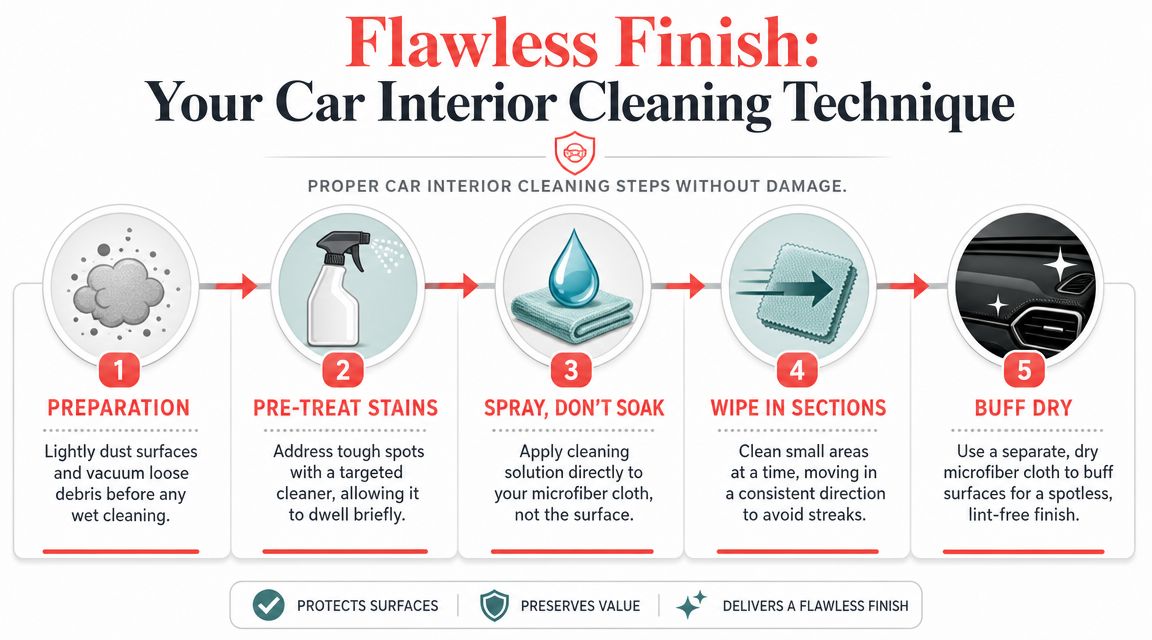
Use the two-towel system
The safest interior routine is simple. One towel does the cleaning pass. A second towel does the dry pass.
That second towel is what keeps loosened grime and cleaner residue from being pushed back onto the panel. I use this approach on dashboards, door panels, center consoles, and especially glass. It is slower than using one towel until it is soaked and loaded, but it cuts down on streaking and rubbed-looking trim.
A good workflow looks like this:
- Vacuum first: Grit on the surface is what causes light scratching.
- Mist the towel, not the interior panel: That keeps overspray off screens, switches, and nearby glass.
- Work a small area: One section at a time is easier to control and inspect.
- Refold often: As soon as one face looks dirty, switch to a clean side.
- Follow with a dry towel: This levels residue before it dries patchy.
For dash materials that stain easily or hold dressing residue in the grain, this guide on the best way to clean a car dashboard pairs well with the right towel choice.
Surface-specific technique that works
The cloth matters, but hand pressure and wipe pattern matter just as much.
Dashboard and hard trim
Use a 250 to 320 GSM terry microfiber with light, even passes. Let the towel pick up dust and skin oils from the texture. If you scrub aggressively, the high points of the grain take the abuse first, and that is where trim starts to look shiny and uneven.
Steering wheel
Steering wheels collect body oils, hand lotion, and old protectant fast. A lightly damp towel gives better control than spraying the wheel directly. Clean the rim in short sections, then dry it right away so cleaner does not sit in stitching, thumb grips, or button edges.
Screens, gauge lenses, and gloss trim
This is where DIY jobs go wrong. Infotainment screens, piano black trim, and clear gauge covers need a fresh, tagless, ultra-soft low-pile or suede microfiber. No pressure. Straight-line passes are safer than hard circular wiping because they make it easier to see if residue is gone and reduce the chance of creating visible swirl patterns on soft plastics.
If a screen still looks smeary after one pass, the towel is usually loaded or the product amount is too high. Swap towels before you increase pressure.
Interior glass
Interior glass responds best to discipline, not extra product. Consumer Reports advises using two cloths on glass, one to apply cleaner and one to wipe dry, which matches what works in the field on hazy windshields and smoker film. A dedicated glass towel with a tight weave leaves less lint and less smear than a plush general-purpose towel.
Shop habit: The last pass on interior glass should be with a fresh, dry towel.
The same careful process applies in bigger cabins where clear plastics, vinyl, and glass sit close together. If you also care for a camper or trailer, these seasonal RV cleaning tips follow the same logic by surface type and help prevent cross-contamination from one material to another.
Professional results come from these small decisions. Cloth type, towel condition, fold control, pressure, and wipe order all matter. Once a soft lens or gloss panel is marred, you are no longer cleaning. You are correcting damage, and that usually takes more time, more skill, and sometimes a professional touch to put right.
Solving Stains Pet Hair and Odors
Coffee runs into a seat seam fast. Wet dog hair works into carpet even faster. By the time the cabin starts to smell off, the problem is usually below the surface, not on it.
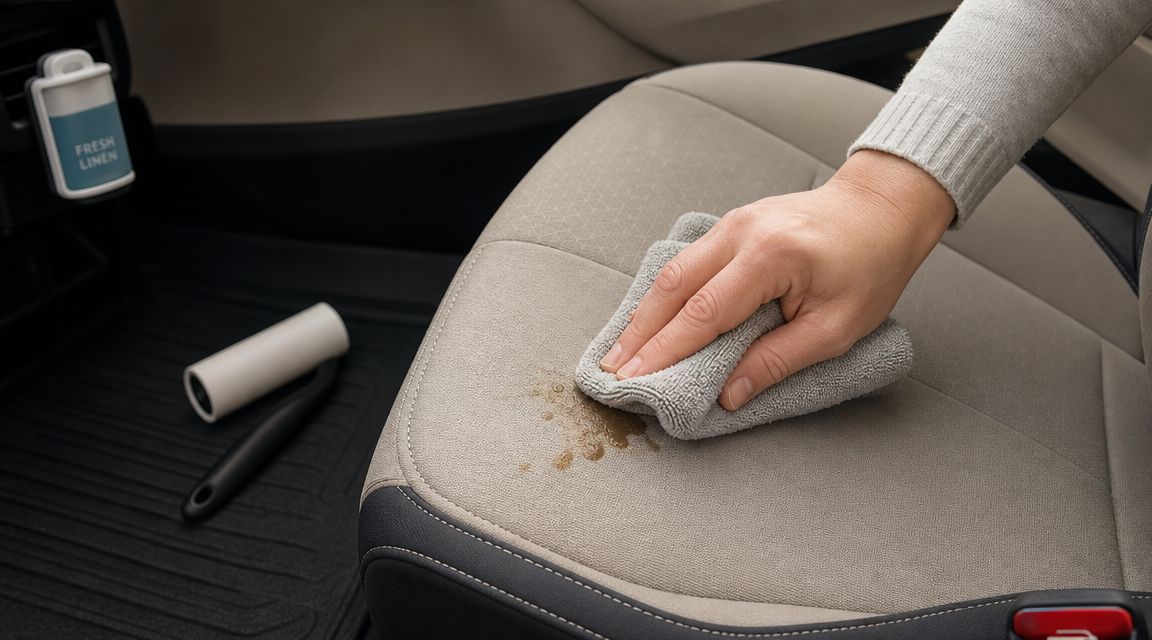
Stains need the right towel and the right stop point
For fresh spills on fabric seats or carpet, use a clean, absorbent microfiber to blot straight down. A medium-plush towel in the 300 to 400 GSM range works well here because it can pull up moisture without the aggressive bite of a short-nap towel. On leather or coated vinyl, switch to a lower-pile towel so you are lifting residue instead of pushing liquid into stitching and perforations.
Pressure matters. So does timing.
A towel can remove what is still near the surface. Once coffee, sports drinks, milk, or pet mess has moved into the foam, blotting becomes a containment step, not a full repair. I see this a lot with seat bolsters and child-seat areas. The fabric looks better after wiping, but the stain line or odor returns as the material dries and contamination wicks back up.
That is the trade-off DIY cleaners often miss. The safer your towel technique, the less likely you are to fray fibers or spread the stain. The downside is that a cloth alone cannot rinse, extract, and neutralize what has already soaked deep into the cushion.
Pet hair is a process, not a towel choice
Microfiber helps after the hair is loosened. It is not the tool that does the heavy lifting.
Embedded pet hair in carpet, trunk liners, and woven seat fabric usually needs a staged approach:
- Loosen the hair with the right tool for the material.
- Vacuum while the hair is still standing up.
- Use a clean microfiber towel to gather what is left on trim, seat edges, and hard-to-reach corners.
Towel choice still matters here. A general 250 to 320 GSM towel is usually enough for the final pickup on plastic panels and door sills. A plush towel can hang onto the hair it collects, but it can also drag on textured trim and leave bits behind. For heavily furred interiors, a detailer is really choosing cloth as the cleanup tool, not the removal tool.
If pet hair is your ongoing problem, this guide on how to remove pet hair from a car explains where cloths help and where other tools do more.
A short walkthrough helps here:
Odors stay until the source is removed
Odor work exposes the limit of towel cleaning faster than anything else. You can wipe every visible panel in the cabin and still have sour milk in the seat foam, pet urine in the carpet backing, smoke film in the headliner, or spilled food under the seat tracks.
Scent products only cover that for a while. If you want to read about fragrance options, Aroma Warehouse's guide to car oils is useful for the scent side. It does not change the basic rule. If the source is still there, the smell comes back.
Persistent odor usually means contamination is still sitting in padding, backing material, or another hidden layer.
That is where professional judgment matters. The question is not just which cleaner to spray. It is whether the job needs blotting, agitation, extraction, enzyme treatment, or a full odor-neutralizing process. The Mobile Buff handles that deeper corrective work with interior detailing, pet hair removal, stain treatment, and Bio Bomb odor elimination when towel-level cleaning stops being enough.
Proper Washing and Care for Your Microfiber
A towel can feel plush in your hand and still be wrong for interior work after one bad wash. I see this all the time. A cloth gets laundered with bath towels, dried on high heat, then used on piano black trim or a gauge lens. That is how a good maintenance towel turns into a marring tool.
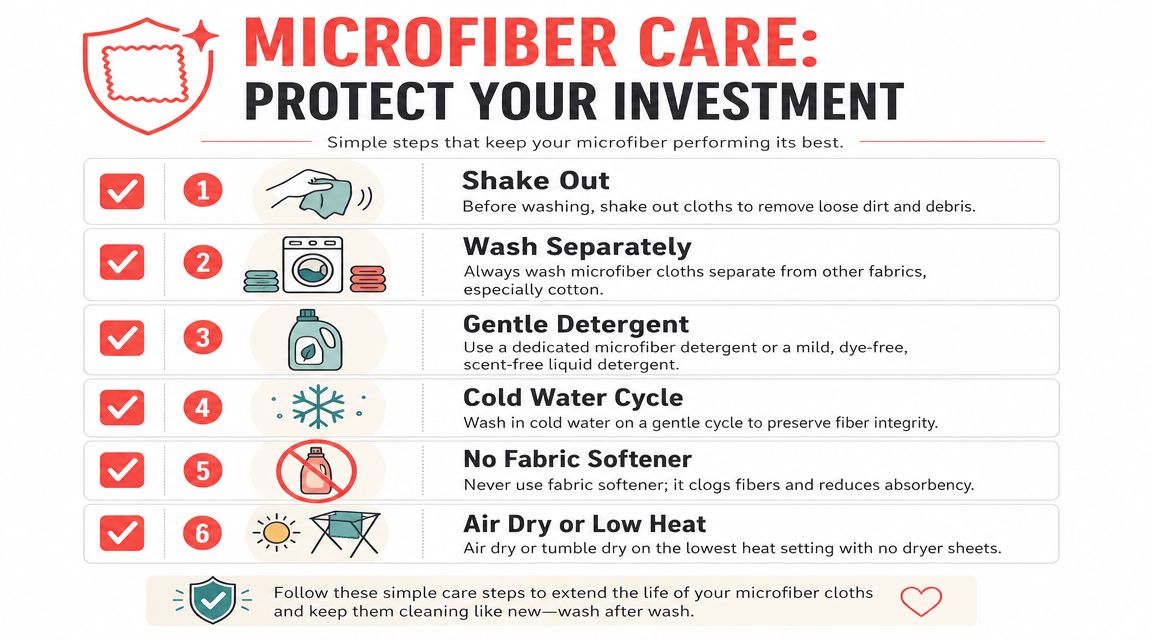
The must-follow rules
Microfiber works because the fibers stay open, clean, and fine enough to lift residue without dragging it across the surface. Wash and dry it the wrong way, and you lose that margin of safety.
Use a simple process:
- Wash microfiber by itself: It grabs lint from cotton, shop rags, and household laundry fast.
- Skip fabric softener and dryer sheets: They leave residue behind and make the towel smear instead of clean.
- Use low heat: Too much heat stiffens the fibers and shortens the towel's useful life.
- Avoid contaminated towels on interior surfaces: If a towel hits the ground or has grit embedded in it, pull it from interior duty.
The American Cleaning Institute's guidance on how to wash microfiber cloths lines up with what works in the detailing world. Gentle washing, no softeners, and restrained heat keep the fibers performing the way they should.
What professionals do differently
Pros do not wash every microfiber together and hope for the best. We sort by job and by risk. Glass towels stay separate from general interior towels. Screen towels stay especially protected because even a small amount of polish dust, sand, or greasy residue can leave streaks or light scratching.
I also retire towels by surface, not just by age. A 350 GSM edgeless towel that is no longer safe for gloss trim might still be fine for door jambs or pedals. A waffle weave glass towel that starts dragging on windows is done for interior glass, even if it still looks clean.
Shop rule: If a towel no longer glides cleanly, leaves lint, or feels grabby after washing, it loses its place in your interior rotation.
That kind of sorting sounds picky until you price a replacement screen, gloss trim panel, or scratched cluster lens. Fresh microfiber is cheap. Interior damage is not.
Know When to Call a Professional Detailer
Daily upkeep is manageable with the right cloths and careful technique. Deep correction is another story.
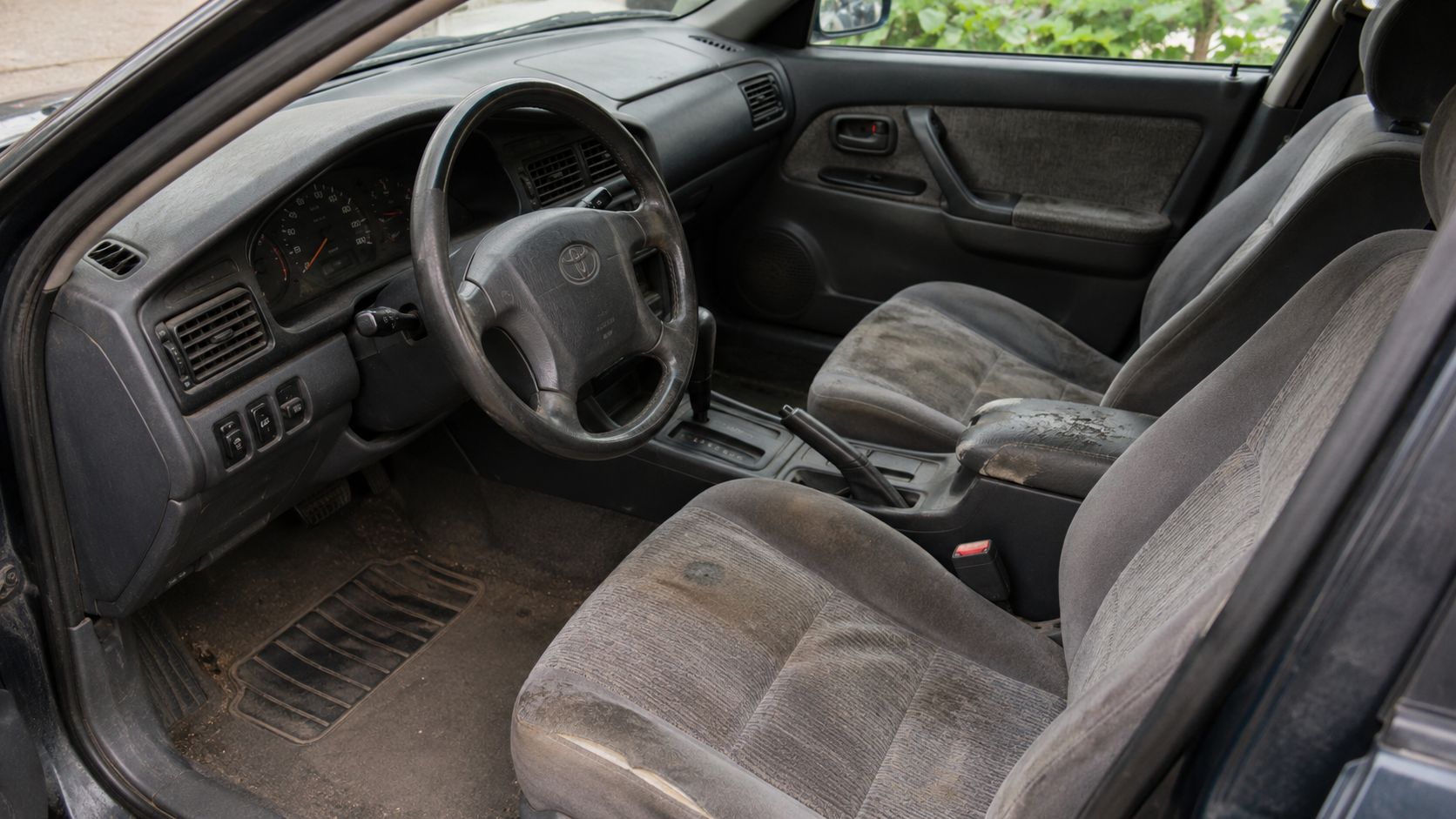
If your interior has ground-in pet hair, recurring odors, sticky buildup around controls, heavy staining in fabric, or delicate trim that already shows marring, DIY often turns into a long afternoon with mediocre results. The hard part isn't the wiping. It's knowing how far to push each material without making it worse.
Jobs that usually need more than a towel
Some problems are bigger than cloth selection:
- Set-in stains: Surface cleaning won't always reach what's below.
- Odor issues: Smells often live in padding, carpet backing, and hidden areas.
- Sensitive materials: Gloss trim, gauge plastics, and screens punish bad technique fast.
- Neglected interiors: Once grime layers build up, removal takes more than maintenance wiping.
For drivers around Harrisburg, Mechanicsburg, Carlisle, Newport, and nearby Central Pennsylvania communities, a mobile detailer can handle that deeper reset at your driveway instead of adding another errand to your week. You can also check recent local feedback and photos on The Mobile Buff's Google Business Profile before booking.
A good car interior cleaning cloth helps you maintain results between visits. It doesn't replace the tools, process, and judgment needed for a full interior recovery.
If your interior needs more than a wipe-down, book a professional mobile detail with The Mobile Buff. We'll handle the stains, pet hair, odor issues, and material-safe interior cleaning at your location so your cabin looks clean, feels fresh, and saves you the trial-and-error.

