


You know the moment. A customer has already decided whether they'll book you again before you've finished the first walkaround. They're watching how you park, how you greet them, whether you confirm the details without making them repeat themselves, and whether you leave the vehicle looking cleaner than they expected. In car wash customer service, the work starts long before the foam touches paint, and it keeps going after the last towel is packed away.
That matters even more now that professional washing has become the default for many drivers, not a niche choice. The car wash market is large, segmented, and competitive, with about 17,500 conveyor car washes, 29,000 in-bay automatic washes, and 16,250 self-service washes in the U.S. by 2020, according to an International Carwash Association commissioned study on the industry (industry information). In that kind of market, service is the separator. Price gets attention, but clarity, consistency, and how you recover when something goes wrong are what earn repeat business.
Why Car Wash Customer Service Decides Your Repeat Business
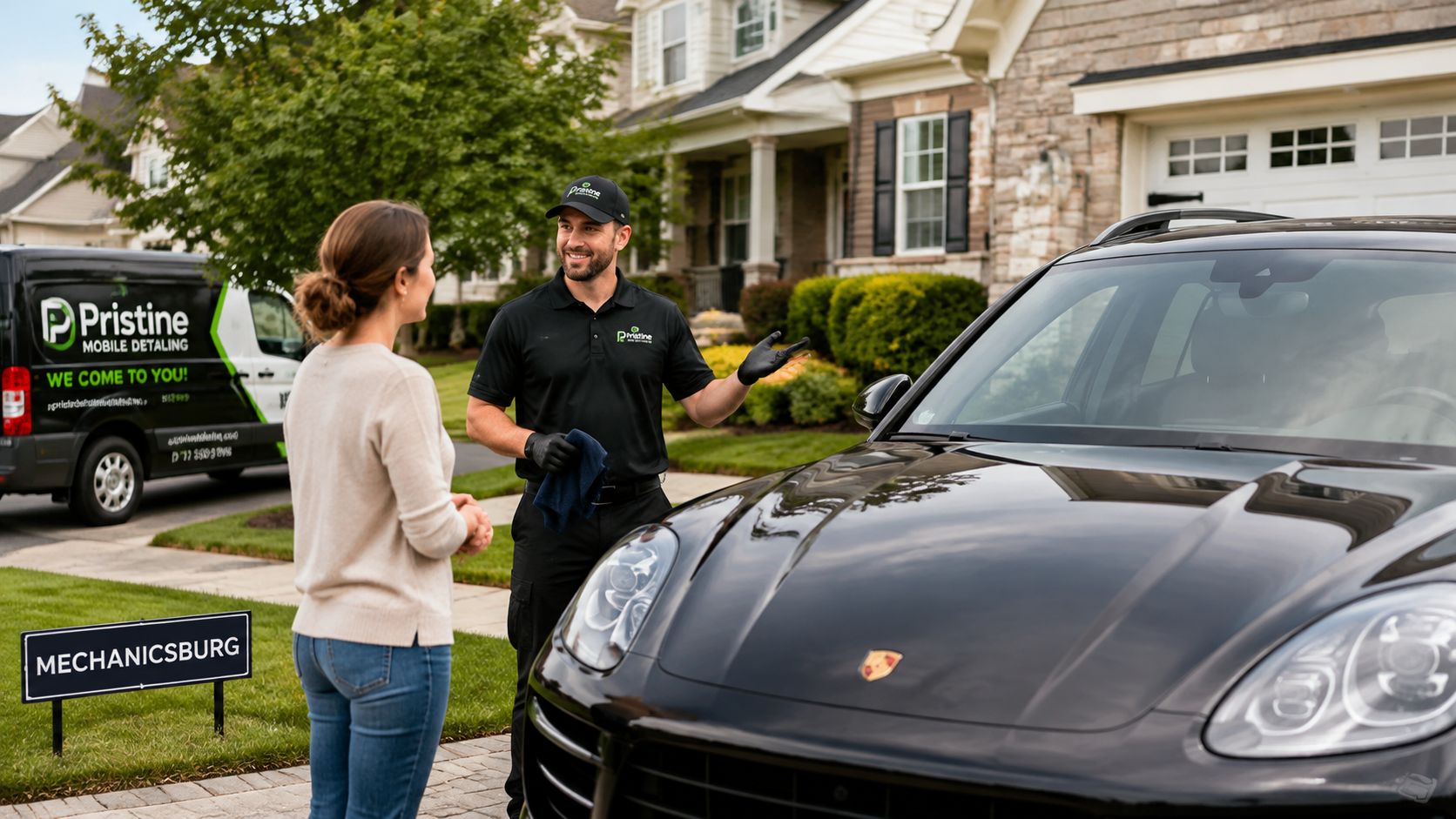
A customer in Mechanicsburg does not remember every soap brand or towel choice. They remember whether you texted before arrival, showed up when you said you would, and left their SUV looking right without turning their driveway into a mess. That is the part of car wash customer service that keeps a local client from treating you like a one-off vendor and starts treating you like the person they book every month.
Convenience beats friction every time
Industry information from the International Carwash Association points in the same direction. By 2020, 20% of professional car wash customers were current subscription members, another 18% were lapsed members, and memberships had grown 43% since 2019 (industry information). That shift shows customers want predictable, fast, hassle-free service, not a fresh sales pitch at every visit. It also explains why 88% of membership holders intended to continue their membership, because convenience turns into habit once the process feels easy and dependable.
For mobile detailing, that same logic shows up in smaller ways. If you answer fast, explain the process clearly, and arrive ready to work, you reduce the customer's effort. Busy households and small fleets notice that right away, because less back-and-forth means less friction before the job even starts.
Satisfaction is built in the small moments
The same consumer data shows 72% of customers were very satisfied with the car wash they use most often (industry information). That number is not a reason to get comfortable. It is a reminder that most customers already expect a decent experience, so your service has to feel calmer, cleaner, and more dependable than the one they used last time.
The loyalty patterns in real examples of brand loyalty translate well to local service businesses. People stay with the operator who reduces hassle and handles the small stuff without drama. That matters even more after the job is done, when the test is whether you follow up on concerns, fix a miss without pushing back, and communicate clearly about memberships or recurring service so the customer never feels abandoned after payment clears.
Practical rule: if the customer has to chase you for basic information, you have already created friction. Clear communication is part of the service, not a separate task.
For a mobile-detailing perspective on how convenience changes buying behavior, the breakdown in is mobile detailing worth it matches what I see on-site. People pay for the service that saves time without creating more work for them. That is why the best operators stay in touch after service, handle recovery quickly when something is missed, and make membership reminders simple enough that busy clients can stay enrolled without thinking twice.
Booking and Communication Scripts That Build Trust
Good booking communication doesn't sound polished for the sake of sounding polished. It sounds calm, specific, and easy to answer. Customers want to know what you're doing, when you'll arrive, how long the job will take, and what they need to move before you get there.
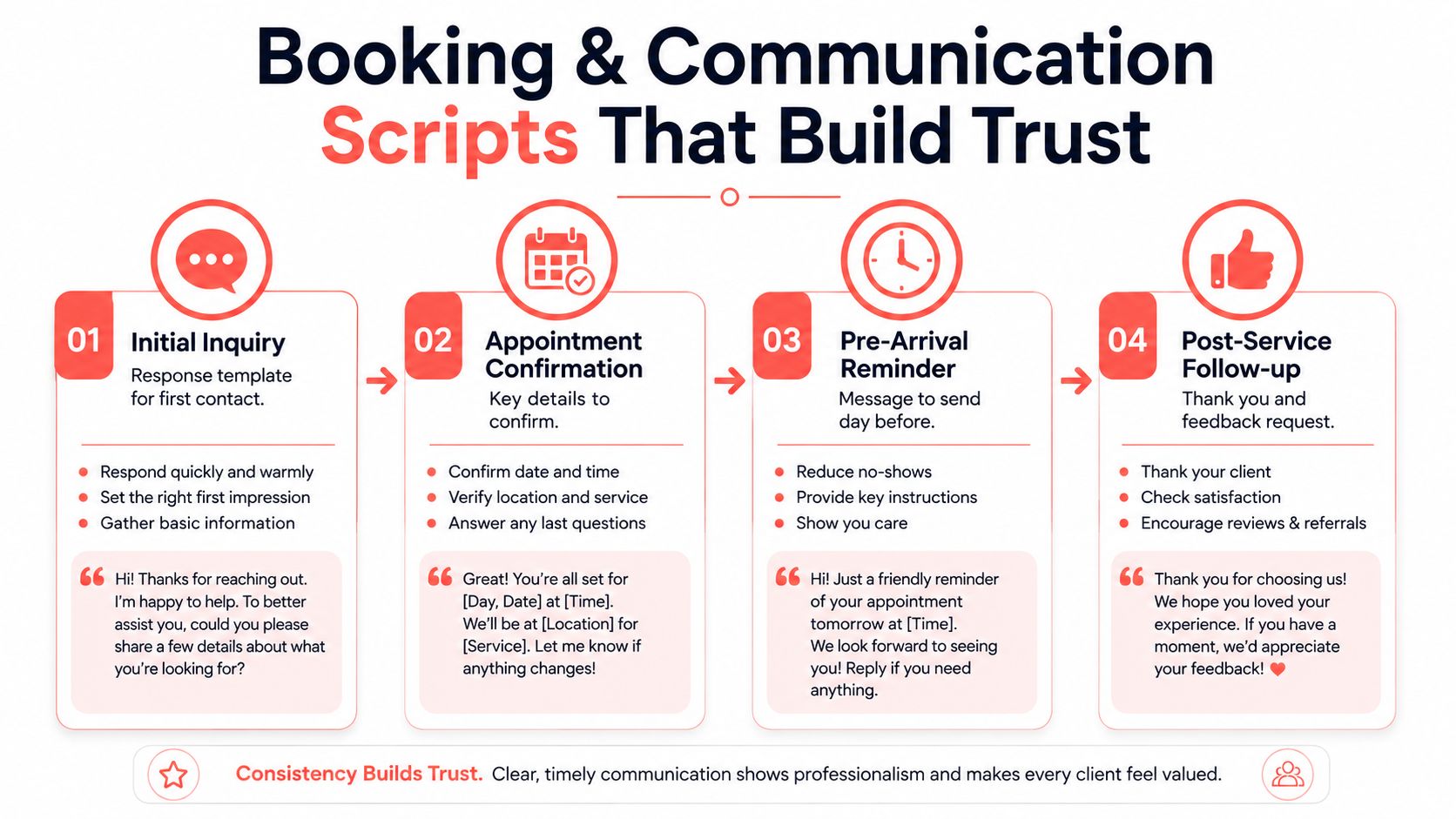
Start with a first response that feels human
A first reply should confirm the request, state the service area, and ask only the details you need. A clean version looks like this. “Thanks for reaching out. I can help with that. Send me the vehicle year, the service you want, and your address, and I'll confirm availability.”
That's better than a long explanation about tools, packages, and policy. The customer hasn't committed yet. They just want to know if you're responsive and organized.
Confirm the appointment like a pro
Once the booking is set, send a short confirmation with the service, date, window, location, and payment terms. Keep the wording plain. “You're booked for Thursday morning. I'll send an arrival text when I'm on the way. Please have the vehicle ready and any personal items removed from the areas you want cleaned.”
If weather may affect the visit, say it early. Central Pennsylvania customers understand delays better than silence. A simple message like, “If the forecast changes enough to affect service, I'll update you as soon as I know,” prevents most awkward back-and-forth.
Use the day-before and arrival texts to reduce stress
The day-before reminder should do three things, confirm the time, restate what's included, and remind the customer about access. That reminder is also the right place to mention rescheduling if a driveway is blocked or the weather turns. Keep it professional and brief.
For a local lead flow that supports this kind of follow-up, how to find the best car wash and detail near me is a good reminder that customers often compare convenience as much as quality. They're deciding whether your process feels easy.
“Write the message the way you'd want to receive it if you were the customer.”
When you arrive, don't just appear. Text first. “I'm pulling up now and I'm parked out front.” That small habit keeps the customer from guessing and makes you look deliberate instead of rushed.
On-Site Etiquette and Quality Checklists for Every Visit
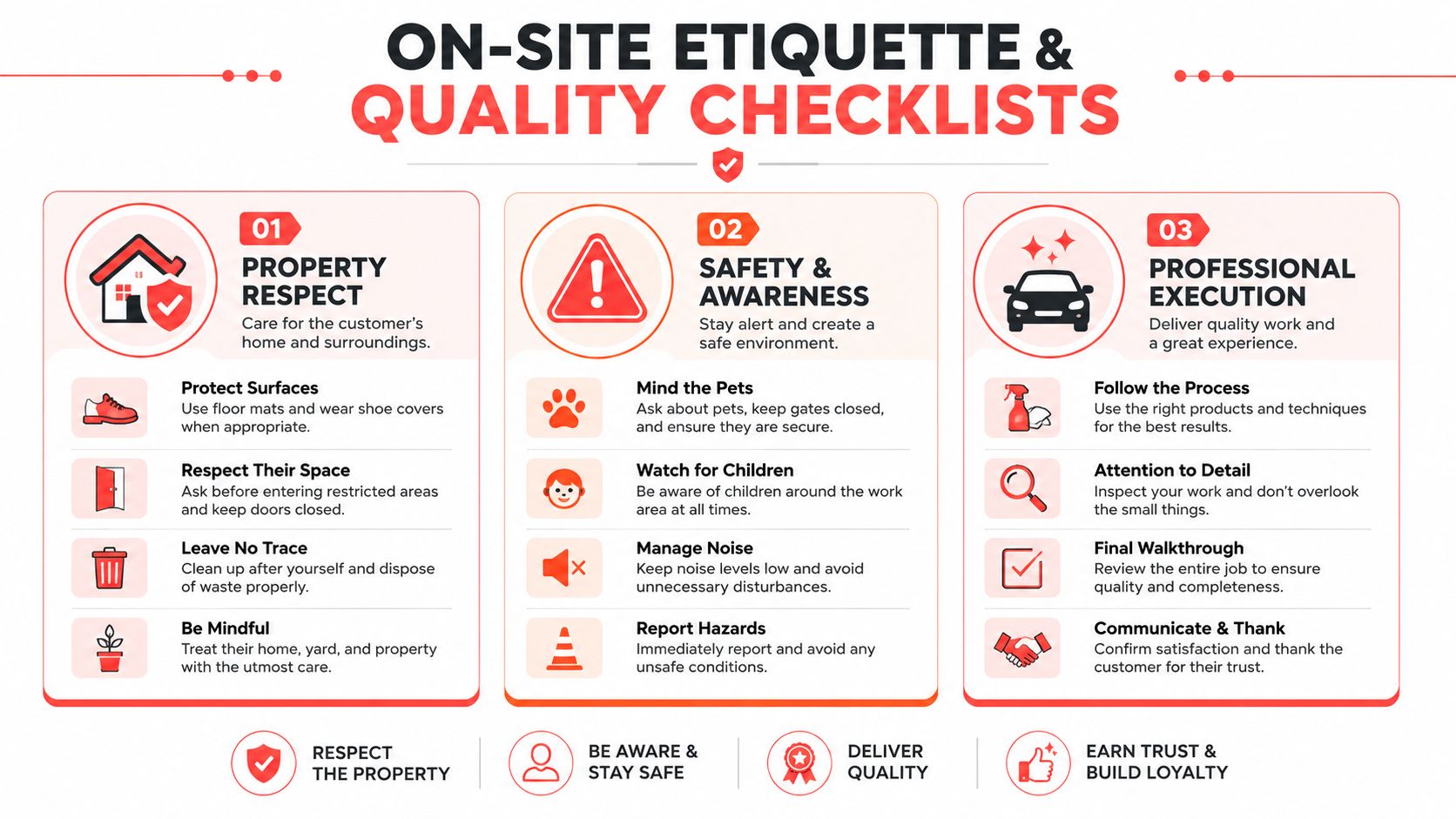
The driveway is part of the job site. So is the customer's patience, their schedule, and the fact that they're trusting you around a home, kids, pets, and sometimes a tight parking area. Respect shows up in how you set up, how much noise you create, and how quickly you settle into a clean, controlled workflow.
Lead with property respect
Keep hoses, cords, and product containers organized. Don't block garage access, don't lean equipment against the customer's vehicle, and don't leave runoff where it can track into the house or onto clean pavement. If you need to move something, ask first. That one habit prevents most misunderstandings.
A professional appearance matters too. Branded, clean gear tells the customer you treat the work like a business, not a side hustle. If the vehicle is the asset, the worksite is the first impression.
Watch the family, the pets, and the noise
Kids and pets change the pace of a visit. Let the customer know when you're about to run a louder tool or move the vehicle. If a dog is loose in the yard, pause and confirm boundaries before you start opening doors or unloading equipment.
That sounds basic because it is. In practice, it separates calm jobs from chaotic ones.
Finish with a checklist the customer can see
A final walkthrough should be deliberate. Check the exterior for missed edges, inspect the interior for crumbs and dust in the obvious touchpoints, and verify that any odor treatment or headlight work is complete before you say you're done. If you use a treatment like Bio Bomb, confirm with the customer that the result matches what they expected.
Here's the sequence I'd keep on a laminated card:
- Exterior: glass, door jambs, wheels, trim, and visible streaks.
- Interior: seats, cupholders, vents, floor mats, and touch surfaces.
- Special services: headlight clarity, odor treatment, stain removal, and pet hair.
- Walkthrough: invite the customer to point out anything that needs a quick touch-up before you pack up.
For a broader look at how operators structure service delivery, mobile detailing companies is a useful companion read. The lesson is the same, standardization reduces variation.
Handling Complaints and Turning Problems Into Loyalty
The best operators don't fear complaints. They treat them like a test of the system. Most customers don't want a speech, they want the problem recognized quickly and fixed without making them feel like they're arguing with the person who just worked on their car.
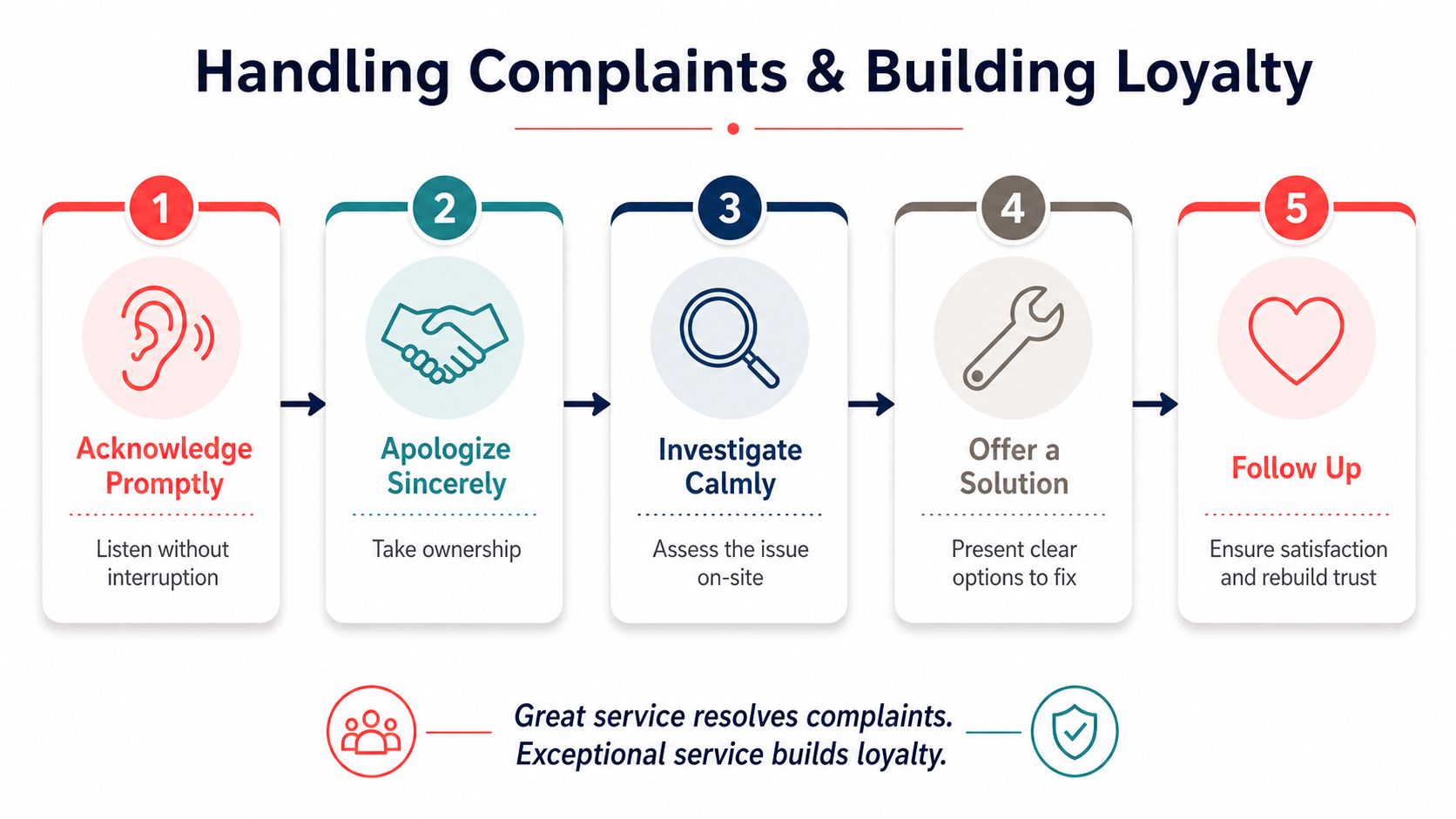
Use a fixed de-escalation sequence
The sequence is simple. Listen first. Don't interrupt. Apologize. Solve the issue. Thank the customer. That order matters because it keeps the conversation from becoming a debate.
Keep your tone low, even if the customer is upset. If they sound irritated, the worst move is matching their energy. The goal is to move the interaction from emotion to action.
The first 10 minutes matter most
If a customer reports missed spots, streaks, damage, or a billing issue, document it immediately. Take photos while the car is still in front of you, note what service was performed, and decide whether the fix is a rewash, a correction, or a payment adjustment. Then communicate the next step clearly.
That speed matters because the problem is no longer just the defect, it's the uncertainty around how you'll handle it. Clear compensation rules help. A rewash, service credit, or another approved remedy should be offered without drama when the issue is legitimate.
Keep the follow-up tight and specific
One industry best-practice source says complaints should be acknowledged within 24 hours, which fits the broader service standard of not leaving people hanging (how to handle customer complaints). That doesn't mean every issue waits until later. It means if you can't resolve it on the spot, you confirm receipt, set the next step, and honor the timeline you gave.
For a strong comparison point on what not to do with negative feedback, RecensioAI's negative review tips are worth a look. The common failure is defensiveness. Customers remember that more than the original mistake.
The reason this works is simple. Existing complaint analyses show the biggest pain points are quality failures, not just friendliness, so recovery has to focus on evidence, correction, and consistency. A calm apology helps. A documented fix builds trust.
Practical rule: a good recovery is specific enough that the customer can tell you took the complaint seriously, and fast enough that they don't need to follow up twice.
Retention Tactics and Upsell Strategies That Feel Natural
Membership and package talk only works when it sounds like help, not pressure. Families, multi-vehicle households, pet owners, and small fleet managers all buy differently, and they need different explanations. If you offer the same pitch to everyone, you end up confusing the people who would've bought if the choice had been clearer.
Match the package to the use case
Keep your language tied to outcomes. If someone has kids, pets, or a truck that gets used every day, explain what each package solves. An Interior and Exterior service makes sense for general upkeep. Exterior and Headlight works when the outside is the priority and clarity matters. Interior and Headlight fits customers dealing with cabin wear plus older lenses. Full Service and Headlight is the easiest recommendation when the vehicle needs both a reset and a visibility boost.
The right question is not, “Which package sounds premium?” It's, “Which package keeps this vehicle from needing a bigger correction later?”
Upsell at the moment it helps
Upselling works when it's tied to what you can see. If a customer books an exterior wash on an older vehicle and the headlights are hazy, mention headlight restoration while you're already looking at the car. If the interior has pet hair or a lingering odor, explain the difference between a basic clean and a deeper treatment instead of waiting until the customer is annoyed by the result.
Digital payment and electronic billing help here too. When the payment step is smooth, the customer spends less mental energy on the transaction and more on whether the service solved the problem. That's especially useful for small fleets, where predictable billing matters as much as the wash itself.
Keep loyalty communication plain
A loyalty program should answer one question fast. Will this save me time or money over a few months? If you can't explain that clearly, the program feels like a commitment instead of a convenience. That's where flexible, transparent messaging beats a hard sell.
The best retention pitch is a simple one. Explain what the customer uses, what they're paying for, and what gets easier if they keep coming back.
If you're serving households with multiple drivers or small business vehicles, the conversation should sound practical. Talk about package fit, billing simplicity, and whether recurring service will reduce cleanup between longer gaps. That's how membership starts to feel like a tool instead of a trap.
Local Tips for Central Pennsylvania and Your Next Booking
Central Pennsylvania customers notice when you understand their routine. A vehicle in Harrisburg, Mechanicsburg, Carlisle, or Newport has different wear patterns depending on season, parking, and daily driving. Winter road salt means you need to speak plainly about undercarriage grime and how often exterior care matters. Spring pollen changes the conversation inside the cabin too, because people notice dust and residue faster once the weather warms.
Summer brings another issue, heat. Interior detailing in a parked car that's been sitting in direct sun is a different job than one in a shaded driveway. Say that out loud so the customer knows you're thinking about the worksite, not just the vehicle.
A local lead form should also make booking simple. If you want more inquiries that convert, boost local conversions with Growform is a useful example of how a clear form can reduce friction before the first message even starts. The same idea applies to mobile detailing. Less confusion means more completed bookings.
The Mobile Buff keeps the process straightforward with service at the customer's location, electronic billing, and appointments available seven days a week from 7am to 3pm. If you want hand-wash precision, a satisfaction-first approach, and a team that understands how Central Pennsylvania drivers use their vehicles, book your next visit through The Mobile Buff. The easiest way to judge service is to see how the first conversation feels and how clean the car looks when the job is done.
If you want mobile detailing that treats communication, recovery, and quality like part of the wash itself, visit The Mobile Buff and schedule a service that fits your day. You'll get professional care, clear billing, and a customer experience built for busy households and local fleets that need the job done right the first time.

