


You step out to the driveway, spot a thin white scuff on the door, and your first thought is usually the same, can a spray make that disappear, or are you about to make it worse? Around here in Central PA, that's a real question, because one bad attempt with the wrong bottle can turn a light mark into cloudy clear coat and a bigger repair bill. The right car scratch remover spray can help on shallow clear-coat marks, but only if you know how deep the damage really goes and you prep the panel the right way.
The market keeps growing because this isn't a one-and-done product. The global car scratch remover market was estimated at USD 2.09 billion in 2024 and is projected to reach USD 3.2 billion by 2032, with a 5.48% CAGR in that forecast period, while spray scratch remover alone was valued at USD 0.45 billion in 2024 as a quick-application option for minor clear-coat damage (WiseGuyReports). Another report projects growth from USD 2,216.22 million in 2026 to USD 3,618.99 million by 2035 at 5.6% CAGR, and says the world has more than 1.45 billion registered vehicles, with about 62% seeing minor paint scratches annually, while the U.S. has over 284 million registered vehicles and 49% of vehicle owners use scratch removers at least once every 18 months (Industry Research).
What matters in the driveway, though, is not the brochure language. Scratch remover sprays are for surface-level clear-coat work, not magic paint restoration, and the difference between a clean result and a hazy mess usually comes down to depth, prep, and restraint.
That Fresh Scuff in Your Driveway
A driver in Harrisburg backs out in the morning and catches a bright line across the rear door, probably from a cart, a garage wall, or a quick brush against something hard in a tight parking spot. The paint still looks intact from a few feet away, but the mark is enough to bug you every time you walk by it. That's the moment you reach for a bottle and hope the scratch vanishes on the first pass.
That reaction makes sense, but the bottle is only the right answer if the damage is light and confined to the top layer. A car scratch remover spray can help with minor clear-coat scuffs, transfer marks, and faint surface haze, but it won't rebuild paint that's been cut through. When the scratch is deeper, the product can't fix what's missing.
If you want a straightforward breakdown before you touch the panel, the practical guide at DIY scratch repair for cars is useful because it stays focused on light repair decisions rather than selling a miracle cure. That's the right mindset here, judge the scratch first, then decide whether the spray is even worth opening.
Practical rule: if you're already wondering whether the scratch is “too deep,” stop and inspect it in good light before you apply anything.
What a spray can realistically handle
The common wins are boring, and that's a good thing. Light scuffs, faint clear-coat marks, and shallow transfer often respond to a controlled polish with a scratch remover spray or hand-applied abrasive. Deeper gouges, exposed color change, or rough edges usually point to a repair that needs more than a bottle and a towel.
A friendlier way to think about it is this, if the damage still looks like a surface problem, a spray may help. If it looks like a cut into the finish, the spray is only going to polish around the problem.
Figuring Out How Deep the Scratch Really Is
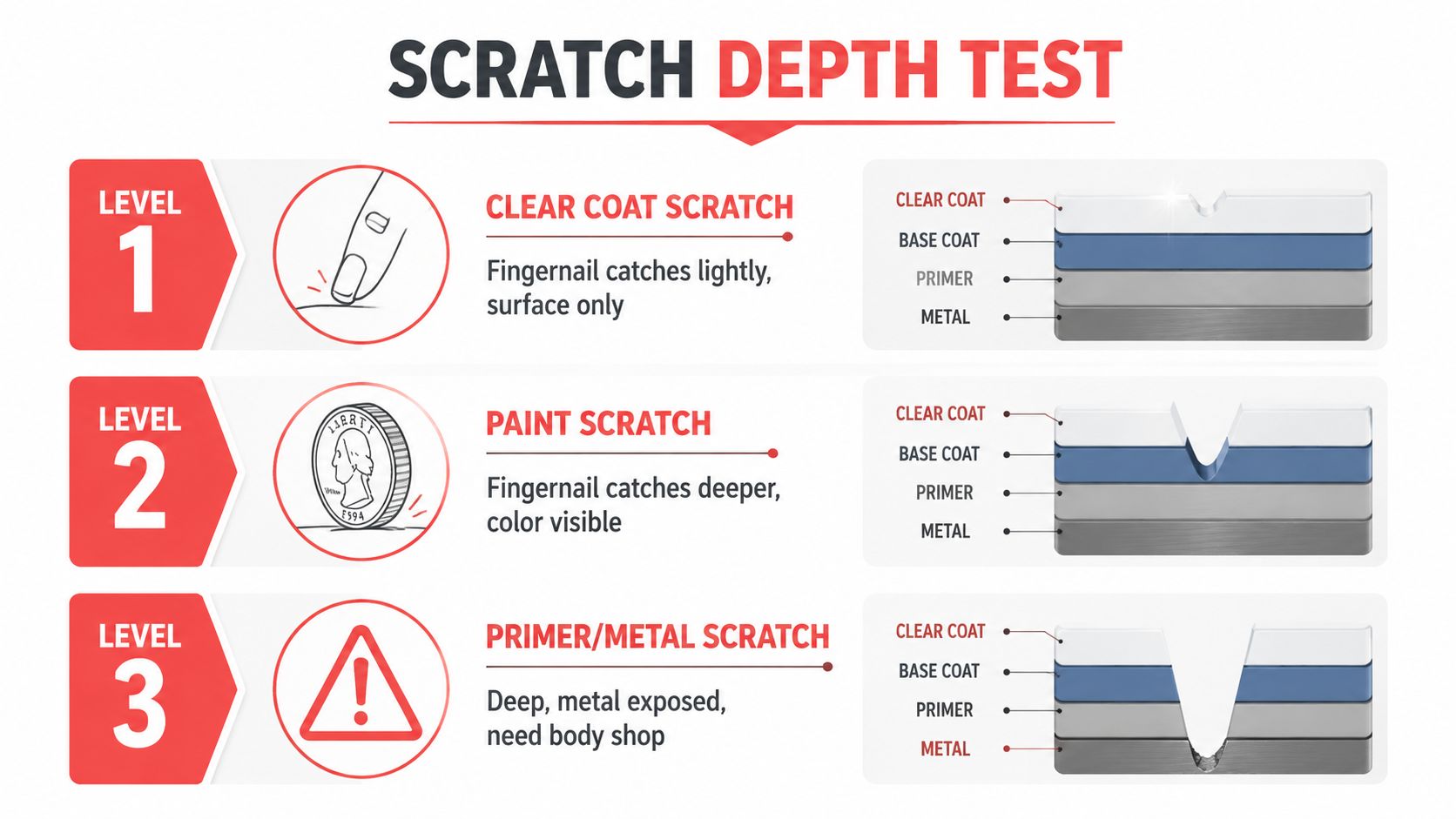
Most bad results with scratch spray start with a bad guess. Somebody sees a white line in the driveway light, assumes it is just surface grime, and keeps rubbing until the clear coat gets thinner than it should. Once you cut past the top layer, a spray product cannot put that material back.
The two tests that tell you the most
Run a fingernail lightly across the scratch. If it barely catches, you may still be dealing with the clear coat. If it hooks hard, the damage is usually deeper than a simple spray fix can handle.
The wet test gives you a second read. If the mark fades a lot when the panel is wet, that usually means the defect is still shallow enough to respond to surface correction. If it stays plain as day when wet, it is probably more than a top-layer scuff. That lines up with the practical guidance in Wired's scratch repair kit testing, where the point is simple, a scratch that still stands out when wet often needs sanding, filler, or repainting. If you want the broader paint-side answer, does car detailing remove scratches explains where detailing stops helping and where real paint correction starts.
A scratch that acts like a surface scuff can often be blended. A scratch that still shows clearly when wet usually needs a different plan.
Read the paint layers before you touch the bottle
Modern paint is built in layers, clear coat, base coat, and primer. The clear coat is the glossy top layer, the base coat carries the color, and the primer sits underneath to prepare the panel for paint. That matters because scratch remover sprays level the surface you still have, they do not replace missing paint.
If the scratch stays in the clear coat, a spray or hand-applied abrasive may improve it. If you can see color change, or the line looks cut into the finish instead of sitting on top of it, the job usually belongs with a professional who can polish, compound, or repair it more accurately.
Getting the Panel Ready to Work On
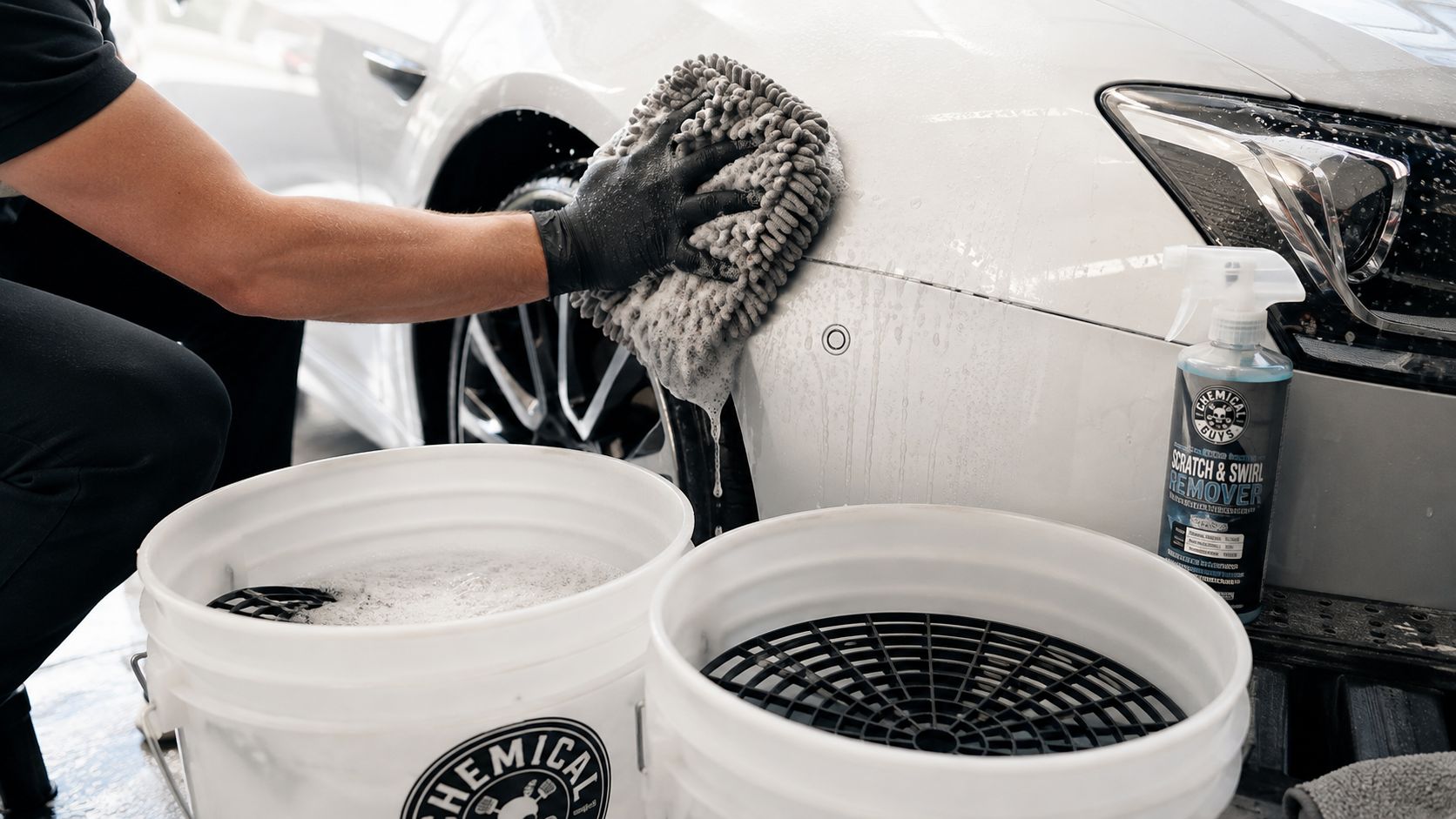
A lot of bad scratch work starts before the spray even hits the towel. Dirt, road film, and leftover wax change how the product cuts, and they can drag grit across the panel while you're working. If the surface is not clean and dry, you are not correcting the scratch, you are grinding contamination into the finish.
Wash, dry, and feel the panel
Start with a proper hand wash, not a quick rinse. Dry the panel completely so the product does not thin out or streak, then run your hand across the finish. If the panel feels rough after washing, clay it before you touch the scratch.
If you want a deeper explanation of why that extra step matters, what is clay bar treatment for cars is a good companion read because it explains why a smooth surface gives better correction and fewer surprises. On a clean panel, scratch remover can work evenly. On a gritty one, it tends to smear and haze.
Tape, isolate, and keep the work area small
Mask trim, badges, and nearby edges with painter's tape. That keeps product off rubber and textured plastic, and it also reminds you to stay in a tight work zone instead of wandering across the whole door. On a scratch, smaller is safer.
Shop-floor habit: keep your correction zone about the size of the damage plus a small buffer, not the whole panel unless the panel needs it.
A clean microfiber stack helps too. Use one towel for inspection, one for buffing, and do not reuse a dirty towel once it has picked up compound residue. Work in the shade and let hot panels cool down first, because heat makes product dry too fast and raises the odds of streaking.
Applying Car Scratch Remover Spray Like a Pro
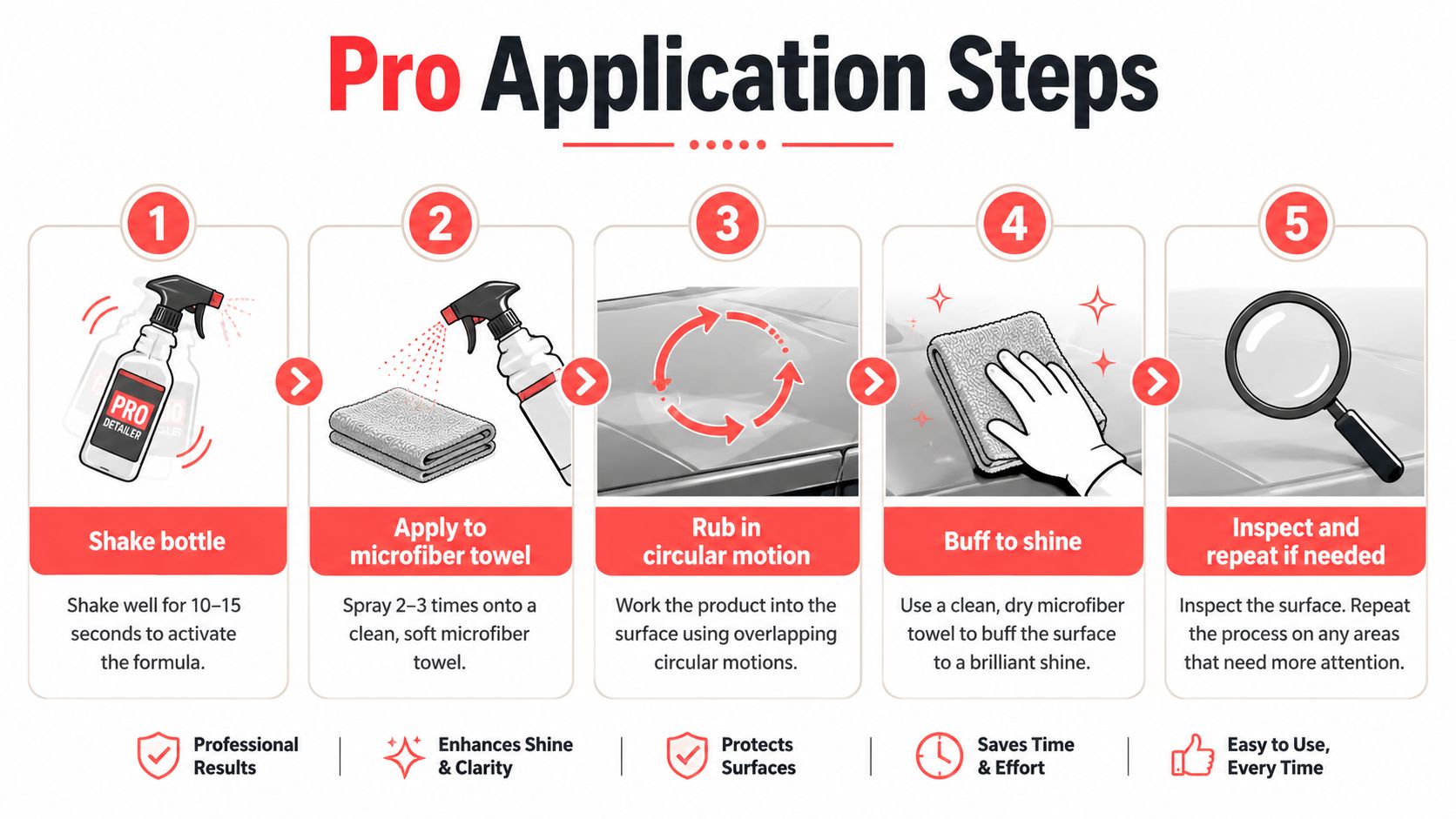
The bottle isn't the hard part. The hard part is keeping your pressure even and your expectations realistic while you work a tiny defect without chasing it into a bigger one. That's why pros keep the motion controlled and stop to inspect constantly.
Use the product like an abrasive, not a dressing
Shake the bottle well, then put a small amount on a foam or microfiber applicator. Work the scratch in overlapping circular or back-and-forth motions with light-to-medium pressure, not a heavy grind. 3M's Scratch Removal System specifically tells users to work a small 4" x 4" zone with 3000-grit wet sanding, check progress about every 10 seconds, mask adjacent trim, and then polish the corrected area with light-to-medium pressure (3M scratch removal instructions).
That guidance matches what matters in practice. Scratch removers work by removing a thin layer of clear coat, so leaning harder does not automatically mean better results. It usually just means more haze.
Inspect early, then stop before you overcook the clear coat
Wipe the area after a few passes and look at it under strong light. If the scratch is blending and the finish is getting clearer, keep going carefully. If the area starts looking cloudy, streaky, or dry, stop and reassess.
The best cue is visual, not emotional. You're looking for the defect to blend into the surrounding paint under normal lighting, not for a perfect laboratory finish that costs you clear coat thickness. 3M's hand-applied 3M Scratch Remover 39044 is explicitly described as a hand-applied liquid abrasive used with a clean, soft cloth in circular motion, which is a good reminder that this is refinement, not filling or coating (3M product sheet).
If you can make the mark blend, stop. Chasing a deeper scratch until the panel clouds up is how a small job becomes a polishing correction.
Finishing, Polishing, and Protecting the Repaired Area
A corrected scratch area usually looks a little dull right after the abrasive step. That's normal, because you've leveled the surface, but you haven't restored the full gloss yet. The repair only looks finished once the shine matches the rest of the panel.
Restore gloss before you protect it
Use a fine finishing polish if the panel needs it, then buff with a clean microfiber towel until the surface reflects evenly. You want the repaired spot to match the surrounding paint in sheen and clarity, not just in color. If you can see a flat, dry patch from a few feet away, it still needs work.
Protection comes next. A sealant, wax, or ceramic topper helps keep the corrected area from drying out visually and collects less contamination than a bare, freshly worked section. This step doesn't hide a bad repair, but it does help the finish stay uniform.
Know what good enough looks like
A proper finish shouldn't jump out at you in parking lot light. It should blend into the panel unless the sun hits it at a harsh angle. If the scratch still appears as a bright line in direct light, the earlier step didn't go far enough.
That's also where the line between DIY and pro work gets obvious. Independent testing from Car and Driver's 2026 roundup found visible differences among commercially sold scratch removers, with some products meaningfully improving light clear-coat marks and others mainly hiding defects or needing more aggressive correction methods (Car and Driver). In other words, the product matters, but the panel condition matters just as much.
DIY Spray vs Calling a Mobile Detailer
A bottle and a towel are cheap. The cost is your time, your learning curve, and the risk of turning a quick driveway fix into a cloudy panel that needs machine work anyway. For shallow marks, DIY can make sense. For deeper or high-visibility damage, a mobile detail visit is usually the calmer choice.
| Factor | DIY Spray Fix | Professional Mobile Detail |
|---|---|---|
| Scratch depth | Best for shallow clear-coat marks | Better for unclear, deeper, or mixed damage |
| Risk | Higher chance of haze or overwork | Lower risk when the panel needs compounding and polishing |
| Time | Your weekend and your patience | A scheduled driveway visit |
| Finish consistency | Depends on your prep and hand pressure | More predictable on visible panels |
| Best fit | Small, confirmed surface scuffs | Multi-panel scuffs, leased cars, ceramic-coated cars |
If you're comparing service options and trying to think like a detailer, the SEO playbooks for car detailers page is a solid reference for how shops position their work and explain scope. That matters here because your decision should be based on the damage, not the promise on the label.
The Mobile Buff also fits this kind of decision-making because it brings scratch-related detailing work to the driveway rather than asking you to guess your way through it in the garage. If the mark is on a leased vehicle, a ceramic-coated finish, or a panel you see every day, that's usually the point where a pro earns the call. For more on how a mobile setup works locally, mobile detailing companies is a useful read.
Choosing the Right Spray and Using It Safely
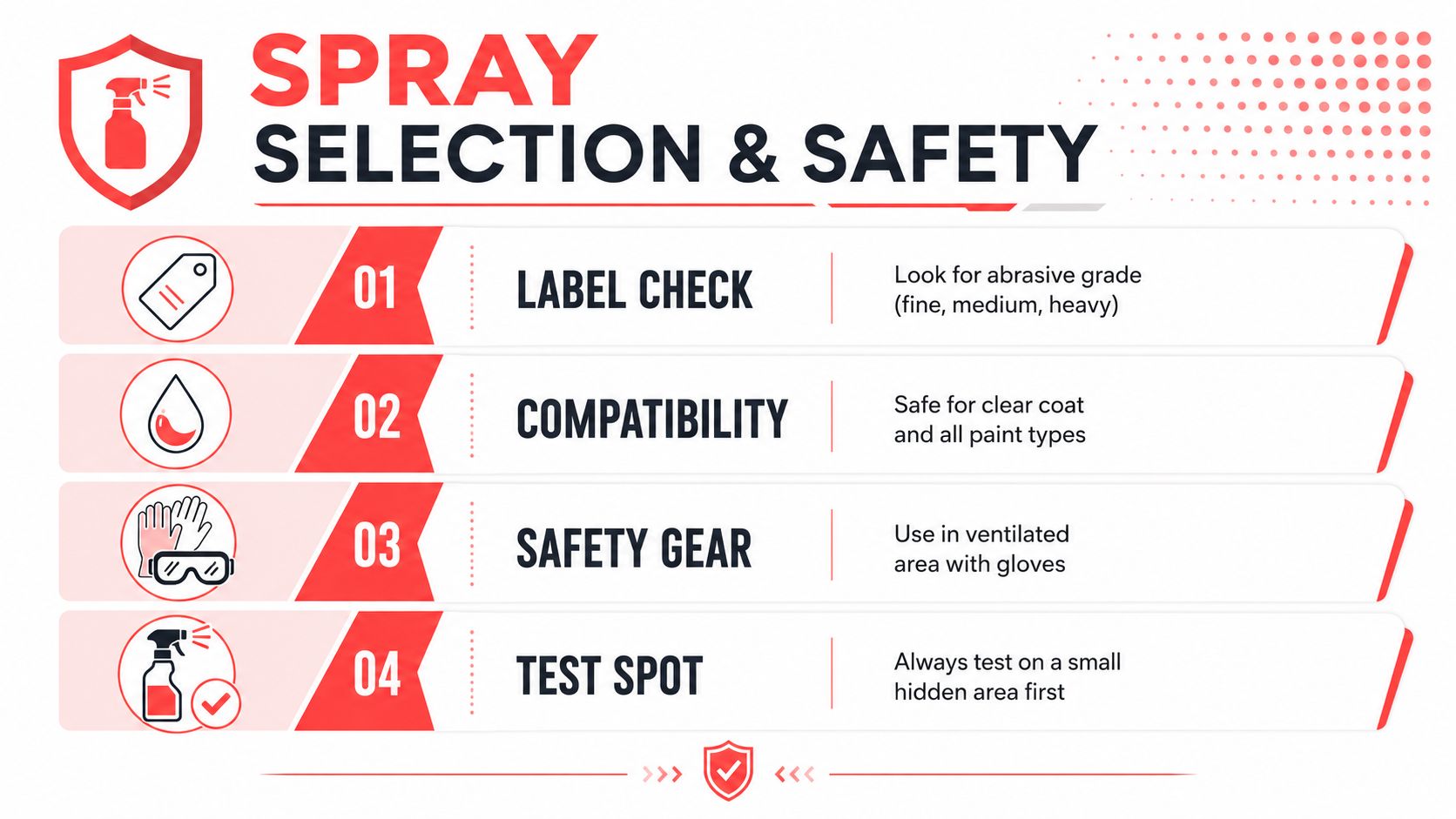
The shelf is full of bottles that promise the same result, but the label usually tells you more than the marketing does. Look for wording that points to clear-coat compatibility, abrasive grade, and automotive use, not vague miracle language. If a product does not clearly say what finish it is made for, I leave it alone.
Compatibility matters more than hype
Scratch removers are mainly built for superficial clear-coat damage. They are a poor match for deep scratches, and they can behave differently on mixed surfaces. Guidance also says to test on an inconspicuous area first, especially on ceramic-coated vehicles, matte or satin finishes, wrapped panels, plastic bumpers, and metallic colors, where results and risk vary by surface (Alibaba guide on scratch remover compatibility).
That hidden test is not optional. A product that behaves fine on one panel may streak or dull another, especially when the finish reflects light differently.
Use basic safety habits and keep the work controlled
Wear gloves and eye protection, and work with decent ventilation. Keep the product off rubber seals and textured trim, because residue there is annoying to clean and can make the job look sloppy. If you are using a spray or compound near edges, stay controlled and do not flood the area.
Safety rule: if the label does not tell you what the product is made for, do not let the marketing make the decision for you.
A second practical rule comes from how these products are tested in actual use. If the scratch still shows clearly after the area is wet, that usually means the damage is deeper than a spray can clean up well. That is the point where a stronger bottle is not the answer, and a professional correction makes more sense.
The Mobile Buff handles that kind of call in the driveway for drivers in Harrisburg, Mechanicsburg, Carlisle, Newport, and surrounding Dauphin and Perry county areas, with appointments available seven days a week from 7am to 3pm and payment handled electronically on completion. If the scratch is beyond a simple surface scuff, or if you would rather pair the exterior work with interior detailing, headlight restoration, or engine bay cleaning, booking a mobile visit saves you the trial-and-error phase and gets the panel looked at by someone who does this every day.
If you have a scratch that is still bothering you, send it to The Mobile Buff and book a driveway visit instead of guessing with the wrong product. The right call is usually a quick assessment, a clean repair plan, and a finish that does not leave you staring at haze all week.

