


You pull into the driveway, shut the door, and there it is again, that chalky white haze along the rocker panels and around the wheel arches. On the inside, the floor mats feel gritty under your boots, and every heel press seems to grind the same crust deeper into the carpet. That's the kind of winter salt stain removal problem most Central Pennsylvania drivers notice first, and it's also the point where a quick rinse stops being enough.
Road salt is ugly, but it's not just a cosmetic nuisance. AAA says 70% of U.S. drivers live or have lived in a winter climate region within the past five years, and 15% of those drivers reported at least one repair for rust damage caused by salt and other de-icing chemicals, with $15.4 billion in five-year salt-related rust damage and an average repair cost of $490 per rust-related repair. AAA's road de-icer and rust damage fact sheet puts a hard number on what every winter driver already feels. Salt residue keeps working long after the storm passes, and once it's embedded, it starts showing up as haze, staining, corrosion, and that annoying white return on carpets after you thought the job was done.
Why Winter Salt Stains Are More Than a Cosmetic Problem
A customer backs into the driveway, opens the door, and the first thing you notice isn't the paint. It's the white line running down the lower panels, the crust around the wheel lips, and the salt dust stuck to the mats like powdered sugar. The Mobile Buff sees that pattern every week from January through March, because winter maintenance doesn't stop at the road, it follows the car home.
That matters because road salt isn't sitting on the surface politely waiting to be wiped off. Highway agencies spread about 10 million tons of salt each winter, and the Federal Highway Administration's road-salt report notes that local agencies spend about $300 million on salt purchases plus another $250 million on storage, handling, and application. The TRB road-salt report shows why this is a recurring cleaning problem, not a once-a-season nuisance. The scale is big enough that residue management becomes part of normal vehicle care.
Practical rule: if the salt has been sitting overnight, it's already doing more than staining. It's drying into seams, settling into carpet fibers, and hanging around on hardware that doesn't care whether the vehicle looks clean.
That's why winter salt stain removal is really a maintenance task. The sooner residue comes off, the less chance it has to migrate into clear coat, wheel finishes, undercarriage components, carpet backing, and trim edges. For a related winter rust-prevention checklist, see how to protect a car from rust in winter.
Pro-Level Washing for Paint, Wheels, and Undercarriage
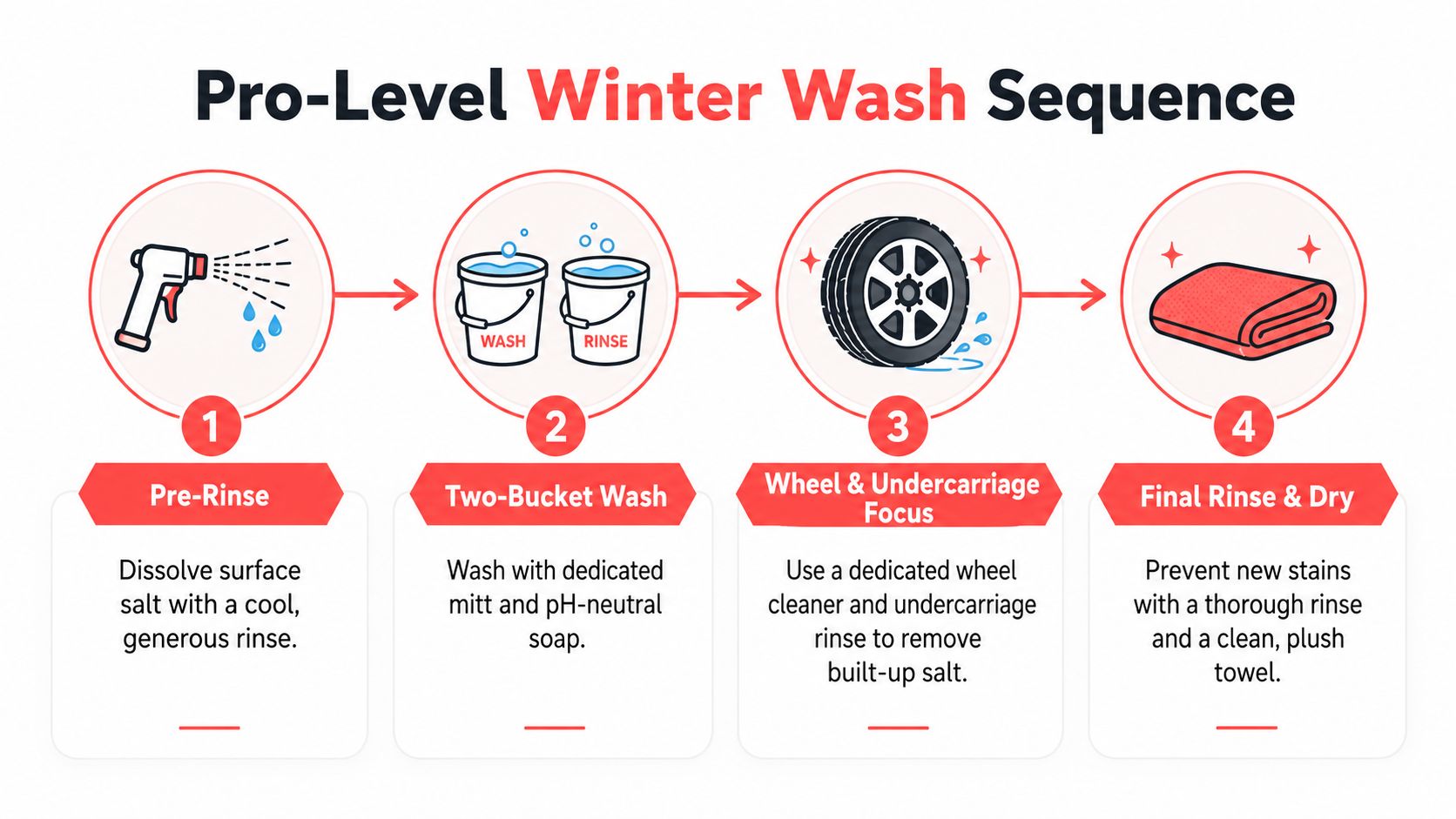
The outside of the car needs a wash sequence that respects where salt collects, not just where it looks dirty. Start with a cool, generous pre-rinse, because loose salt should leave the surface before any mitt touches paint. Then move into a two-bucket wash with a grit guard, using a pH-neutral car shampoo and a deep-nap wash mitt so the paint gets cleaned without dragging grit across it.
What to clean first
Wheels and wheel wells come first in my own workflow, because they carry the heaviest winter load. Use a dedicated wheel cleaner safe for clear-coated and alloy finishes, then work a soft brush around the barrel, spokes, and lug area before you even think about the body panels. After that, rinse the rocker panels and lower doors with a softer brush or mitt, since those spots collect the worst road film and salt splash.
The undercarriage is the step most homeowners skip, and it's the one that matters most after a storm. A low-pressure undercarriage rinse, or a self-service bay with a high spray setting, helps clear out packed residue before it settles into seams and brackets. Washing in direct winter sun or using hot water can flash-dry the panels and leave mineral spotting behind, so a shaded wash or a cool day is the safer bet.
If you want a service-based version of that exterior sequence, a mobile detailer can usually handle the same wash order at your driveway without turning it into a garage project. The point is simple: buy the right tools once, skip the harsh shortcuts, and rinse the car like salt matters, because it does.
Interior Workflow for Carpets, Floor Mats, and Upholstery
Inside the cabin, salt gets tracked in on boots, shoes, and pet paws, then ground into fibers every time someone gets in and out. The first move is always dry work. Pull the floor mats out of the vehicle, then dry-vacuum loose crystals before any liquid hits the carpet, because moisture before vacuuming just gives the salt more places to go.
A good interior kit is mostly about control. The basics are a true wet/dry shop vac, microfiber towels, a soft-bristle brush, and a pH-balanced interior cleaner. For a ready-made shopping reference, interior car detailing products can be useful if you're assembling a serious home kit and don't want random household products getting mixed into the process.
Carpet and mat handling
For carpet, use controlled moisture, not saturation. Light agitation with a brush loosens the residue, then a wet/dry vacuum pulls out the dirty moisture before it dries back into the pile. That same logic applies to carpeted mats, but rubber or all-weather mats get a different treatment, since they can be rinsed and fully dried outside the vehicle without soaking the floor.
The main mistake is over-wetting. Too much liquid pushes dissolved salt deeper into the backing, and a damp car in winter can hold onto odor long after the visible stain is gone. Professional cleaning crews often focus just as much on airflow and extraction as they do on the cleaner itself, because a dry finish is what keeps the stain from reappearing. For a deeper interior walkthrough, see removing salt stains from car carpet.
Material-Specific Rules for Leather, Suede, and Sensitive Trims
Not every interior surface wants the same chemistry. Leather, suede-style trim, and glossy plastics each react differently to winter residue, and the universal vinegar mix you see online can be fine on some fabrics but too aggressive on the wrong material. WipesBlog's guide on safe hygiene for commercial spaces is a useful reminder that cleaning products need to match the surface, not just the stain.
Leather seats should be handled with a lightly damp microfiber cloth first, then a pH-balanced leather cleaner if residue remains. After cleaning, conditioning matters, because salt and winter grime can leave the surface looking dry or dull. Over-wetting is the bigger risk than under-cleaning here, especially around stitched seams, perforations, and bolsters.
Suede or microsuede is a different game entirely. Let it dry fully, then brush gently in one direction to lift residue without grinding it in. For painted plastic trim and piano-black pieces, use a cleaner that leaves no chalky film behind, because salt haze shows up fast on shiny surfaces.
The seam between materials is where DIY gets awkward. A leather shift boot next to carpet, or a suede insert beside plastic trim, needs a different touch on each side. Once the stain sits in a transition area, a careful hand and the right tool matter more than brute force.
Drying the wrong way causes more trouble than the stain itself. If a surface stays damp in a cold garage, you're not just waiting on evaporation, you're inviting residue, stiffness, and a mess that shows up again the next day.
Why Vinegar and Water Is Not Always Enough
Vinegar and water is a decent first response, not a cure-all. It can help dissolve dried salt, but it doesn't solve the bigger issue, which is where the moisture goes after the stain loosens. Salt dissolves, travels with the liquid, and then re-deposits wherever that liquid dries, which is how white halos and stubborn returns happen.
That's why the failure modes matter more than the recipe. If you over-saturate carpet, rub instead of blotting, or leave the area damp, the residue can sink deeper into the fibers and backing. In winter, that dampness can also freeze in an unheated car or create the kind of lingering smell that makes the interior feel never fully clean.
When the next tool is the right tool
For dried residue on stubborn spots, a clothes steamer can help loosen what a wipe can't. For deeper carpet contamination, a wet vac becomes the important piece, because the job isn't just to break salt loose, it's to extract the dirty moisture before it resets in the pile. The Spruce's recent roundup notes that deeper contamination often calls for extraction, especially when moisture and odor are part of the problem, and that's the point where home cleaning starts to fall short. The Spruce's salt stain guide is useful because it names the part most DIY articles skip, the backing is where the trouble starts.
If you keep seeing the same white ring after drying, that's usually not a chemistry problem anymore. It's a moisture management problem, and that changes the answer fast.
Frequency and Prevention Habits That Actually Pay Off
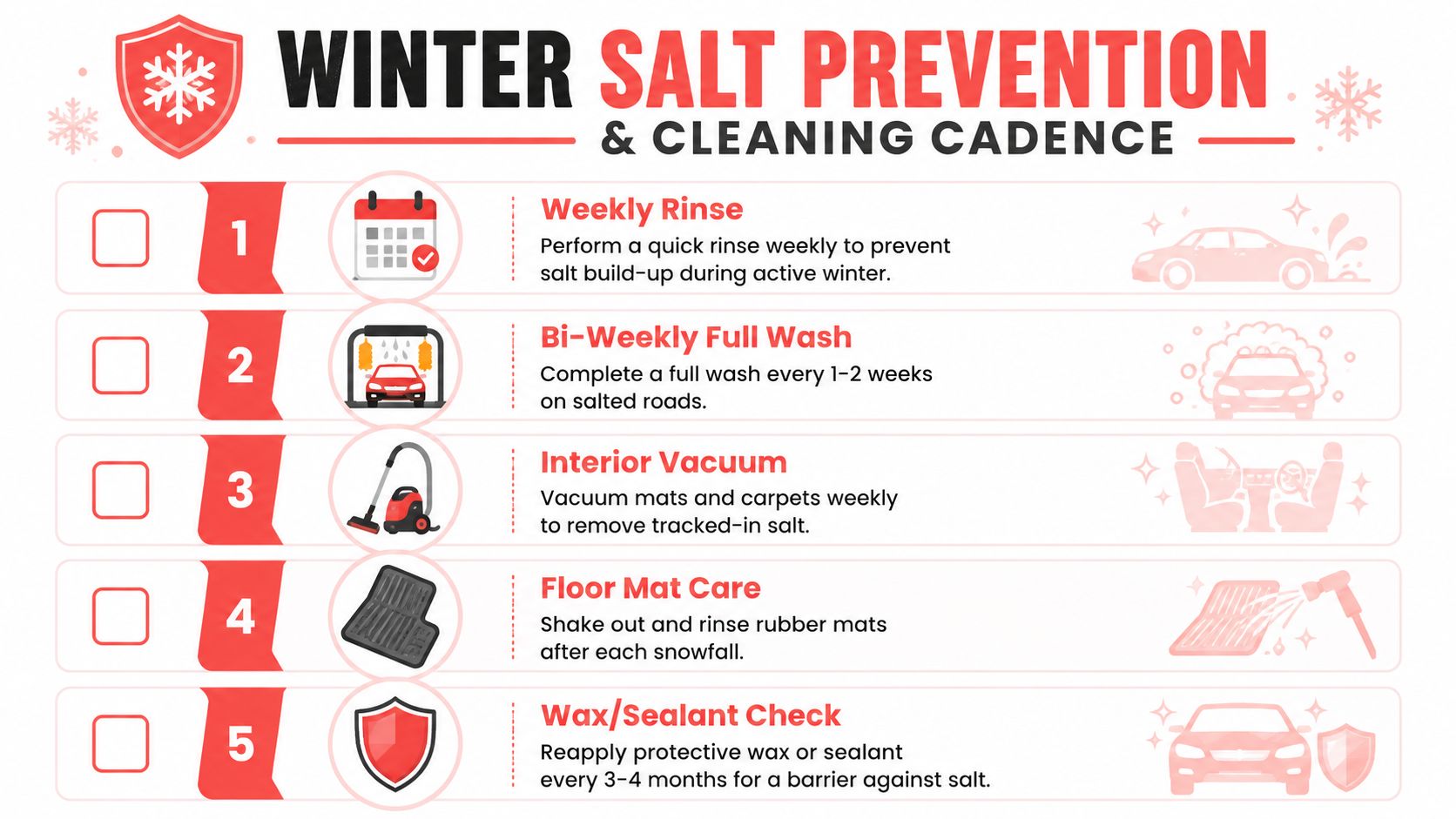
Winter cleanup goes a lot easier when you stop waiting for the car to look bad. On salted roads, a practical rhythm is a full wash every one to two weeks, with weekly vacuuming of the mats and footwells so crystals don't keep building up under boots. Rubber mats help a lot in that routine, because they can be shaken out and rinsed after each snowfall instead of holding salty slush against carpet.
Prevention that actually sticks
A quick undercarriage rinse after a storm does more than keep the underside tidy. It cuts down on the amount of residue that dries onto hardware, brackets, and lower body parts. A pre-rinse before any wash helps too, because it moves loose salt off the surface before mitt contact starts.
Protective products matter, but the goal is a barrier, not magic. Spray sealants and ceramic coatings can help make the surface easier to clean and give salt less direct access to the clear coat. For concrete-like winter discipline on the car, the idea is the same, clean early, rinse often, and keep dirt from becoming a baked-on layer.
A routine doesn't just make the car look better. It keeps every winter wash from becoming a rescue job, and rescue jobs are where damage usually shows up.
If you've got a daily driver, the prevention schedule matters more than chasing one perfect deep clean in March. Consistent attention keeps salt from hardening into the kind of mess that needs extraction later. The result is less staining, less odor, and fewer surprises when the thaw finally arrives.
When DIY Stops and Professional Detailing Starts
DIY has a clear limit. If white halos keep coming back after cleaning, leather feels stiff or discolored, carpet smells damp, or the stain shows up again within a day, the residue is still there. Visible undercarriage rust is another sign that the job has moved beyond surface cleaning and into damage control.
That's where professional detailing starts making sense. The Mobile Buff handles driveway appointments across Central Pennsylvania, with service available seven days a week from 7am to 3pm, and billing completed electronically when the job is done. If you want to check coverage and book from your phone, the easiest place to start is the Google Business Profile listing. For a winter-specific overview of mobile service, see mobile detailing in winter.
Quick answers people usually want
Is road salt the same as calcium-based de-icer stain? Not always. Both can leave white residue, but calcium products often behave more like mineral buildup, so the safest response is still surface-specific cleaning and extraction.
How long should a cleaned interior dry before I close the car up? Long enough that the carpet, backing, and mats are fully dry to the touch, with airflow helping the process. If it still feels damp, don't seal it up yet.
Can a car wash membership replace hand detailing? Not for winter salt. It can help with rinse frequency, but it usually won't touch the stubborn residue in carpet, seams, or lower body areas the way a hand detail can.
Are touchless washes safe in freezing weather? They're safer than skipping wash care altogether, but they're still only part of the answer. Salt removal works best when rinsing, contact-safe washing, and proper drying all happen together.
The Mobile Buff handles that full winter cleanup across Central Pennsylvania, from salt-covered exteriors to carpet extraction and the tricky interior spots that don't respond to quick wipes. If you're tired of seeing the same white stains come back, visit The Mobile Buff and book a driveway appointment that gets the salt out before it settles in.

