


You notice it at dusk first. The road looks flatter, the lane markings seem less crisp, and your headlights throw a weak, tired beam instead of a clean wash of light. That is usually the moment drivers start searching for a headlight lens replacement service near me, because they can feel the problem before they can name it.
Most of the time, the bulb is not the core issue. The lens has gone cloudy, yellowed, pitted, or cracked, and the beam is scattering instead of reaching the road where you need it. If you drive at night, that change matters fast, because a dim, distorted headlight makes every turn, merge, and stop feel more stressful than it should.
Why Your Headlights Look Worse at Night
The problem usually hides in plain sight during the day. In direct sunlight, a headlight lens can look only a little dull, but once the sky starts fading, the weak beam becomes obvious and the road starts disappearing sooner than it used to.
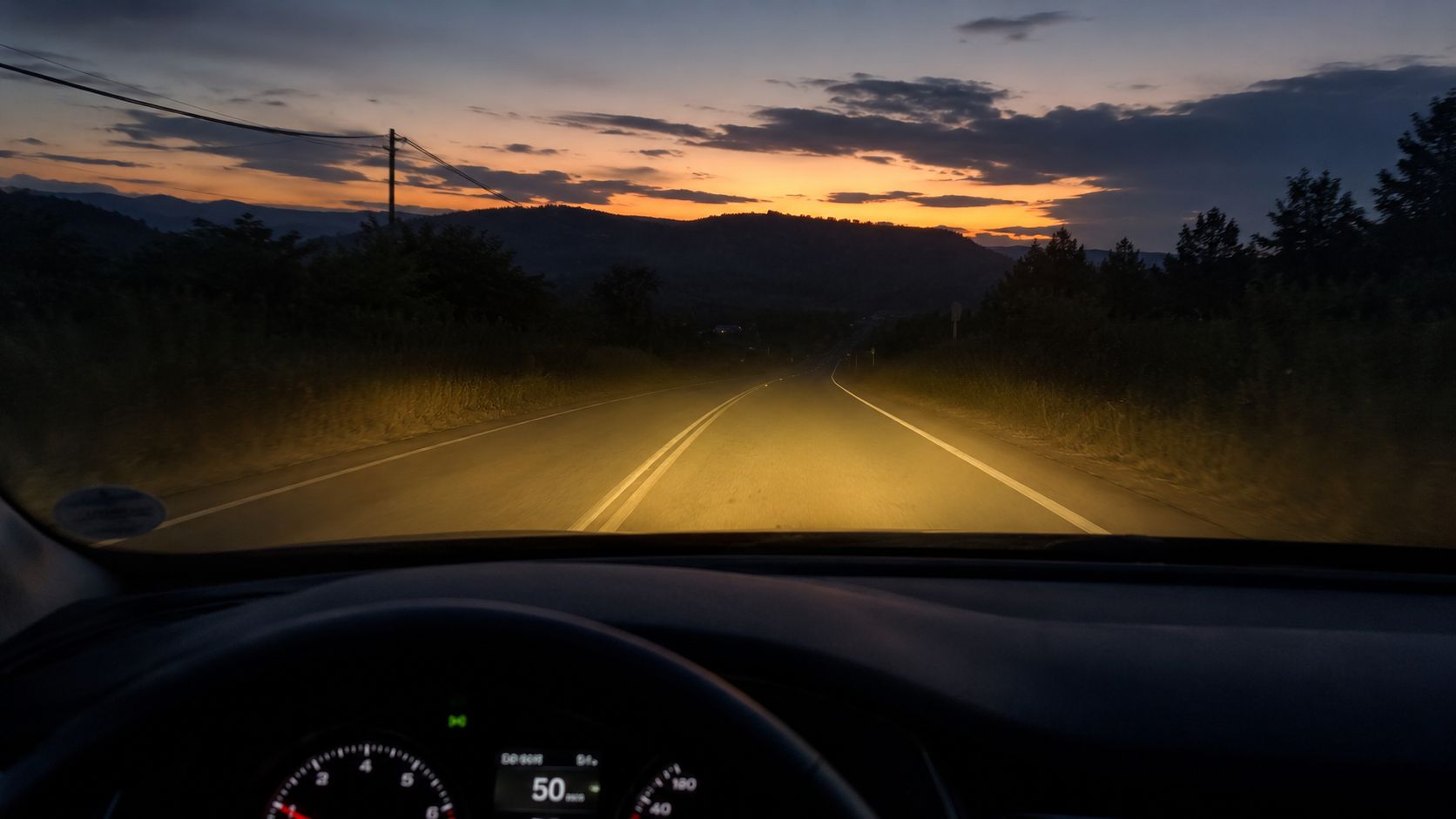
What the driver usually notices first
A lot of people blame the bulb. That's understandable, because a headlight that feels weak looks like an electrical problem. In reality, the lens often does the damage by diffusing the light before it can reach the road.
UV exposure, road grit, and age work on the lens every day. The plastic slowly clouds over, yellowing creeps in, and tiny surface damage starts breaking up the beam. By the time night driving feels sketchy, the lens has usually been declining for a while.
If you have to keep checking your high beams just to feel comfortable, the lens probably isn't doing its job anymore.
That's why this repair is about more than cosmetics. Clear lenses don't just look cleaner, they help the headlights project usable light instead of a hazy glow. If you're noticing the change more at night than during the day, you're not imagining it.
Lens Replacement Versus Lens Restoration
Drivers mix these two up because both can make old headlights look better, but they solve different problems. Lens restoration cleans up the original plastic, while lens replacement swaps in a new lens or, on some vehicles, the full assembly.
The practical difference
Restoration makes sense when the lens is mostly hazy or yellowed and the housing is still solid. That is the cheaper path, and it fits the kind of job where the plastic still has enough life left to recover clear light output. A good look at headlight restoration value shows why this option stays popular with drivers who just need better visibility, not a full rebuild.
Replacement is the right call when the lens or housing has moved past saving. Consumer cost guides put full headlight assembly replacement much higher than restoration, with the bill climbing fast on vehicles that use integrated lighting or more complex parts. That price gap is exactly why drivers usually try restoration first, then move to replacement when the lens is cracked, badly pitted, or no longer sealing properly. Jerry's headlight repair cost guide makes that difference easy to see.
My take: if the lens is only cloudy and the housing is dry, restoration is worth the money. If the plastic is cracked, heavily pitted, or moisture has already moved in, replacement is the cleaner repair.
When the swap earns its price
Older halogen assemblies usually cost less to replace than newer lighting setups. Basic halogen units tend to stay on the lower end, while HID, LED, and advanced assemblies bring a much bigger bill because the parts are more integrated and harder to service. That is why a full swap can feel steep on paper, but still be the right answer on a newer car with built-in lighting hardware. a mobile assembly cost guide and this replacement overview lay out the tradeoff plainly.
Here is the short version. Restoration refreshes what you already have. Replacement replaces what you cannot save anymore.
Signs Your Headlights Need Replacement Instead of a Polish
Some headlights are still worth polishing. Others are past that point, and trying to squeeze more life out of them just wastes time and money.
What to look for at home
Start with the surface. If the lens has cracks, spidering, or damage you can feel with a fingernail, polishing is not enough. The same goes for heavy yellowing that does not improve and for deep pitting that keeps breaking up the light pattern.
Moisture changes the decision fast. If you can see condensation or trapped water inside the housing, the problem is no longer just the outer plastic. A polish can make the outside look better for a while, but it will not fix what's happening inside the unit.
Pay attention to the road itself, not just the lens. If the bulbs are fresh but the car still throws short, weak, or uneven light, the optical path is compromised. That's usually a sign the lens surface or housing has moved beyond a simple cosmetic correction.
The rule I use
If the lens still preserves the original beam shape, restoration may buy you useful time. If the light is scattering, the plastic is brittle, or the inside is compromised, replacement is the smarter fix. ClearView's lens replacement guidance points in the same direction, especially when damage is structural rather than cosmetic, and it emphasizes fitment, seal integrity, and beam pattern after the repair ClearView's lens replacement FAQ.
A driver once polished cloudy lenses twice in one season and still kept getting fog back inside the housings. The underlying problem was micro-cracking and moisture intrusion, not surface haze. That's the kind of job where replacement pays for itself in fewer repeat visits.
What Happens During a Professional Lens Service
A proper headlight job is not a quick wipe-down. It starts with inspection, because the technician needs to know whether the lens can be restored or whether it should be replaced outright.
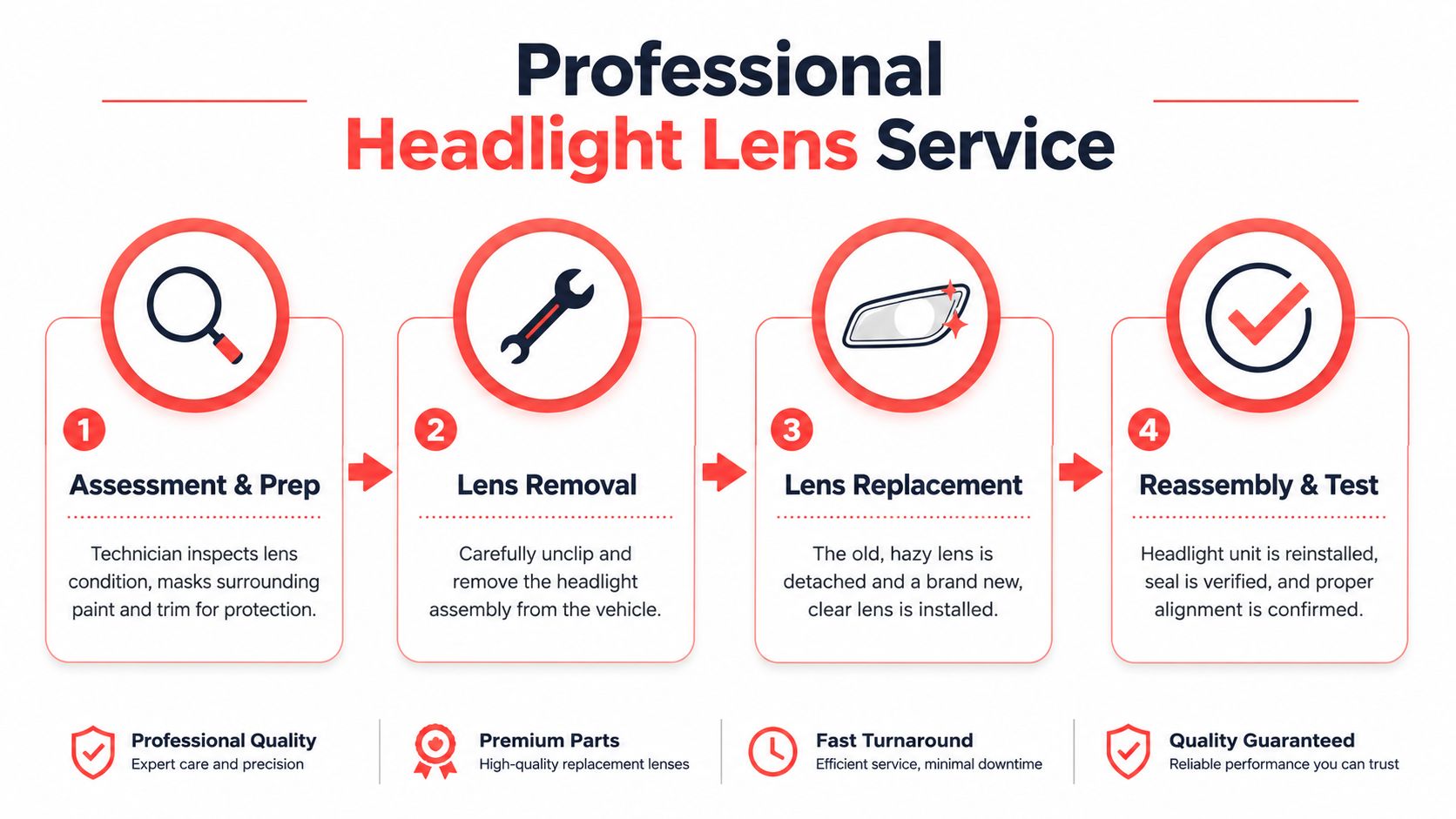
The actual sequence
First comes assessment and prep. The technician checks the lens condition, looks for moisture, and masks the surrounding paint and trim so the job doesn't leave marks. That part matters more than many realize, because headlight work happens inches from finished panels.
Next comes removal. On many cars, the assembly has to come out to access the lens correctly. A mobile pro will unclip or unbolt the unit carefully rather than forcing anything, because brittle housings crack fast when someone rushes the job.
Then comes the replacement or restoration step itself. If the lens is being replaced, the old one is detached and a new lens is fitted and sealed. If the service is restoration, the technician uses industry-approved wet-sanding, polishing, and a UV-inhibiting protectant rather than a household shortcut.
Finally, the unit goes back in and gets tested. A technically sound job includes beam aiming and a light-intensity check, because a headlight can still be unsafe if the pattern is off. Guidance on DOT-compliant work stresses pre-service inspection, aiming equipment, and photometer-style verification so the headlights do more than just look clean DOT-compliance guidance.
A lens swap that looks good but throws glare is not a finished repair.
For a mobile appointment, that last step is the difference between cosmetic work and real road safety. It is also why I don't recommend shortcuts like a quick polish with whatever's in the garage.
Here's a real-world example of the kind of process you're buying when you book professionally, from a detailed walkthrough of mobile car detailing. You're paying for the inspection, the fitment, the seal check, and the final aim, not just the time spent with a tool in hand.
Realistic Cost Expectations for Central PA Drivers
The price depends on the car in your driveway, not the headline on a quote page. A modern headlight replacement can cost as much as $200 in parts and $100 in labor, according to NAPA Auto Parts, and the total climbs as access gets tighter and the headlight design gets more complex NAPA's headlight replacement service guide.
What drives the price
Basic halogen assemblies are usually the least painful on the wallet. Once you move into HID, LED, or advanced assemblies, the bill rises because the parts are more complex and harder to source. Luxury and adaptive systems can push the repair into the $2,000 to $4,000+ range, which is why plenty of owners hesitate before approving a full replacement Jerry's cost guide and the assembly replacement guide.
If the housing is still intact, restoration is usually the smarter spend. That is why a lot of drivers compare a mobile restoration quote with the cost of a full assembly swap. For a closer look at how service pricing is usually framed, this mobile detailing price breakdown helps set expectations.
A lot of owners also want the practical answer, not the theory. If your lens is cloudy but the assembly still works, pay for restoration and keep the money in your pocket. If the housing is cracked, burned, or full of moisture, stop shopping for polish and budget for replacement instead.
| Headlight Service Cost Ranges at a Glance | ||
|---|---|---|
| Service Type | Typical Price Range | Best For |
| Headlight restoration | $80 to $150, or $100 to $150 per pair | Hazy lenses, intact housings |
| Mobile restoration work | $153 to $267 | Convenient on-site clarity work |
| Basic halogen assembly replacement | $150 to $300 | Older vehicles with simple housings |
| Full assembly replacement | $150 to $800 | Standard vehicles with damaged units |
| HID, LED, advanced assemblies | $500 to $1,500+ | Newer lighting systems |
| Luxury or adaptive systems | $2,000 to $4,000+ | High-end and complex headlight setups |
That table says what quote pages often gloss over. The lowest price is not always the right call, and the highest price is not always necessary either. If the lens is salvageable, you save money and keep the car safe enough to drive at night. If it is not, you spend the money once and stop wasting time on temporary fixes.
For drivers comparing service providers, how to dominate your local market is the kind of local-first thinking that wins nearby customers, because people want a clear answer, a fair price, and work that fixes what they can see on the road.
Why a Mobile Detailer Is the Smart Call
A shop visit makes sense for collision-level damage. For a cloudy or failing lens, a mobile appointment is usually the better experience because the work happens where the car sits, without the drop-off hassle or the shuffle for a ride home.
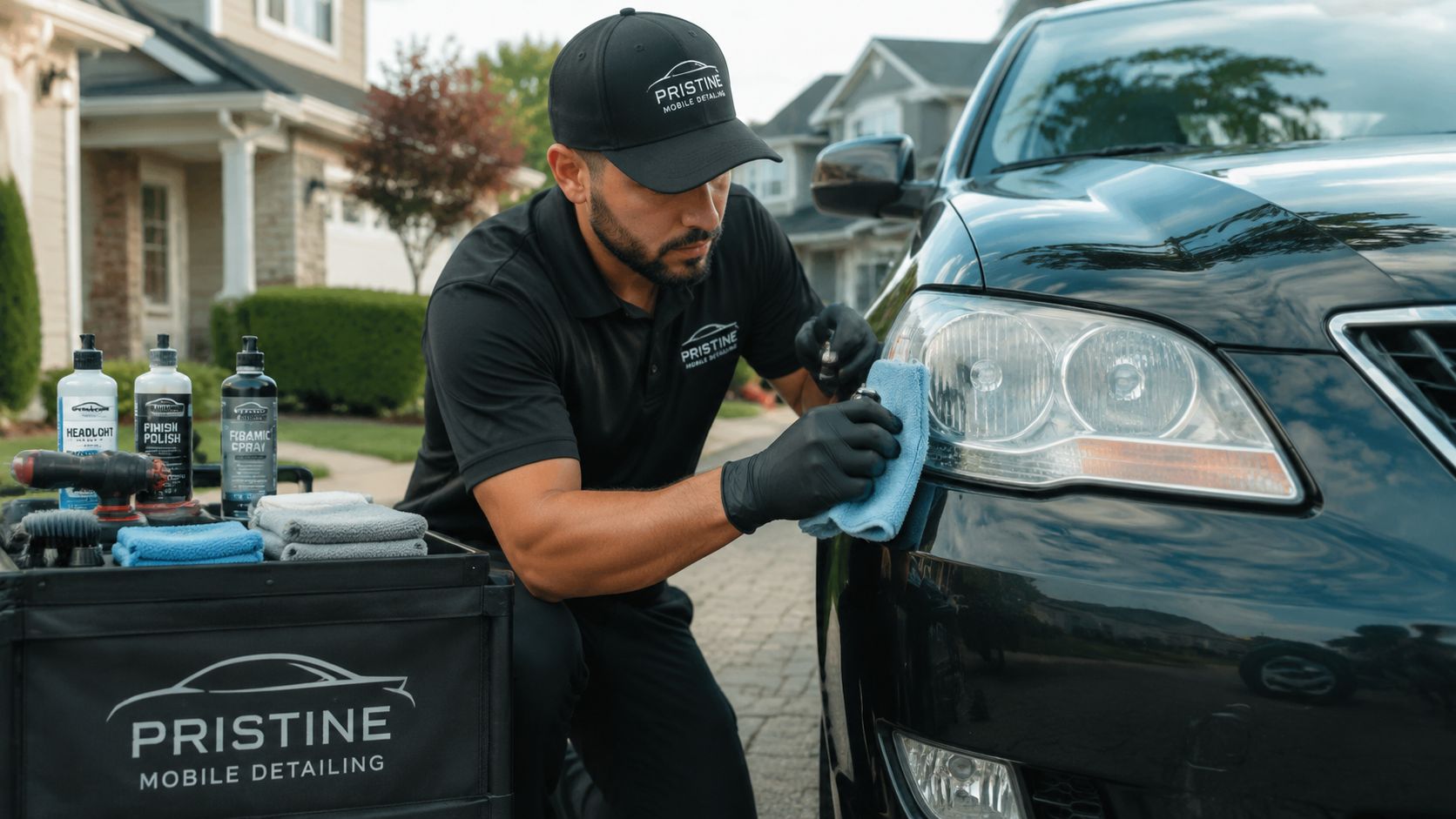
Why driveway service works
A mobile detailer can inspect the car in the same light you drive in, which matters more than people think. If the headlights look dull in your driveway and weak on the road, you want the person fixing them to see that context too.
The convenience is obvious, but the accountability is the bigger win. You can watch the condition check, ask what the repair covers, and see the finished beam before the technician packs up. That makes the process clearer than dropping the car at a counter and waiting for a call.
Mobile pros also tend to think in systems, not just single parts. They care about paint protection around the housing, lens condition, and the final appearance of the car as a whole. If you want to understand that service model better, what mobile car detailing actually includes is a helpful reference.
Cloudy headlights are a safety issue first and an appearance issue second.
For a Central Pennsylvania driver, speed matters too. The longer you keep driving with weak headlights, the longer you live with reduced nighttime confidence. If you're comparing providers, check local availability, operating hours, and service area first, because that is what determines whether the work gets done soon enough. A good local SEO example of why that visibility matters is how to dominate your local market, since homeowners and drivers alike choose the provider they can find, verify, and book quickly.
I'd also look at the business profile before you call. The easiest way to check reviews, hours, and service coverage is the Google Business Profile for The Mobile Buff, here.
Where The Mobile Buff Works in Central PA
The Mobile Buff serves Harrisburg, Mechanicsburg, Carlisle, and Newport, along with surrounding areas in Dauphin and Perry counties. That footprint matters because headlight work is one of those jobs where convenience really does decide whether a driver books now or puts it off another month.
A normal appointment can look simple. A driver in Mechanicsburg books a Saturday morning slot, the detailer arrives in the driveway, handles the headlight work, and can bundle it with an exterior wash or a fuller detail package. That's a lot easier than spending half a day organizing a shop drop-off.
The service model is built for that kind of routine. Appointments run seven days a week from 7 a.m. to 3 p.m., billing is electronic, and payment is due on completion. Flexible packages like Interior & Exterior, Exterior & Headlight, Interior & Headlight, and Full Service & Headlight make it easy to keep the headlight job from becoming a separate errand.
If you want the work done without interrupting your week, mobile service fits the job.
For local visibility, booking pages only help if people can find them. That's why how to rank a repair shop locally is worth a look if you care about how a service provider shows up in search and maps results.
The quickest way to verify whether your town is covered is still the business profile link. If you're in the Central PA service area and you want a cleaner, safer beam without making a shop trip, that's the place to check first.
Booking Your Appointment and Common Questions
Booking is straightforward. Use the Google Business Profile to confirm your town, choose a package like Exterior and Headlight or Full Service and Headlight, and pick a time that fits your day. The mobile setup is built for drivers who want the repair handled at home without a second errand.
How long does it take? Most customers care less about the clock than the result, but the service is usually handled in one visit. Is it DOT-compliant? It should be, if the technician verifies the optics after the install instead of stopping at the cosmetic finish.
Will it last? That depends on the lens condition, the seal, and whether replacement was the correct fix in the first place. Is there a warranty or satisfaction guarantee? Ask before you book, because that should be clear upfront, not after the work is done.
If your headlights are hazy enough that night driving feels annoying or unsafe, stop debating it and get the car looked at. Clearer headlights are usually one appointment away.
If you're in Central PA and your headlights are looking tired, The Mobile Buff can handle the inspection, restoration, or replacement-style cleanup right in your driveway. Book through The Mobile Buff and get the kind of headlight service that makes night driving feel normal again.

