


That moment your heart sinks—a greasy spot on your pristine car upholstery. It's a common problem, but tackling it the right way is crucial. As professional detailers, we know that removing a grease stain isn't just about a quick wipe-down. It's a specific process that requires the right tools and techniques to break down the oil, lift it from the fabric, and extract it completely. The most important things to remember are to blot, not rub, and to act as quickly as possible before the stain sets.
Why That Grease Stain Is Such a Stubborn Problem
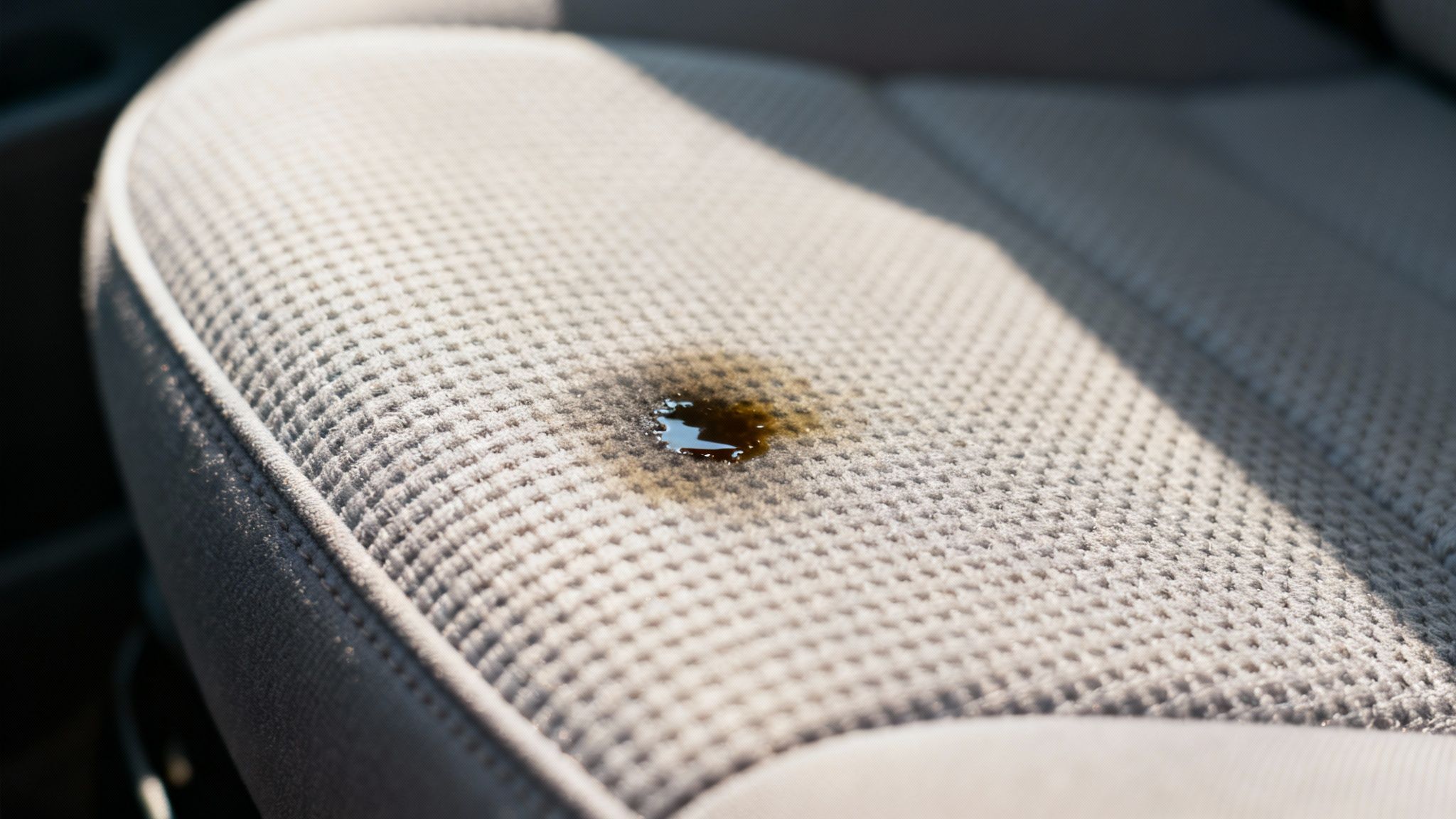
Ever wondered why that little grease spot from a dropped french fry seems to stick around forever? It's not your imagination. Grease and oil are chemically attracted to the synthetic fibers—like polyester and nylon—that make up most modern car seats.
Once that grease soaks in, it doesn’t just hang out on the surface. It dives deep into the fabric and can even seep into the foam cushion underneath. If you leave it, the oily residue oxidizes and hardens, which makes it exponentially harder to remove later on.
The Science Behind the Stain
Unlike a water-based spill like coffee or soda, oil is "hydrophobic," which is a fancy way of saying it repels water. This is exactly why dabbing at it with a wet cloth usually just spreads the oily mess into a bigger, shinier problem. To beat it, you need a professional-grade solution that can actually break down and emulsify the oil itself.
That ugly spot is just the beginning. A greasy patch is basically a magnet for every other kind of grime.
- It traps dirt and dust, making the stain look darker and larger over time.
- It can cause funky, lingering odors as the oil starts to go rancid.
- It leaves behind a sticky, unpleasant residue that you definitely don't want to sit on.
The longer a grease stain sits, the more it chemically bonds with the fabric fibers. Time is your biggest enemy here, turning a simple cleanup into a potential permanent problem.
The Cost of Waiting Too Long
When you're figuring out how to remove grease stains from upholstery, speed is your best friend. Did you know a grease stain can become a permanent fixture if you don't act fast? Some studies have shown that up to 98% of grease stains can set permanently within just 24 hours if they go untreated. This makes a simple DIY fix almost impossible and often leads to the need for professional intervention.
You can learn more about the challenges of the upholstery cleaning market to see why quick, professional care is so important.
What starts as a small, manageable spot can quickly become a full-blown detailing emergency. Understanding what you're up against is the first step, but having the right tools and approach is what really saves the day. If you're staring down a stubborn spot and feeling out of your league, remember that calling in a pro is always the safest bet. Our team at The Mobile Buff has seen it all, and we have the gear to make that stain a distant memory. Contact us today to get your car's interior looking brand new again.
Getting Your Cleaning Toolkit Ready
Before you even think about touching that grease stain, let's talk about supplies. Having the right tools on hand is half the battle, and honestly, it’s what separates a successful removal from a bigger, blotchier mess. We’re aiming to lift the grease out, not just push it deeper into the fabric.
As professionals, we’ve seen it all, including well-intentioned DIY attempts using household cleaners like dish soap. Big mistake. Those products often leave behind a sticky residue that becomes a dirt magnet, or worse, they can bleach your car's upholstery. You need a dedicated, professional-grade kit.
What You'll Absolutely Need
To do this right, you'll want to gather a few specific items. Each one has a job, and skipping one can compromise the whole process.
- A Stack of Clean Microfiber Cloths: These are your best friends for blotting up the initial mess and for the final wipe-down. Their design is perfect for trapping oil without smearing it around. You'll need several so you're never dabbing a dirty cloth back onto the clean area.
- A Soft-Bristled Upholstery Brush: You need this for gentle agitation. The key word here is gentle. A stiff brush will fray and damage the fibers of your seats, but a proper upholstery brush is soft enough to work the cleaner in safely.
- A Professional, pH-Neutral Cleaner or Degreaser: This is your heavy hitter. A pH-neutral formula is a must—it's tough on grease but won't harm or discolor your fabric. If you're unsure which one to grab, we've put together a guide on the best stain removers for car upholstery to help you choose.
The Pro's Secret Weapon
While the tools above are essential for a basic attempt, there's one piece of equipment that truly makes a professional difference: an extractor.
A hot water extractor (or at least a powerful wet/dry vacuum) is the only surefire way to pull the cleaning solution and the dissolved grease completely out of the upholstery. If you leave that residue behind, it will dry sticky and attract dirt, and you'll have a dark spot again in a week.
This machine's powerful suction doesn't just clean the surface; it pulls everything out of the foam cushion underneath. It's the critical final step for a truly deep clean. If you don't have an extractor, this is the point where a DIY job often falls short. As mobile detailers, we see the incredible results this equipment delivers every single day. Just check out the before-and-afters on our Google Business Profile to see what we mean.
Ready to put these tools to work, or thinking this job is best left to the pros? Contact The Mobile Buff today, and we'll bring our complete professional toolkit right to your driveway!
Match Your Cleaning Method to the Upholstery
When you're staring down a grease stain, it's tempting to grab the first cleaner you see. But trust me, there's no magic bullet solution for every type of upholstery. A heavy-duty degreaser that works wonders on a tough synthetic fabric could absolutely ruin delicate leather. As a pro, the first and most important step is always identifying the material and choosing the right tool for the job.
You simply can’t treat a durable polyester blend the same way you’d handle genuine suede. Every fabric reacts differently to oils and cleaning agents, and knowing how to adapt your approach is what separates a successful cleanup from a costly, permanent mistake.
For Standard Cloth and Synthetic Blends
Ever feel like your car seats are a magnet for greasy food stains? There’s a reason for that. A huge chunk—around 85% of upholstery fabrics in modern cars—are synthetic blends like polyester or olefin. While they’re great at repelling water, they have a nasty habit of trapping oily residues deep within their fibers.
This is a big part of why the carpet and upholstery cleaning chemical market is now a USD 3.2 billion industry. These fabrics need a specific approach.
For these common materials, we start with a specialized solvent-based spot cleaner or a powerful enzymatic formula designed to literally break down oil molecules. The trick is to agitate it gently with a soft brush—you want to lift the stain, not grind it in—and then use a hot water extractor to pull out all the dissolved grease and leftover cleaner. You can find more details on this process in our complete guide on cleaning cloth car seats.
As you can see, there’s a world of difference between a simple DIY attempt and a professional deep clean.
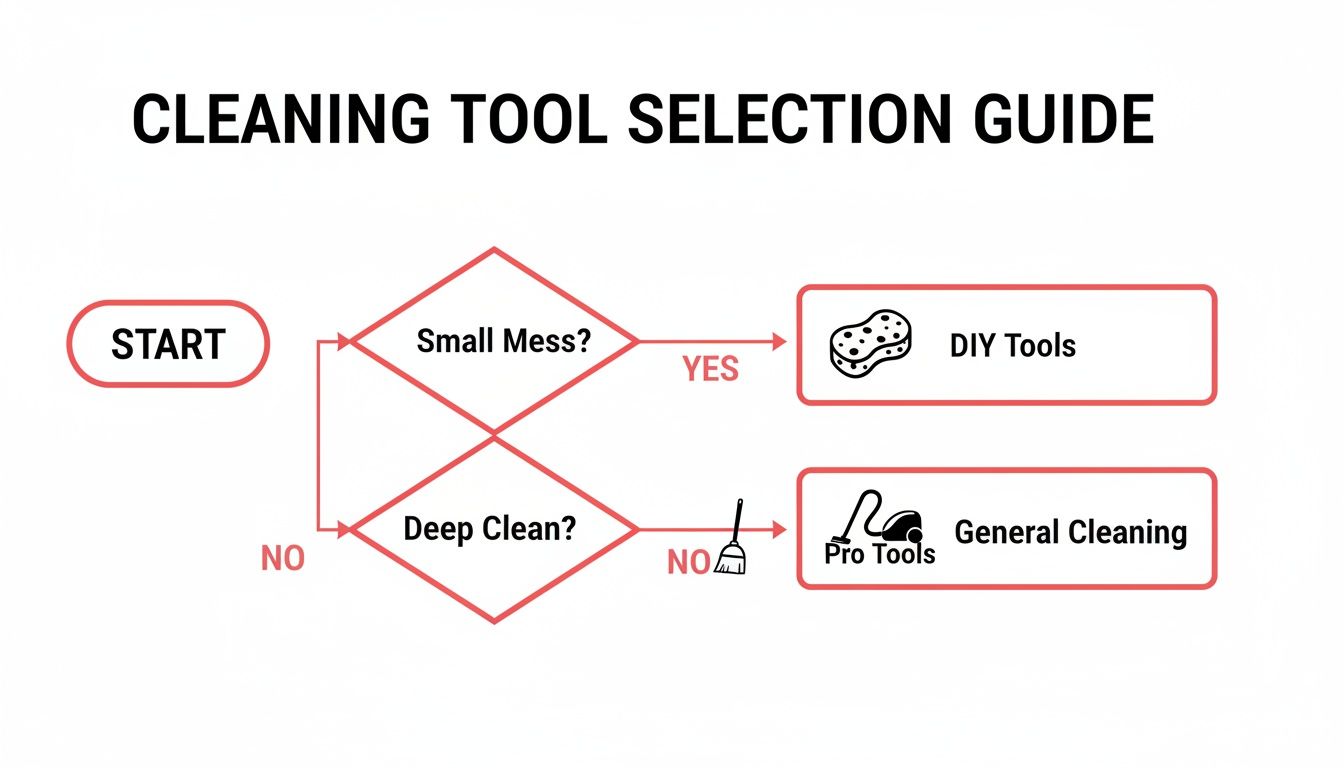
That extractor is the real MVP here. It flushes the fabric with hot water and immediately vacuums it all back up, ensuring no residue is left behind to attract more dirt later. Basic tools just can't do that.
A Softer Touch for Leather
Leather is a whole different ballgame. It's a natural skin, and hitting it with harsh, all-purpose cleaners will strip its essential oils, leaving it dry, faded, and prone to cracking. That's a mistake you'll regret down the road.
The right way to handle a grease stain on leather is a careful two-part process:
- Clean first. We use a pH-balanced leather cleaner, applying a small amount to a microfiber applicator pad. Then, we gently work it into the surface to lift the grease without damaging the finish.
- Condition second. After the stain is gone, it's absolutely crucial to apply a quality leather conditioner. This step puts the moisture back, replenishes those natural oils, and leaves a protective barrier against future mishaps.
This isn’t just about cleaning; it’s about preserving the life and look of your leather interior.
A true detailer knows that with leather, you're not just wiping a surface—you're caring for the material itself. The goal is to get the stain out while nourishing the leather to prevent any long-term damage.
The Delicate Dance with Suede and Alcantara
Then you have the really sensitive stuff, like suede or Alcantara. These materials are beautiful but notoriously unforgiving. Too much moisture, the wrong chemical, or even brushing too hard can cause irreversible damage, like water spots or matted fibers.
For these delicate surfaces, we reach for a specialized suede cleaner and a proper suede brush or erasing block. The whole process is about patience and precision. You have to gently lift the stain without changing the fabric's unique nap and texture. Honestly, this is where a DIY job can go south fast, turning a small spot into a very visible, very permanent problem.
When it comes to a tough stain on a tricky material, your safest bet is to call in an expert. We have the specific products and the hands-on experience to tackle any upholstery type without the risk. If that stain has you stumped, take a look at our work on our Google Business Profile and then give The Mobile Buff a call for a perfect, professional finish.
To make it even clearer, here’s a quick-glance table breaking down how a professional detailer approaches grease on different upholstery types.
Professional Stain Removal by Upholstery Type
As you can see, the right tool for the job changes dramatically based on what you're cleaning. Taking a moment to identify the material is the first and most important step toward getting that grease out for good.
The Pro-Level Method for Perfect Stain Removal
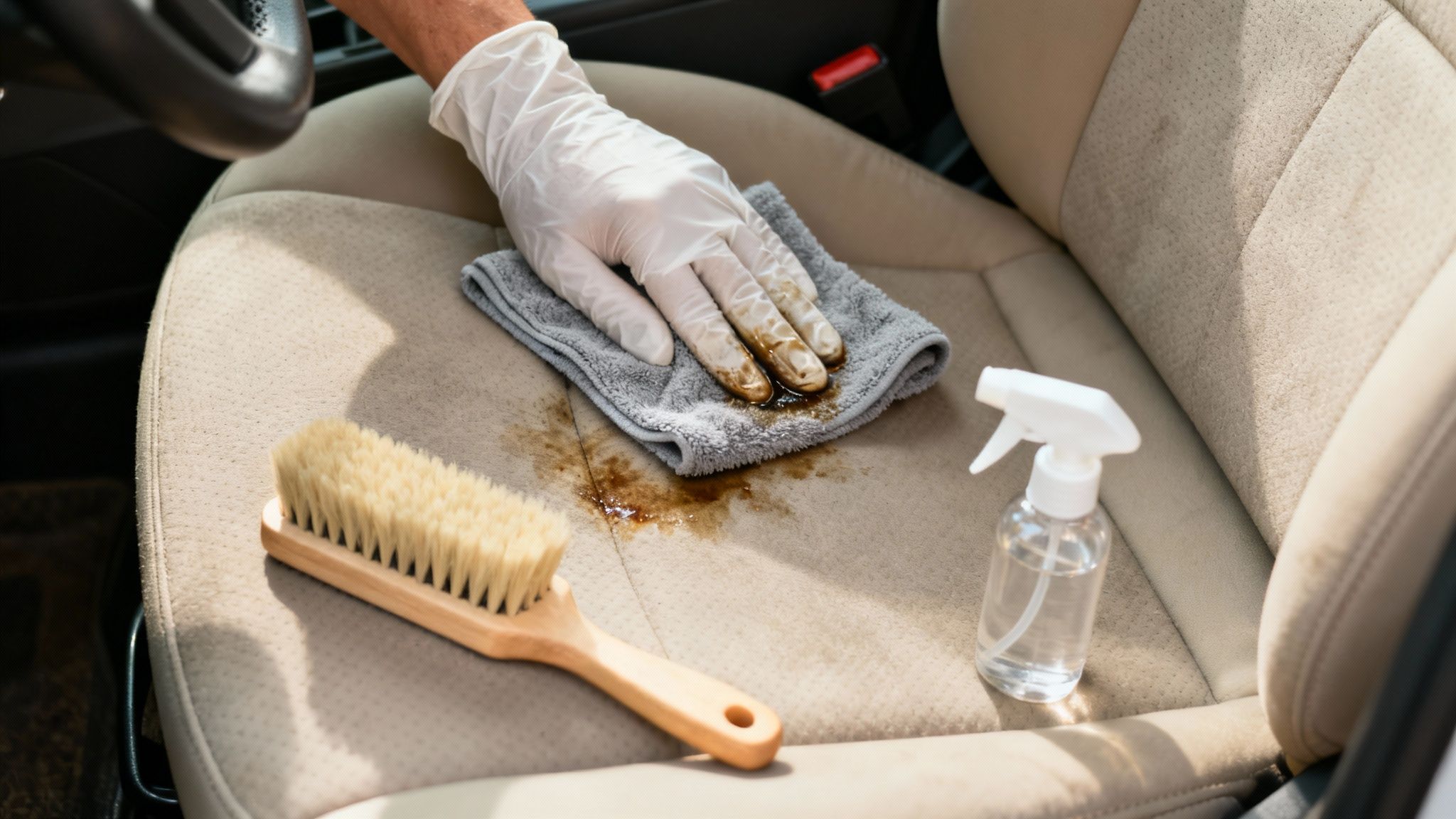
Alright, you’ve figured out what kind of upholstery you're dealing with and have your professional cleaning arsenal ready. This is where the real work begins. Getting a grease stain out isn't about scrubbing wildly; it’s a careful, deliberate process. The goal is to lift the oil out of the fabric, not drive it deeper in.
As professional detailers, we live by one simple rule: contain and extract. You always work on the stain from the outside edges inward, which stops it from spreading. Then, you pull the dissolved gunk completely out of the fibers. This is what separates a quick fix from a truly flawless result.
First Things First: The Spot Test
Before you even think about putting cleaner on that stain, you have to do a spot test. This is non-negotiable in the pro world. Find a hidden spot on the upholstery—maybe a flap of fabric underneath the seat or on the back—and apply a small amount of your cleaning solution.
Let it sit for a minute, then blot the area with a clean, white microfiber towel. Look closely. Did any color come off onto the towel? Is the fabric faded or discolored? If everything looks normal, you're good to go. Skipping this simple 30-second test can turn a small stain into a much bigger, permanent disaster.
The Gentle Art of Blotting and Applying Cleaner
Your first move against the stain itself is always to blot. Grab a clean, dry microfiber cloth and press down gently on the grease spot. You’re just trying to soak up any excess oil sitting on the surface. Whatever you do, never rub or scrub! That's the fastest way to push the grease deeper into the fibers and create an even wider, more stubborn stain.
After you've blotted up what you can, it’s time to apply your cleaner. Lightly mist the solution directly onto the stain. Resist the urge to drench the area. Over-wetting the fabric can lead to ugly water rings and even mildew growth inside the cushion. A light, even mist is all you need to let the cleaner start breaking down the grease.
Agitation and the Magic of Extraction
Now for the part that really lifts the stain. Once the cleaner is on, take a soft-bristled upholstery brush and gently work the area.
The trick is to use small, controlled motions, starting from the outer edge of the stain and moving toward the center. This technique corrals the stain, preventing it from bleeding outward as the cleaner dissolves the oil.
Finally, we get to the step that most DIY attempts miss: extraction. This is what actually removes the stain for good. Using a dedicated hot water extractor or a powerful wet/dry vacuum, you'll flush the area with water and immediately suck out all the dissolved grease, grime, and cleaning solution. Without proper extraction, you’re really just spreading the mess around. This step guarantees a deep clean and ensures that stain won't mysteriously reappear next week.
Feeling like this is a bit much to handle on your own? That's completely understandable, and it's why we're here. You can see the kind of results we deliver for our clients on our Google Business Profile. Let The Mobile Buff take care of it so you don't have to—contact us today to get on our schedule
Knowing When to Call in a Mobile Detailing Expert
Sometimes, the smartest move is knowing when to call for backup. As a professional, I've seen countless DIY attempts turn a simple spot into a permanent disaster. Learning to recognize when a grease stain is out of your league will save you a ton of time, frustration, and maybe even your car's upholstery.
If you’re staring down a huge, soaked-in stain or one that’s been baking in the sun for weeks, the odds are seriously stacked against you. Old grease doesn't just sit there; it oxidizes and chemically bonds with fabric fibers. Breaking that bond requires specialized gear that you just can't buy at the auto parts store.
High-Stakes Scenarios
Certain situations just scream "call a pro" right from the get-go. Don't even think about tackling it yourself if you run into one of these:
- Delicate Materials: I'm talking about fabrics like suede, Alcantara, or certain types of very fine leather. These materials are incredibly unforgiving. The wrong chemical, or even just a little too much water, can leave behind permanent water spots, discoloration, or a ruined texture.
- Set-In Stains: A stain that's been hanging around for more than a few days isn't just a surface problem anymore. The oil has almost certainly seeped deep into the foam padding of the seat. The only tool that can truly get that out is a commercial-grade hot water extractor.
- Unknown Stains: If you're not 100% certain it's a simple grease stain, stop right there. Trying to treat a mystery stain with the wrong method can lock it in, making it impossible for even a professional to remove later on.
It’s not just about looks, either. A lingering grease stain can become a breeding ground for nasty stuff. An EPA study actually found that dust mite populations can skyrocket by 1,000% within just a few months in oily residues. This growing concern over interior hygiene is a big reason the global upholstery cleaning market is booming, which you can see if you explore more about the industry's growth.
A professional detailer isn't just cleaning a stain; we're restoring the health and safety of your car's interior. We have the tools and expertise to pull out deep-seated contaminants that DIY methods simply leave behind.
For those really tough jobs in the Harrisburg, Mechanicsburg, or Carlisle areas, a mobile service is your best bet. A detailer from The Mobile Buff can bring the right equipment—like our hot water extractors and perfectly pH-balanced chemicals—straight to your driveway. We offer a guaranteed, risk-free solution, and you can see the quality of our work for yourself on our Google Business Profile.
Don't let a stubborn grease spot win. If you're up against a stain that just won't budge, our professional stain removal service is designed for exactly these kinds of headaches. Contact The Mobile Buff today and let us get your upholstery looking brand new, safely and effectively.
Got Questions About Grease Stains? We’ve Got Answers.
As professional detailers serving Central Pennsylvania, we've seen just about every kind of spill you can imagine. Grease is a frequent offender, and there’s a ton of bad advice out there. Let's clear up some of the most common questions we get from car owners just like you.
"Can I Just Use Dish Soap on My Car Seats?"
Please don't! It’s a tempting thought, I get it. Dish soap is a degreaser, after all. But here's the problem: it’s designed for hard, non-porous surfaces like plates, not for absorbent upholstery and foam cushions.
Getting all that soap rinsed out is nearly impossible. What's left behind is a sticky residue that becomes a magnet for more dirt and dust, eventually creating a bigger, darker spot than you started with. Plus, many dish soaps have a harsh pH that can fade or discolor your car's fabric. Stick with a cleaner made specifically for automotive interiors.
"How Long Do I Have Before a Grease Stain Is Permanent?"
Time is not your friend with grease stains. The moment oil hits the fabric, it starts to oxidize and bond with the fibers. For most grease spots, this process can make the stain permanent in as little as 24 hours.
The quicker you act, the better your odds of getting it out completely. If a stain has been sitting for days or weeks, the oil has soaked deep into the seat cushion. A DIY job probably won't cut it at that point. You’ll need a professional with the right equipment to break down those deep-set oils.
"Can I Actually Make the Stain Worse by Trying to Clean It Myself?"
Absolutely, and unfortunately, we see this happen all the time. A small, treatable spot can quickly become a permanent disaster with the wrong approach.
- Scrubbing too hard: This is a classic mistake. It just frays the fabric and shoves the grease deeper into the foam. Always blot, never scrub.
- Using the wrong cleaner: Grabbing a generic all-purpose cleaner can cause a chemical reaction that permanently "sets" the stain. Now, even a pro might not be able to get it out.
- Applying heat: Never use a hairdryer to speed up the drying process. Heat will cook the oil right into the fabric fibers, locking it in for good.
Pro Tip: If you've already tried a home remedy that failed, be sure to tell your detailer exactly what you used. But honestly, for the best results, calling a professional from the get-go is the safest way to fix the problem without the risk of making it worse. You can see some of the gnarly stains we tackle on our Google Business Profile.
Don't let a simple question lead to a permanent mistake. If you're unsure, contact The Mobile Buff today, and we'll give you the right answers and the perfect fix for your upholstery.
Ready to Get Your Car's Interior Looking Brand New?
Don't let a stubborn grease stain win. While it's tempting to tackle it yourself, some jobs are just too tough and need a professional's touch. That's where we come in. The difference between a DIY attempt and a professional result comes down to the right tools, chemicals, and experience—and we bring all three right to your door.
If you're around Harrisburg, Mechanicsburg, Carlisle, or anywhere in Central PA, our team at The Mobile Buff is ready to roll. We have the professional gear and proven techniques to safely and effectively remove grease stains from upholstery for good.
Curious about our results? Check out what our customers are saying on our Google Business Profile.
Ready to make that stain disappear for good? Contact The Mobile Buff today to schedule your mobile detailing service and get your car's interior looking spotless!

