


The strongest signal that on site fleet maintenance has moved from convenience to core operations is the size of the market behind it. The on-site fleet maintenance service market reached $42.7 billion in 2025 and is projected to reach $78.6 billion by 2034, expanding at a 7.0% CAGR, according to Dataintelo's market outlook. That kind of growth doesn't happen because managers want something trendy. It happens because fleets need more uptime, tighter scheduling, and fewer unplanned disruptions.
For a new fleet manager, the real shift is this. Maintenance can't be treated as a side task handled only when a truck, van, or service vehicle starts acting up. It has to be built into operations. And if you're running vehicles across Central Pennsylvania, where weather, road grime, salt, and long service days all take a toll, the best on-site program should cover more than mechanical work. It should also address appearance, cleanliness, and day-to-day presentation so the fleet performs well and looks like it belongs in front of customers.
Why On-Site Maintenance Is No Longer Optional
Downtime is expensive even before the wrench turns. A vehicle has to leave the route, travel to a shop, wait in line, get serviced, and come back. That's lost labor, lost capacity, and often a scheduling mess that spills into the next day.
On-site service changes that equation. It brings the work to the asset. That sounds simple, but operationally it matters a lot more than most managers realize. Shop trips add dead time that never helps the customer and never produces revenue.
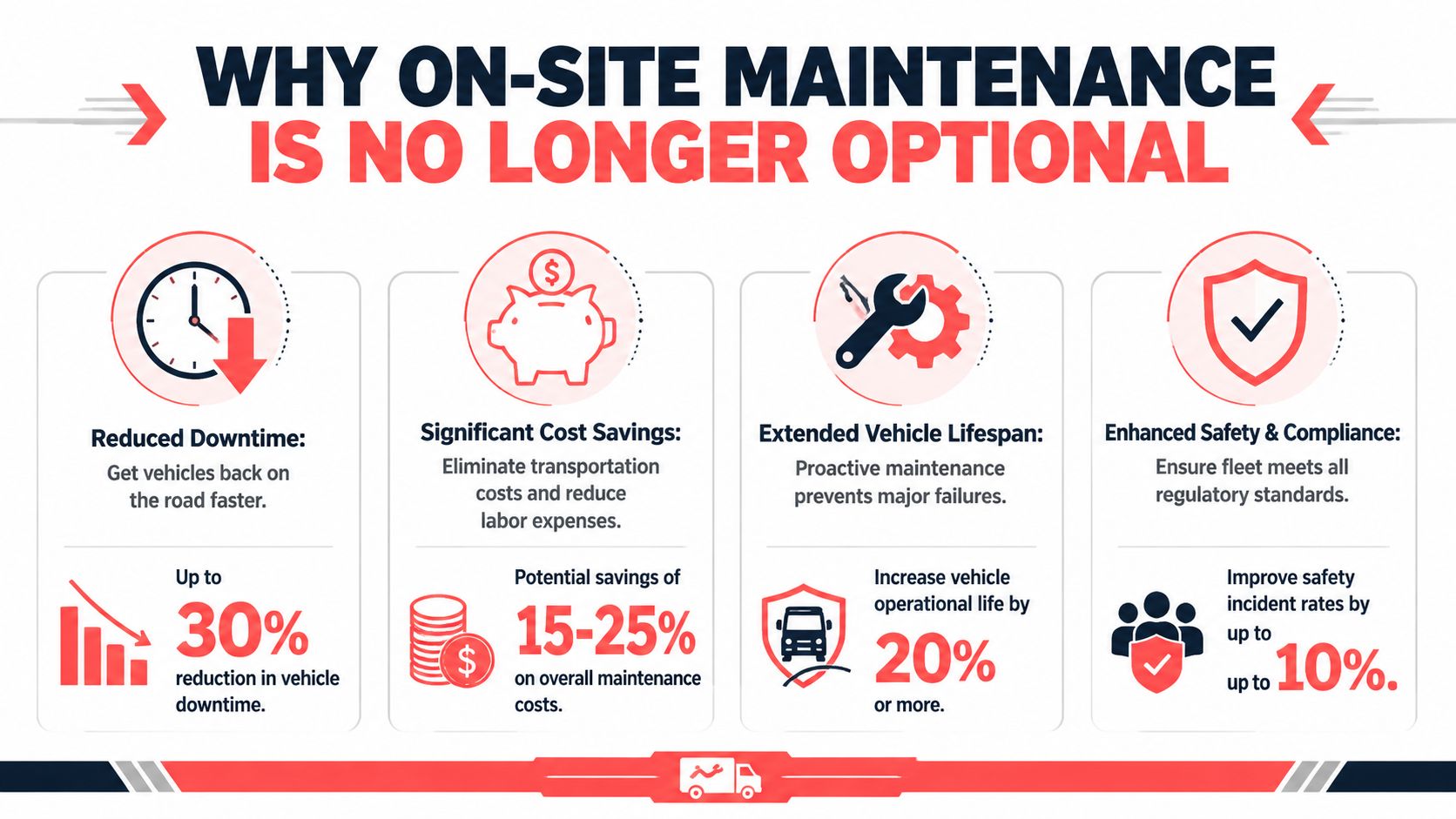
Downtime is the real cost center
A maintenance invoice is visible. Lost vehicle availability usually isn't, at least not until service levels slip. That's why more fleets now treat on site fleet maintenance as a scheduling tool as much as a repair model.
When maintenance happens in your yard, at a branch, or at a jobsite during natural downtime, you keep control of the day. That's especially valuable for route fleets, contractor vehicles, and service vans that need predictable availability.
The best maintenance setup isn't the one with the cheapest invoice. It's the one that keeps the vehicle earning.
There's also a management benefit. Fleet leaders can line up inspections, fluid service, tire work, cleaning, and appearance care in one controlled window instead of coordinating separate off-site appointments. If you want a broader operational framework, T1A Auto's guide for fleet managers is a useful companion read because it connects maintenance discipline to overall fleet control.
Why appearance belongs in the same conversation
Most discussions about on site fleet maintenance stop at oil, brakes, tires, and diagnostics. That's incomplete. A dirty fleet sends a message to customers, drivers, and supervisors. In Central Pennsylvania, road film, salt residue, mud, and interior wear build fast. If vehicles are customer-facing, appearance is part of operations.
A clean, professionally maintained vehicle does three things:
- Protects brand image: Lettered vehicles work as moving billboards only if people can see them.
- Supports resale condition: Paint, trim, glass, headlights, and interiors hold up better with routine care.
- Improves driver pride: Drivers tend to report issues faster and treat equipment better when the vehicle feels cared for.
That's why the best programs don't split mechanical condition from vehicle presentation. They treat both as uptime assets.
Defining Your On-Site Maintenance Scope and Goals
A workable program starts with a blunt question. What exactly are you trying to maintain?
If the answer is just “keep the vehicles running,” the plan will stay vague and reactive. Scope has to match duty cycle, usage pattern, operating environment, and customer-facing expectations. Some fleets need a heavy mechanical focus. Others need a balanced program that includes wash cycles, interior cleaning, and presentation standards because the vehicle shows up at homes, offices, schools, or job sites every day.
Start with a fleet self-audit
Before you assign schedules or call vendors, break the fleet down by how it works.
- Vehicle type: Cargo vans, pickups, medium-duty trucks, and supervisor vehicles don't wear the same way.
- Usage trigger: Some units should follow mileage. Others should follow engine hours, especially if they idle heavily.
- Route pattern: Dense stop-and-go work creates a different maintenance pattern than long highway runs.
- Operating environment: Construction dust, winter salt, and gravel roads all change service needs.
- Customer visibility: A utility body truck used inside a yard can tolerate a different appearance standard than a branded van parked in front of clients.
- Downtime windows: Nights, weekends, route gaps, and shift changes are the windows that make mobile service work.
That review will usually show that one blanket schedule won't hold. Fleets need service triggers tied to wear, not assumptions.
Set targets that change behavior
Good goals are operational, not decorative. One benchmark that matters is the preventive-to-reactive mix. UpKeep's fleet maintenance guidance notes that best-in-class operations aim for an 80% preventive maintenance and 20% reactive maintenance ratio, while many fleets still run closer to a 50/50 split and spend their time firefighting.
That ratio gives managers a practical way to judge whether the program is working. If emergency work still dominates the week, the plan isn't preventive yet. It's just organized reacting.
Use goals like these:
- Preventive focus: Move scheduled work ahead of breakdown work.
- Service timing: Put recurring work into route gaps, overnight windows, or low-demand periods.
- Approval flow: Define who authorizes what so vehicles don't sit waiting for a callback.
- Appearance standard: Decide how clean a vehicle must be to represent the company properly.
For a starting framework, a simple fleet maintenance checklist for recurring service planning can help organize both mechanical and presentation items.
Practical rule: If your team can't say what “acceptable condition” looks like for each vehicle class, the program will drift.
Add appearance to the maintenance scope
Appearance isn't cosmetic fluff. It belongs in the scope because neglect shows up physically and financially. Salt left on lower panels, dirty interiors, neglected glass, stained seats, and hazy headlights all make the fleet feel older than it is.
A professional appearance schedule should cover items such as:
- exterior hand washing
- wheel and tire cleaning
- interior vacuuming and wipe-downs
- stain and odor treatment when needed
- headlight restoration for visibility and presentation
- seasonal deep cleaning after winter buildup
For Central Pennsylvania fleets, this matters even more after winter and during muddy shoulder seasons. If you wait until the vehicle looks bad, you're already behind.
Choosing the Right On-Site Service Partners
A solid on site fleet maintenance plan can still fail if the vendor side is weak. The right partner doesn't just show up with tools. They fit your schedule, document the work, communicate clearly, and operate like they understand the cost of a missed vehicle.
Many new fleet managers commonly make a basic mistake. They look for one vendor to do everything, then accept poor execution in one area because the other area is decent. Mechanical service and appearance service aren't the same discipline. They should be evaluated differently.
What to check before signing anything
On-site fleet maintenance can reduce total downtime by 15–20% compared to shop-based servicing by removing travel time and using off-peak service windows, according to Autosist's maintenance best practices. That gain only happens if the vendor is organized enough to work around your operation rather than interrupt it.
Ask direct questions about:
- Coverage area: Can they reliably service locations across Harrisburg, Carlisle, Mechanicsburg, Newport, and surrounding Central PA routes?
- Response discipline: Do they confirm arrival windows and report delays fast?
- Documentation: Will they provide usable records, not vague text messages?
- Equipment setup: Can they work safely and professionally on site without creating a mess in your yard?
- Seasonal readiness: Do they have a winter plan for cold-weather service and appearance work?
One overlooked operational issue is access control. Lost or damaged keys can create unnecessary downtime, so resources like Blade Auto Keys for businesses are worth reviewing if you manage pooled vehicles or trade units.
Vendor selection criteria
| Criteria | Mechanical Vendor (e.g., Mobile Mechanic) | Appearance Vendor (e.g., The Mobile Buff) |
|---|---|---|
| Core role | Keeps vehicles roadworthy and addresses service items | Keeps vehicles clean, presentable, and protected |
| Best fit | PM work, inspections, brakes, fluid service, minor repairs | Fleet washing, interior detailing, stain removal, odor control, headlight restoration |
| Scheduling value | Route-gap and off-shift maintenance windows | Regular recurring visits that keep branding visible |
| Documentation needs | Service records, findings, approvals, completion notes | Condition reporting, service scope confirmation, visible result standards |
| Yard impact | Must manage tools, fluids, and safe work area | Must manage water, cleaning products, and finish quality |
| Seasonal focus | Wear checks, fluid condition, battery and cold-weather readiness | Salt removal, interior recovery, glass clarity, post-winter cleanup |
| Success signal | Vehicles return to service without repeat issues | Vehicles stay customer-ready between visits |
Build a complete local service stack
In Central Pennsylvania, the practical answer is often a two-part service stack. Use one partner for mechanical health and one for appearance. That lets each provider do what they're built for instead of forcing a compromise.
For fleet presentation planning, mobile fleet washing services for local businesses offers a useful look at how recurring cleaning fits into field operations and customer-facing work.
A clean fleet and a roadworthy fleet are not competing priorities. They solve different problems for the same business.
Put expectations in writing
Even a friendly vendor relationship needs structure. A vague agreement usually turns into vague service.
Your agreement should spell out:
- Scope of work: What's included, and what triggers approval.
- Service windows: Which days and times are available.
- Reporting standard: Photos, checklists, service notes, or sign-off process.
- Billing method: Clear pricing and clear invoicing.
- Escalation path: Who gets called when a vehicle can't return to service or needs extra work.
The more predictable the work is, the easier it is to keep vehicles available and presentable without daily scrambling.
Developing Your Standard Operating Procedures
Plans fail when they live in someone's head. Standard operating procedures turn on site fleet maintenance into a repeatable system that drivers, supervisors, mechanics, and appearance crews can all follow.
The first job is to define when work happens. The second is to define how condition is checked before and after service. Those two points solve a surprising number of fleet headaches.
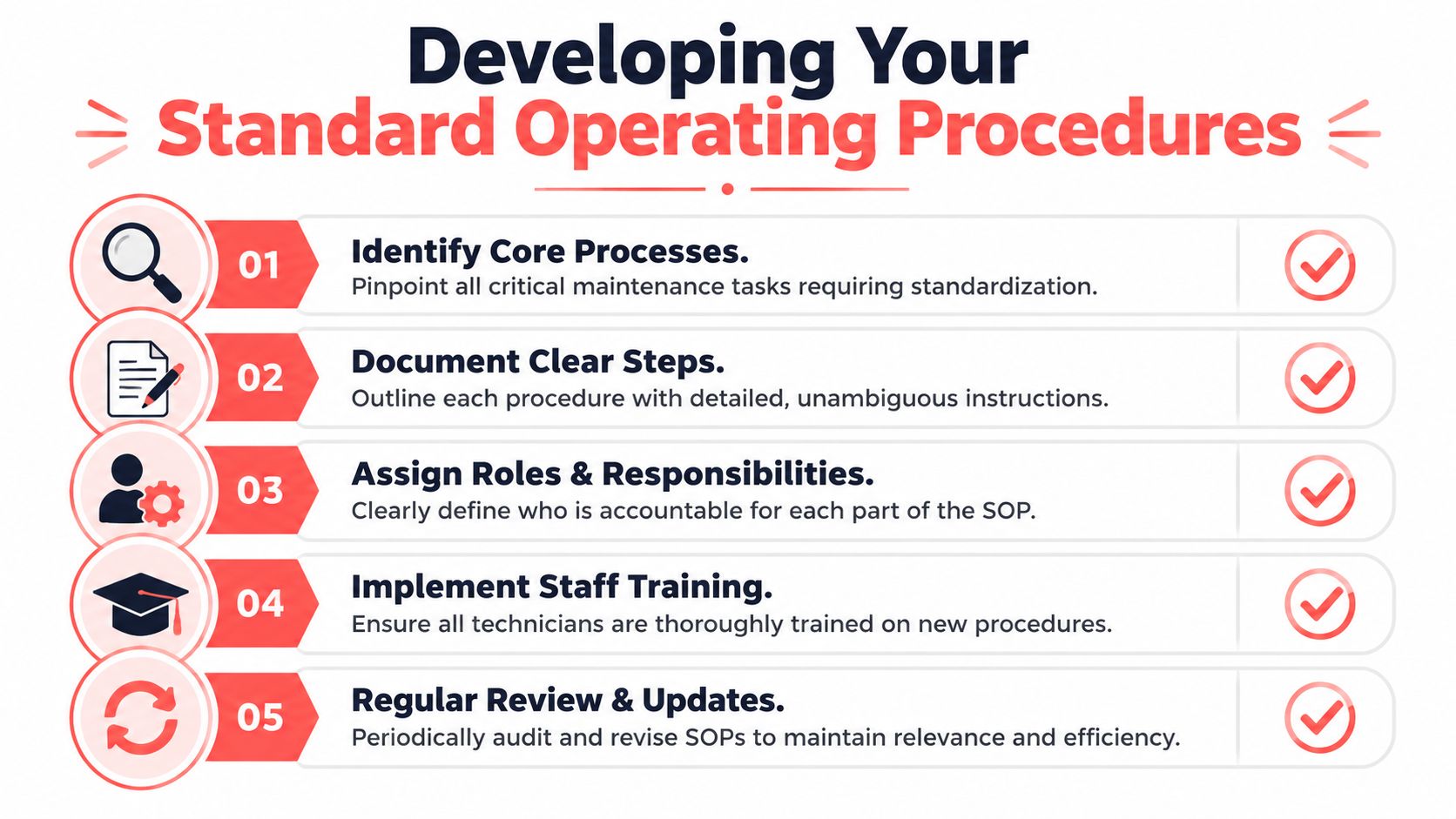
Standardize the inspection process
Inconsistent inspection checklists are a major problem in mobile maintenance. Reach24's fleet management guidance notes that non-standardized protocols lead to an 18% higher repeat repair rate when drivers and mechanics aren't using the same checklist.
That matters because repeat repairs burn trust fast. The driver says the issue was reported. The technician says it wasn't documented clearly. The vehicle goes back out half-checked. Then everyone loses time.
Use one checklist format for everyone involved. Don't let each driver or tech invent their own routine.
Sample on-site service checklist
- Vehicle ID, mileage, engine hours if applicable
- Driver-reported issues since last service
- Fluid condition and leak check
- Tires, tread condition, inflation, visible damage
- Brakes, lights, wipers, glass, mirrors
- Battery and starting concerns
- Body damage or safety-related exterior defects
- Interior cleanliness and cab condition
- Exterior wash need and road film buildup
- Headlight clarity and visibility condition
- Approval status and return-to-service signoff
Build the workflow around real downtime
Night service, weekend service, and route-gap service work well because they respect the operation. Midday interruptions usually don't. If a unit earns money during the day, don't build a process that takes it out of service during its earning hours unless there's a safety issue.
Role clarity helps too:
- Drivers report defects using the same checklist every time.
- Supervisors review urgency and approve scheduling.
- Service partners perform work within the agreed window.
- Return-to-service checks confirm that the vehicle is ready and clean enough for the next assignment.
Good dispatching also tightens the process. If you're evaluating software support for field scheduling, boosting ROI with dispatch software is a worthwhile read because it shows how routing and service coordination affect labor use and response quality.
A short training video can also help teams align around process discipline:
Keep appearance standards inside the SOP
If appearance is left out of the SOP, it gets handled only when someone important complains. Put it on paper instead.
Include items such as:
- wash frequency based on season and duty cycle
- interior reset standards for customer-facing vehicles
- stain, odor, and pet hair procedures where relevant
- post-winter cleanup requirements
- headlight restoration review when clarity drops
A good SOP makes both serviceability and presentation measurable. That's how you avoid the cycle of “we'll clean it when we have time.”
Measuring Success with the Right KPIs
A maintenance program earns budget support when the numbers are easy to defend. If the reporting is soft, leadership sees maintenance as overhead. If the reporting is sharp, leadership sees it as revenue protection.
The most useful KPIs are the ones that show whether your program is getting more disciplined, more predictable, and less reactive.
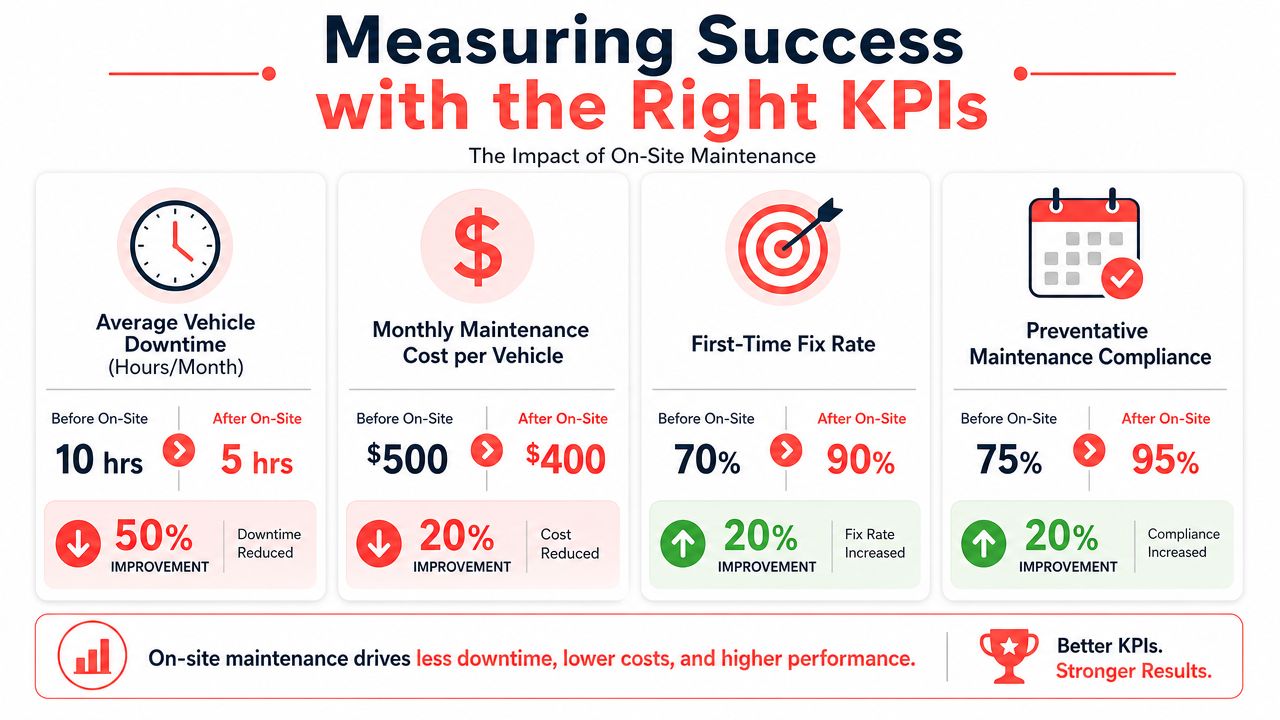
Benchmarks that actually matter
Well-managed fleets with effective maintenance programs achieve PM compliance above 90%, maintain vehicle availability above 95%, and keep repair and maintenance cost per mile at $0.12 to $0.18 for Class 8 equipment, according to Millennials Maintenance performance benchmarks.
Those are useful because they connect process to outcome. High compliance isn't just paperwork discipline. It shows up in availability and cost control.
Watch these KPIs closely:
- PM compliance: Are scheduled services getting done on time?
- Vehicle availability: How often is each unit ready for work?
- Repair cost per mile: Are problem vehicles drifting above the rest of the fleet?
- Planned versus unplanned work: Is the shop week getting calmer or more chaotic?
- Repeat repair frequency: Are vehicles returning for the same issue?
If PM compliance stays low, the rest of the dashboard usually gets worse a few weeks later.
Use simple monthly reviews
Don't overcomplicate the dashboard. A manager should be able to glance at it and know three things. Which vehicles are consuming too much attention, whether scheduled work is happening on time, and whether uptime is holding.
A practical monthly review can include:
| KPI | What to ask |
|---|---|
| PM compliance | Did scheduled services happen when they should have? |
| Availability | Which units were unavailable, and why? |
| Cost per mile | Which vehicles are becoming expensive to keep? |
| Unplanned repairs | What failures should have been caught earlier? |
| Appearance status | Which customer-facing units fell below presentation standards? |
Connect KPI review to action
Tracking metrics without changing behavior doesn't help. Each KPI should trigger a decision.
If PM compliance slips, tighten scheduling and approval flow. If availability drops, identify whether the problem is parts, vendor timing, or poor defect reporting. If appearance quality slips, the cleaning frequency is probably too loose for the duty cycle.
That same logic helps with budgeting. A fleet manager who can show strong compliance, steady availability, and controlled cost per mile is in a much stronger position when asking for support, adding vendors, or adjusting replacement timing.
For customer-facing fleets, include appearance in the review. Dirty vehicles, stained interiors, or clouded headlights may not show up on a mechanical report, but they absolutely affect how the business looks in the field.
Your Next Step to a Flawless Fleet in Central PA
The fleets that run well over time usually do a few basic things right. They define service scope clearly, choose partners carefully, standardize inspections, and track the numbers that expose drift early. That's the foundation of good on site fleet maintenance.
What gets missed, especially in local service businesses, is the appearance side. A vehicle can be mechanically sound and still hurt the brand every time it pulls into a driveway or commercial lot. In Central Pennsylvania, that problem shows up fast because winter residue, muddy roads, interior wear, and daily grime don't wait for a convenient cleanup window.
Build the kind of program drivers will respect
Drivers notice when a company only cares about a vehicle after something breaks. They also notice when the vehicle is kept roadworthy, clean, and ready to use. That affects morale. It also affects how quickly small issues get reported.
Professional appearance care belongs in the same operating rhythm as maintenance because it protects several things at once:
- Brand image in the field
- Resale condition over the life of the unit
- Cab cleanliness for the people who spend their day inside it
- Confidence when vehicles show up at homes and businesses
Make the local piece easy
For fleet managers in Harrisburg, Mechanicsburg, Carlisle, Newport, and the surrounding area, convenience matters. So does consistency. The right appearance partner should be able to work at your location, fit into your schedule, and keep standards uniform across the fleet.
If you're budgeting for that side of the program, this breakdown of fleet detailing prices for local service planning is a practical place to start. And if you want to review a local profile before making contact, you can also check The Mobile Buff on Google.
A flawless fleet doesn't happen because someone remembers to clean a few vehicles before a busy week. It happens when maintenance and detailing are both scheduled, professional, and built into operations.
If your fleet in Central PA needs a dependable appearance program to match its maintenance plan, talk with The Mobile Buff. They provide professional mobile detailing that helps fleet managers keep vehicles clean, customer-ready, and easier to protect over the long haul.

