For any business in Central Pennsylvania, from Harrisburg to Carlisle, your fleet is more than just vehicles; it's your reputation on wheels. A single breakdown isn't just an inconvenience. It's lost revenue, a delayed delivery, and a dent in customer confidence. What if you could shift from reactive repairs to proactive performance? That's where a detailed fleet maintenance checklist becomes your most valuable tool.
Forget generic advice that doesn't apply to your daily grind. This guide is a deep dive into an actionable, 8-point system designed for the real-world demands of local small and medium-sized fleets. We'll cover everything from essential mechanical checks like fluid inspections and brake system documentation to professional detailing schedules that keep your vehicles looking as reliable as they run. For a truly modern approach, many managers are now pairing manual checks with technology, using tools that offer real-time vehicle health monitoring to catch problems before they sideline a truck.
By the end of this list, you'll have a clear roadmap to reduce downtime, cut long-term costs, and ensure every vehicle in your fleet is a powerful asset, not a potential liability. Whether you're managing a few delivery vans or a dozen service trucks, this checklist provides the structure needed to maintain both performance and appearance. Let’s get your fleet running at its best.
1. Fluid Inspections and Replacement Scheduling
The lifeblood of any vehicle is its fluids. Ignoring them is like expecting a person to run a marathon without water; it’s a recipe for breakdown. This part of your fleet maintenance checklist focuses on a two-pronged approach: consistent, routine inspections and a structured schedule for replacing fluids before they cause catastrophic and expensive failures. This isn't just about topping off the washer fluid; it's about actively preventing engine damage, overheating, brake failure, and transmission issues that can sideline your vehicles and cripple your operations.
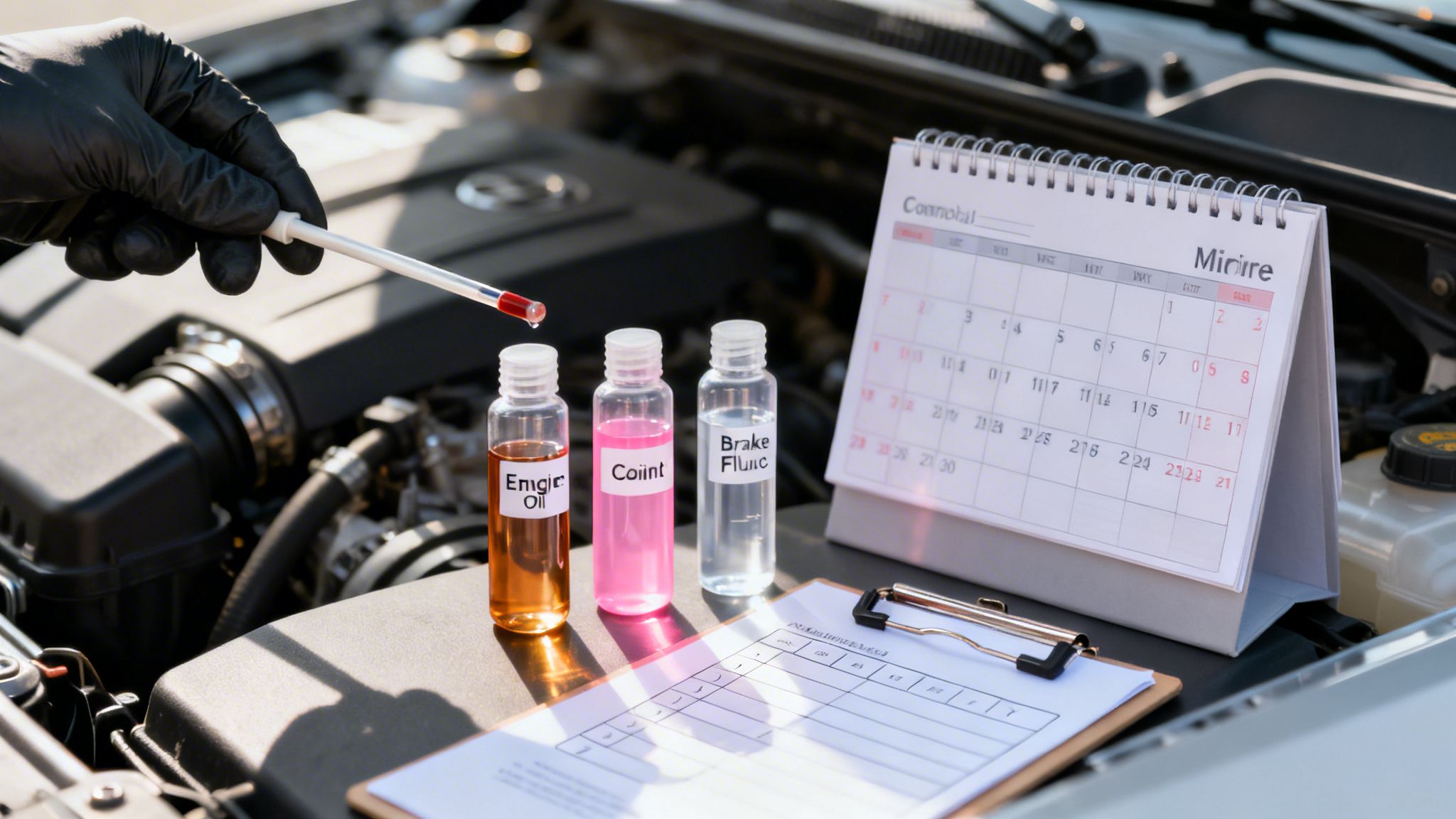
This systematic approach directly impacts your bottom line. Fleet operators who implement preventive fluid maintenance have reported significant reductions in vehicle downtime, sometimes by as much as 60%. It’s a practice championed by everyone from major oil manufacturers like Mobil 1 and Valvoline to vehicle brands themselves; Toyota's "Toyota Care" program, for instance, includes complimentary oil changes precisely because they know it’s the single most important service for vehicle longevity.
Key Fluids to Monitor
Your monthly fluid check should be a quick but thorough process. Create a simple log for each vehicle to track levels, color, and any additions.
- Engine Oil: Check the dipstick for level and color. Milky or gritty oil signals serious trouble.
- Coolant (Antifreeze): Inspect the overflow reservoir. The color should be vibrant (e.g., green, orange, pink), not rusty or murky.
- Brake Fluid: Look for a clear, yellowish tint. Dark, brown fluid indicates it has absorbed moisture and needs replacement to prevent brake failure.
- Power Steering Fluid: Check the level and look for a clear, amber, or reddish color.
- Transmission Fluid: For vehicles with a dipstick, check the level while the engine is warm and running. The fluid should be reddish and smell sweet, not burnt.
- Windshield Washer Fluid: Keep this topped off for clear visibility, a crucial safety factor.
Pro-Tip: Always follow your Original Equipment Manufacturer (OEM) recommendations for fluid types and replacement intervals. Using the wrong fluid can void warranties and cause significant damage.
Actionable Tips for Your Fleet
- Create a Dual-Trigger Schedule: Set calendar reminders for time-based replacements (e.g., brake fluid every two years) and mileage-based reminders for others (e.g., oil changes every 5,000-7,500 miles).
- Bundle Your Checks: Make it a habit to check all other fluids whenever a vehicle is in for an oil change. It adds just a few minutes but can catch a problem early.
- Optimize for the Season: Especially in Central Pennsylvania, it’s vital to use the correct oil viscosity for winter. For more detailed advice on getting your vehicles ready for freezing temperatures, our guide on how to prepare a car for winter offers essential tips.
- Document Everything: Keep meticulous records of all fluid services. This documentation is invaluable for warranty claims, demonstrating compliance, and tracking the health of your fleet over time.
While you handle the mechanical fluids, let us manage the fluids that keep your fleet looking professional. The Mobile Buff provides expert on-site detailing to ensure your vehicles’ interiors and exteriors are spotless. See what our clients are saying about our convenient service on our Google Business Profile and contact us today to schedule a service.
2. Tire Condition and Pressure Monitoring
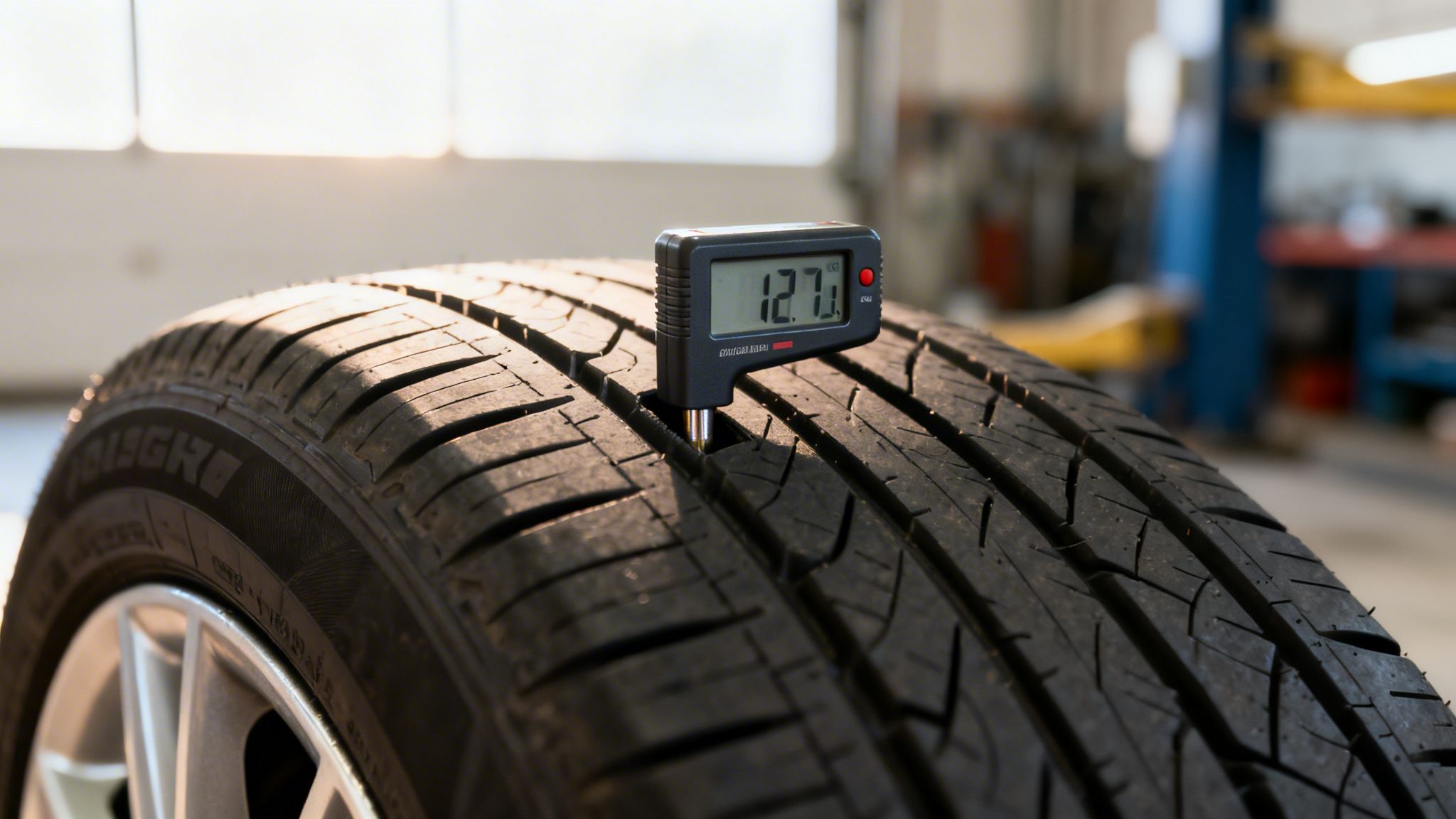
Often overlooked until a dashboard light flashes, tires are your vehicles' only contact with the road. Proper tire maintenance is a non-negotiable part of any fleet maintenance checklist, directly influencing safety, fuel economy, and operational costs. This goes beyond a quick kick of the tires; it involves a routine of inspecting pressure, tread depth, and overall condition to prevent dangerous blowouts, reduce accident risk, and extend the life of one of your most critical assets.
The stakes are high, and the data is clear. The National Highway Traffic Safety Administration (NHTSA) links over 660 annual fatalities to tire-related failures, while State Farm reports that proper tire care can reduce accident risk by 15%. For a fleet, this translates into fewer incidents, lower insurance premiums, and improved fuel efficiency. Major manufacturers like Goodyear and Michelin, alongside organizations like AAA, heavily promote these checks because they know that well-maintained tires are fundamental to vehicle safety and performance.
Key Areas to Monitor
Integrate these checks into a monthly schedule for each vehicle in your fleet. A simple log will help you track trends and identify potential issues before they become major problems.
- Tire Pressure (PSI): Check when tires are cold. Under-inflation is a primary cause of blowouts and drastically reduces fuel economy.
- Tread Depth: Use a tread depth gauge or the "penny test." If you can see all of Abraham Lincoln's head when a penny is inserted into the tread, it's time for new tires.
- Wear Pattern: Look for uneven wear. Center wear suggests over-inflation, edge wear suggests under-inflation, and one-sided wear can indicate an alignment problem.
- Sidewall Integrity: Inspect for any cracks, cuts, bulges, or punctures. Sidewall damage compromises the tire's structure and requires immediate replacement.
- Spare Tire: If the vehicle has a full-size or temporary spare, check its pressure and condition regularly so it's ready when needed.
Pro-Tip: Always inflate tires to the pressure listed on the vehicle's door jamb sticker, not the maximum pressure printed on the tire's sidewall. The door jamb spec is the manufacturer's recommendation for optimal safety and performance.
Actionable Tips for Your Fleet
- Schedule Monthly Pressure Checks: Designate a specific day each month to check and document the PSI for every tire in your fleet. Adjust for significant seasonal temperature drops.
- Implement a Rotation Schedule: Rotate tires every 5,000-7,000 miles to ensure even wear and maximize their lifespan. This is a perfect task to bundle with oil changes.
- Train Your Drivers: Teach drivers to perform quick visual inspections before each trip, looking for obvious signs of under-inflation or damage.
- Document Everything: Keep a dedicated log for each vehicle that tracks the date, mileage, PSI readings, and tread depth for all tires. This data is crucial for predicting replacement needs and identifying chronic alignment issues.
While you focus on keeping your tires in safe, working order, let The Mobile Buff handle the tire shine and wheel cleaning that keeps your fleet looking sharp. See the professional results our clients in Central Pennsylvania rave about on our Google Business Profile and contact us to schedule an on-site service that will make your vehicles stand out.
3. Brake System Inspection and Documentation
Beyond the engine, no system is more critical to driver safety and public liability than a vehicle's brakes. A comprehensive brake inspection is a non-negotiable part of any fleet maintenance checklist, involving a full evaluation of pads, rotors, lines, and fluid. More than just a mechanical check, this process demands meticulous documentation to ensure safety compliance and protect your business from liability, a standard underscored by organizations from the DOT to major brake manufacturers like Brembo and Wagner.
For commercial fleets, this is a legal imperative. The Federal Motor Carrier Safety Administration (FMCSA) requires documented brake inspections, and rideshare platforms like Uber and Lyft mandate annual checks for their drivers. School districts have even shown that implementing simple pre-route brake checks can directly reduce accident rates. Neglecting brake health is a direct risk to your drivers, your assets, and your company's reputation.
Key Components to Inspect
A proper brake inspection goes beyond just listening for squealing. Your technicians should be looking at the entire system to catch wear before it becomes a failure.
- Brake Pads & Rotors: Measure pad thickness and check for uneven wear. Inspect rotors for warping, cracks, or "hot spots."
- Brake Fluid: Check the fluid level and clarity. Dark or cloudy fluid has absorbed moisture, reducing its boiling point and effectiveness, which can lead to brake fade.
- Brake Lines & Hoses: Look for cracks, leaks, or rust on all lines and hoses that carry the hydraulic fluid.
- Calipers & Hardware: Ensure calipers are moving freely and that all mounting hardware is secure and free of corrosion.
- Performance Test: A road test should confirm the vehicle stops straight without pulling, pulsation, or excessive noise.
Pro-Tip: Train your drivers to be the first line of defense. Educate them on recognizing and reporting brake issues immediately, such as a spongy pedal, grinding noises, or the vehicle pulling to one side during braking.
Actionable Tips for Your Fleet
- Establish Baseline Data: When you add a new vehicle to the fleet, document its brake measurements. This baseline allows you to accurately track wear trends over time and predict when service will be needed.
- Schedule Seasonally: Perform comprehensive brake inspections before major seasonal shifts, especially before winter in Central Pennsylvania when icy roads make stopping power absolutely critical.
- Go Digital with Documentation: Use fleet management software or a simple shared spreadsheet to log every inspection, measurement, and repair. Include date, mileage, parts replaced, and the technician's name.
- Perform Regular Fluid Flushes: Following the guidance of ASE-certified professionals, plan to have the brake fluid completely flushed and replaced every 2-3 years to remove moisture and contaminants, ensuring peak hydraulic performance.
While your mechanics focus on stopping power, let The Mobile Buff handle your fleet's visual impact. Our on-site detailing services keep your vehicles looking pristine and professional, reflecting the quality of your brand. Check out reviews from other local businesses on our Google Business Profile and contact us to make your fleet shine.
4. Battery Health and Electrical System Testing
A dead battery is one of the most common and disruptive roadside failures, bringing a vehicle’s operations to a sudden halt. For a fleet, this isn't just an inconvenience; it's a direct hit to productivity and reliability. This section of your fleet maintenance checklist focuses on proactive testing of the battery and the entire electrical system. This means regularly checking not only the battery's charge but also the performance of the alternator and starter to prevent surprise failures that leave your drivers stranded and your customers waiting.
This preventative strategy is crucial for managing operational costs. AAA reports that battery-related issues are a top cause for roadside assistance calls, especially during Central Pennsylvania's cold winters when a battery’s cranking power can be reduced by up to 50%. Fleet management programs that include routine battery testing see significant reductions in breakdown costs and vehicle downtime. It’s a practice endorsed by major battery manufacturers like Interstate and Duracell, who understand that a battery's lifespan is finite and predictable with proper monitoring.
Key Electrical Components to Test
Your electrical system check should be scheduled semi-annually, with a mandatory test before winter sets in. Use a dedicated log for each vehicle to track voltage, test dates, and component conditions.
- Battery Voltage and Load Test: A simple multimeter can check the resting voltage (should be ~12.6V). A more advanced load tester is needed to see how the battery performs under stress, which is a better indicator of its true health.
- Terminal Condition: Look for any signs of corrosion (a white or greenish powdery substance). Cleaning terminals is a crucial, industry-approved step to ensure a solid connection and efficient power flow.
- Alternator Output: With the vehicle running, the alternator should be charging the battery at around 13.7 to 14.7 volts. A low reading means the battery isn't recharging properly and will eventually die.
- Starter Performance: Listen for any slow cranking, grinding noises, or clicking when starting the vehicle. These are early warning signs of a failing starter.
Pro-Tip: Modern vehicles with complex electronics and battery management systems (BMS) are especially sensitive to voltage fluctuations. Regular testing is non-negotiable to prevent system-wide electronic faults.
Actionable Tips for Your Fleet
- Schedule Pre-Winter Testing: Mandate a comprehensive battery and electrical system test for every vehicle in your fleet in the fall. This single step can prevent the majority of cold-weather no-start situations.
- Clean and Protect Terminals: At every oil change, inspect the battery terminals. If corrosion is present, it's best handled by professionals who use specific wire brushes and neutralizing sprays to do the job safely and effectively. Keeping this area clean is also a key part of our professional engine bay cleaning service.
- Document and Plan Replacements: Log all voltage readings with the date and mileage. Most vehicle batteries last 3-5 years; use your data to budget for and schedule replacements proactively, not reactively.
- Train Your Drivers: Teach your team to recognize the symptoms of a weak electrical system, such as dimming headlights when the A/C kicks on, slow engine crank, or the battery warning light illuminating.
While you focus on keeping your fleet's electrical systems running, The Mobile Buff can ensure your vehicles always project a professional image. Read our client testimonials on our Google Business Profile and contact us to schedule convenient on-site detailing that keeps your brand looking its best.
5. Maintenance Record Keeping and Digital Documentation Systems
If a service isn't documented, it might as well have never happened. Meticulous record-keeping is the backbone of any effective fleet maintenance checklist, transforming routine upkeep from a series of disjointed tasks into a strategic, data-driven operation. This practice involves systematically organizing and documenting all inspections, preventive maintenance, repairs, and service dates. It’s the official history book for each vehicle, ensuring warranty compliance, supporting higher resale value, and enabling smart, future-proof planning.
The power of documentation is proven across the industry. Companies like Enterprise and Hertz rely on advanced digital systems to track millions of vehicles, while data from Toyota and Lexus shows that vehicles with complete service records can resell for 10-15% more. This isn't just for massive corporations; even small fleets can see immense benefits. Modern fleet management software providers like Geotab and Verizon Connect automate tracking, but even a well-organized spreadsheet can make a world of difference for a smaller business.
Key Records to Track
A strong documentation system, whether digital or physical, should be easy to use and consistent. For every service, log the essential details to build a complete vehicle history.
- Date and Mileage: The two most critical data points for tracking service intervals.
- Service Type: Specify what was done (e.g., oil change, tire rotation, brake pad replacement).
- Parts Used: List specific part numbers and brands for future reference and warranty claims.
- Cost: Track expenses for budgeting and calculating the total cost of ownership.
- Technician/Vendor: Note who performed the work.
- Receipts and Invoices: Scan and attach digital copies of all paperwork.
- Photos: Include pictures of significant repairs or part replacements for visual proof.
Pro-Tip: For fleets of five vehicles or fewer, a shared Google Sheets or Zoho spreadsheet is a fantastic, low-cost starting point. For larger or more complex operations, dedicated fleet management software is a worthwhile investment.
Actionable Tips for Your Fleet
- Choose Your System Wisely: Match the tool to your fleet size. A simple spreadsheet works for a handful of vehicles, but as you grow, software from providers like Sfleet offers automation that saves significant time.
- Go Digital with Receipts: Scan every paper receipt and invoice immediately. Store them in a cloud-based folder (like Google Drive or Dropbox) organized by vehicle ID. Aim to keep records for at least seven years.
- Set Automated Reminders: Use your chosen system to create automatic alerts for upcoming service based on both time (e.g., annual inspection) and mileage (e.g., every 5,000 miles for an oil change).
- Train Your Team: Ensure every driver and administrator understands how to log information correctly. Consistency is crucial for the data to be useful. For comprehensive management of your fleet's needs, considering advanced solutions like Field Service Management Software can significantly enhance efficiency and organization.
While you focus on documenting mechanical services, don't forget the visual records. The Mobile Buff ensures your fleet's appearance is always pristine and professional, a key part of your brand's image. Check out reviews from other Central PA businesses on our Google Business Profile, then contact us to schedule on-site detailing that keeps your vehicles looking as good as they run.
6. Air Filter and Cabin Air Filter Replacement Scheduling
Often overlooked, the air filters in your vehicles are the lungs of the operation. One filter protects the engine, while the other protects your drivers and passengers. Ignoring them means forcing your engine to work harder for less power and exposing your team to dust, pollen, and pollutants. This part of your fleet maintenance checklist focuses on the simple, low-cost task of regularly replacing engine and cabin air filters to boost efficiency, improve in-vehicle air quality, and prevent bigger HVAC problems down the road.
This is a small action with a significant impact. The U.S. Environmental Protection Agency (EPA) notes that replacing a clogged engine air filter can improve fuel economy and acceleration. Meanwhile, a clean cabin air filter is a major factor in passenger comfort, a point often highlighted by rideshare drivers who report higher satisfaction and better ratings from customers when the cabin air is fresh and clean. For services that transport pets, frequent cabin filter changes are essential for controlling dander and odors.
Key Filters to Monitor
Inspecting these filters is straightforward and should be integrated into your routine vehicle checks. A visual inspection can tell you everything you need to know.
- Engine Air Filter: This filter prevents dirt, debris, and contaminants from entering your engine. A dirty filter restricts airflow, reducing performance and fuel efficiency. It should be light-colored; if it’s dark grey or clogged with debris, it’s time for a replacement.
- Cabin Air Filter: This filter cleans the air entering the vehicle's interior through the HVAC system, trapping dust, pollen, and other airborne particles. A clogged filter can lead to musty odors, reduced airflow from the vents, and a strain on your AC system.
Pro-Tip: In dusty environments, like construction sites or rural roads in Central Pennsylvania, you may need to replace your engine air filters more frequently than the OEM recommendation. Check them visually every few months.
Actionable Tips for Your Fleet
- Schedule Engine Filter Changes: Plan to replace the engine air filter every 12,000 to 15,000 miles. Coordinate this with other routine services like oil changes to save time.
- Set Cabin Filter Reminders: Replace the cabin air filter every 15,000 to 30,000 miles, or at least once a year. For vehicles with high passenger traffic or those used for pet transport, consider changing it every six months to maintain superior air quality.
- Inspect During Seasonal Transitions: Make filter inspections a standard part of your spring and fall vehicle prep. This ensures your HVAC system is ready for the high-demand summer and winter months.
- Document and Buy in Bulk: Record every filter replacement in your vehicle maintenance logs. If your fleet uses several of the same vehicle models, buying filters in bulk can reduce costs and ensure you always have replacements on hand.
While you manage the air your engines breathe, let us handle the air quality and cleanliness inside your cabins. The Mobile Buff specializes in on-site interior detailing that removes dust, allergens, and odors, creating a healthier and more professional environment. Read the reviews on our Google Business Profile to see why local businesses trust us, and contact us today to schedule a service.
7. Wiper Blade Inspection and Seasonal Replacement
Clear visibility isn't a luxury; it's a non-negotiable safety requirement for every vehicle in your fleet. Wiper blades are often overlooked until they fail during a downpour, creating a dangerous situation. This part of your fleet maintenance checklist focuses on proactive inspection and scheduled replacement of wiper blades, ensuring your drivers have an unobstructed view of the road, no matter the weather. This simple, low-cost maintenance task prevents accidents and keeps your vehicles compliant with safety standards.
A compromised view through the windshield is a major liability. The National Highway Traffic Safety Administration (NHTSA) consistently highlights that many rain-related accidents are preventable with properly functioning wipers. Major blade manufacturers like Bosch and Michelin, along with safety organizations like AAA, promote replacing blades every 6 to 12 months. For fleets, especially those in areas with harsh weather like Central Pennsylvania, this schedule is a critical baseline for operational safety.
Key Signs of Wiper Blade Failure
Monthly inspections are fast and effective. Train your drivers to spot these common warning signs during their daily checks and report them immediately.
- Streaking: Blades leave behind lines or bands of water, indicating a worn or dirty rubber edge.
- Chattering: The blade skips or vibrates across the windshield instead of gliding smoothly, often caused by hardened rubber.
- Squeaking: A loud noise during operation points to old, inflexible blades or an improper fit.
- Splitting or Cracking: Visually inspect the rubber squeegee for signs of damage from sun exposure and age.
- Bent Frame: The wiper arm itself may be bent, preventing the blade from making proper contact with the glass.
Pro-Tip: Don't wait for total failure. The first sign of consistent streaking or chattering is your signal to replace the blades. Keeping a spare set for each vehicle model in your inventory can turn a potential downtime event into a five-minute fix.
Actionable Tips for Your Fleet
- Schedule Seasonal Swaps: In Pennsylvania, make wiper replacement a standard part of your pre-winter prep in late August or September. Consider switching to durable, winter-grade blades that resist freezing.
- Document Every Change: Log the date and type of blade used for each vehicle. This helps you track performance, identify vehicles that wear out blades faster, and manage inventory.
- Clean Blades and Windshields Weekly: Instruct drivers to wipe the rubber blade edge with a damp cloth during fuel stops. This removes dirt and debris that cause streaking and premature wear.
- Pair with Other Services: Bundle wiper checks with your monthly fluid inspections or routine vehicle washes. This reinforces the habit and ensures it never gets missed.
While you focus on the functional aspects of visibility, let us handle the aesthetic side. A professionally cleaned windshield, inside and out, complements new wipers perfectly. See what our clients say about our thorough on-site services on our Google Business Profile and contact The Mobile Buff today to keep your fleet's glass crystal clear.
8. Headlight and Lighting System Inspections with Documentation
Clear and functional lighting isn't just a matter of compliance; it's a critical safety component that directly impacts driver visibility and how other motorists see your vehicles. This part of your fleet maintenance checklist addresses all exterior and interior lights, from headlights to turn signals. It emphasizes not only checking for function but also documenting the clarity of headlight lenses, creating a paper trail for scheduling restoration or replacement before safety is compromised or citations are issued.
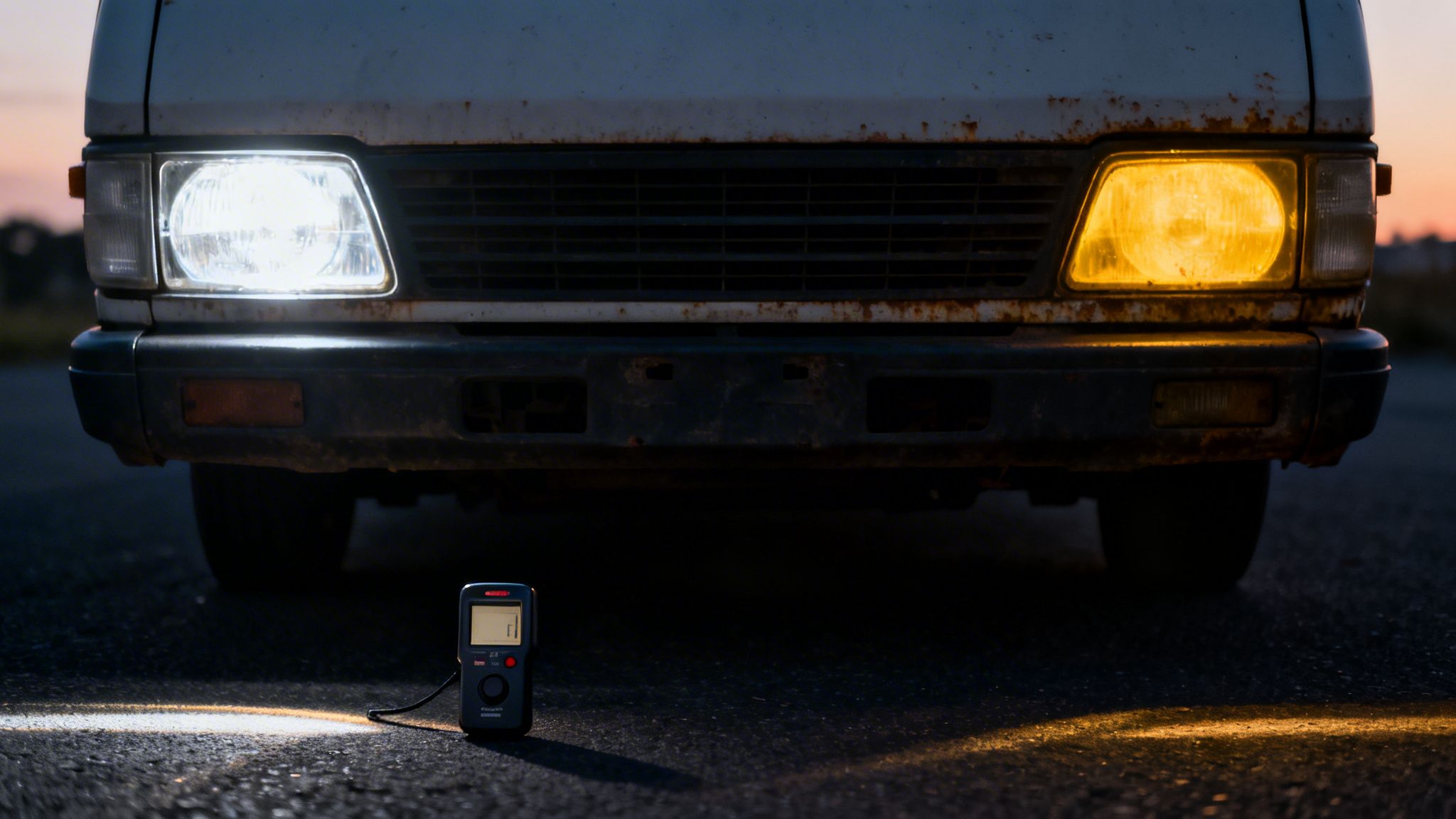
The stakes are high. The National Highway Traffic Safety Administration (NHTSA) reports that defective or cloudy headlights contribute to thousands of crashes annually. Locally, Pennsylvania state and municipal police regularly issue citations for non-functioning lights, leading to fines and potential vehicle-use restrictions. On the other hand, proactive restoration can yield a 50-70% improvement in light output, drastically improving nighttime driving safety. Many rideshare programs even mandate monthly light inspections, showing how vital this check is for commercial operations.
Key Lights to Monitor
A systematic inspection ensures no light is overlooked. Use a simple checklist for each vehicle and perform the test in a garage or during evening hours for the best assessment.
- Headlights (Low & High Beams): Check for functionality and lens clarity. Hazy, yellowed, or foggy lenses significantly reduce light output.
- Taillights and Brake Lights: Have a team member press the brake pedal while you confirm all brake lights illuminate brightly.
- Turn Signals (Front & Rear): Test both left and right signals and ensure they blink at a normal rate.
- Hazard Lights: Activate the emergency flashers and walk around the vehicle to confirm all are working.
- Reverse Lights: Put the vehicle in reverse to check these.
- Interior Dome/Map Lights: Ensure cabin lights are functional for driver and passenger convenience and safety.
Pro-Tip: Keep a log with photos of your headlight lenses every few months. This visual record helps you track the progression of oxidation and decide when restoration is needed, rather than waiting for a complete failure or a ticket.
Actionable Tips for Your Fleet
- Create a Lighting Checklist: Integrate a lighting-specific checklist into your weekly or bi-weekly vehicle inspections. Have drivers perform a quick "walk-around" check before their first trip of the day.
- Document and Photograph: Note any burnt-out bulbs or foggy lenses in your maintenance log. Take a quick photo with a smartphone to document the condition for future reference and to justify restoration services.
- Use the Right Bulbs: Always consult the vehicle’s owner's manual to ensure you are using the correct replacement bulb types. Using the wrong bulb can cause electrical issues or premature failure.
- Schedule Proactive Restoration: Don't wait for headlights to become dangerously dim. Once you notice yellowing, schedule a professional restoration. To better understand what causes this and how to slow the process, check out our guide on how to prevent headlights from yellowing.
When your fleet's headlights become foggy and reduce visibility, it's time for professional intervention. The Mobile Buff’s on-site headlight restoration service brings clarity back to your lights, improving safety and vehicle appearance. Read the reviews on our Google Business Profile to see the difference we make, then contact us to get your fleet's lighting back to peak condition.
8-Point Fleet Maintenance Checklist Comparison
| Service | Implementation complexity 🔄 | Resource requirements ⚡ | Expected outcomes 📊 | Ideal use cases 💡 | Key advantages ⭐ |
|---|---|---|---|---|---|
| Fluid Inspections and Replacement Scheduling | Moderate 🔄 (scheduled intervals & checks) | Moderate ⚡ (fluids, disposal, documentation) | Prevents engine/transmission failure; better warranty compliance 📊 | Fleets, high‑mileage vehicles, warranty‑sensitive owners 💡 | Cost‑effective prevention; reduces major repairs ⭐ |
| Tire Condition and Pressure Monitoring | Low 🔄 (monthly checks) | Low ⚡ (pressure gauge, tread tool, TPMS) | Improved fuel economy, longer tire life, enhanced safety 📊 | All drivers, rideshare, delivery fleets 💡 | Fast ROI; safety and efficiency gains ⭐ |
| Brake System Inspection and Documentation | High 🔄 (professional inspections, test drives) | High ⚡ (skilled techs, parts, diagnostic time) | Prevents brake failure; regulatory and legal protection 📊 | Commercial fleets, high‑liability operations 💡 | Critical safety compliance; reduces emergency repairs ⭐ |
| Battery Health and Electrical System Testing | Low–Moderate 🔄 (voltage/load tests) | Low–Moderate ⚡ (multimeter, load tester, terminals) | Fewer roadside failures; better cold‑weather reliability 📊 | Cold climates, high‑usage fleets, pre‑winter checks 💡 | High customer satisfaction; inexpensive prevention ⭐ |
| Maintenance Record Keeping and Digital Documentation Systems | Moderate–High 🔄 (process setup, training) | Moderate ⚡ (software, staff time, security) | Better resale value, predictive maintenance, compliance 📊 | Medium–large fleets, resale‑focused owners, regulated operators 💡 | Data‑driven planning; simplifies recalls/warranty claims ⭐ |
| Air Filter and Cabin Air Filter Replacement Scheduling | Low 🔄 (periodic replacement) | Low ⚡ (filters, minimal tools) | Improved fuel economy and interior air quality 📊 | Families, pet owners, dusty/urban environments 💡 | Low cost; noticeable comfort and efficiency benefits ⭐ |
| Wiper Blade Inspection and Seasonal Replacement | Low 🔄 (simple monthly/seasonal checks) | Low ⚡ (replacement blades, brief labor) | Better visibility in adverse weather; fewer incidents 📊 | All drivers; seasonal climates and rideshare fleets 💡 | Very low cost; high safety impact ⭐ |
| Headlight and Lighting System Inspections with Documentation | Low–Moderate 🔄 (dark testing, photos) | Low–Moderate ⚡ (light meter, bulbs, restoration tools) | Improved night safety, fewer citations, restored appearance 📊 | Night drivers, rideshare, vehicles with oxidized lenses 💡 | Natural upsell to restoration; citation prevention ⭐ |
Integrate Professional Detailing into Your Fleet's DNA
We’ve journeyed through the nuts and bolts of a robust fleet maintenance checklist, covering everything from fluid levels and tire pressure to brake systems and record-keeping. Each checkpoint, from the daily walk-around to the monthly deep-dive, is a critical layer of defense against unexpected downtime and costly repairs. Mastering these mechanical checks is the foundation of a reliable and safe fleet. However, building a truly exceptional brand presence requires looking beyond what’s under the hood. The ultimate goal is not just to have vehicles that run well, but to have vehicles that represent your business with pride and professionalism every single mile.
This is where the visual and sensory aspect of your fleet comes into play. A squeaky brake gets fixed immediately, but what about a stained seat, a lingering odor, or a dull, grimy exterior? These issues can create a negative impression on clients, hurt employee morale, and even diminish your vehicles' long-term resale value. A complete fleet maintenance checklist acknowledges that your vehicle's appearance is as important as its mechanical function. It’s a rolling billboard for your company, and its condition speaks volumes about your attention to detail and commitment to quality.
From Checklist to Action: Making Detailing a Core Component
Integrating professional detailing into your maintenance routine is not an extravagance; it's a strategic business decision. Think of it as preventative maintenance for your brand’s image. Just as you schedule regular oil changes to protect your engine, scheduling regular professional detailing protects your company's reputation and asset value.
This is where a partnership with a dedicated mobile detailing service becomes a game-changer for small and medium-sized businesses in Central Pennsylvania. Instead of pulling your employees off their primary tasks to do a quick, often subpar, wash, you can have professionals come directly to your location.
Key Takeaway: A proactive detailing schedule transforms vehicle upkeep from a reactive chore into a strategic brand management tool. It ensures every vehicle in your fleet consistently meets a high standard of cleanliness, directly impacting client perception and employee satisfaction.
For example, a construction company in Dauphin County can have its work trucks deep-cleaned on-site at the end of a long week, removing dirt and grime before it becomes a permanent fixture. A real estate agency in Perry County can ensure its agents' cars are always client-ready with pristine interiors and spotless exteriors. It’s about creating a system that works for your specific operational flow. We’ve seen firsthand how this impacts businesses; check out what other local fleet managers say about our service on our Google Business Profile to see the difference it makes.
Services that go beyond a simple wash are particularly important:
- Interior Detailing: Regular deep cleans to remove dirt, dust, and allergens, creating a healthier and more pleasant environment for your drivers.
- Stain and Odor Removal: Specialized treatments for coffee spills, food messes, or pet-related issues, using industry-approved products and methods to neutralize odors at their source, not just mask them.
- Headlight Restoration: A critical safety and aesthetic service that clears foggy, yellowed headlights, improving nighttime visibility and giving older vehicles a fresh, updated look.
By making professional detailing a recurring item on your fleet maintenance checklist, you are investing in safety, brand image, and asset preservation. You are building a fleet that doesn't just work hard, but also looks the part, reinforcing your company's commitment to excellence in every detail.
Ready to elevate your fleet's presence and protect your investment? The Mobile Buff brings professional, on-site detailing directly to your business, making it easier than ever to integrate top-tier care into your fleet maintenance checklist. Visit The Mobile Buff to explore our fleet services, or check out our reviews on our Google Business Profile and schedule a consultation today.