


A car stain never shows up at a good time. It happens on the way to work, after school pickup, during a road trip, or right before you plan to sell the vehicle. One spilled coffee, one leaking takeout container, one muddy paw, and suddenly the seat is the first thing you notice every time you open the door.
Some messes wipe off. A lot of them don't.
Once liquid works past the surface fabric and into the padding, you're no longer dealing with a quick cleanup. You're dealing with a stain that can keep resurfacing, hold odor, and leave the seat looking worse after a bad DIY attempt. That's where a professional car seat stain removal service makes sense. The goal isn't just to make the spot look lighter for a day. The goal is to remove as much contamination as possible without damaging the material or soaking the seat.
That Sinking Feeling When a Stain Appears
It usually starts with denial.
You spot the mark on the passenger seat and tell yourself it's probably nothing. Maybe it's just surface dirt. Maybe a damp towel will take care of it. Then you blot it, rub it a little, and watch the stain spread into a bigger, darker patch.
That's the moment most drivers realize car upholstery isn't like cleaning a kitchen counter. Seats are layered materials. Fabric, stitching, foam, and backing all react differently once a spill starts moving downward instead of staying on top. What looks small at first can turn into a larger issue by the time the seat dries.
Parents deal with this all the time. Juice, melted snacks, mystery smudges. Pet owners know the routine too. Wet paws, drool, tracked-in grime, and the occasional accident. Commuters get hit with coffee stains because the car is where breakfast happens.
Some stains are ugly right away. Others look mild at first and get worse after they dry.
The frustrating part is that many store-bought cleaners give people just enough short-term improvement to feel hopeful. Then the stain comes back, the fabric gets stiff, or a water ring forms around the original spot. At that point, the seat doesn't just look dirty. It looks mishandled.
A proper stain service fixes the problem differently. It starts with identifying the material and the type of contamination, then using the right combination of pre-treatment, agitation, extraction, and drying control. That's why professional stain work is treated as deep interior cleaning, not as a quick spray-and-wipe add-on.
Why Some Stains Need a Professional
A stain isn't just “something on the seat.” It's contamination that has attached itself to the fibers or moved below them. That's why two stains that look similar can behave completely differently during cleaning.

Fabric type changes the whole approach
Cloth seats are the most common trouble spot because they absorb fast. Once liquid gets into the foam backing, heavy scrubbing from the surface won't resolve the deeper issue.
Leather and coated materials usually don't absorb the same way cloth does, but they can still stain, especially if a cleaner is too harsh or leaves residue in seams and perforations.
Delicate synthetic finishes can also react badly to the wrong brush, too much heat, or oversaturation. That's why one all-purpose bottle from the auto parts store isn't a real strategy.
For cloth seat stain removal, the key is moisture control. Professionals lightly mist the fabric and use repeated extraction passes to prevent over-wetting, which can drive stains deeper into the foam backing and cause secondary discoloration or wicking, as outlined in this professional upholstery cleaning guidance.
Why DIY goes wrong
The most common DIY mistake is using too much liquid. People see a stain and think more product will mean more cleaning. Usually, it means a wetter seat, longer dry time, and a bigger chance that the stain will return from underneath.
That return is called wicking. The surface looks cleaner while it's wet, but as the seat dries, moisture carries dissolved contamination back up through the fibers. The stain reappears, sometimes as the same spot, sometimes as a ring.
Another problem is residue. If the cleaner isn't fully removed, the fabric can feel crunchy or sticky. That residue attracts new dirt fast, so the seat starts looking dirty again even if the original stain improved.
For a closer look at how deeper upholstery issues behave, this guide on car upholstery stain removal helps explain why stubborn spots need a more controlled process.
Practical rule: If the stain has soaked in, changed the color of the fabric, or came back after you cleaned it once, stop scrubbing and switch to a professional approach.
What works better
Set-in upholstery stains respond better to pre-treatment, controlled agitation, and low-moisture extraction than to aggressive surface scrubbing alone. Professional instruction for deep stains recommends cross-hatch agitation in small sections with low-to-medium machine speed and multiple passes to lift contamination while limiting fiber distortion and trapped moisture, as demonstrated in this detailing extraction walkthrough.
That's the difference between cleaning what you can see and removing what's in the seat.
The Professional Stain Removal Process Unpacked
Good stain removal looks simple when it's finished. It isn't simple while it's happening. A proper service involves inspection, chemistry, mechanical agitation, extraction, and drying management.

What happens before the stain gets touched
The first step is checking the seat material, the stain location, and how far the contamination appears to have traveled. A fresh splash near the surface gets handled differently than a dark set-in area that has likely reached the padding.
Loose debris gets removed before any wet process starts. That matters more than people think. Grit, crumbs, and dry soil turn into muddy residue if they aren't vacuumed out first.
Published detailing workflows for full interior seat shampooing show why this kind of work isn't a quick errand. Mobile seat shampooing or stain removal often takes 3.5 to 4 hours for one vehicle because the process usually includes vacuuming, pre-treatment, agitation, shampooing or extraction, residue rinse, and thorough drying, according to this seat shampoo service breakdown.
The cleaning phase that actually removes the stain
Once the area is prepped, the stained section gets treated with a product chosen for the fabric and the type of contamination. Then comes agitation. Not wild scrubbing. Controlled agitation with the right brush and pattern so the cleaner can loosen the stain without roughing up the fabric.
After that, extraction does the heavy lifting. This is where professional equipment matters. It pulls suspended soil and solution out of the fabric instead of just moving it around.
If you want a consumer-friendly overview of interior cleaning fundamentals, the Evo Dyne Products car cleaning guide is a useful reference. The difference with a professional car seat stain removal service is the equipment, stain-specific process, and the ability to remove moisture much more effectively.
For customers comparing service options, our stain removal service covers the kind of targeted interior work that goes beyond a standard wipe-down.
A real-world look at the process helps. This video shows the kind of deliberate interior workflow that gives better results than fast cosmetic cleaning:
The part people forget
Drying matters.
A key detail often overlooked is dry time. After a professional deep clean, seats typically need 2 to 4 hours to dry completely, depending on humidity and airflow. Cracking the windows or running the A/C can speed this up, as noted by this mobile stain removal dry-time guide.
If someone promises deep stain removal with no drying window at all, ask how they're controlling moisture and what they're doing to prevent the stain from returning.
Mobile Detailing vs a Traditional Detail Shop
Both options can work. The better choice depends on what matters most to you.
A traditional shop has one clear advantage. It controls the environment better. Indoor space, stable airflow, and a fixed setup can help with certain jobs, especially during rough weather. If you like dropping a vehicle off and picking it up later, a shop fits that routine.
Mobile detailing solves a different problem. It saves time.
For busy households, office workers, and fleet operators, the biggest obstacle usually isn't willingness to get the car cleaned. It's finding time to leave home or work, arrange a ride, and build half a day around a detailing appointment.
Mobile service vs shop visit at a glance
| Feature | Mobile Detailing Service | Traditional Detail Shop |
|---|---|---|
| Convenience | Comes to your home or workplace | Requires drop-off and pickup |
| Time disruption | Lower for most customers | Higher if you need to wait or arrange transportation |
| Environment | Works in your driveway or parking area | Controlled indoor setting |
| Equipment quality | Can deliver professional-grade results on site | Professional-grade results in a fixed location |
| Best fit | Busy parents, commuters, office visits, fleets | Customers who prefer a shop setting |
Where mobile detailing makes the most sense
If your day is packed, mobile service is usually the practical choice. The work gets done while you're at home, working, or handling something else. You don't lose time sitting in traffic or waiting at a counter.
That matters a lot for stain work because customers often put it off. Not because they don't care, but because they don't want the logistics headache.
Where a shop may still be preferable
A shop can be the right call if the vehicle needs to stay inside for an extended period or if weather conditions are unusually difficult. That's a fair advantage, and any honest mobile detailer should say so.
Still, modern mobile setups can handle serious interior work. Professional tools, extraction equipment, and organized workflows can be brought directly to the job site. For most daily drivers in Central Pennsylvania, that makes mobile detailing the more convenient choice without sacrificing the professional process.
What Does a Car Seat Stain Service Cost
Price is one of the first questions people ask, and it should be. Stain removal isn't a flat commodity service where every seat gets the same treatment in the same amount of time.
A light fresh spill is different from an old stain that has moved into the padding. Material type matters too. Cloth, delicate upholstery, and heavily soiled seats all change how much labor and extraction work the job will need.
Why pricing varies
A good estimate usually depends on factors like:
- Stain type. Food, coffee, grease, ink, and pet-related contamination don't respond the same way.
- Age of the stain. Older stains often need more than one cleaning pass.
- Seat material. Some surfaces can take more aggressive mechanical cleaning than others.
- Affected area. One isolated spot is different from multiple seats or a full interior issue.
- Condition of the interior. Heavy debris, pet hair, and general soil increase labor before stain treatment even begins.
What the market already shows
Commercial pricing shows that car seat stain removal is commonly sold as a specialized service instead of a throw-in item. Market examples include add-on pricing at $49.99, $60, and $75, which reflects the extra labor, chemical treatment, machine work, and drying management involved, according to these industry pricing examples for seat stain add-ons.
That should tell you something important. Professionals don't price this like a basic vacuum or wipe-down because it isn't one.
Cheap stain removal usually means one of two things. The spot is getting a fast cosmetic pass, or the cleaner is underestimating the labor.
How to think about value
The right question isn't just “What does it cost?” It's “What am I paying for?”
You're paying for material-safe cleaning methods, stain-specific chemistry, extraction equipment, reduced risk of wicking, and a better chance of improving the seat without making it worse. In many cases, stain work makes the most sense as part of a deeper interior package because the surrounding fabric and traffic areas often need attention too.
If you want a quick way to compare options before booking, our instant pricing calculator helps you get a realistic starting point based on the service you need.
How to Choose the Right Provider and Prepare Your Car
Choosing a detailer gets easier when you ignore the flashy promises and focus on trust signals. A good provider should be easy to evaluate before they ever touch your vehicle.
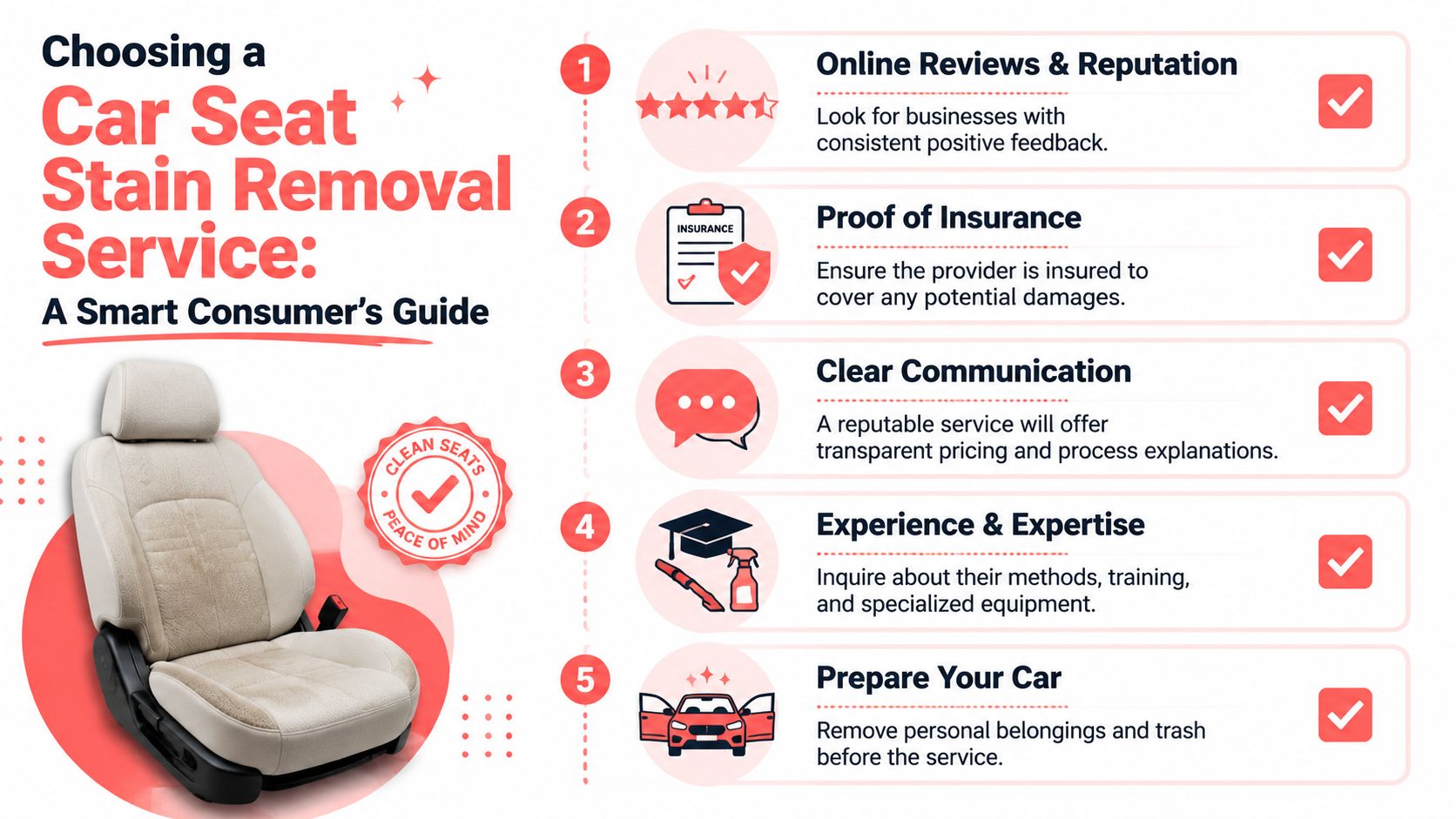
What to look for before you book
Start with the basics:
- Reviews that sound specific. Look for comments about communication, punctuality, and actual interior results, not just “great job.”
- Proof of insurance. Any professional working around your vehicle should be able to answer that clearly.
- Clear explanations. If they can't explain how they approach stain removal, they probably don't have a repeatable process.
- Photos of real work. Before-and-after results help, especially for interior problem-solving.
If you want to vet a local provider the same way, you can browse The Mobile Buff Google Business Profile and look at how customers describe the experience.
Questions worth asking
A few direct questions can tell you a lot:
- Have you worked on this type of seat material before?
- How do you handle set-in stains that may have reached the foam?
- What should I expect if the stain improves but doesn't disappear completely?
- How wet will the seat be afterward, and what should I do while it dries?
- Do I need to remove child seats or personal items before you arrive?
For families using removable child seats, it also helps to stay aware of manufacturer-specific care rules. This guide to essential Nuna Rava car seat tips is a useful example of why seat accessories and child restraints should be handled according to their own care instructions, not treated like standard automotive upholstery.
How to prepare your vehicle
Preparation helps the service move faster and keeps the detailer focused on cleaning instead of clearing clutter.
- Remove personal items so nothing valuable or fragile gets in the way.
- Take out child seats if possible unless you've already arranged otherwise.
- Point out the problem areas when the technician arrives. Old stains, repeat spills, and odor spots are easier to address when they're identified early.
- Be realistic about access. A packed back seat or full floor area slows down any interior service.
A professional detailer should answer questions without sounding defensive. If the conversation feels vague, rushed, or evasive, keep looking.
Get a Fresh Start for Your Car's Interior
A stained seat changes how the whole vehicle feels. Even when the rest of the cabin is decent, one ugly spot makes the interior look neglected. That's why a proper stain service does more than improve appearance. It makes the car feel clean, usable, and easier to enjoy again.
Why professional help is usually the smarter move
DIY works for tiny surface issues when you catch them early and use the right method. Tougher stains are different. Once you're dealing with embedded contamination, recurring wicking, or residue from a previous attempt, the risk of making the seat look worse goes up quickly.
Professional stain removal is a practical service, not a luxury add-on. You're paying to avoid bad chemistry, over-wetting, stiff fabric, water spotting, and wasted time. You're also paying for convenience when the work can be done at your home or workplace instead of forcing you into a shop schedule.
If you like comparing different approaches to interior cleanup, this article on car interior cleaning solutions offers another useful perspective on keeping a vehicle cabin in better shape overall.
What local service should feel like
In Central Pennsylvania, convenience matters. People want the car cleaned well, but they also want the process to fit around work, errands, school pickup, and family life. A mobile appointment solves that problem in a simple way. The vehicle gets professional attention where it's already parked.
The result should be straightforward. Better-looking seats, less frustration, and no guesswork about which spray bottle to try next.
If you've been putting off that stain because you didn't want the hassle, this is the part where it gets easy.
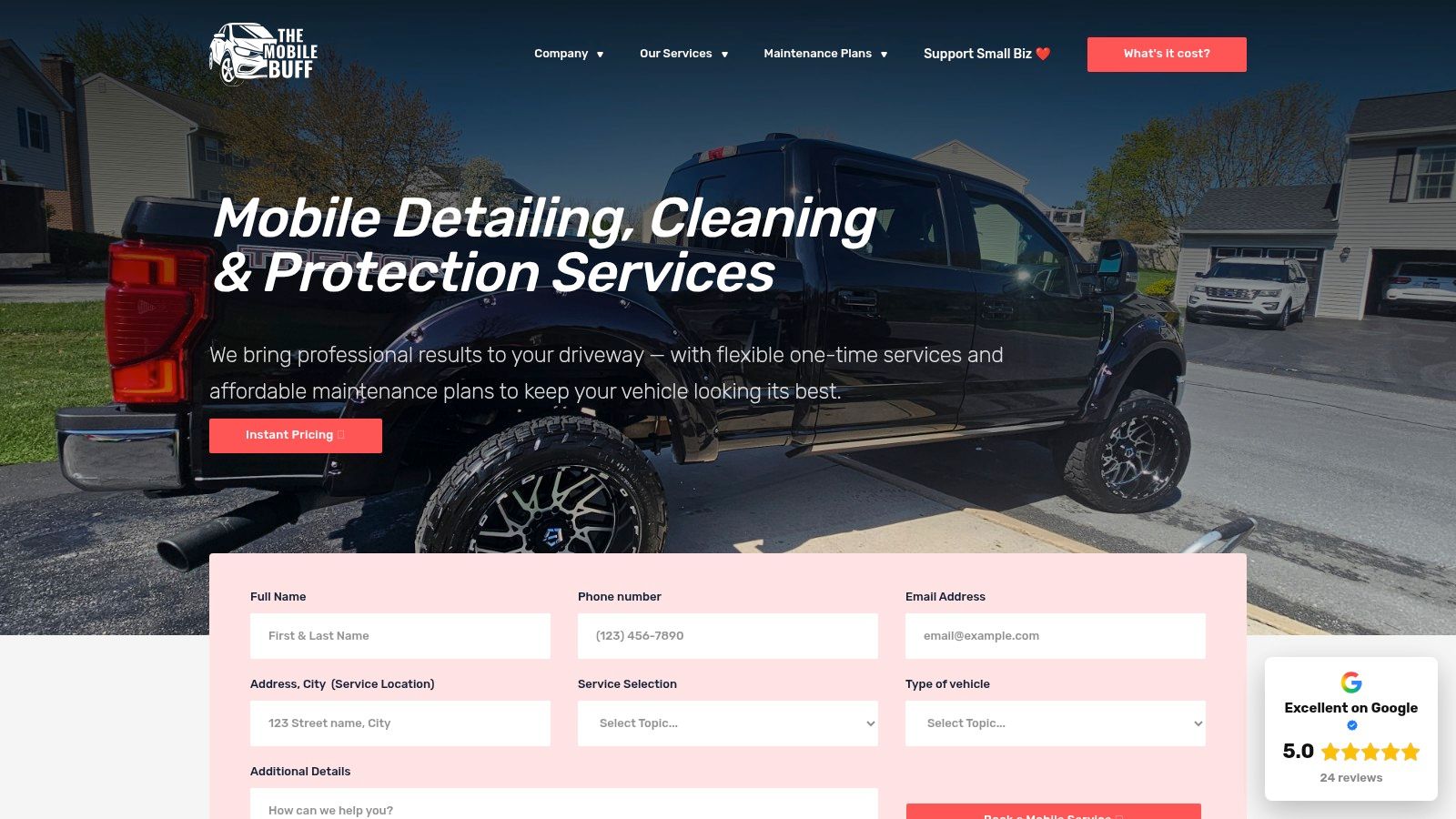
If your seats have a stain that keeps catching your eye, book a professional visit with The Mobile Buff. We bring mobile interior detailing directly to your driveway in Central Pennsylvania, so you can get expert stain removal without rearranging your whole day.

