


A lot of Central PA drivers still clean their cars the same way they did years ago. Bucket in the driveway, hose running, soap on the pavement, and suds heading toward the curb. It feels harmless because it's familiar.
But if you've ever watched that dirty water run down the street and wondered where it ends up, you're asking the right question. Eco friendly car detailing grew out of that exact concern. It's about getting a vehicle properly cleaned while using less water, choosing safer products, and reducing the mess that leaves the wash area in the first place.
That matters because this isn't some tiny corner of the industry anymore. The global car detailing services market was estimated at USD 41.40 billion in 2024 and is projected to reach USD 58.06 billion by 2030, with much of that growth tied to demand for water-efficient, eco-friendly mobile services, according to Grand View Research's car detailing services market report.
That Weekend Car Wash Might Be Costing More Than You Think
A sunny Saturday wash sounds like a productive afternoon. You knock the pollen off, scrub the wheels, rinse the panels, and stand back feeling pretty good about it. Then the water keeps moving. It carries road film, brake dust, leftover soap, and grime off the driveway and toward the nearest drain.
That's the part many overlook.
For many drivers, the choice isn't “wash the car or leave it dirty.” It's deciding whether you want a quick cosmetic cleanup or a method that's better controlled from start to finish. That's one reason more owners are comparing a simple wash with a full detailing service, especially once they understand the difference between car detailing vs car wash.
The hidden cost of the easy option
The driveway wash feels cheap because you already own a hose and a sponge. But it can cost more in time, cleanup, and risk to the finish if the wash media isn't clean or the technique isn't right. It can also use a surprising amount of water.
Many car owners in this area are balancing a few practical concerns at once:
- Busy weekends: You want the car clean, but you don't want to burn half the day doing it.
- Modern finishes: Dark paint, ceramic-coated surfaces, piano black trim, and big touchscreens are less forgiving than older cars.
- Neighborhood cleanup: Nobody wants soap residue drying on the driveway or dirty runoff heading down the block.
A clean car shouldn't leave behind a dirtier street.
Eco friendly car detailing offers a better middle ground. You still get the gloss, the clean glass, the fresh interior, and the finished look. The difference is in how the job gets done. Less waste. Better control. More care around the materials on the vehicle.
For drivers around Harrisburg, Mechanicsburg, Carlisle, and nearby communities, that shift makes sense. You can keep the car looking sharp without treating water use and runoff like they don't matter.
What Eco-Friendly Detailing Really Means
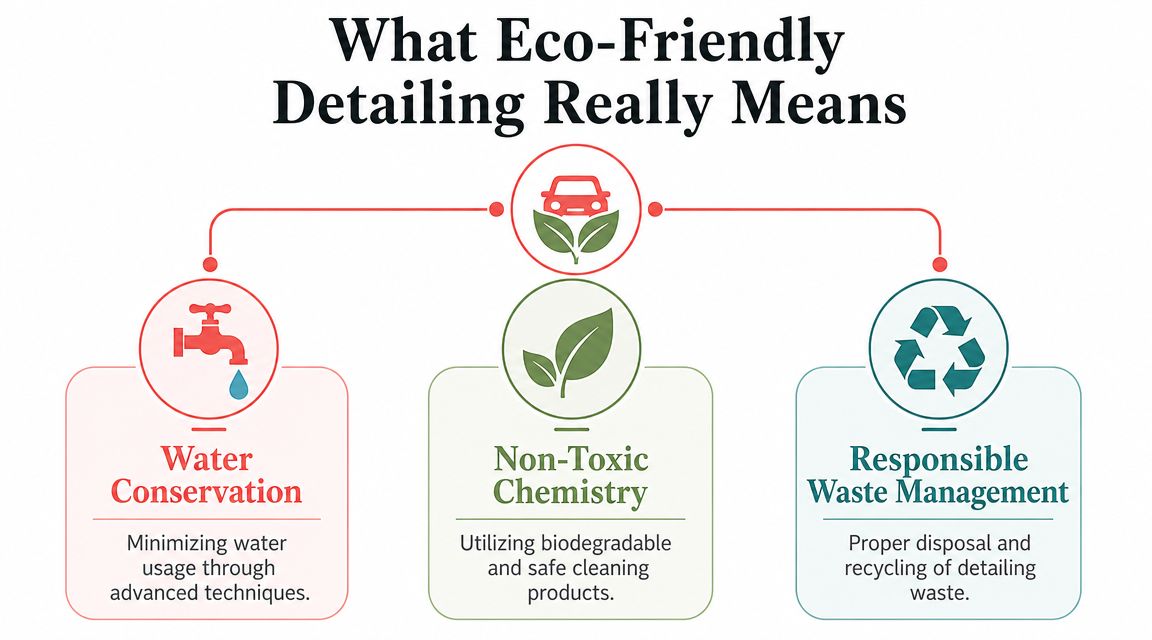
Eco friendly car detailing isn't just “using green soap.” It's a full approach to cleaning that changes how a detailer uses water, selects chemicals, and handles waste. Done properly, it protects the vehicle and reduces what gets left behind on your driveway, in your garage, or near a storm drain.
Water conservation
Many individuals begin their eco-friendly detailing efforts by considering water usage, and for good reason. A conventional driveway car wash can use 40 to 100 gallons of water, with all of it becoming contaminated wastewater, while eco-friendly methods can reduce that to as little as a single gallon, according to Dennis Auto Detail's explanation of eco-friendly car detailing benefits.
That changes the whole process. A professional isn't flooding the surface and pushing dirty water everywhere. They're using controlled amounts of liquid, quality wash media, and a method that matches the level of dirt on the vehicle.
Non-toxic chemistry
The second pillar is product choice. Eco-conscious detailing leans on biodegradable, non-toxic, and safer cleaning products instead of harsh formulas that leave strong residues behind. That matters outside the car, but it also matters inside it.
If you've got kids climbing into the back seat, pets riding along, or you spend a lot of time commuting, interior residue matters more than people think. Dashboards, door panels, cupholders, and seat surfaces are all touch points.
A few owners who want to understand the fabric side of that conversation also like reading about tools such as eco-friendly cleaning cloths, because towels and wash media play a big role in how safely dirt gets lifted away.
Practical rule: The greener method isn't only about saving water. It's also about reducing what stays on the surfaces your family touches.
Responsible waste management
The third pillar is what separates true eco friendly car detailing from marketing language. A responsible process limits runoff and controls where grime goes. That's especially important when the dirt coming off the vehicle includes oily residue, brake dust, road film, and winter contamination.
In plain terms, good eco detailing asks three questions:
- How much water is really needed?
- What product is being left on the surface?
- Where does the waste go after the dirt comes off?
If you're the kind of owner who likes learning maintenance basics before calling a pro, there's some helpful general reading in this DIY car care category. Just keep in mind that the safest results still come from matching the method to the vehicle's condition.
In Central PA, where we deal with pollen, mud, salted roads, and wet seasons, eco detailing works best when it's practical, not preachy. The right process keeps the car cleaner and the cleanup smarter.
Exploring Low-Impact Detailing Methods
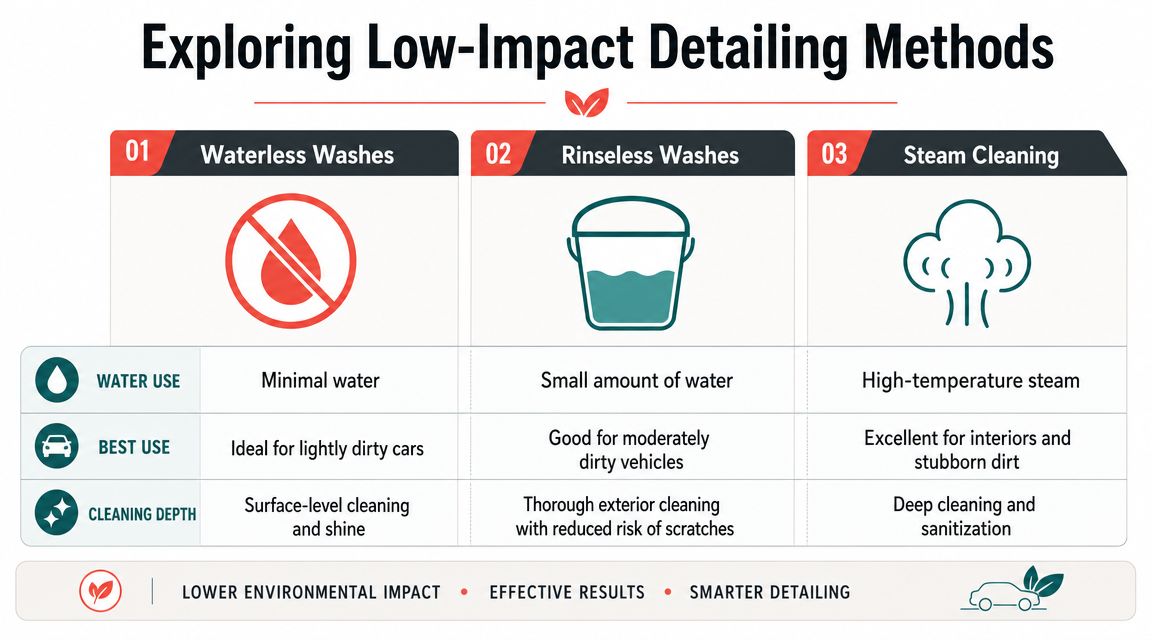
There isn't one single “green” detailing method. Professionals usually choose from a few low-impact techniques based on the vehicle's condition, the surface being cleaned, and how much contamination is present. The three methods most drivers hear about are waterless washing, rinseless washing, and steam cleaning.
How the main methods compare
| Method | Best use | Water use | Where it shines | Where caution matters |
|---|---|---|---|---|
| Waterless wash | Light dust, garage-kept vehicles, quick maintenance | Very low | Fast exterior touch-ups | Not ideal for heavy grit or caked-on dirt |
| Rinseless wash | Moderate dirt, regular maintenance cleaning | Low | Safe, controlled exterior washing without a full hose rinse | Requires proper wash media and technique |
| Steam cleaning | Interiors, tight spaces, sanitation-focused cleaning | Low | Seats, plastics, mats, vents, trim | Needs careful handling around electronics and adhesives |
The key is that these methods aren't interchangeable. A lightly dusty SUV and a salt-covered winter commuter need different treatment.
Waterless and rinseless are not the same
People often lump these together, but they solve different problems. A waterless wash is usually a spray-on, wipe-off process for vehicles with light surface dust or mild grime. It works best when the paint isn't carrying abrasive dirt.
A rinseless wash uses a small amount of water mixed with a purpose-built solution. The wash media lifts contamination while the product helps encapsulate it, so the detailer can safely remove grime without a traditional open-hose rinse. For many maintained daily drivers, this is a practical sweet spot.
For owners trying to keep up with routine maintenance between deep cleanings, a professional checklist like this car detailing checklist helps you see what should be cleaned, inspected, and protected regularly.
Why steam stands out for interiors
The core technologies of green detailing are biodegradable cleaners and steam, and high-temperature steam is especially effective for interiors because it can sanitize fabrics and surfaces without solvent-heavy chemicals or excess water, according to Steamology's guide to eco-friendly car detailing tips.
That makes steam especially useful for:
- Fabric seats and mats: It helps loosen grime in fibers.
- Plastic trim and consoles: It reaches tight seams and textured surfaces.
- High-touch interior areas: It supports a cleaner finish without soaking materials.
Here's a quick visual overview of low-impact detailing methods in action:
Some car owners also like reading broader sanitation-focused material, especially for interiors. If you're curious about that side of cleaning chemistry, BacteriaFAQ's hypochlorous acid article gives useful background. For vehicle interiors, though, the important part is still method control and surface compatibility.
Steam is powerful because it cleans precisely. That same precision is why the operator matters.
A good eco detailer doesn't force one method onto every car. They look at the dirt level, the finish, the interior materials, and the setting. Then they choose the least aggressive process that will still deliver a proper result.
DIY Eco-Detailing vs Professional Service
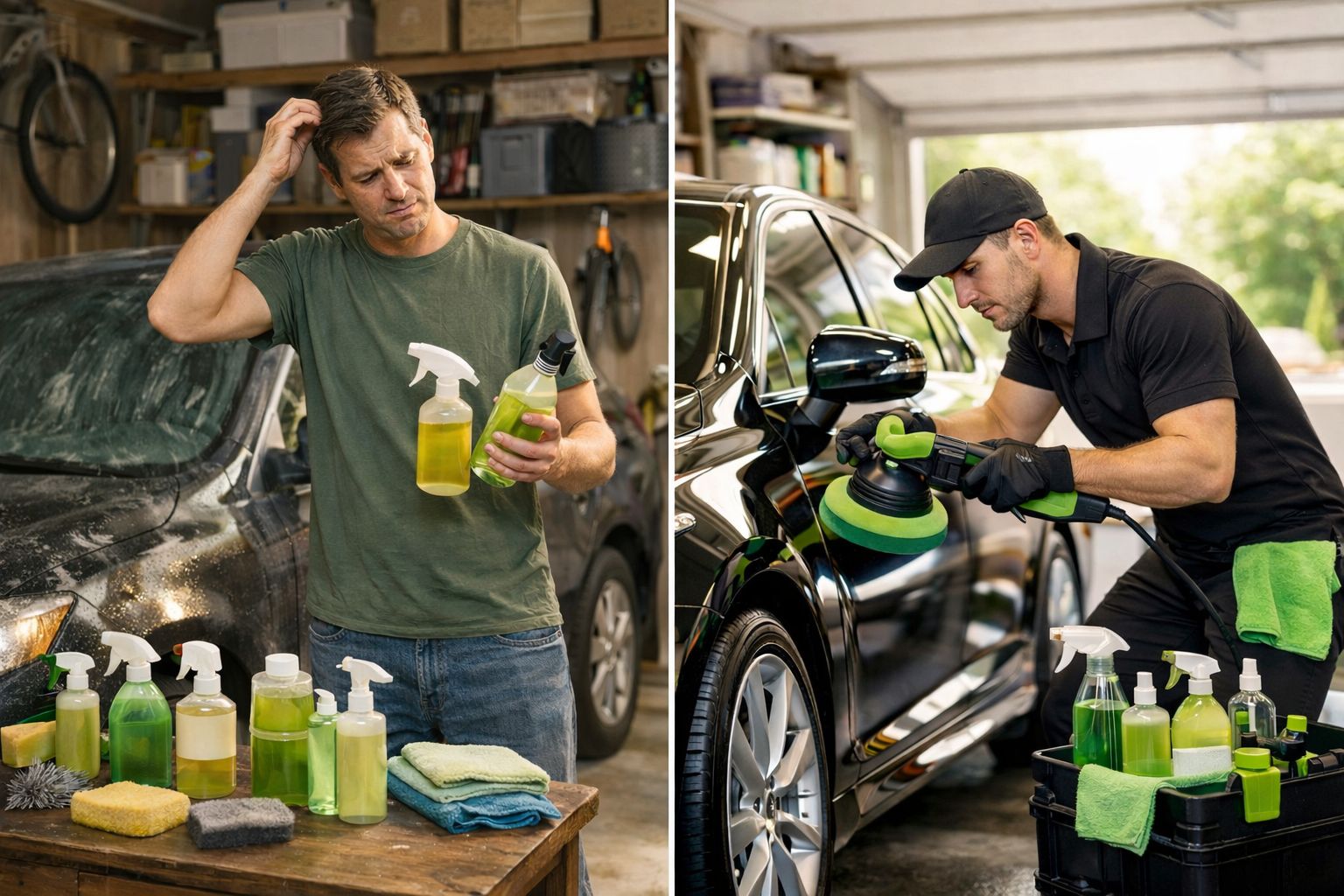
A lot of people get interested in eco friendly car detailing because they want to do the right thing. That part makes sense. You see a waterless spray on a shelf, grab a pack of microfiber towels, and figure you'll save water and money at the same time.
Sometimes that works. Sometimes it doesn't.
Where DIY goes wrong
The biggest mistake isn't bad intent. It's using the wrong method for the level of dirt on the vehicle. If the paint has gritty road film on it and you try to wipe it down like it's only dusty, you can drag that contamination across the clear coat.
That risk gets higher on black paint, soft paint systems, glossy trim, and vehicles that already have visible marring. Many DIY jobs also fall apart around wheels, rocker panels, lower doors, and hatch areas where heavier grime collects.
The trade-offs are real
Eco-products are effective, but they do have limits. Rinseless and waterless washes are best for light soil and require precise lubrication to prevent scratching, while steam can damage sensitive electronics or adhesives if used improperly, according to NuView Auto Salon's discussion of sustainable products that work.
That matters more now than it used to. Modern vehicles have:
- Large infotainment screens
- Delicate piano black trim
- Matte or satin-finish surfaces on some models
- Ceramic-coated paint that benefits from the right maintenance approach
- Adhesives and soft-touch materials that don't love excessive heat or misuse
The cleaner the method sounds, the more technique matters. Low-water detailing leaves less room for sloppy handling.
Why pros make it look easy
A professional detailer isn't guessing. They're checking how dirty the vehicle really is, what materials are inside it, and whether the chosen method is appropriate before they ever start wiping. They're also using better towels, more controlled product application, and a workflow that separates dirtier areas from cleaner ones.
That's the part many DIY videos skip. The camera shows a glossy hood at the end, but not the judgment behind every step.
If your vehicle is lightly dusty and you know exactly what you're doing, maintenance cleaning can be manageable. But if it's carrying winter salt, gritty spring pollen, pet hair, spilled snacks, mystery stains, or months of buildup, professional service is usually the safer move. You avoid the trial and error, and you avoid learning on your own paint.
For most drivers, that convenience matters just as much as the environmental benefit. Your car gets cleaned correctly, and you don't have to wonder whether you just saved water while putting fine scratches into the finish.
Hiring a Green Detailer in Central PA
Once you decide you want eco friendly car detailing, the next question is simple. How do you tell whether a company works that way, or just says it does?
A traditional car wash uses about 38 gallons of water on average, and a professional using water-saving techniques helps support water conservation in the community, according to Eco Car Cafe's guide to sustainable car cleaning. So it's worth asking detailed questions before you book.

Questions worth asking before you schedule
Use this checklist when you call or message a mobile detailer:
- Ask about wash method: Do they use waterless, rinseless, steam, or a mix based on the vehicle's condition?
- Ask about product selection: Are their cleaners biodegradable and suitable for interior touch surfaces?
- Ask about runoff control: How do they prevent dirty wastewater from spreading across the driveway or into the street?
- Ask about sensitive materials: How do they handle screens, trim, coatings, and delicate interior surfaces?
- Ask about protection and professionalism: Are they insured, and can they explain their process clearly?
A company that really understands green detailing should answer those without hesitation.
What matters for Central PA drivers
Local conditions make the questions even more important. In this region, a detailer needs to handle spring pollen, winter residue, muddy shoulder splash, and family-use interiors that see a lot of traffic. That means eco-friendly service can't just be gentle. It still has to be effective.
A strong answer sounds practical, not trendy. You want to hear that they adjust the method to the car, not that they use one miracle product on everything.
If a detailer can't explain how they clean, protect, and contain the mess, they probably aren't as eco-conscious as they claim.
Local reviews help too. If you want to see photos, service feedback, and what nearby customers say about mobile detailing work, you can look at this Google Business Profile for a Central PA mobile detailer.
The best green detailer isn't the one with the fanciest label. It's the one with a sound process, good communication, and results that hold up in real Central Pennsylvania conditions.
Your Top Eco-Detailing Questions Answered
Central PA drivers usually ask better questions than “Is it green?” They want to know whether eco friendly car detailing will work on the messes they deal with every week. That's the right way to look at it.
How does eco detailing handle PA road salt and winter grime
It can handle it, but not every low-water method is appropriate for every winter vehicle. Salt buildup, sand, and heavy grime usually call for a more careful pre-treatment and a process that removes contamination safely before any contact washing happens.
If a car is heavily soiled, the detailer should adjust the approach instead of forcing a light-maintenance method onto a dirty vehicle. That's where professional judgment matters most.
Is mobile eco detailing okay in neighborhoods or HOA communities
In many cases, yes, because low-impact methods are designed to reduce runoff and keep the work area controlled. That tends to be much cleaner than a typical driveway wash with a hose running across the pavement.
Still, every neighborhood is a little different. If your community has parking or service-vehicle rules, it's smart to check them ahead of time. A professional mobile operator should also be able to explain how they keep the service tidy and respectful of the property.
Are green products strong enough for kids, pets, and everyday messes
Yes, when they're professional-grade and used correctly. Interior eco detailing isn't about weak products. It's about using safer chemistry, quality tools, and methods like steam where they make sense.
For family vehicles, the bigger benefit is often the balance. You want a car that looks and smells better without loading the cabin with harsh residues after cleaning.
Will eco detailing protect my paint as well as traditional methods
It can, but the phrase “eco-friendly” doesn't automatically mean “safe for every scenario.” Paint safety comes from matching the method to the condition of the vehicle, using proper lubrication, and choosing clean, high-quality towels and tools.
That's especially important if your car has dark paint, a coating, or trim that marks easily. The process matters more than the label.
Is it worth hiring a pro instead of trying a quick DIY kit
For many people, yes. Not because DIY is impossible, but because modern vehicles are expensive to correct once something goes wrong. A scratched clear coat, streaked interior trim, or moisture issue around electronics can turn a simple cleaning job into a bigger headache.
If you're busy, want reliable results, and don't want to gamble with technique, professional mobile service is the easier answer. You get the convenience of having the work done at home or work, and the methods are chosen for your actual vehicle, not for a generic instruction label.
Get a Showroom Shine That's Kinder to Pennsylvania
You don't have to choose between a clean vehicle and a cleaner approach. That's really what eco friendly car detailing comes down to. Better process, smarter product choices, less waste, and a finish that still looks the way you want it to.
For drivers across Central PA, that matters in everyday life. You're dealing with commuting, weather, family messes, pet hair, pollen, mud, and winter buildup. A controlled mobile detailing process is more practical than dragging out the hose and hoping for the best.
Professional eco detailing also solves the biggest DIY problem. Uncertainty. You don't have to guess which method is safe for the paint, whether the interior product is too harsh, or how much moisture is too much around modern screens and trim.
If you want your vehicle to look sharp while taking a lower-impact route, professional mobile service is the easiest way to get there.
If your car needs a safer, cleaner, more convenient reset, book with The Mobile Buff. We bring professional mobile detailing right to your driveway in Central PA, so you get high-end results without the shop hassle.

