


You walk out to your car on a sunny Central PA afternoon, and the paint tells on itself. What looked fine in the shade suddenly shows a web of swirls, light scratches around the door handles, and that dull look that makes a decent car seem older than it is. A basic wash helps with dust and pollen, but it doesn't fix the finish.
That's usually when people start searching paint correction near me and trying to figure out whether they need a real correction, a simple polish, or just better protection. If that's where you are, the good news is that this isn't just a show-car service. For daily drivers in Harrisburg, Mechanicsburg, Carlisle, Newport, and the surrounding area, paint correction can make a car look cleaner, sharper, and easier to protect without chasing perfection for perfection's sake.
That Shine Is Gone and You Want It Back
A lot of daily drivers follow the same pattern. The car looked glossy when you bought it. Then came regular commuting, winter grime, quick tunnel washes, driveway washes with a mitt that had seen better days, and normal wear from real life. Months later, the finish starts looking flat even right after a wash.
You may notice it first on a black hood, a dark blue trunk lid, or the doors when garage lighting hits at an angle. Instead of a deep reflection, you see tiny circular marks and a cloudy surface. That's frustrating because the car isn't necessarily dirty. It just doesn't look crisp anymore.
That gap between clean and glossy is where paint correction comes in. It's the professional answer when washing, spray wax, or an off-the-shelf polish won't restore the look you remember.
Most people don't realize the paint can be clean and still look tired. The problem isn't always dirt. It's often defects in the clear coat changing how light reflects.
For Central Pennsylvania drivers, this matters even more because road film, salt residue, and washing-induced marring can stack up over time. On a family SUV, commuter sedan, or pickup, the goal usually isn't concours perfection. It's getting the finish back to a healthy, bright, well-kept appearance.
If you want that kind of result without losing a day to a shop visit, mobile correction becomes a practical option instead of a luxury.
What Is Professional Paint Correction Really
Paint correction is a modern detailing term for buffing and polishing away swirl marks and light scratches in a vehicle's clear coat. The key idea is simple. Once the uppermost layer is swirled or scratched, the way to restore gloss is to carefully level the surface rather than wash or wax over it, as described by Denver Auto Spa's explanation of paint correction.
It's similar to refinishing fine furniture. If the top surface is scuffed, you don't hide the problem by wiping on more product and hoping for the best. You refine the surface carefully, then bring the finish back.
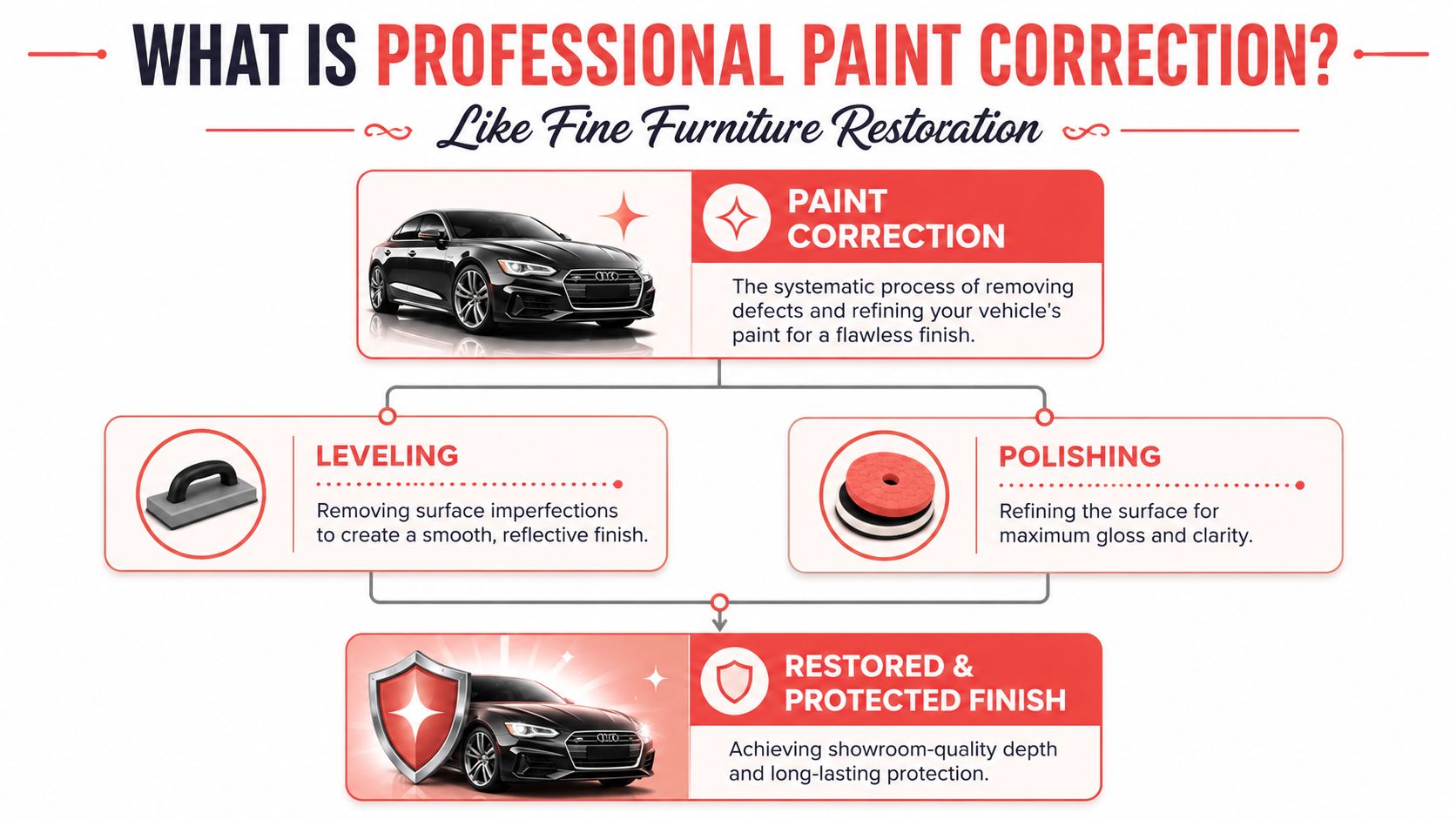
What correction removes and what it doesn't
Professional correction targets defects in the clear coat, which is the transparent top layer over the color coat. Common examples include:
- Swirl marks that show up in sunlight or under LEDs
- Light scratches from washing and drying
- Oxidation and haze that mute gloss
- Water spots that dull reflections
What it doesn't do is magically erase every deep scratch. If damage goes beyond the clear coat, a detailer has to evaluate whether correction will improve it, reduce its appearance, or if a different repair path makes more sense.
Why a quick buff and wax isn't the same thing
A cheap buff job often focuses on speed. A proper correction focuses on defect removal, finish quality, and preserving paint safely. Those are not the same thing.
A professional inspects the paint, tests a process, and works from the least aggressive method that can produce the right result. That's why car owners often get confused when one shop says "full correction" and another says "enhancement polish." The names can vary, but the essential difference is how much defect removal and refinement the service is designed to achieve.
If you want a deeper breakdown of where correction ends and polishing begins, this guide on paint correction vs polish helps sort out the overlap.
For shop owners who care about how educational service pages should be written clearly for local customers, I also like Outrank's SEO guide for detailers because it highlights the kind of plain-language content people search for.
Our Step-By-Step Professional Correction Process
A good result starts before the machine polisher ever touches the paint. Correction only works well when the surface is properly cleaned, inspected, and matched with the right pad and polish combination.

Step one is decontamination
Before any polishing starts, the paint needs to be stripped of the stuff sitting on top of it. That includes road grime, old protection, and bonded contamination that can interfere with polishing or get dragged across the surface.
That prep work usually includes a careful wash and decontamination process so the paint is clean enough to be properly inspected. If you skip this step, you can mistake contamination for paint defects or create more marring during polishing.
Inspection decides the right correction level
Under proper lighting, the paint's true condition shows up fast. What looked like "a few swirls" in the shade may turn out to be wider wash marring across the hood and doors. What looked terrible in one angle may respond well to a lighter process than you expected.
Here's the standard professionals follow. A one-step correction uses a single pad and polish combination for lighter defects. A two-step correction uses a stronger compounding pass first, then a refining polish to restore gloss. The important part is choosing the least aggressive method that gets the result you want, which is the benchmark described by Superior Detailer's paint correction overview.
Practical rule: The right process isn't the most aggressive one. It's the safest one that removes the defects you're targeting without unnecessary clear coat removal.
This short visual gives you a feel for how machine correction looks in practice:
Refinement and protection finish the job
After correction, the paint often needs a refining step to improve clarity and remove any haze left by heavier cutting. During this step, the finish starts to look sharper, darker, and more reflective.
Then comes protection. Once the surface is corrected, a sealant or coating-ready prep helps preserve the work. If a customer is planning a ceramic coating, correction usually needs to happen first because protection locks in the condition of the surface underneath.
For local owners who want a mobile option, The Mobile Buff performs on-site detailing and paint refinement in Central Pennsylvania using a service model built around driveway convenience and professional process control.
How to Tell If Your Car Needs Paint Correction
You don't need fancy tools to spot the usual signs. Most owners can get a pretty good read on their paint with sunlight, a phone flashlight, and a slow walk around the vehicle.
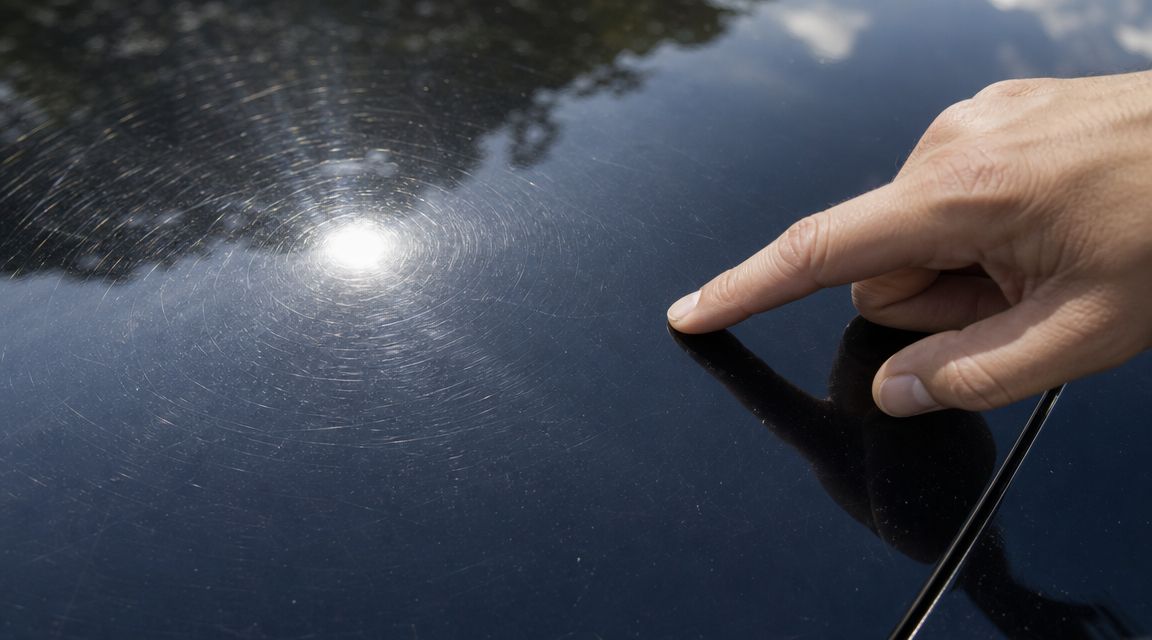
Quick signs to look for
- Spiderweb swirls in direct sun. These usually show up on the hood, roof, and trunk first.
- A gray or hazy look on darker paint. The car is clean, but reflections look soft instead of crisp.
- Light scratches near handles or loading areas. If they seem shallow, correction may improve them.
- Paint that still looks tired after a wash. That's a common clue that the issue is in the surface, not on it.
Try the phone flashlight test
At dusk, in a garage, or in the shade, turn on your phone flashlight and hold it at an angle close to the paint. Move the light slowly across the panel.
If the beam reveals circular marring, random fine scratches, or a cloudy halo around the light, your paint is a candidate for correction or at least a professional polishing assessment.
A lot of people assume every flawed finish needs the most intensive service. It doesn't. For high-mileage family vehicles, a one-step polish plus sealant can be a smarter investment than multi-step correction, while more intensive work often makes more sense for resale prep or enthusiast-owned vehicles. The goal is to match the service to the vehicle's age, paint thickness, and the owner's goals, as noted in 5 Diamond Detailing's discussion of correction decisions.
If your car is a daily driver, the best answer is often "improve it a lot and protect it well," not "chase every last defect."
If what you see looks like the before photos other local drivers talk about in reviews, take a look at our Google Business Profile. It can help you compare your car's condition with the kinds of issues Central PA owners commonly want fixed.
Understanding Paint Correction Costs and Time
People usually ask two questions first. What's it going to cost, and how long will my car be tied up?
The honest answer is that paint correction is priced by condition and process, not just by vehicle type. A lightly marred sedan needing a one-step polish is a different job from a neglected SUV with heavier defects that need compounding and refinement.
Why pricing varies
Professional correction is labor-intensive. Some providers advertise paint correction starting at $499 and describe multi-stage polishing as part of the service, which shows how the industry positions correction as a restoration workflow rather than a cheap add-on, according to My Baby Detailing's paint correction pricing page.
A fair quote usually depends on factors like:
- Vehicle size and how much painted surface needs attention
- Defect severity, including swirls, oxidation, and scratch visibility
- Correction level, such as enhancement, one-step, or multi-step work
- Protection choice after correction
Why time matters
Good correction takes time because prep, inspection, machine work, wipe-downs, and final protection all matter. Fast work isn't automatically bad, but rushed correction usually shows up later in missed defects, uneven results, or poor finishing.
If you're trying to budget realistically, this overview of paint correction cost gives a useful framework for what affects the final number.
A good detailer should be able to explain not just the price, but what level of improvement that price is designed to achieve.
Mobile Service vs a Traditional Shop in Central PA
For many Central PA drivers, the decision isn't just whether to get correction done. It's whether to hand the car over to a shop for the day or have the service performed at home.
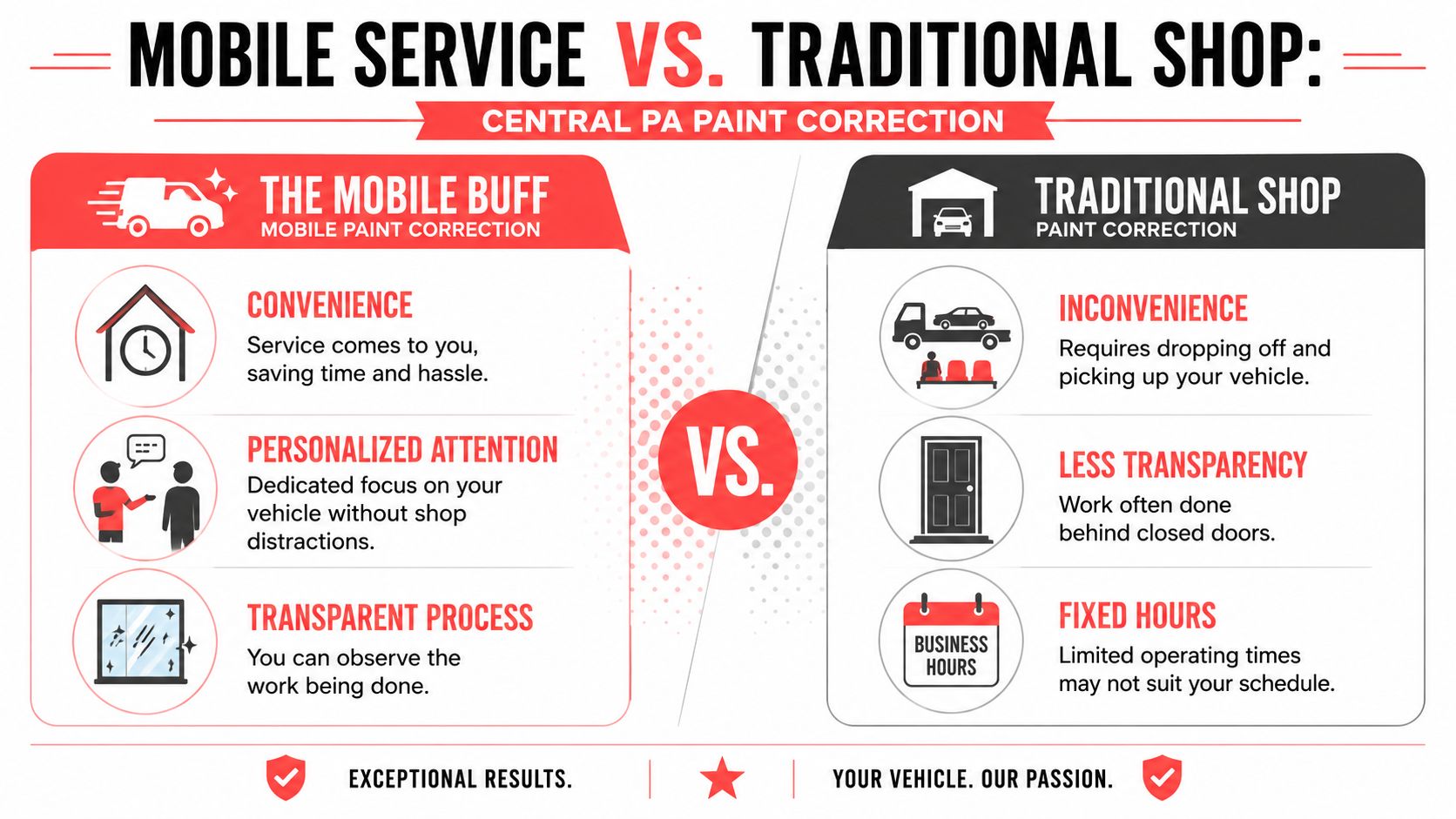
Where mobile service fits real life better
A shop has a controlled location, but it also means scheduling drop-off, finding a ride, and fitting your day around someone else's workflow. For busy parents, commuters, and small business owners, that's often the biggest pain point.
A mobile setup can remove that hassle if it's run professionally. One provider's guidance notes that mobile correction works by scheduling around weather, using portable professional lighting for inspection, and operating with a self-contained setup that can match shop-grade outcomes with more convenience, as explained by Top Shine Detailing's paint correction service page.
Simple comparison
| Option | What tends to work well | What to think about |
|---|---|---|
| Mobile correction | Convenient scheduling, no drop-off, you can see the process at your home | Weather and site conditions need to be managed properly |
| Traditional shop | Fixed indoor location, established bay setup | Less convenient for many owners, often less visibility into the work while it's happening |
A well-run mobile service doesn't ignore weather. It plans around it.
If you're comparing local providers and wondering why some businesses show up more clearly in map results than others, Bare Digital's guide to local SEO gives a helpful plain-English overview of how local visibility works.
And if your main priority is convenience, this page on mobile car detailing near me is a useful next step for understanding how at-home service fits into a busy week.
Book Your Mobile Paint Correction Today
Once your paint has been corrected, the next job is keeping it that way. The biggest difference comes from gentle washing, clean wash media, careful drying, and staying away from harsh wash habits that reintroduce swirls.
A few good aftercare habits go a long way:
- Use a quality wash method with clean mitts and fresh water
- Dry with proper microfiber towels instead of old bath towels or chamois
- Keep protection on the paint so contamination releases more easily during washing
- Address bird droppings and bug residue promptly before they sit too long
For auto businesses trying to understand why reviews and local reputation matter so much when customers choose services like this, Reviews To The Top's guide for auto repair marketing gives a solid business-side look at how trust gets built online.
If your vehicle looks dull in the sun, shows swirl marks under garage lights, or just doesn't reflect the way it used to, paint correction may be the service that brings it back. For daily drivers in Dauphin and Perry counties, the goal isn't perfection for a trailer queen. It's a cleaner, glossier, better-kept vehicle you enjoy driving again.
If you're ready to restore gloss without the hassle of a shop visit, book a mobile paint correction service with The Mobile Buff. We serve Central Pennsylvania drivers in Dauphin and Perry counties and can help you figure out whether your car needs a one-step improvement, a more involved correction, or a simpler polish-and-protect approach.

