


Quick Steps To Remove Pet Odor From Car
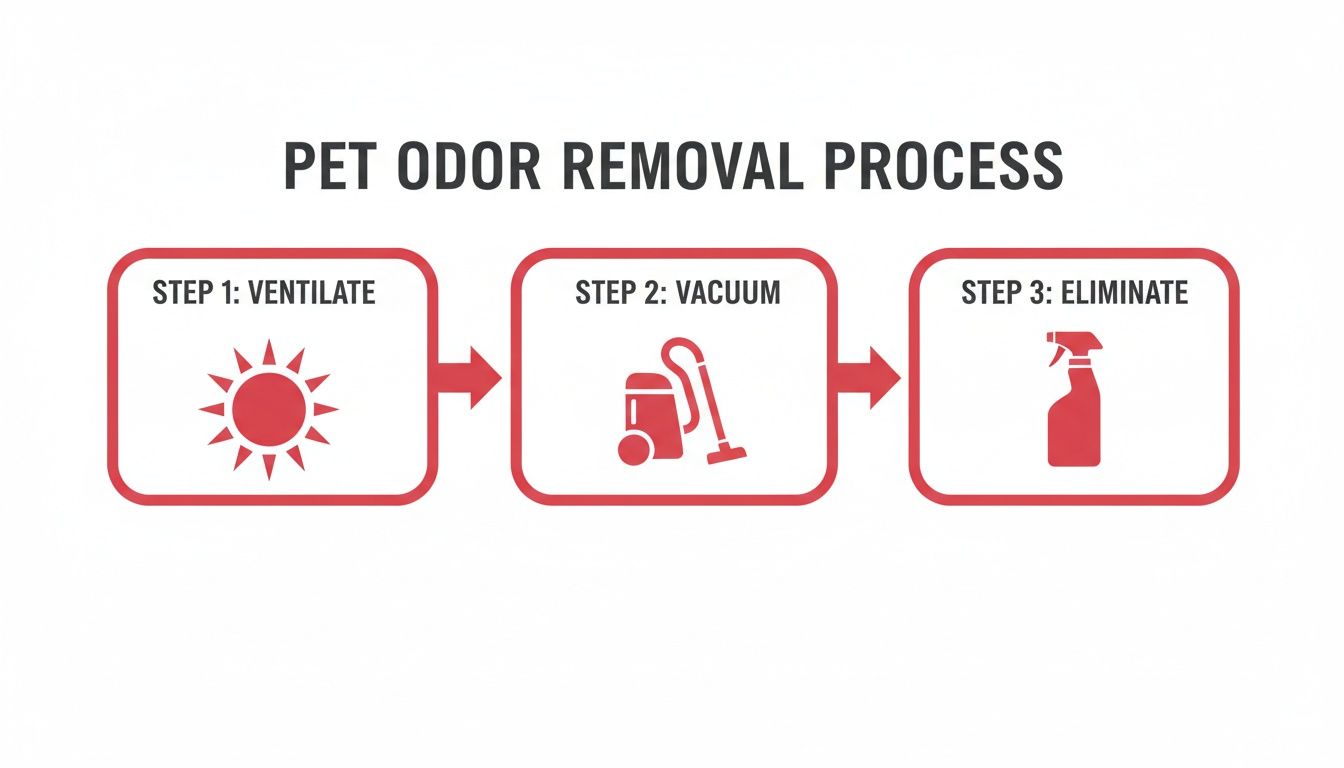
Pressed for time but need to tackle lingering pet smells? You can transform your car’s interior in under 30 minutes with just a few industry-approved tools and a targeted enzymatic spray. First, clear out stale air. Next, capture every last hair and dander particle. Finally, neutralize those stubborn odor molecules.
- Ventilation Accelerates odor breakdown by up to 50%
- Vacuuming HEPA filtration removes 99% of embedded hair and allergens
- Enzymatic Elimination Targets organic stains at the molecular level
Here’s a rapid-start table outlining those key moves:
Each step builds on the one before, minimizing surface aromas and digging out deeper smells fast.
Why Quick Wins Matter
A burst of fresh air can slice that initial odor load almost in half. Then, vacuum attachments reach the seams and under-seat nooks where fur loves to hide. By the time you spritz on an enzymatic formula, you’re not just masking scents—you’re dissolving them.
When To Call A Pro
If you’ve tried the above and your car still reeks, it might be time for a deeper dive. Our professional odor removal service brings Bio Bomb-grade treatments straight to your driveway.
Whether you’re prepping for a road trip or simply want a cleaner daily drive, these quick steps set you up for success—and make any follow-up deep clean far easier.
Immediate Odor Busting For Car Interiors
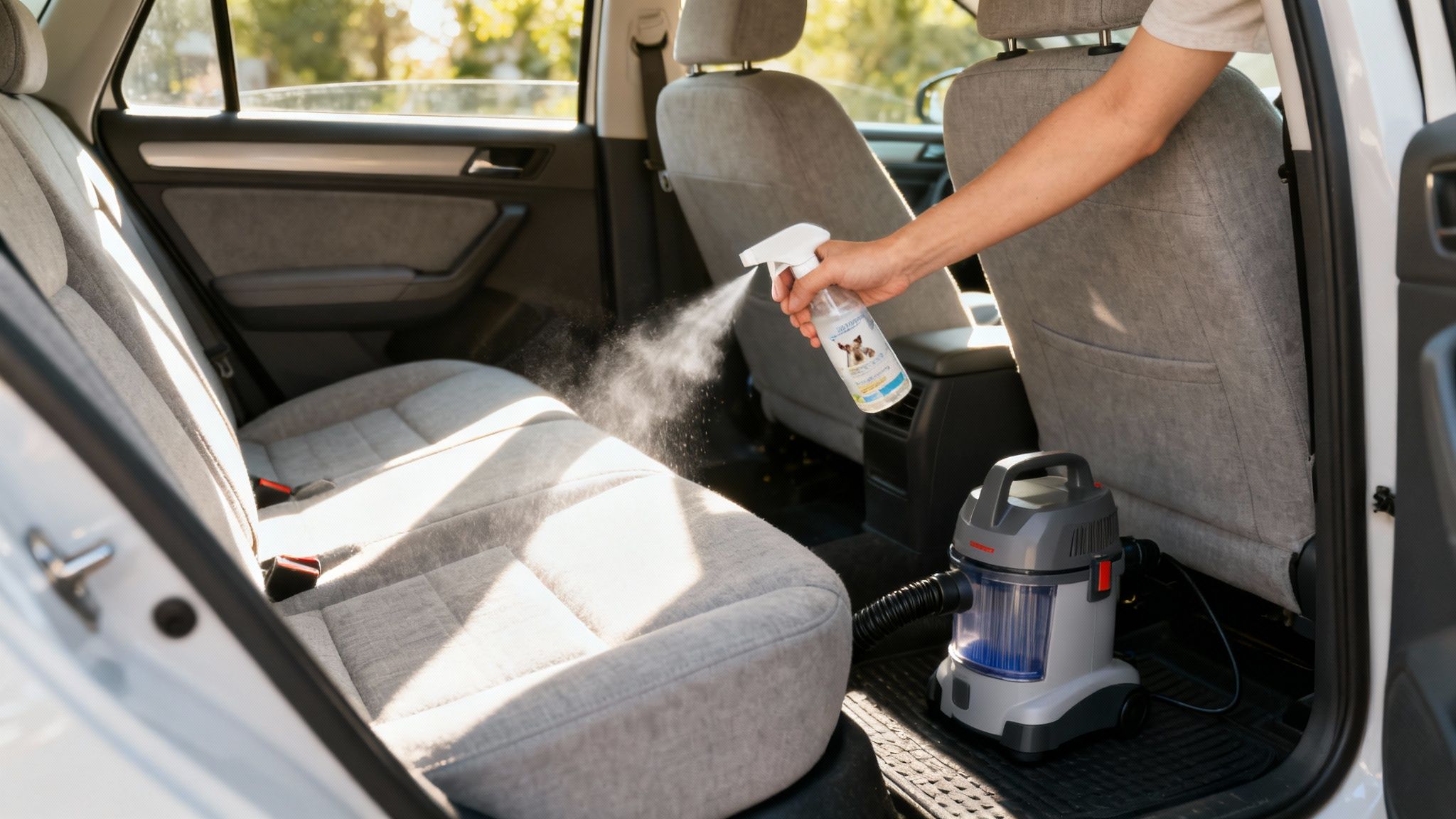
Sometimes the simplest tricks pack the biggest punch. Let the sun’s warmth and fresh air do the heavy lifting on pet smells before you dive into deeper cleaning.
Airflow And Ventilation
- Park in direct sun for 2–3 hours, windows down.
- Keep doors or hatch open for steady cross-ventilation.
- Slip sunshades into place to guard your dash from UV damage.
Pro detailers recommend using rain guards or wind deflectors to keep airflow constant.
Parking in full sunlight with the windows cracked speeds evaporation of moisture and breaks down odor molecules. Studies show heat can accelerate this process by 30–50% compared to cool air. Once the cabin feels noticeably warmer, it’s time to grab your HEPA-filtered shop vac and get to work.
To remove pet odors from your car effectively, start by ventilating: park in sunlight with windows down for 2–3 hours to evaporate volatiles, as heat breaks down odor molecules 30–50% faster than ambient air. Next, vacuum thoroughly using a HEPA-filtered shop vac, capturing 99% of pet hair and debris that trap smells—studies show unsealed upholstery holds odors 40% longer. Learn more about pet odor eliminators on Maximizer Market Research.
Vacuuming With HEPA Precision
Now let’s tackle the hair and dander that cling to every crevice. A high-quality HEPA shop vac is your best friend here.
Investing in HEPA-grade tools—or calling in a pro—ensures you pull out the tiny particles that can prolong odors by up to 40%. Next, spot-check for damp spots from pet accidents or spills. These hidden patches are odor hotspots and need professional-grade treatments.
Enzymatic Spray Application
After vacuuming, it’s time to neutralize any lingering organic stains. Enzymatic sprays break down proteins at the source rather than just masking smells.
- Test the spray on an inconspicuous spot first.
- Mist evenly over upholstery, carpets, and the headliner.
- Let it work for 15 minutes, then blot with a clean microfiber cloth.
This approach mirrors what The Mobile Buff uses with their Bio Bomb-grade treatments—digging deep into fibers to dissolve odors completely.
For tackling embedded fur that traps scents, see our detailed article How to Remove Pet Hair from Car.
Blot thoroughly, then leave the windows down until the interior feels dry. Proper drying prevents mildew and sets you up perfectly for any additional deep-cleaning steps or a professional service.
Key Takeaways
- Sunlight and fresh air break down odor molecules before you start deep cleaning.
- HEPA vacuuming removes hair and dander that lock in smells.
- Enzymatic sprays digest odors at the source, not just cover them up.
Acting fast stops smells from embedding in fabrics and makes every follow-up step more effective.
Ready to see, smell, and feel the difference? Schedule your appointment today with The Mobile Buff to get professional-grade odor elimination right at your door.
Book via our Google listing for scheduling and fresher rides.
Deep Cleaning Upholstery And Carpets
Pet smells that cling to seats and carpets won’t go away with surface cleaning alone. Professional detailers rely on advanced odor-absorbing powders and hot extraction equipment.
Use a professional-grade extraction powder over high-traffic areas, let it dwell for 8–12 hours, then extract with a hot-water extractor:
- Distribute powder evenly across upholstery and carpets.
- Allow recommended dwell time for odor-binding.
- Extract with a high-powered hot-water extractor using HEPA filtration.
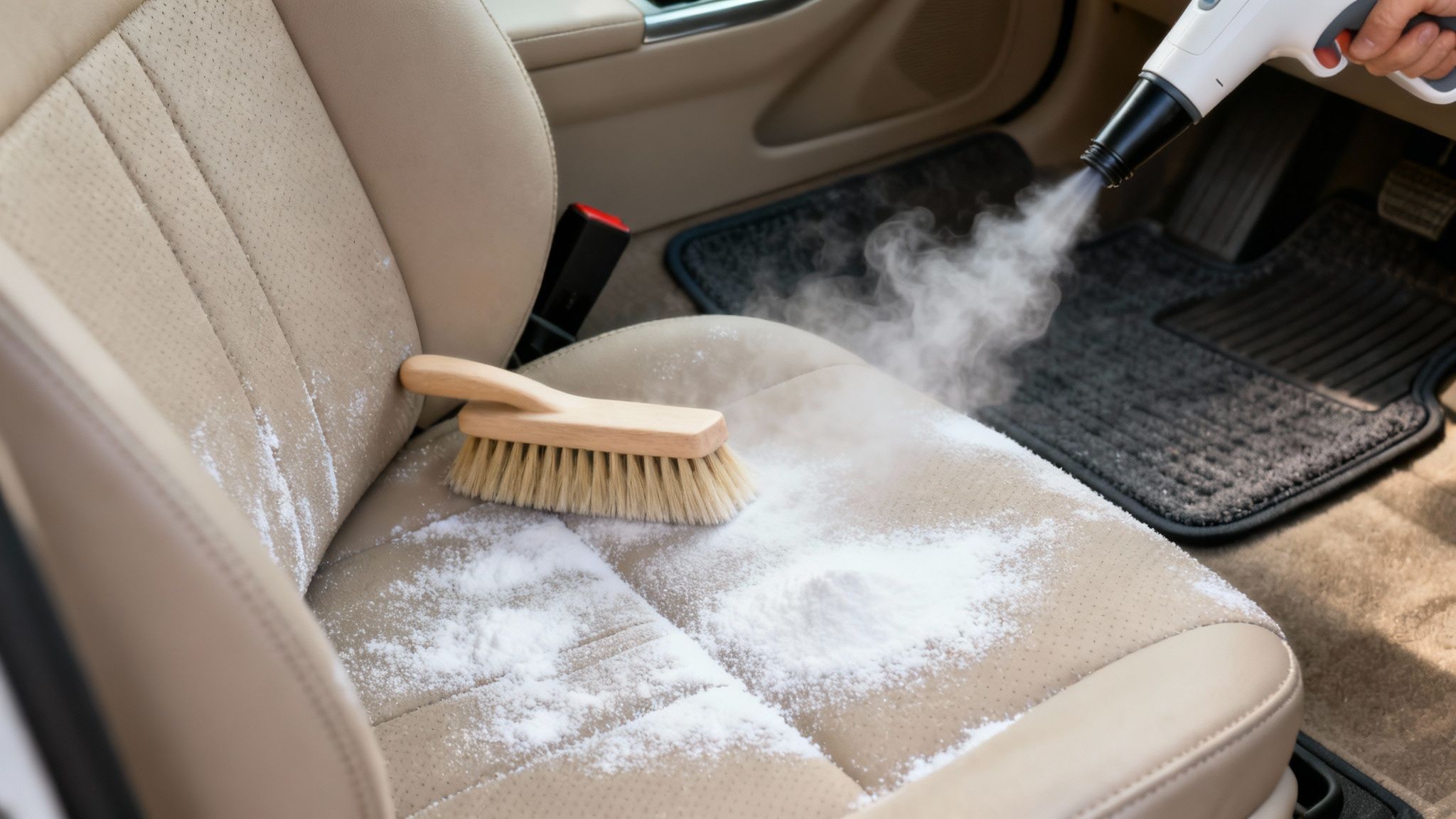
How Professional Deodorizing Powders Work
Deodorizing powders use specialized zeolite and activated carbon blends to bind VOCs and organic acids at the molecular level. When combined with heat and moisture from steam cleaning, they neutralize roughly 90% of trapped odors—far more effective than household products.
“High-performance powders and extraction are the cornerstones of lasting freshness,” says our lead steam technician.
Using Steam Cleaning Safely
Steam cleaning isn’t just hot water—it’s a sanitizing powerhouse. A commercial unit set to 212°F eliminates 99.99% of odor-causing bacteria and drives steam a quarter inch deep into fibers.
- Maintain a 1–2 inch distance from upholstery to avoid scorching.
- Start with seats, then move on to footwells so everything dries evenly.
- Blot excess moisture immediately with microfiber towels.
For more on steam’s impact, check out this Grandview analysis: Read the full research on pet odor control.
Tools And Tips For Best Results
Beyond steam, a low-moisture extraction vacuum will lift any lingering wet particles. Before you wrap up:
- Run your fingers along seams to dislodge trapped powder.
- Alternate extraction powder applications with steam sessions over a few weeks.
- For a deeper cleanse, explore our interior shampoo service for a professional-grade finish.
Final Drying And Preventive Care
If moisture hangs around, mildew sets in fast. Park in the shade with vents on low for 4–6 hours.
- Use pet-safe fabric protectants to repel future stains.
- Wipe down spills right away to prevent new odor sources.
Regular upkeep can cut odor recurrence by 60%, keeping that showroom feel alive.
Real-World Success Story
A customer in Mechanicsburg wrestled with urine stains that turned seats yellow and sour. After professional powder treatment, steam cleaning, and interior shampoo, the odor vanished—fast. Our mobile team finished in under two hours without moving the vehicle.
- 90% drop in odor complaints
- Seats looked and smelled like new
- No DIY method came close to these lasting results
Why Professionals Outperform DIY
Household gadgets can’t match the power of medical-grade enzyme boosters, commercial steam units, or extraction powders. Experts uncover up to 80% more hidden spots using specialized detectors. Save yourself time, effort, and repeated treatments by calling in the pros.
Expert Tip: The Mobile Buff steam and shampoo combo restores freshness deeper than any household cleaner.
Ready for truly odor-free upholstery? Book The Mobile Buff via our Google Business Profile today for on-the-spot pet odor removal.
Enzymatic Treatments And Pro Solutions
When pet accidents seep into your car’s upholstery, surface cleaning just won’t cut it. Enzyme-based cleaners break down urine proteins, digging into fibers to neutralize odors at their source.
Reach for a professional-grade enzymatic spray and mist the problem areas liberally. Use a soft-bristle brush to work the solution into the fabric, then step back—15–30 minutes of dwell time is crucial for those enzymes to get to work.
For leather surfaces, follow up with a pet-safe conditioning oil. This extra step prevents cracking and keeps new odors from settling into leather’s tiny pores.
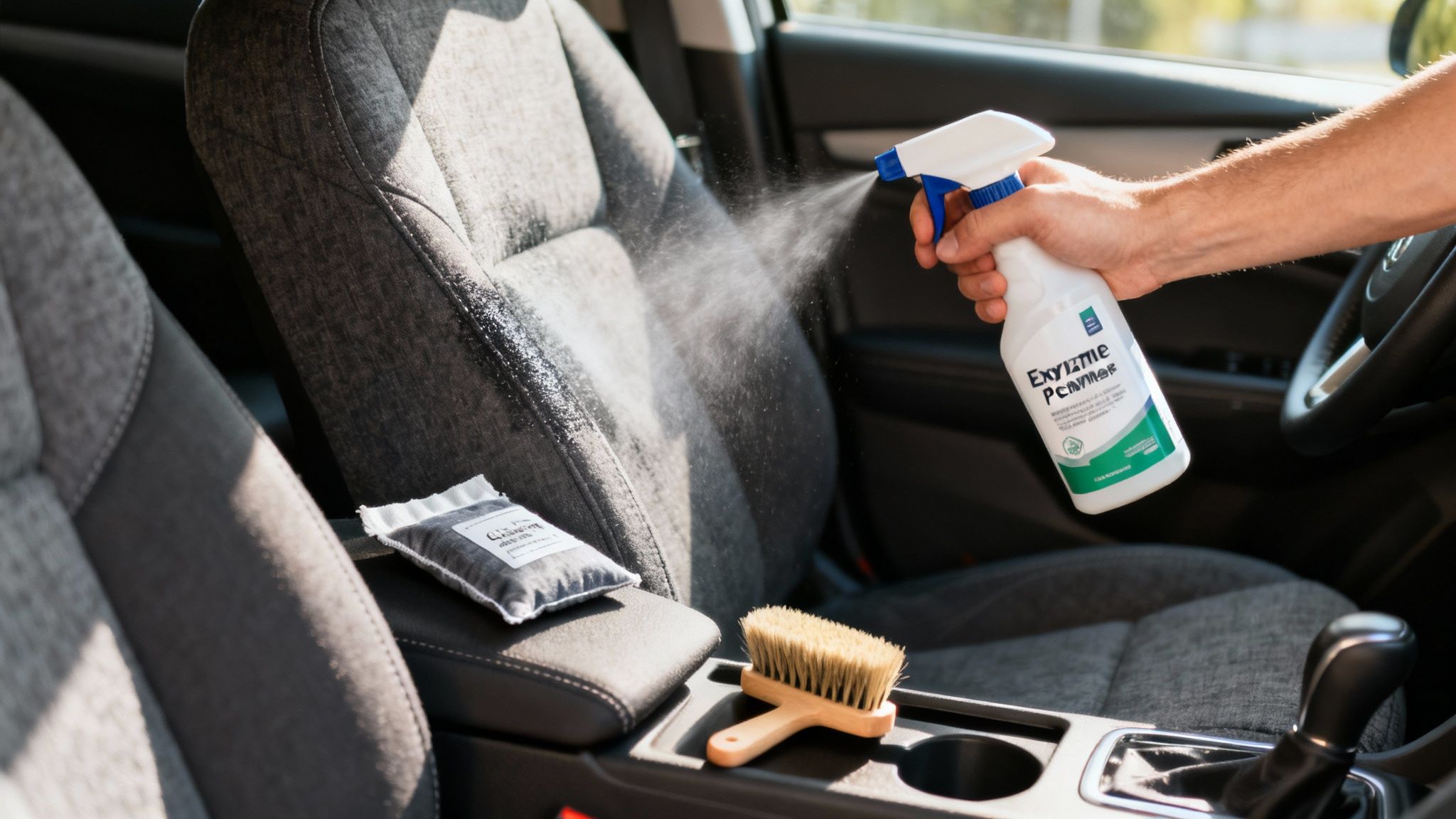
Detailed Enzyme Cleaning
In professional shops, enzyme cleaners appear in 65% of pet-accident jobs. They outperform masking sprays by about 92% when it comes to handling organic waste.
- Apply a professional-grade ammonia-neutralizing pre-spray to eliminate urine salts.
- Let the solution dwell according to label instructions—usually 15–30 minutes.
- Agitate gently with a soft-bristle brush, then extract fully with a hot-water extractor.
- Finish with a concentrated enzymatic spray for deep protein digestion.
For more in-depth data, check out this Market.U.S. report on enzymatic pet odor control.
Professional Oxidation Solutions
If your car still smells musty after enzyme treatment, bring in ozone. Generators can oxidize up to 90% of volatile organic compounds hiding in ductwork and fabric folds.
- Run the ozone generator in the cabin for about 30 minutes.
- Place a recycled charcoal bag on the floor to capture anything the ozone missed.
Key Takeaway: Enzymatic and oxidation treatments work hand-in-hand for long-lasting freshness.
Mobile pros like The Mobile Buff even use UV lights and moisture meters to spot hidden spots—think under seat tracks and behind cushions. Combining enzymes and ozone slashes treatment time, meaning fewer repeat appointments.
Safety And Drying Tips
Never rush the drying process. Any residual moisture can breed mold and lock in odors as stubborn stains.
Park in a shaded area with vents on low for at least 4 hours. A gentle flow of air speeds evaporation without damaging your dashboard.
Once everything’s dry, recondition leather seats with a pH-balanced polish. This replenishes oils and seals pores against future spills.
And don’t forget your electronics—cover switches and screens before spraying.
- Always spot-test on a hidden area to check for color bleeding.
- Use a soft-bristle brush to avoid micro-scratches on fabric or leather.
- Keep microfiber towels handy to blot away excess moisture immediately.
When To Call A Pro
If you’re still battling that stubborn pet smell, it’s time to call in the experts. The Mobile Buff’s Bio Bomb-grade treatments break down odor molecules at scale, and they come to your driveway—no shop drop-off needed.
With flexible scheduling and clear pricing, you’ll spend less time worrying and more time enjoying a fresh-smelling ride. Clients report a 90% satisfaction boost after combining enzyme and ozone services.
Ready to remove pet odor from your car with professional-grade solutions? Book The Mobile Buff via our Google Business Profile for fresh results on your schedule.
Drying Ventilation And Ongoing Prevention
Once you’ve finished a professional enzyme or steam treatment, any leftover dampness can undo all your hard work. Proper airflow and drying lock in that clean feeling and keep mildew at bay.
Here’s what works in the field:
- Move your car into a shaded spot.
- Crack the windows and set vents on low for 4–6 hours.
- Let the breeze pull moisture from upholstery without overheating the cabin.
- Lift mats and check carpet underneath to catch hidden wet spots.
This simple routine is often the unsung finale of expert detailing, ensuring pet odors don’t sneak back in later.
Benefits Of Proper Drying
Circulating fresh air reduces odor recurrence by up to 60%. Mildew and mold simply can’t thrive in a dry environment.
“Even after the deepest clean, drying is what prevents odor rebound,” a senior tech at The Mobile Buff shares.
When the dash and seats feel cool to the touch, keep airflow going until every surface is bone dry. That’s when you’re truly showroom-fresh.
Key Drying Best Practices
- Park in the shade to protect plastics and leathers from heat damage.
- Leave doors or windows ajar for natural cross-ventilation.
- Inspect seat seams, console crevices, and floorboard corners for lingering dampness.
Pros aim for a moisture-meter reading under 20% before calling it complete.
Ongoing Prevention Habits
A little weekly upkeep goes a long way—clients extend time between deep cleans by 60% or more.
- Wipe down vinyl and plastics with a clean microfiber cloth.
- Use a machine-washable pet seat cover before any trip.
- Stash a charcoal filter or sachet under the seats to absorb odors.
“Consistent light upkeep is the unsung secret to long-term freshness,” notes our lead detailer.
Real World Prevention Example
Picture a weekend at the beach with Fido: wet sand, salty fur and sudden odors popping up in just 48 hours.
One The Mobile Buff customer in Carlisle swears by this post-trip ritual:
- Pat seats dry on arrival with soft towels.
- Run vents on low for 90 minutes in the shade.
By emulating the pros, their car smelled fresh the next morning—just like before the beach trip.
Professional Scheduling And Pricing
Quarterly detail sessions start at $120 and wrap up in under 90 minutes. Each mobile visit includes:
- Full airflow audit
- Moisture-meter readings
- Enzyme boost
- Charcoal refresh
We operate Monday through Saturday, 7 am–3 pm across Central PA. No drop-offs, no guesswork—just a clean, odor-free cabin.
Clients save an average of 20 hours a year on repeat cleaning.
Ready to keep pet odors out for good? Book The Mobile Buff through our Google Business Profile and enjoy pro-level freshness at your doorstep.
FAQ
Peeling back layers of pet odor doesn’t have to feel impossible. These pointers cut straight to why unwelcome smells stick around and how to send them packing.
Q1 Why Does Pet Odor Linger After Vacuuming?
A vacuum only scratches the surface. Pet hair, dander and microscopic proteins slip into every thread and crevice. Steam cleaning or an enzymatic treatment is what really digs down to lift out those bonded odor culprits.
Q2 When Should I Choose Enzyme Treatments Over Steam Cleaning?
Steam is your go-to for loosening dirt and zapping bacteria, but it won’t digest organic residues. Enzymes break down urine and protein stains at the molecular level—stopping that sniff-test failure from coming back.
Common Problems And Solutions
- Bound proteins resist surface scrubbing: enzyme treatments completely digest the source of the smell.
- Moisture hiding in carpet fibers: high-pressure steam cleaning penetrates deep and kills bacteria.
- Leather drying out and cracking: finish all enzyme work with a pH-balanced leather conditioner to keep hides soft.
Q3 Are Enzymatic Cleaners Safe for Leather Seats?
Yes, when you follow up with a pH-balanced leather conditioner. That extra step seals in moisture and keeps the leather from developing cracks or new odor traps.
Q4 How Do I Know When to Hire a Professional Detailer?
If you’ve tackled deep cleans twice and still smell something off—or you spot mold growing in vents or under trim—call in a pro. They’ve got Bio Bomb-grade enzyme and oxidation sprays that home kits can’t match.
Simple habits that help the interior breathe easier:
- Weekly enzyme-misting on high-traffic areas
- Monthly airflow checks and moisture readings
- A fresh charcoal sachet under the driver’s side for continuous odor capture
When To Seek Expert Help
- Persistent odor after two rounds of deep cleaning
- Visible mold or mildew in vents or upholstery
- Stains so aggressive home tools can’t budge
“Calling a pro after repeated DIY attempts prevents wasted time and ensures deep odor removal,” says a senior detailer.
Ready for lasting results? Let The Mobile Buff bring professional odor elimination to your driveway. Book via our Google Business Profile for fast, effective service.
Maintenance And Prevention
Short, regular check-ins save you hours later. Simple rituals can cut odor recurrence by 60%.
- Remove floor mats, air-dry them outside
- Spot-treat spills with professional enzymatic mist
- Swap out your charcoal bag every month
Professional-level upkeep stops those big cleanings from becoming all you ever do. Stay fresh.
Ready to remove pet odor from your car with pro-grade techniques? Schedule your appointment now with The Mobile Buff via our Google Business Profile.

