


Most advice about hypoallergenic cleaning products starts with “look for the word hypoallergenic.” That's the advice I'd challenge first. On household cleaners, the term isn't a legally defined safety standard, so it doesn't prove that a formula is free from allergens, respiratory irritants, or fragrance chemistry that can linger inside a vehicle.
I've seen the practical side of this problem in car interiors. A cleaner can leave seats looking sharp while its scent hangs in the cabin, settles into fabric, or bothers a child, pet, or driver before the vehicle reaches the end of the driveway. The safer approach is more demanding but more useful: check the ingredients, consider how the product is applied, and use professional equipment when residue and embedded contamination are part of the problem.
Why Hypoallergenic Labels Can Be Misleading
A front label can suggest reassurance without telling you what “hypoallergenic” means in measurable terms. The EPA explains its Safer Choice product program as a separate ingredient-safety and product-review system, and it maintains a distinct category for fragrance-free products. That distinction matters because hypoallergenic is not the same as independently verified.
A manufacturer may use “hypoallergenic” as a marketing description without meeting a universal household-cleaner threshold. The claim might reflect a reduced fragrance load, a reformulated preservative system, or nothing more specific than the brand's own positioning. That doesn't automatically make the product dangerous, but it does mean the label alone can't answer the question sensitive customers have: “What exposure am I getting?”
Ingredient transparency beats reassurance
Fragrance exposure helps explain why this category exists. An EU scientific review estimated that 1% to 3% of the European population is allergic to some fragrance ingredients, while a separate EU risk assessment estimated fragrance contact allergy at about 1% to 2% of the general population and identified fragrance ingredients as the second most frequent cause of contact allergy after metals. The same EU review of fragrance allergens found fragrance allergens in 1/3 of detergents in a review of 301 products.
That exposure isn't limited to laundry. In a UK review of 300 consumer products, linalool and limonene appeared in 63% of products, according to the same EU document. For a vehicle, this matters because upholstery, carpets, and air vents can hold onto residues long after a wipe-down appears complete.
For a broader explanation of what to verify when selecting household cleaners for allergies, focus on the ingredient list rather than the front panel. Look for a clearly stated fragrance-free formula, disclosed preservatives, and a credible certification with published criteria.
Practical rule: Treat “hypoallergenic” as a prompt to investigate, not as proof that a product is suitable for every allergy-prone person.
Common Allergens and Irritants Hiding in Cleaning Products
The ingredients that cause trouble aren't always the ones consumers expect. Fragrance compounds such as limonene, linalool, and α-terpineol can be included to create a clean-smelling finish, while preservatives protect the liquid from microbial growth. Either function can create a problem for someone with contact sensitivity, dermatitis, respiratory sensitivity, or scent-triggered discomfort.
An Italian market survey found methylchloroisothiazolinone/methylisothiazolinone in 35.7% of products, limonene in 43.6%, and surfactants listed in 16.5% of products reviewed, as reported in this published product survey. Those figures don't mean every product containing an ingredient will cause a reaction. They do show why “gentle,” “natural,” and “green” aren't enough information by themselves.
What the ingredient is doing
| Ingredient | Function | Common Reactions |
|---|---|---|
| Limonene | Fragrance component | Contact irritation or sensitization, scent-related discomfort |
| Linalool | Fragrance component | Contact allergy and irritation after oxidation or repeated exposure |
| α-terpineol | Fragrance component | Scent sensitivity and possible irritation |
| Methylchloroisothiazolinone | Preservative | Contact dermatitis in sensitized users |
| Methylisothiazolinone | Preservative | Contact dermatitis and skin irritation |
| Surfactants | Lift oils and soil from surfaces | Dryness, irritation, or discomfort depending on formula and exposure |
Human reports also show why fragrance deserves special attention. A U.S. survey published in 2009 found that 30.5% of the general population reported irritation from scented products on others, 19% reported adverse health effects from air fresheners, and 10.9% reported irritation from scented laundry products vented outside, according to the PubMed record for the survey. In a European clinical population, 7.2% of 224 subjects reacted positively to at least one allergen included in the analysis, and fragrance mix I contact allergy prevalence was 7.8% in that clinical group.
This is why I don't choose a car cleaner based on whether the scent smells “fresh.” I look for the chemistry that remains after the cleaning pass. A product can remove grime effectively and still be the wrong choice for a vehicle occupied by a child with sensitive skin or a driver who reacts to fragrance.
For professionals comparing commercial formulas, resources such as this guide to hospitality cleaning chemicals NZ can help frame the difference between cleaning action, preservation, and exposure concerns. The same principle applies in detailing: every ingredient has a job, and every job should justify its presence.
How to Read Labels and Spot Trustworthy Certifications
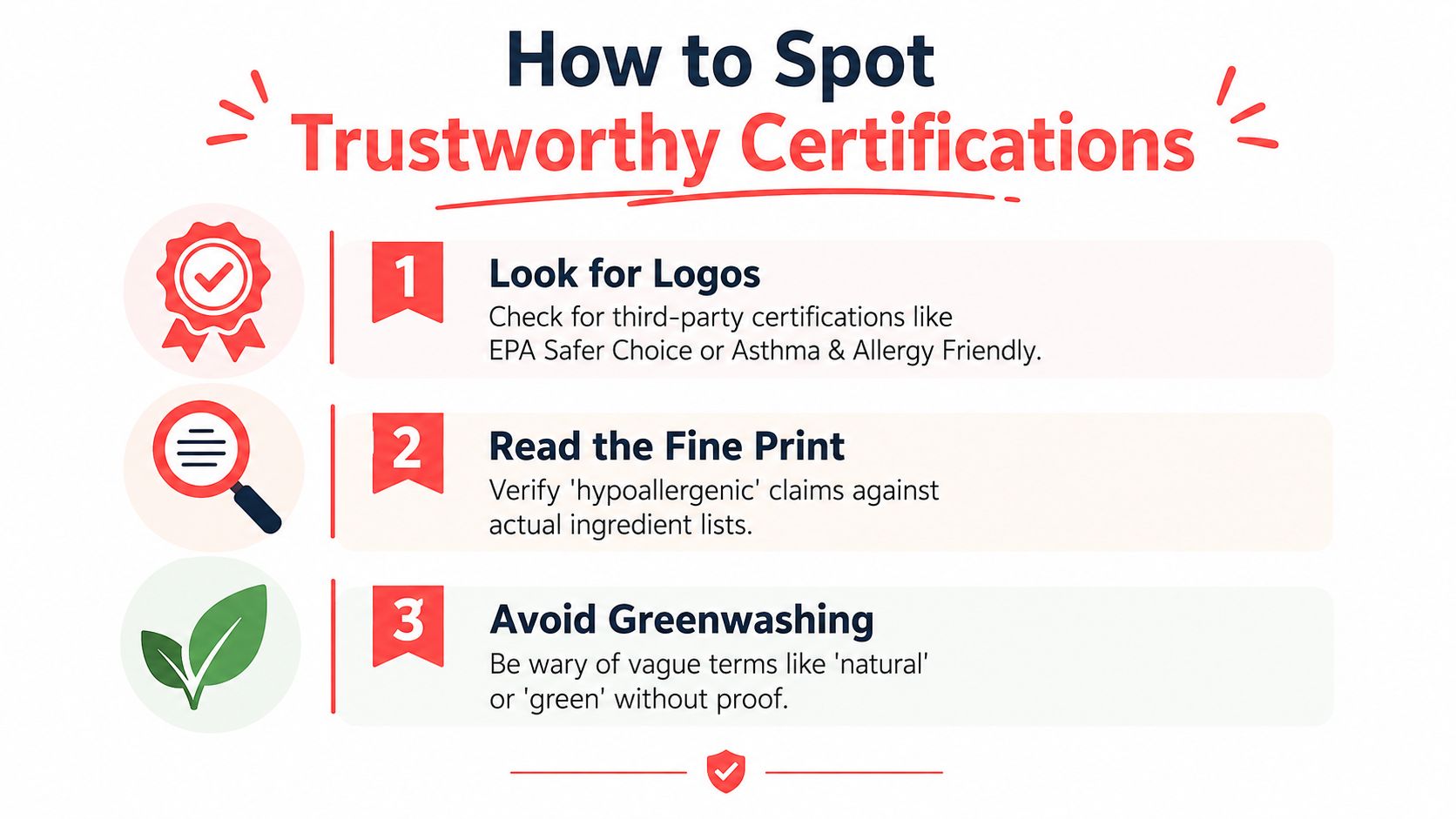
Start with the back label, not the large claim on the front. Find the complete ingredient disclosure, identify whether “fragrance,” “parfum,” or named fragrance allergens appear, and check the directions for ventilation and contact precautions. If the manufacturer offers a technical data sheet or full ingredient explanation, that transparency is more useful than a leaf graphic.
EPA Safer Choice is meaningful because it represents a defined ingredient-safety review rather than a casual marketing phrase. EWG Verified also uses published criteria, and its cleaner requirements address disclosure of fragrance allergens. Under the EWG Verified cleaner licensing criteria, 26 fragrance allergens must be disclosed when present above specified thresholds. Liquid hand dishwashing soap and hand laundry detergent use a 0.001% threshold, while other products use 0.01%, according to those criteria.
A practical label check
Separate “unscented” from “fragrance-free.” Unscented can mean that masking ingredients cover the base odor. Fragrance-free is the clearer claim, but I still verify the ingredient list.
Look for named preservatives. Methylisothiazolinone and methylchloroisothiazolinone deserve particular attention if someone using the vehicle has a history of contact dermatitis.
Check state disclosure rules carefully. California's Cleaning Product Right to Know framework requires certain fragrance allergens to be listed at or above 0.01%, or 100 parts per million, and requires additional ingredients from designated lists to be disclosed, as summarized by this California cleaning-product disclosure overview.
Verify the certification itself. A logo should lead to a searchable certification program or product listing. “Plant-based,” “eco,” and “natural” describe positioning, not a complete safety assessment.
For car owners choosing lower-impact products, a guide to biodegradable car wash products can provide useful context, but biodegradable doesn't automatically mean allergy-friendly. You still need to review fragrance, preservatives, application method, and residue.
Fragrance-Free Versus Low-Fragrance Products
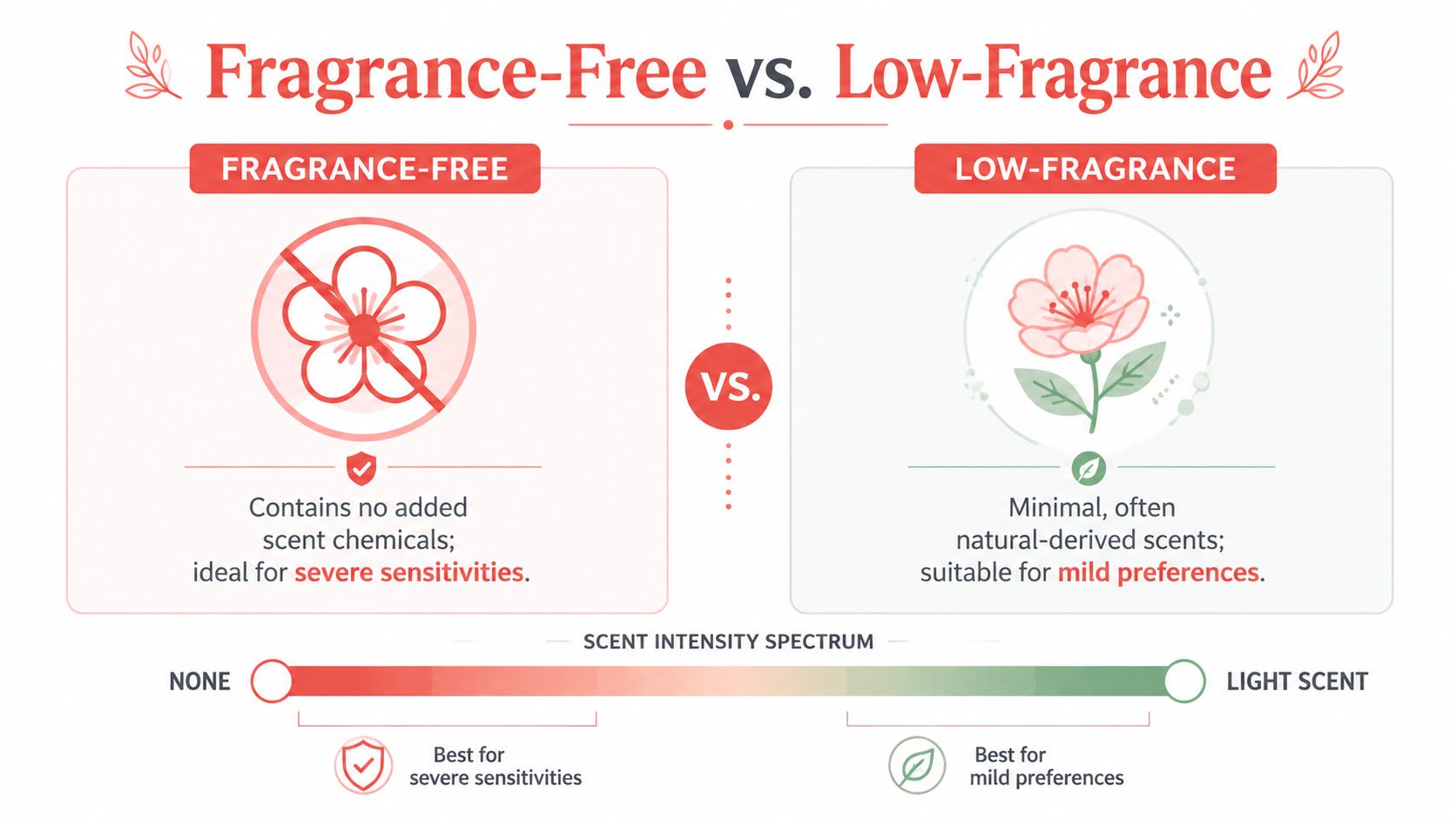
Fragrance-free is the safer starting point for severe sensitivity, especially in a small vehicle cabin. Low-fragrance products may suit someone who tolerates mild scent and wants a less clinical experience, but the word “low” doesn't tell you which compounds are present or how much remains on fabric.
The air-emission evidence favors removing fragrance chemistry when exposure is a concern. In a study of 30 cleaning products, researchers identified 530 unique VOCs, including 193 hazardous VOCs. Fragrance-free green products emitted nearly eight times fewer VOCs than conventional products and about four times fewer hazardous VOCs than green products that still contained fragrance, according to this EWG report on VOC emissions from cleaning products.
Choose by exposure, not preference alone
Fragrance-free: The sensible choice for severe fragrance sensitivity, children's seating areas, pet-heavy interiors, and drivers who report headaches or breathing discomfort around scented products.
Low-fragrance: A possible compromise for mild sensitivity when the formula lists its scent components clearly and the vehicle can be ventilated thoroughly after service.
Unscented: A caution category. It may contain masking fragrance, so don't treat it as equivalent to fragrance-free without checking the ingredients.
Application changes the result. Spraying into the air creates more opportunity for airborne exposure than applying a controlled amount to a cloth, and a product used in a closed cabin behaves differently from one used outdoors. A review of cleaning products and indoor air quality notes that cleaning chemicals can affect indoor air, while separate evidence linked scented-product exposure with fragrance contact allergy and reported an overall odds ratio of 1.70 for contact allergy in one study, with rinse-off exposure showing an inverse association. The cleaning products and indoor air quality review supports a practical conclusion: product type and exposure context matter.
If you're disinfecting a home surface rather than detailing a vehicle, guidance on cleaning viruses at home can help distinguish cleaning goals from scent preferences. In a car, use only the product and dwell time approved for the surface, and avoid adding fragrance to make the cabin smell “finished.”
When Hypoallergenic Cleaning Matters Most
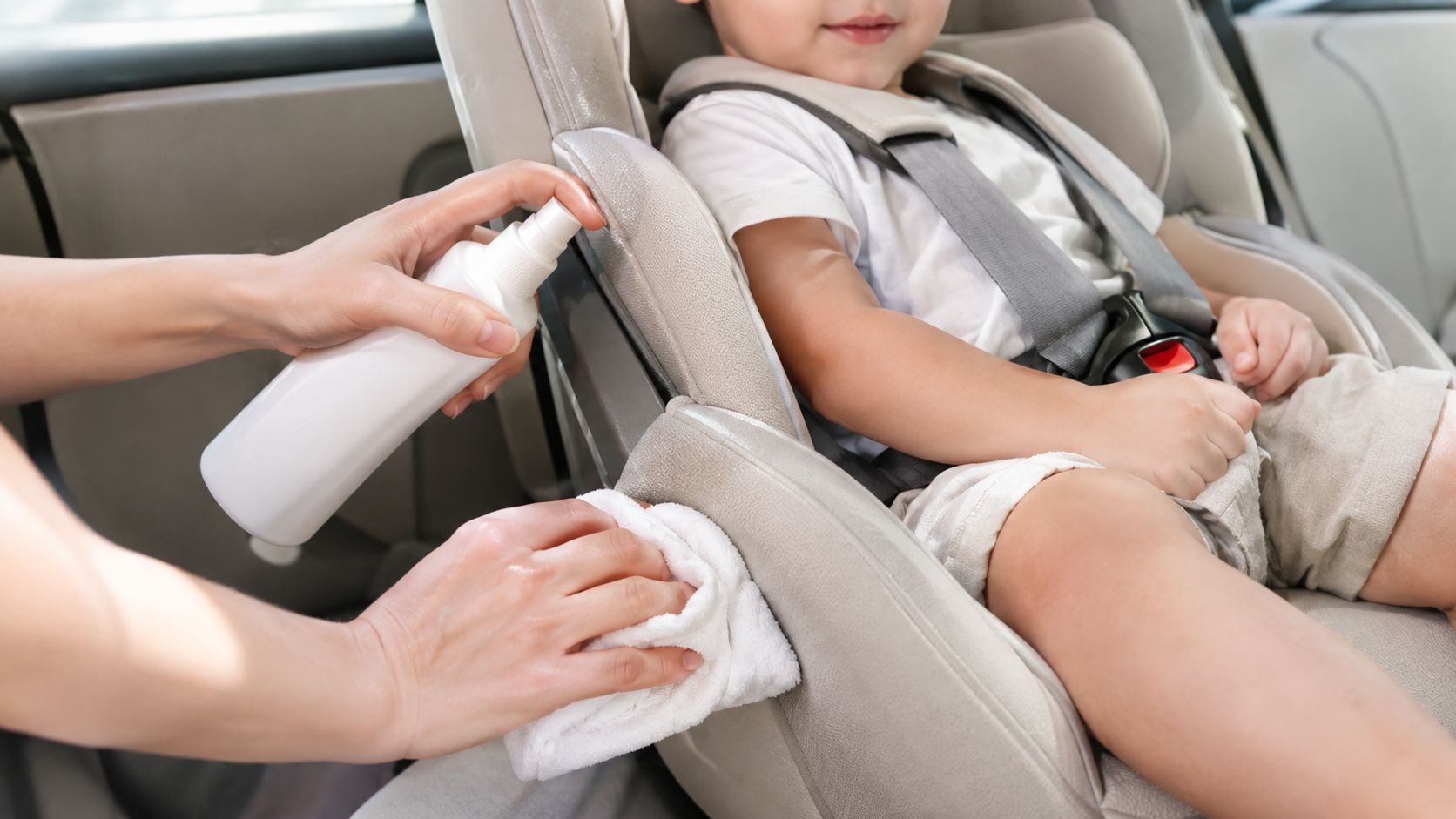
A family vehicle shows why product selection and technique have to work together. A toddler's car seat can hold food residue, dust, pet dander, and cleaning residue in the same fabric. If someone sprays a scented product directly onto the seat and closes the doors, the surface may look clean while the cabin retains a concentrated odor.
Three situations that change the risk
Children create a high-contact environment. Their hands touch armrests, buckles, door panels, and seat fabric, then move toward their faces. Detailers should use surface-appropriate products, control moisture around restraints, and follow the car-seat manufacturer's cleaning instructions rather than soaking or improvising.
Pets bring more than hair. Dander and outdoor particles settle into carpets and upholstery. A fragrance-heavy product may mask pet odor temporarily without removing the material causing it, and residue can transfer back to paws, blankets, or clothing.
Sensitive drivers spend time in an enclosed cabin. A home has more room for dilution than a compact car interior. The HVAC system can recirculate air through the cabin, while fabric and carpet can retain both particles and product residue.
For a closer look at professional care for child seating, see this guide to baby car seat cleaning. The right method depends on the seat's materials, removable covers, harness components, and manufacturer restrictions.
Application matters: Don't judge a product only by its ingredient list. Ask how it will be applied, how much will remain, and how the interior will be ventilated before anyone rides in the vehicle.
A controlled wipe or extraction process usually makes more sense than filling a cabin with spray mist. A professional can pre-vacuum, clean compatible surfaces, extract embedded soil, and allow the interior to dry with appropriate airflow. That approach addresses the exposure pathway instead of replacing a dirty smell with perfume.
The following video illustrates the kind of careful interior-cleaning process owners should look for. It shouldn't replace the manufacturer's care instructions, especially for car seats and delicate trim.
Professional Detailing Versus DIY Approaches
DIY maintenance has a place. Vacuuming loose debris, removing trash promptly, and wiping compatible hard surfaces with a properly selected product can keep contamination from building up. The trouble starts when owners escalate to untested home remedies, mix products, saturate upholstery, or use a strong disinfectant where a material-safe cleaner would do.
Professional detailing adds controlled equipment and process discipline. A technician can identify whether a surface is coated leather, unfinished leather, synthetic upholstery, vinyl, plastic, Alcantara-style material, or carpet before choosing a method. That matters because an ingredient that works on a hard plastic console may stain fabric, dry leather, or leave a residue that attracts soil.
What professional service changes
Deep interior work can combine commercial vacuuming, approved upholstery shampoo, steam cleaning where the surface allows it, and extraction to remove loosened soil from carpets, mats, and upholstery. The goal isn't to cover odor with a stronger scent. It's to remove the material creating the odor and reduce the residue left behind.
Odor elimination also requires restraint. The Mobile Buff offers interior detailing with shampooing, steam cleaning, deep extraction, stain and pet-hair removal, and professional-grade Bio Bomb odor treatments. Bio Bomb should be used according to its approved process and vehicle-surface requirements, not treated as a reason to flood a cabin with fragrance.
For readers comparing methods, this explanation of steam interior car cleaning helps clarify why heat and moisture control matter. Steam isn't automatically appropriate for every component, and more product or more heat doesn't guarantee a better result.
What doesn't work: Masking a persistent odor with scented spray often leaves the original source in place and adds another exposure to the cabin.
A professional also knows when to stop. If a child safety seat, restraint, airbag area, or electronic component requires manufacturer-specific handling, the correct move is to follow those restrictions rather than improvise. That level of caution is difficult to maintain when a busy owner is trying to solve a deep-cleaning problem between errands.
Book Your Hypoallergenic Detailing Service Today
The useful definition of a hypoallergenic interior is practical, not decorative. Choose products with transparent ingredients, favor fragrance-free options when sensitivity is significant, control how the cleaner is applied, and remove embedded soil instead of covering it.
The Mobile Buff provides mobile detailing in Central Pennsylvania, including Harrisburg, Mechanicsburg, Carlisle, Newport, and surrounding areas in Dauphin and Perry counties. Service packages include Interior and Exterior, Exterior and Headlight, Interior and Headlight, and Full Service and Headlight, with interior work that can be adjusted for children, pets, fragrance sensitivity, stains, and odors.
You can also review the company's local service listing through the The Mobile Buff Google Business Profile. If you're unsure which package fits your vehicle, ask about the surfaces involved, the products used, ventilation after service, and whether a Bio Bomb treatment is appropriate.
The Mobile Buff brings professional interior detailing, controlled extraction, steam cleaning, pet-hair removal, and odor treatment to your driveway in Central Pennsylvania. Visit The Mobile Buff to review service options and book a cleaner, lower-residue vehicle interior for your family, pets, or allergy-sensitive drivers.

