


You wash the car, step back, and it still doesn't look right.
The dirt is gone, but the finish looks tired. In direct sun, you catch the spiderweb swirls on the hood. Around the door handles, there are those fingernail scratches that seem to multiply overnight. Dark paint looks especially unforgiving, but even lighter colors start to lose that crisp, liquid gloss when the clear coat gets marked up.
That's usually the moment people ask the true question. Is paint correction worth it, or is it just another detailing upsell?
The honest answer is that it depends on the vehicle, the condition of the paint, and what you want from the car. For some owners in Central PA, paint correction is a smart value-preservation move. For others, a lighter enhancement or a different protection plan makes more sense.
That Shine You Miss Is Hiding Underneath
A lot of drivers think their paint is “old” when what they're really seeing is accumulated damage in the clear coat. The car still has good paint under there. It's just buried under swirls, light scratches, oxidation, and wash marring.
I see this all the time with busy professionals around Harrisburg and Mechanicsburg. They keep the car reasonably clean, but it goes through rushed washes, winter grime, pollen season, and the occasional automatic wash tunnel. The vehicle isn't neglected. It's just been used like a normal vehicle. The finish tells that story.
Pet owners and parents run into a different version of the same problem. Their vehicles work hard. Kids lean on the paint near the doors. Leashes, bags, and strollers brush against panels. Hatch areas take abuse. The result isn't always dramatic damage. It's more often a gradual dulling that makes the whole vehicle look more worn than it really is.
A clean car and a corrected car are not the same thing. One removes dirt. The other removes defects that keep the paint from reflecting light evenly.
That's why a wash and wax often feels disappointing on a heavily swirled vehicle. The car is cleaner, but the finish still looks flat. Wax can add gloss for a while, but it doesn't level defects. If the paint has enough clear coat left and the defects are within that upper layer, correction can bring back clarity that many owners assumed was gone for good.
If you've been looking at your vehicle and thinking, “It used to pop more than this,” that instinct is usually right.
What Exactly Is Paint Correction
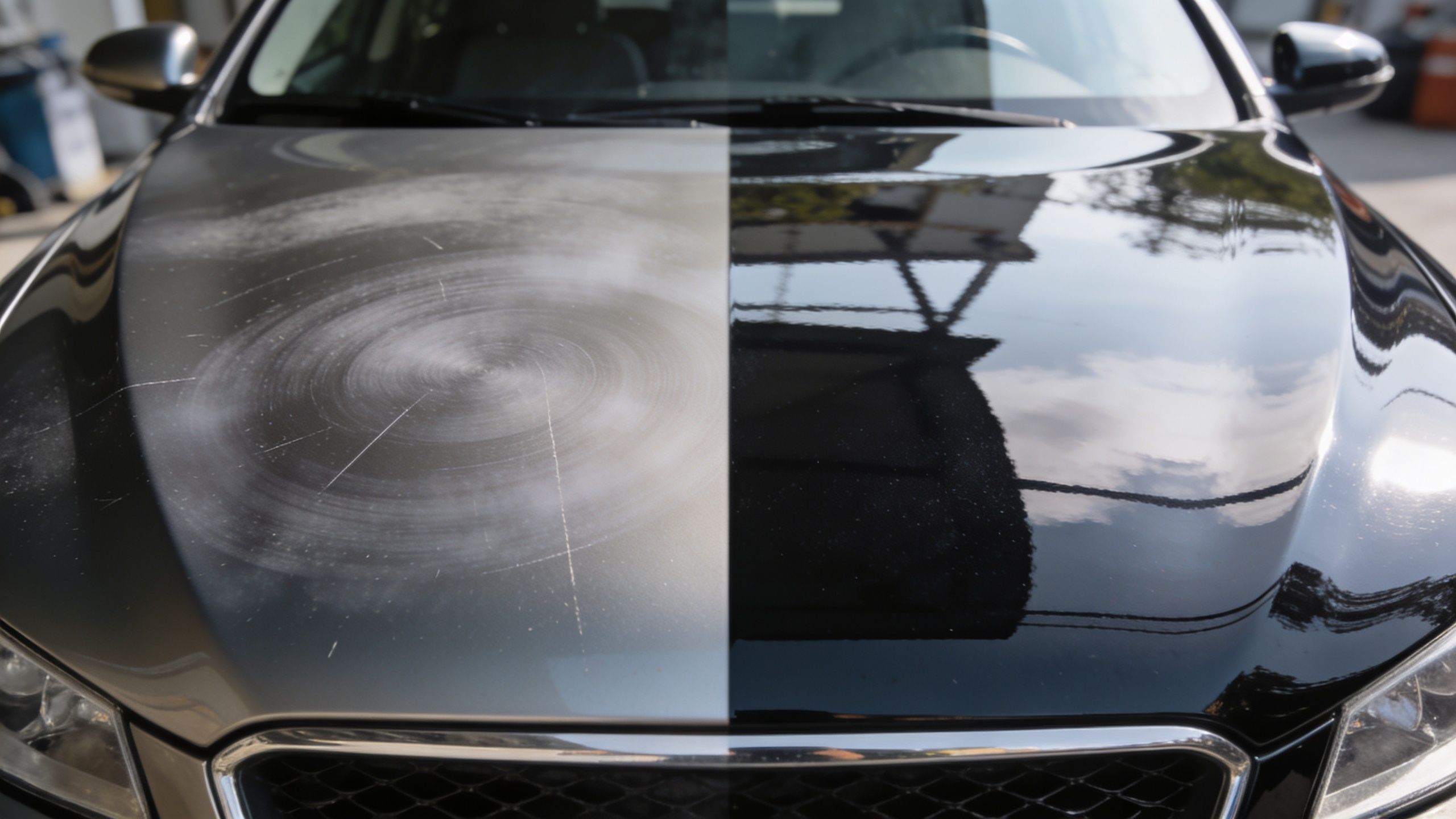
Paint correction is the controlled removal of a very thin layer of clear coat to level surface defects and restore gloss. The easiest way to think about it is like refinishing a piece of wood. If the top surface is scratched and hazy, you don't just smear something shiny over it and call it fixed. You level the surface, refine it, and then protect it.
What it fixes
A proper correction can address several common defects:
- Swirl marks: Fine circular scratching, often from improper washing or automatic car washes.
- Light scratches: The kind that catch your eye but don't usually catch a fingernail.
- Oxidation: That chalky, faded look that robs paint of depth.
- Water spot etching: Some mineral deposits and light etching can be improved or removed.
- General haze: Paint that looks cloudy instead of sharp.
If you want a deeper breakdown of the difference between correction and a basic polish, this guide on paint correction vs polish helps clarify where each service fits.
What it does not fix
Realistic expectations matter here. Paint correction doesn't repair every paint problem.
It usually will not solve:
- Deep scratches through the clear coat
- Rock chips
- Peeling or failing clear coat
- Damage that needs touch-up paint or body work
Practical rule: If the defect is deeper than the clear coat, polishing alone won't erase it.
That's why anyone giving you a paint correction quote should inspect the vehicle first. Two black SUVs can look equally dull from ten feet away and need completely different approaches up close. One may need a straightforward enhancement. The other may have deep defects that can only be improved, not fully removed.
Not a wash, not a wax, not a quick buff
People often use terms like “buff job,” “cut and polish,” and “paint correction” as if they mean the same thing. In practice, they don't.
A wash removes dirt. A wax or sealant adds short-term gloss and some protection. A quick one-step polish may brighten the finish. Paint correction is defect removal work. That's why it takes more time, more testing, and more skill than a standard detail.
The Professional Paint Correction Process
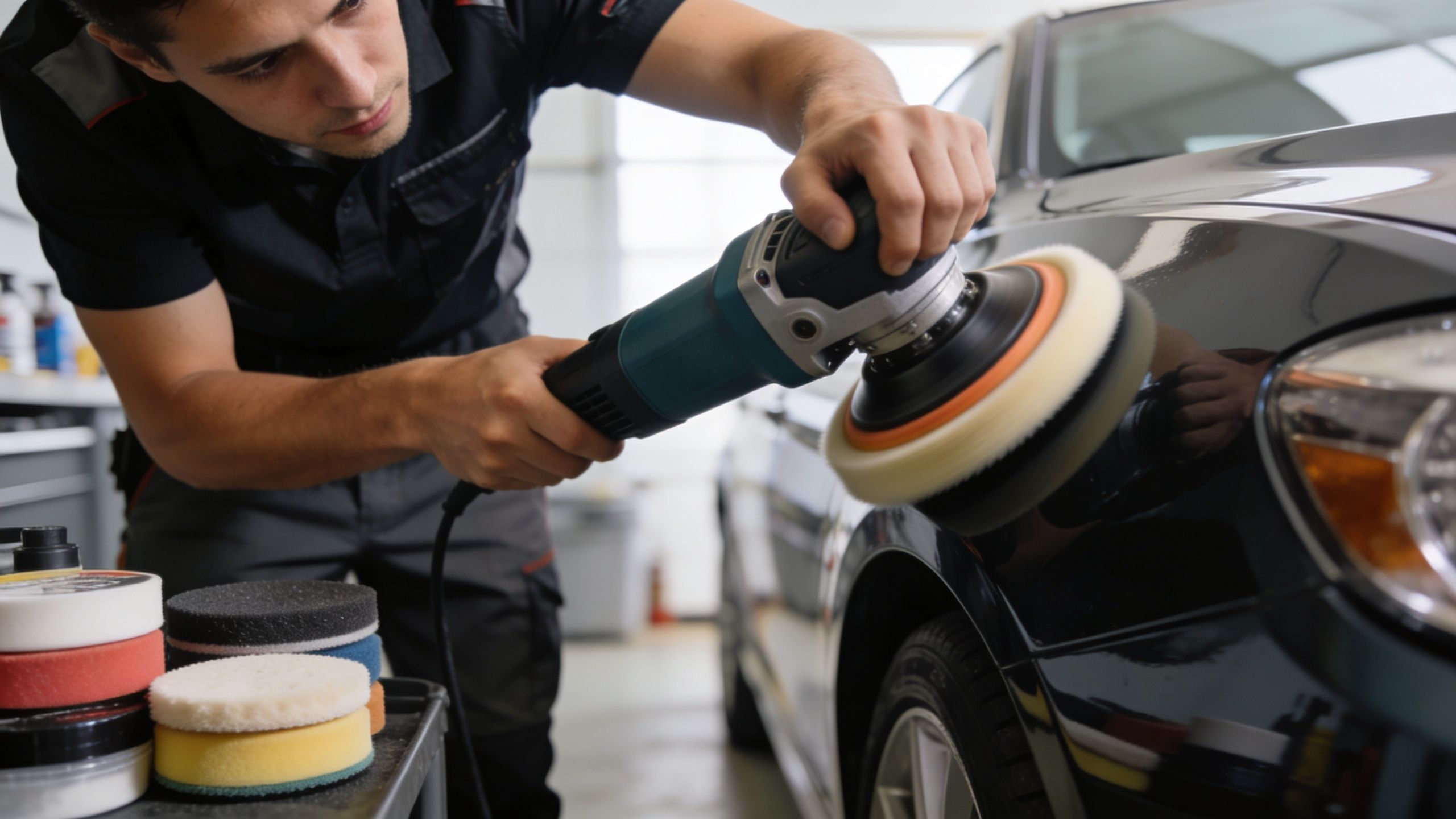
Good correction work starts long before the machine touches the paint. The polishing stage gets the attention, but prep is what keeps the job safe and consistent.
Prep work that separates pros from guesswork
A professional process usually begins with decontamination. That means a careful wash, chemical removal of bonded contamination like iron fallout, and clay treatment where appropriate. If contamination stays on the paint, the pad can drag it across the surface and create more marring.
Then comes paint inspection. Under proper lighting, defects that disappear in shade become obvious. Sensitive trim gets taped. Paint thickness should be checked before aggressive polishing. And before correcting the whole vehicle, the detailer should test a small area to find the least aggressive pad and polish combination that gets the desired result.
A typical workflow includes:
- Decontamination wash
- Chemical and mechanical decon
- Paint inspection under dedicated lighting
- Paint thickness checks
- Test spot
- Correction stage
- Refinement stage
- Protection
Single-stage versus multi-stage
Not every vehicle needs the same level of correction.
A single-stage correction is often an enhancement service. It removes a meaningful amount of light defects and boosts gloss. This is a good fit for daily drivers where the owner wants a strong visual improvement without chasing perfection.
A multi-stage correction is more intensive. One step cuts defects, and another refines the finish for better clarity and gloss. This is usually the right route when the paint has heavier swirls, deeper haze, or when the owner wants the finish ready for long-term protection.
The right correction level is the one that fits the paint and the owner's goal, not the most aggressive option on the menu.
Later in the process, seeing the technique in action helps people understand why this isn't a “quick machine buff.”
Why DIY goes wrong so often
Consumer polishers have made machine polishing more accessible, but the risk is still real. Incorrect pad choice, too much pressure, poor lighting, or overworking an edge can leave holograms, haze, or thin the clear coat unnecessarily.
That doesn't mean every owner should never touch a polisher. It means defect removal should be approached with the same respect as any process that permanently alters the paint surface. Industry-approved methods, proper measurement, and controlled testing matter.
How Much Does Paint Correction Cost in 2026
A Harrisburg consultant driving to client meetings, a State College family hauling kids and a shedding dog, and a Central PA fleet manager trying to keep work trucks presentable will not get the same value from paint correction. The right budget depends on how the vehicle is used, how rough the paint is, and whether appearance affects resale, client perception, or day-to-day pride of ownership.
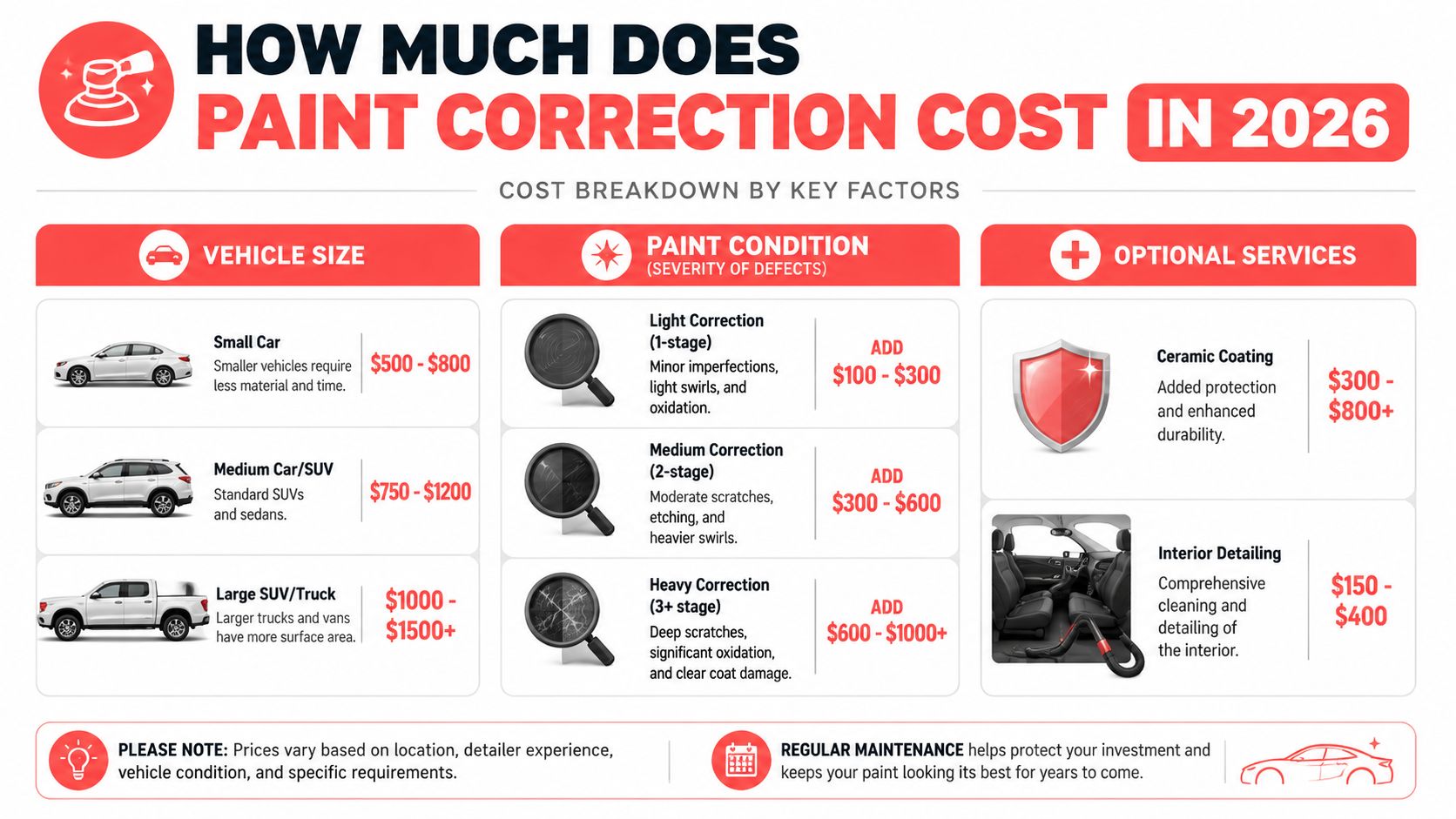
Current market pricing for professional correction usually falls in the hundreds to low thousands, and the spread is wide for a reason. A lightly swirled sedan that gets hand-washed and parked in a garage takes far less labor than a black SUV with tunnel-wash damage, hard-water spotting, and years of neglect. If you want a practical service breakdown before you book, this guide on paint correction cost lays out what owners are usually paying for.
Why prices vary so much
Labor drives the price more than products do. The polish, pads, and compounds matter, but time is what separates a modest enhancement from a correction that takes a full day or more.
The biggest factors are usually:
- Vehicle size: More paint means more polishing time.
- Paint condition: Wash swirls, oxidation, etching, and deeper defects each require a different amount of correction.
- Owner expectations: A daily driver improvement costs less than trying to refine every panel to a much higher standard.
- Protection plans: Many owners add wax, sealant, or coating after correction to keep the finish looking better longer.
In Central PA, that decision often comes down to lifestyle. A busy professional may want a strong visual improvement without taking the car off the road for an extended job. A pet owner with a family SUV may care less about perfection and more about restoring gloss before winter grime sets in. A fleet manager may only correct the newest or most visible vehicles because branding and first impressions matter more than chasing every defect on every unit.
When the math makes sense
Paint correction usually earns its keep when the vehicle still has strong resale value, the paint is dragging down the way the vehicle presents, or the owner plans to keep it long enough to enjoy the result.
I usually tell people to ask a simple question. Will better paint change something that matters in your life? For a Realtor or sales rep in Lancaster or Camp Hill, cleaner paint can support a more professional image. For an owner preparing to sell a newer vehicle, it can help photos look better and help the car show better in person. For a fleet account, selective correction on supervisor vehicles or client-facing units can be easier to justify than a blanket service across the whole lineup.
Presentation has value in a lot of service categories. The same logic shows up when people compare the cost of AI and traditional headshots and decide whether the better result supports a larger goal.
What does not make correction worth the money
Some vehicles are poor candidates.
If the clear coat is failing, if body damage is the bigger visual issue, or if the car has low market value and rough overall condition, paint correction may not be the best place to spend money. The same goes for owners who plan to run the vehicle through harsh automatic washes right away. Corrected paint can look excellent, but it still needs decent maintenance if you want the result to last.
The Real Benefits Beyond Just a Shiny Car
Many car owners start thinking about correction because they want the car to look better. That's fair. But the bigger benefit is what happens after the defects are removed.
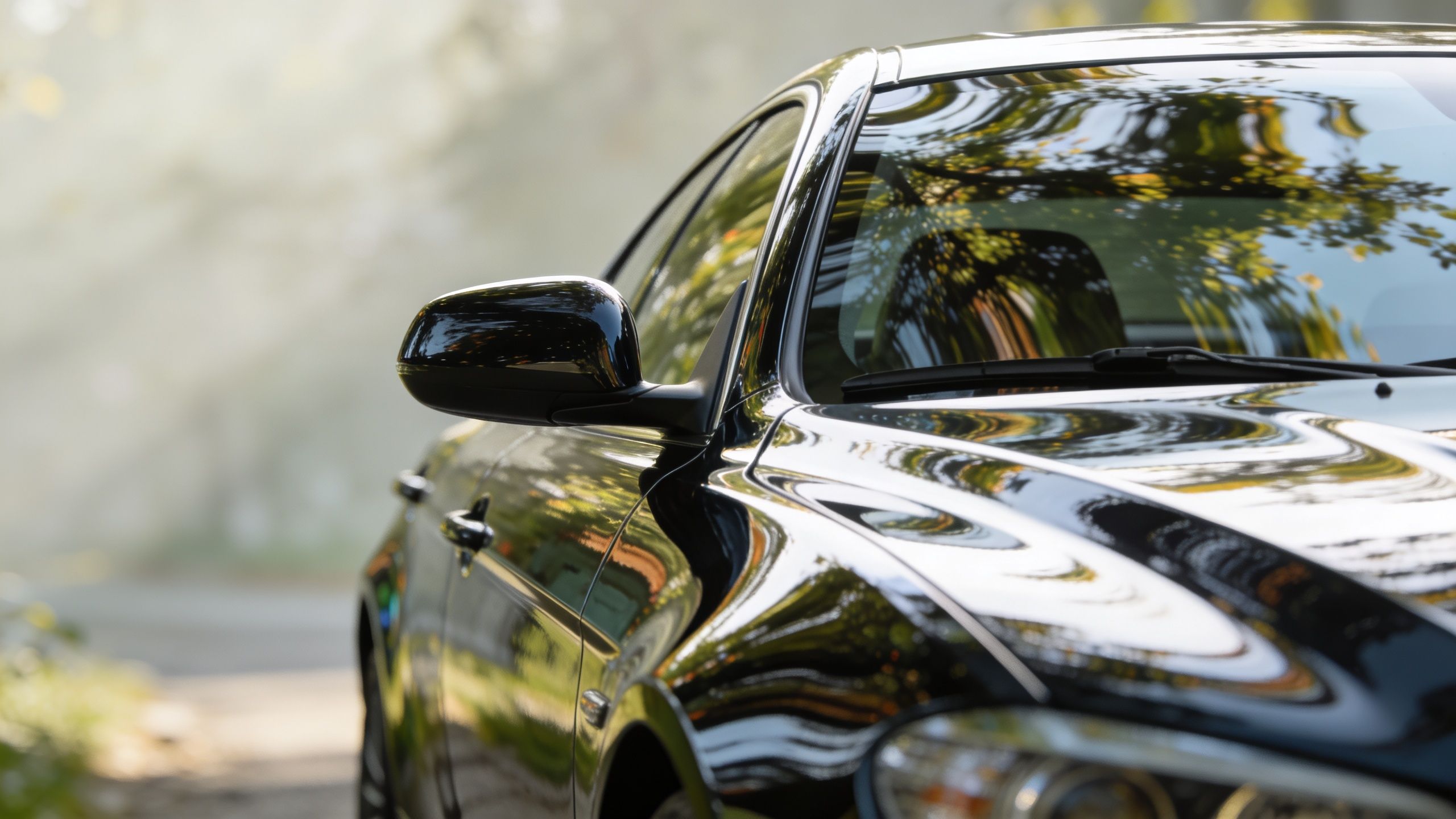
A corrected surface gives your protection layer a clean, even foundation. That matters a lot with ceramic coatings.
Why correction matters before ceramic coating
One industry source states that correcting paint before applying a ceramic coating is essential, and that applying coating to uncorrected paint can reduce durability and performance by as much as 50%. The same source also says a proper correction, when sealed and maintained, can provide a finish that lasts upwards of 5 years. That comes from this discussion of paint correction and coating performance.
That's the part many owners miss. Ceramic coating doesn't hide defects. It preserves what's already there. If the paint is swirled, etched, or hazy, the coating locks that in visually.
If you're comparing protection options, this guide on what ceramic coating is gives a good baseline for what the coating itself does and does not do.
Applying protection over damaged paint is like putting a glass frame over a scratched photo. It preserves the flaws along with everything else.
Daily-life benefits for Central PA drivers
For a busy commuter, a corrected and protected finish is easier to wash and dry cleanly. Dirt releases more easily. The vehicle tends to keep that sharper look between maintenance visits.
For pet owners and family vehicles, the payoff is practical. The exterior takes abuse from parking lots, driveway loading, muddy paws, and constant use. Correction followed by protection gives the paint a better starting point and makes upkeep less frustrating.
For fleet managers, appearance is part of brand presentation. A vehicle that looks neglected sends a message, even if the mechanical side is solid. Correction can reset that appearance before protection and maintenance take over.
What works and what doesn't
What works:
- Correcting first, then protecting
- Maintaining with safe wash methods
- Using the right service level for the vehicle
What doesn't:
- Coating over neglected paint and expecting miracles
- Paying for correction with no plan to maintain it
- Treating every defect as polishable when some need paint repair
That's why I rarely frame correction as a cosmetic luxury. In the right context, it's prep work for the finish you want to keep.
A Decision Checklist For Your Vehicle
Not every owner asks, “is paint correction worth it?” for the same reason. The better question is whether it fits your vehicle, your lifestyle, and your plan for the car.
A quick way to decide
Use this as a practical filter.
| You Are A... | Your Main Goal Is... | Paint Correction Is Worth It If... |
|---|---|---|
| Busy professional | Keep a newer vehicle sharp without wasting weekends on trial-and-error products | The paint looks dull or swirled, the car still has strong value, and you want a professional result before adding protection |
| Parent or pet owner | Reset a hard-used family vehicle so it looks cared for again | Daily use has added visible wash marks, hatch-area scuffs, and overall haze that cleaning alone won't fix |
| Fleet manager | Keep service or sales vehicles presentable and easier to maintain | Exterior appearance affects customer perception and you need a repeatable care standard across multiple vehicles |
| Car enthusiast | Bring back depth, clarity, and crisp reflections | You notice defects in sunlight, care about finish quality, and want correction done with proper inspection and technique |
| Selling soon | Improve buyer first impression | The vehicle has enough resale value that visible paint defects could drag down perceived condition |
| Keeping the car long term | Preserve appearance over time | You're planning a proper maintenance routine instead of one last cosmetic touch-up |
The local angle in Central PA
Central Pennsylvania vehicles deal with pollen, winter residue, road grime, and frequent washing. That environment doesn't always create catastrophic damage. It creates steady wear. Paint correction is often worth it when you're tired of the vehicle looking older than it is.
Some owners also pair correction with physical protection on high-impact areas. If you're looking into that route, this explanation of how to get an invisible shield for cars is a helpful companion to the correction decision.
If your complaint is “my car is clean but still doesn't look good,” correction is usually the service worth considering.
When to pass
You can probably skip correction for now if the paint is failing, if the defects need body shop repair, or if the vehicle's use case makes appearance a low priority. There's no point pretending every car needs the same package.
The right recommendation should match the vehicle in front of you, not a script.
How to Hire the Right Mobile Detailer
A busy professional in Harrisburg usually does not have time to drop a vehicle off for two days, chase updates, and hope the result matches the quote. A pet owner in Mechanicsburg may care less about show-car perfection and more about getting years of wash marks cleaned up on the family SUV. A fleet manager in Carlisle needs consistency, clear scheduling, and work that makes company vehicles look cared for without creating downtime. The right mobile detailer should be able to speak to those differences right away.
Paint correction is not a menu label. It is a skill, a process, and a judgment call. Two detailers can both sell a "one-step correction" and deliver very different results, especially on darker paint or vehicles that have been washed hard through Central PA winters.
Start with questions that reveal how they work, not just what they charge.
- What is your decontamination process? A real answer includes more than a wash.
- Do you inspect paint under dedicated lighting? Sunlight helps, but proper lighting catches what casual inspection misses.
- Do you measure paint thickness when needed? That matters on older vehicles, repainted panels, and anything with an unknown history.
- Do you do a test spot first? Good correction starts with proof, not guesswork.
- How do you choose your pad, polish, and machine combination? You want a method, not a vague "we buff it out."
- Can you show similar vehicles you've corrected? A black daily driver, a dog-hauling SUV, and a work truck do not all polish the same way.
Good answers sound specific. A capable detailer will tell you what should improve, what may remain, and when a defect is too deep to remove safely. They should also talk about maintenance after the job, because corrected paint can look outstanding on day one and lose that edge fast if it goes back to poor wash habits.
For Central PA owners, mobile service is often the practical choice because it cuts out shop logistics. That matters if your schedule is packed, if you have multiple family vehicles at home, or if you manage a small fleet and need work done with less disruption. If you want to verify local reviews, photos, and service area details, check the company's Google Business Profile.
One more sign matters. A good detailer does not push every vehicle into the highest package. They match the correction level to the paint, the budget, and how the vehicle is used.
That is the standard to look for in Harrisburg, Mechanicsburg, Carlisle, Newport, and nearby communities. Clear inspection. Safe process. Honest expectations.
If your paint still looks tired after a wash, get a practical assessment and a recommendation that fits your vehicle and your routine by contacting The Mobile Buff.

