


You take your dog on a few rides, maybe a muddy park run, maybe a nervous trip to the vet, and now the whole cabin has that stale animal smell that won't leave. You vacuum. You hang an air freshener. You spray the seats. It smells better for a day, then warms up in the sun and comes right back.
That happens because most car odor problems aren't sitting on the surface anymore. They've worked their way into carpet backing, seat foam, fabric seams, cargo liners, and sometimes the ventilation system. If the source is still there, the smell keeps coming back no matter how “clean” the interior looks.
That Lingering Pet Smell in Your Car and How to Finally Beat It
The frustrating part is that pet odor doesn't always smell strong right away. A vehicle can seem fine in cool weather, then turn into a rolling kennel the second it sits in a parking lot. Heat and humidity wake old contamination back up. That's why so many owners think they solved it, only to notice the odor all over again a few days later.

Air fresheners have a place. They can make a car more pleasant for a short drive. But they mask odor. They don't remove the saliva, dander, oils, urine residue, or organic grime creating the problem in the first place.
That's also why pet odor removal has grown into a major category, not some tiny side issue. In the U.S., retail sales for pet cleanup and odor control reached $6.9 billion in 2024, according to Freedonia's pet cleanup and odor control market data. People keep spending on this because pet smells are stubborn, recurring, and tied to everyday indoor hygiene.
Why the smell keeps winning
A car interior traps contamination in places often overlooked during cleaning:
- Seat fabric and stitching collect oils, drool, and body odor
- Carpet and cargo areas hold hair, dirt, and accident residue
- Foam under the upholstery can keep odor long after the top surface looks clean
- Plastic trim and door panels grab onto oily film
- Air vents spread smell every time the fan runs
Pet odor removal only lasts when the job is focused on source elimination, not scent cover-up.
If you've dealt with pet smells at home too, some of the same logic applies. This piece on addressing pet smells in Madison homes is useful because it treats odor as a contamination problem, not a fragrance problem.
A car can absolutely smell fresh again. But the fix has to go deeper than a spray bottle and a vent clip.
Finding Where the Smell Is Actually Hiding
Most failed odor jobs start with the wrong target. The owner cleans the visible spot on the seat or carpet, but the source is often hidden below it, beside it, or moving through the HVAC system.
A common reason for failure is that the odor isn't in the carpet at all. It has soaked into padding, underlayment, or an underlying surface, which is why source-level treatment and UV detection matter, as noted by A Clean Pro's discussion of hidden pet odor sources. In a car, the same idea applies to carpet backing, seat foam, trunk liners, and insulation under trim panels.
Start with the nose, then inspect like a technician
Don't begin by spraying anything. First, isolate when and where the odor is strongest.
Use this quick check:
Smell the car cold
Open it first thing in the morning before the cabin heats up. That tells you what the interior is holding naturally.Smell it after the heat builds
If the odor gets stronger after sun exposure, contamination is embedded deeper in porous materials.Run the fan with A/C off
If the smell changes or gets stronger through the vents, the ventilation system may be carrying it.Check the pet's usual zone
Rear seat, cargo area, hammock cover area, and door cards are common hotspots.Look for older residue
Dried drool, nose prints, fur packed into seams, and old accident rings all matter.
Hidden places people miss
The obvious stain isn't always the whole story. In vehicles, pet odor often hides in:
- Under seat rails
- Between seat base and seat back
- Around seat belt anchors
- Along carpet edges near trim
- In hatch weatherstripping
- Inside cloth cargo side panels
- Headliner spots from a dog riding with its head up near windows
If the smell seems to “come from everywhere,” there's usually more than one odor source.
For owners trying to reduce repeat accidents in the first place, J.G. Carpet Cleaning LLC's prevention tips are worth reading because prevention always beats chasing old contamination later.
Ventilation can also hold odor longer than people expect. If your fan smells musty or pet-heavy, this guide to cleaning car air vents properly helps explain why airflow can keep reintroducing odor even after upholstery looks clean.
What professionals use that DIY usually doesn't
A proper inspection often includes UV detection for dried urine or other organic residue that isn't obvious under normal light. That matters because many pet accidents dry clear, especially on dark fabric or patterned carpet. If you can't identify the full spread of contamination, you can't treat it all.
The nose tells you there's a problem. The inspection tells you where to fix it.
Professional Deep Cleaning for Lasting Results
Once the source is identified, the work has to match the material. That's where many DIY attempts go sideways. People use one cleaner on everything, scrub too hard, over-wet the fabric, or add heat when heat is the last thing that should touch urine contamination in synthetic fibers.
For surface-level issues, Humane World for Animals recommends blotting, a cool-water rinse, drying, then an enzymatic cleaner if odor remains, and it warns that steam cleaning can permanently set urine odor in man-made fibers by bonding protein to the fiber, which is why their pet stain and odor guidance lines up with what careful detailers already know. Heat can lock the problem in.
What a real interior pet odor process looks like
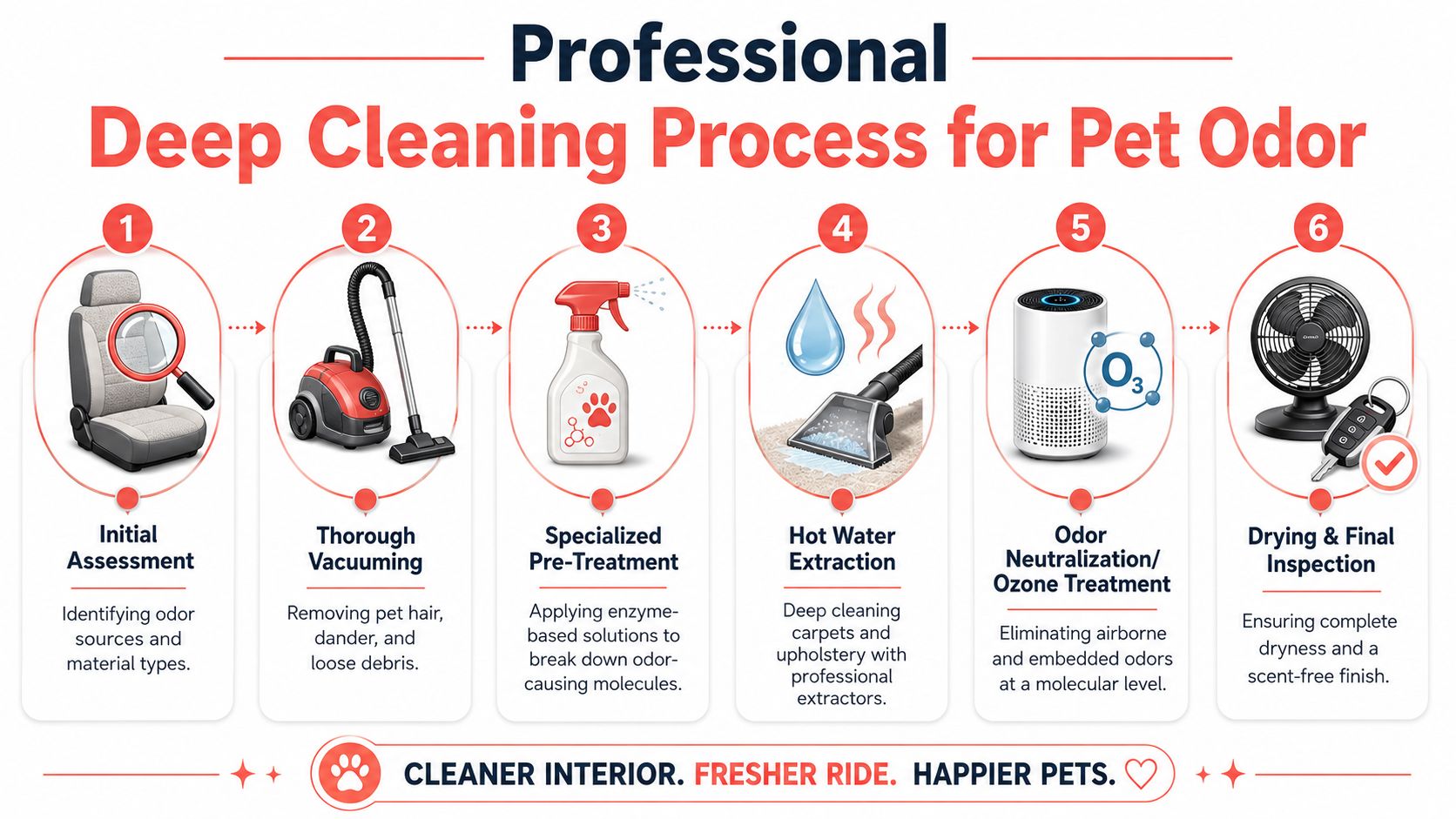
A proper service usually follows a sequence, not a single pass.
| Step | What happens | Why it matters |
|---|---|---|
| Inspection | Odor source is identified by area and material | Prevents wasted cleaning on the wrong spot |
| Hair and debris removal | Vacuuming, brushing, and compressed-air work | Organic buildup blocks chemicals from reaching the source |
| Pre-treatment | Enzyme or specialty odor treatment is applied | Starts breaking down residue before extraction |
| Agitation | Brushes or towels work solution into fibers safely | Improves contact in seams, carpet nap, and textured fabric |
| Extraction or controlled flushing | Contamination is lifted out | Removes dissolved material instead of leaving it behind |
| Drying and verification | Moisture is reduced and odor is rechecked | Prevents mildew and confirms the source was addressed |
Here's a useful visual reference for how ozone fits into odor work when it's used correctly: what ozone treatment for cars actually does.
Why enzymes matter
Enzymatic cleaners aren't perfumes. They're meant to break down organic contamination. That makes them a much better fit for pet-related odor than general-purpose interior sprays. When saliva, urine, vomit, or body oils are part of the problem, the chemistry has to target organic residue, not just add fragrance.
But enzymes still need the right setup to work:
- The area has to be found completely
- The product has to reach the contamination
- Contact time matters
- Extraction or removal often still matters afterward
If urine reached foam or backing material, the top fabric may not be the actual issue anymore.
A lot of car owners also underestimate how much pet hair contributes to odor. Hair traps dander, oils, and dirt, then those contaminants get pushed deeper into fabric and carpet every time someone sits down.
A walk-through helps make this process easier to picture:
Where professional equipment changes the outcome
This is the dividing line between “cleaner than before” and “odor removed.”
Professional extractors pull contamination out of upholstery and carpet instead of just moving it around. Controlled low-moisture methods help avoid soaking padding. Dedicated interior tools reach seams, under seat tracks, and cargo corners. HVAC odor work targets circulating air, not just visible surfaces.
Practical rule: If the treatment can't physically reach the contaminated layer, it can't solve the odor for long.
That's why stubborn pet odor removal usually needs more than a wipe-down. The smell isn't being dramatic. It's telling you where the contamination still is.
DIY Fixes vs Professional Odor Elimination
DIY products usually fail for one simple reason. They treat odor like a smell problem. It's a source problem.
That distinction matters in cars because the cabin is small, enclosed, and full of porous materials. If pet oils, dander, or urine residue stay in the seat foam, carpet backing, or vent path, every shortcut becomes temporary.
What DIY usually does
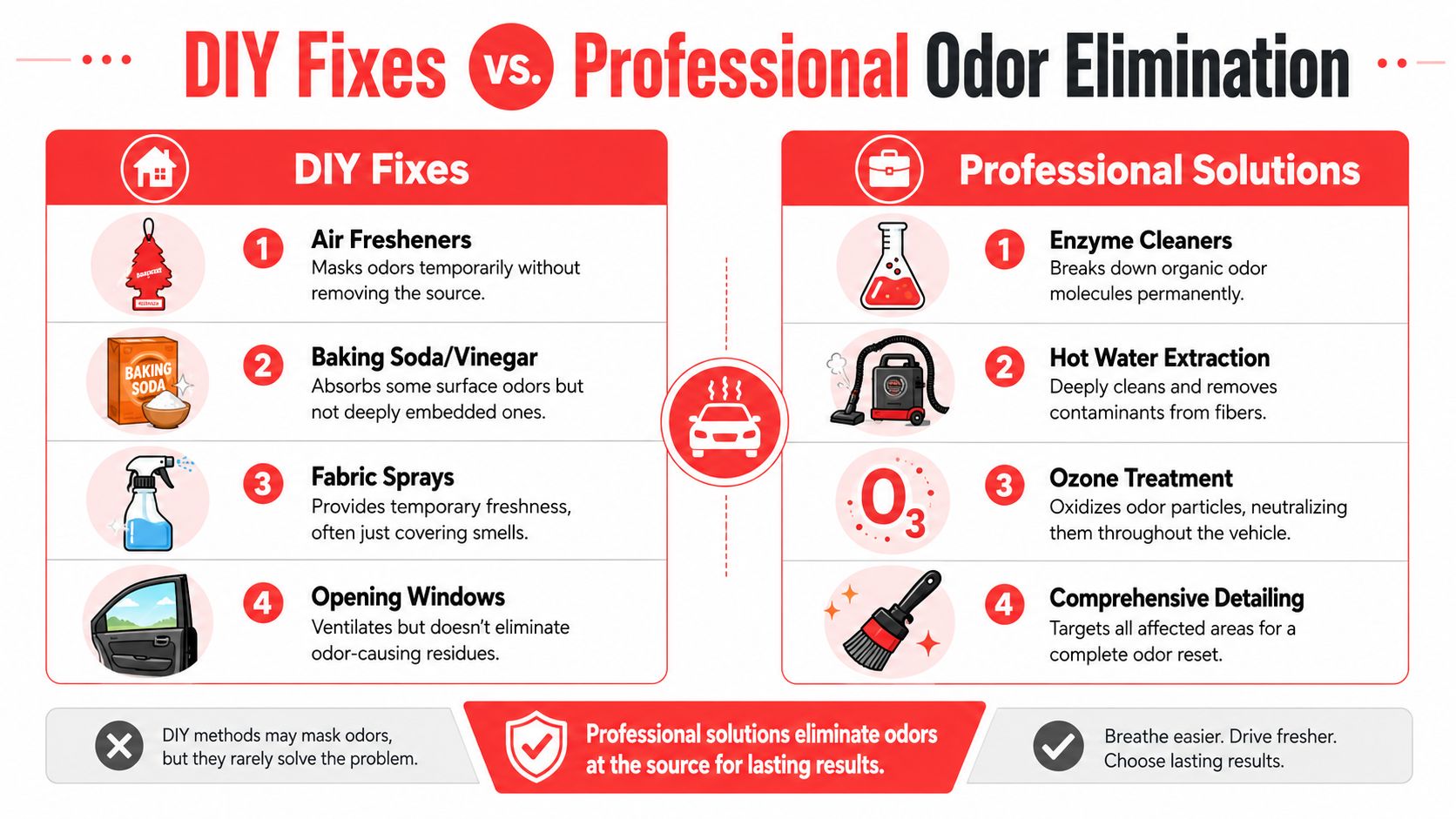
Most at-home approaches fall into four categories:
- Air fresheners cover the smell for a while
- Powders and household absorbers help at the surface only
- Sprays make fabric smell “clean” without removing what's underneath
- Open windows dilute odor briefly, then the smell returns once the car is closed up
None of those methods are the same as removing contamination from the material.
A car can smell better and still not be clean enough to stop the odor cycle.
That's why owners often spend repeatedly on products that never finish the job. By contrast, professional pet odor removal carries meaningful pricing because the work is layered. Angi's pricing guide says the average professional pet odor removal service cost is $350, with most jobs ranging from $100 to $700, and notes that odor work can involve carpet, upholstery, and air systems rather than just a surface treatment, according to Angi's pet odor removal cost breakdown.
What professional odor elimination changes
Professional odor work aims to do three things that DIY usually doesn't:
- Locate the true source
- Break down the organic residue
- Remove or neutralize what's left in hidden areas
That's where professional-grade enzyme treatments and whole-cabin odor processes earn their keep. A product can smell strong and still be ineffective. A proper treatment has to get into seams, fabric layers, carpet pile, and the ventilation pathway.
Some owners also look into broader remediation advice before deciding whether to call a specialist. The Eagle Restoration pet odor guide is a useful outside reference because it approaches pet odor as contamination that may need deeper intervention, not just household fragrance.
Where bio-bomb style treatments fit
For vehicles with stubborn, baked-in odor, a vapor-based cabin treatment can help reach the places hand cleaning can't. That includes tight crevices, porous trim, fabric layers, and airflow passages. At The Mobile Buff, one available option is a Bio Bomb treatment, used as part of odor elimination work when the interior needs more than standard surface cleaning.
That kind of treatment isn't a substitute for cleaning. It works best after source contamination has already been addressed. Otherwise, you're trying to neutralize odor while the mess that caused it is still sitting in the car.
The short version is simple. DIY can help with light, recent odor. Deep-set pet odor removal usually requires inspection, extraction, and full-cabin treatment.
How to Keep Your Car Smelling Fresh
Once a vehicle is cleaned properly, prevention gets much easier. The biggest mistake owners make is waiting too long after a spill, accident, or muddy dog ride. Old contamination settles deeper, spreads wider, and gets harder to remove cleanly.
Independent service guidance notes that odor returns when the biological source penetrates too far to be fully reached, and that persistent odor can remain unless the source is fully removed or sealed, as discussed in this pet odor service explanation. In practical terms, quick cleanup matters.
Habits that help more than people think
A fresh-smelling pet vehicle usually comes down to routine.
Use a washable seat cover or cargo liner
This catches hair, oils, dirt, and minor accidents before they work into the factory fabric.Vacuum the pet zone often
Hair holds odor. If it stays packed into carpet edges and seat seams, smells build faster.Keep towels in the car
A damp dog leaves moisture behind. Drying the seat or liner early reduces the chance of odor hanging around.Handle accidents immediately
Blot, contain, and avoid adding heat. Delay makes odor removal harder.
Build a simple pet travel cleanup kit
Keep these in the trunk or cargo area:
- Microfiber towels for blotting
- A pet-safe enzymatic cleaner for organic accidents
- Disposable gloves for quick cleanup
- A small trash bag or sealed container for soiled items
- A spare liner or towel if the current one gets saturated
Cleanups that happen right away stay small. Cleanups that wait tend to spread.
If pet hair is one of your ongoing battles, this guide on the best pet hair remover approaches for cars can help you keep buildup under control between details.
When maintenance detailing makes sense
Some vehicles need more than home upkeep, especially if pets ride often, the car has cloth seats, or there's been an older accident that keeps resurfacing in warm weather. Regular interior detailing helps remove the hair, dander, and residue that daily driving keeps grinding into the cabin.
If you're in Central PA and want a local option for upkeep, you can check The Mobile Buff's Google Business Profile to see service details and local availability.
Your Car Needs a Reset? Here Is the Solution
If the smell keeps coming back, the car usually needs a reset, not another fragrance product. Once odor gets into seat foam, carpet backing, trim gaps, or the ventilation path, light cleaning won't reach enough of the problem to change the result.
That's why stubborn pet odor removal has to be honest about limits. Sometimes a quick vacuum and wipe-down is enough for mild dog smell. Sometimes it isn't even close. If the odor has been there for a while, if there was a urine accident, or if the cabin smells worse with heat or airflow, the source is likely deeper than what a consumer spray can fix.
What a reset actually means
A reset means treating the interior like a contamination issue:
- Find the source
- Clean the affected materials correctly
- Extract what can be removed
- Neutralize odor in areas hand cleaning can't fully reach
- Verify the smell is gone after the cabin dries
For severe interior odor, that's where a deeper whole-cabin treatment can make sense. A bio-bomb style service is designed to penetrate beyond the easy-to-wipe surfaces and help reset the interior environment after the physical cleaning work is done.
If you're tired of driving a car that still smells like the dog park no matter what you spray, it's time to stop masking it and remove the source.
If your vehicle needs real pet odor removal, book a service with The Mobile Buff. We bring professional interior detailing, stain and pet hair removal, and odor elimination directly to your driveway in Central Pennsylvania, so you can get your car fresh again without losing half a day at a shop.

