


You clean the car. You crack the windows. You hang an air freshener from the mirror and hope nobody notices when they open the door.
Then a warm afternoon hits, the cabin heats up, and that stale smoke smell comes right back.
That's the part that frustrates people most. It feels like the odor is gone until it isn't. If you're dealing with that right now, you're not missing some simple trick. Smoke odor is one of the most stubborn interior problems a vehicle can have, and permanent removal usually takes a professional process that goes far beyond wiping surfaces and spraying fragrance.
That Lingering Smell No Air Freshener Can Hide
A lot of drivers call after they've already tried the obvious fixes. They've vacuumed, wiped down the dash, changed the cabin smell with a vent clip, and maybe even left baking soda in the car overnight. For a day or two, the interior seems better. Then the odor returns the second the seats warm up or the AC starts pushing air again.
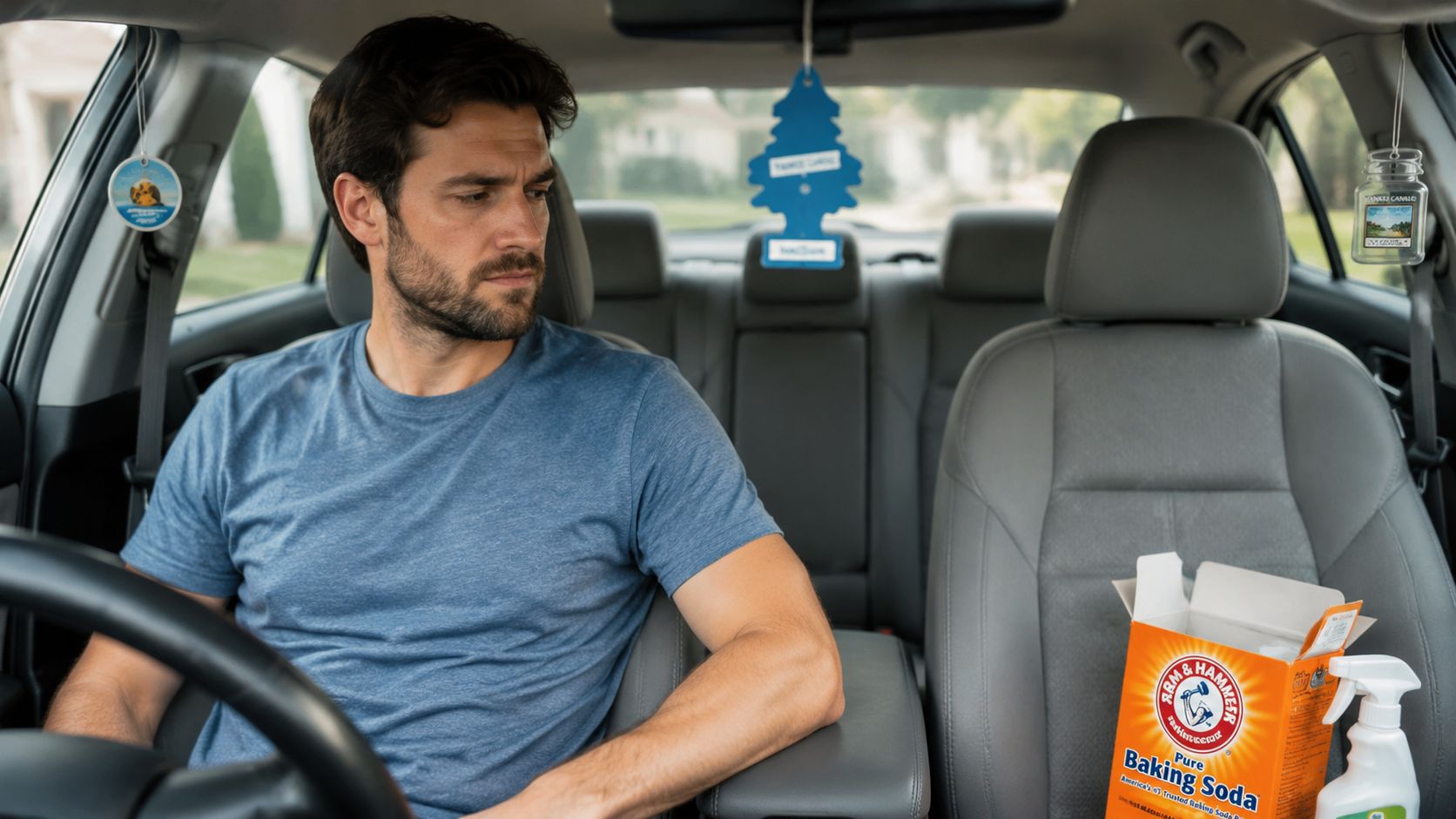
That cycle happens because masking and removal are not the same thing. A scented product changes what your nose notices. It doesn't pull smoke residue out of fabric, foam, carpet backing, or the ventilation system. In practice, that means a car can smell “better” and still be contaminated with the same odor source.
What clients usually notice first
- Morning is deceptive: The car may smell tolerable when it's cool.
- Heat exposes the problem: After sitting in the sun, the odor becomes obvious again.
- The vents trigger it: Turning on the heat or AC can bring the smell back fast.
Smoke odor that keeps returning usually means the source is still in the interior materials, not just floating in the air.
Sometimes there's another layer to this. If smoke exposure is tied to a larger loss, cleanup decisions and insurance questions can get messy fast. In that situation, practical fair insurance settlement advice can help you understand how cleanup and value are being handled before you agree to anything.
The main point is simple. If you've tried “everything” and the smell still comes back, the problem isn't your effort. The problem is that smoke doesn't behave like a normal surface odor.
Why Smoke Smell Is So Stubbornly Stuck in Your Car
Smoke residue doesn't just land on the visible parts of the cabin. It spreads into cloth, leather seams, headliners, carpets, foam padding, trunk liners, and the HVAC system. Once it gets there, basic cleaning only touches the top layer.
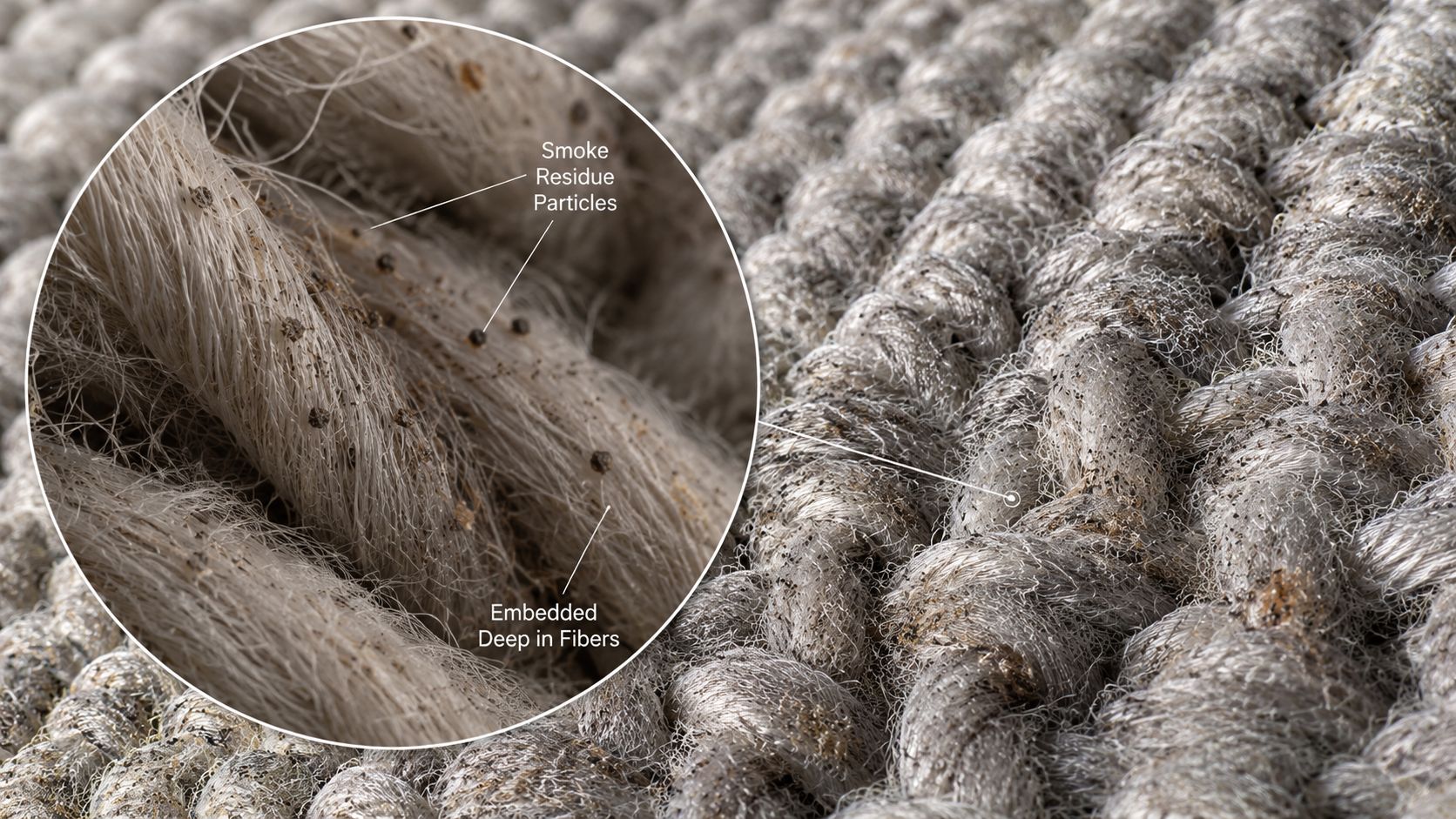
It acts more like sticky residue than dust
The easiest way to think about smoke is this. It's closer to a greasy film than loose dirt. When tobacco smoke moves through a car interior, it carries compounds that cling to surfaces and settle into anything porous. Seat foam, carpet padding, and headliner material hold onto that contamination like a sponge holds onto liquid.
That's why a quick wipe-down doesn't solve it. You can remove visible grime and still leave the deeper odor source untouched.
The real problem is below the surface
The persistence of smoke odor is due to semi-volatile organic compounds, or SVOCs, like tar and aldehydes penetrating deep into car seat foam. These compounds are chemically bonded, not just sitting on the surface, and can re-emit odors for up to 12 months in temperatures above 75°F.
That one fact explains why so many do-it-yourself attempts feel successful for a few days and then fail. Heat wakes the odor back up. A closed car interior makes that even worse because the smell has nowhere to go.
If you've ever noticed the vents making the smell stronger, that's another clue. Smoke particles and residue don't stop at the seats. They also move through the climate system. A proper vent and duct cleaning matters, and this guide on how to clean car air vents professionally helps show why the vent area can't be ignored.
A quick visual helps make the point:
Why standard washing usually disappoints
- Seats trap contamination: Foam and stitching hold smoke far below the surface.
- Headliners are delicate: Aggressive scrubbing can damage them before it removes odor.
- Carpet backing hangs onto residue: Surface shampooing often misses what's underneath.
- HVAC keeps recirculating it: Even a clean-looking cabin can smell bad once air starts moving.
A smoke-smelling car rarely has one dirty spot. It has a network of contaminated materials feeding the same odor.
That's why professional smoke smell removal isn't about one magic product. It's about treating every place smoke settled, then neutralizing what cleaning can't physically extract.
The Professional Smoke Removal Playbook
A proper smoke job follows a sequence. Skip steps, and the smell usually comes back. Do the steps in order, and you've got a much better shot at permanent results.
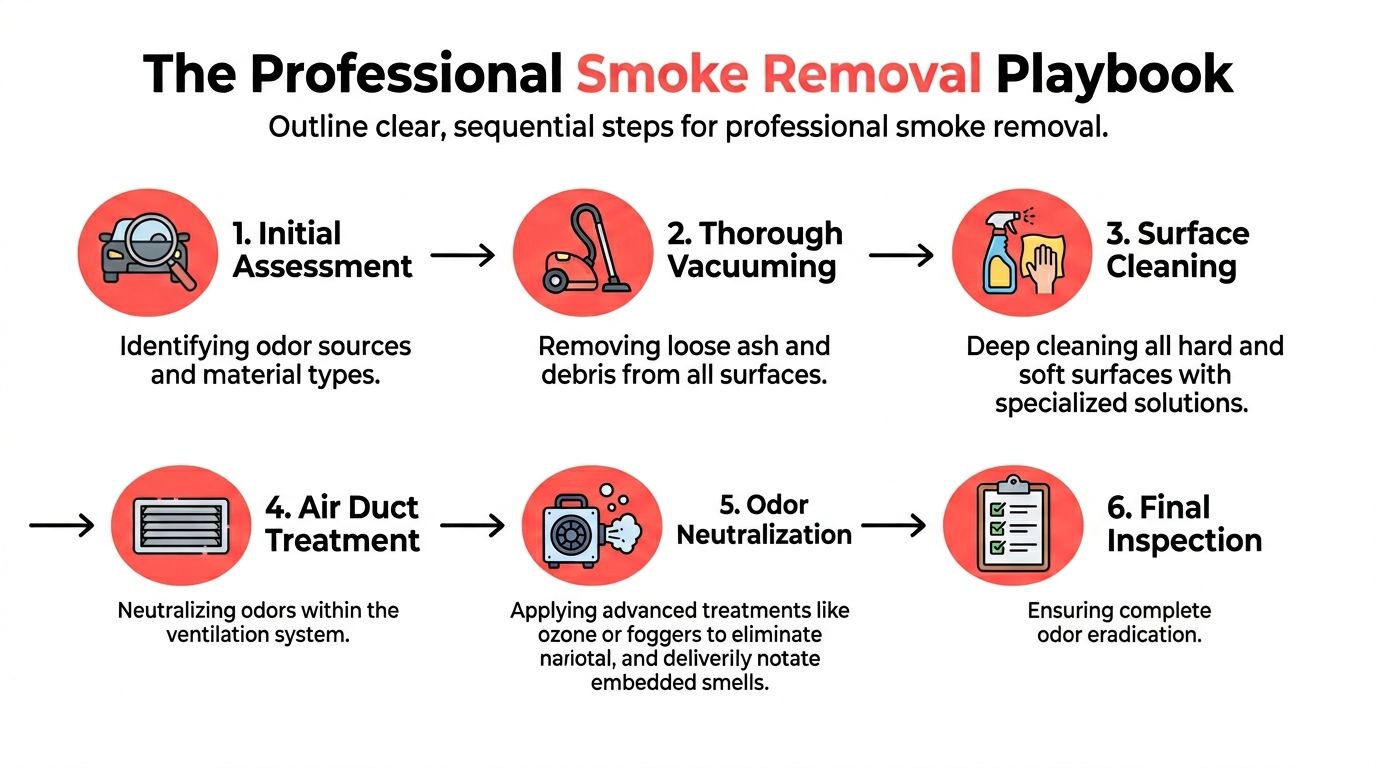
Step one starts with inspection, not deodorizer
The first thing a pro should do is identify where the odor is living. In cars, that usually means checking fabric condition, ash buildup, staining around trim, residue on glass, and how strongly the HVAC system is carrying the smell.
If someone wants to jump straight to an ozone machine or a fogger without deep cleaning first, that's a red flag. Odor treatment works better after the residue load has been reduced.
Cleaning has to remove the fuel source
Smoke odor survives because residue remains behind. Professional cleaning targets that residue in layers.
- Trash-out and loose debris removal: Ash, cigarette remnants, and loose contamination need to come out first so they don't keep spreading.
- Heavy vacuuming: This gets into seams, under seats, carpet edges, and trunk areas where dry particles collect.
- Surface cleaning and agitation: Pros use interior-safe cleaners to break up film on plastics, vinyl, leather, door panels, consoles, and glass.
- Steam where appropriate: Steam helps loosen buildup and sanitize many hard-to-reach areas without soaking them.
- Hot water extraction: Upholstery and carpet often need extraction to flush out contamination trapped deeper in the fibers.
The HVAC system can undo the whole job
This is one of the most overlooked parts of professional smoke smell removal. For permanent odor removal, industry protocols require replacing HVAC filters and thoroughly cleaning all ductwork and vents, as residual molecules in the HVAC system can re-contaminate a cleaned interior. This step is critical for preventing the smell from returning the first time you turn on the heat or AC according to Restoration guidance on removing smoke odor from a house.
That guidance comes from building restoration, but the principle translates directly to vehicles. If the air pathway still holds residue, the cabin gets re-contaminated every time the fan runs.
Practical rule: If the vents still smell smoky after the seats are cleaned, the job isn't finished.
Why pros use a layered process
A smoke interior isn't one problem. It's usually three at once.
- Visible contamination on glass, trim, and surfaces
- Embedded contamination inside carpet, fabric, and foam
- Airflow contamination inside the ventilation path
That's why a serious process feels slower than people expect. Each layer needs its own method. Surface wiping won't replace extraction. Extraction won't replace duct treatment. Duct treatment won't replace final deodorization.
For larger property losses, the same logic applies on a bigger scale. If you want to see how restoration companies think through severe odor jobs in commercial settings, AMPM Restoration commercial smoke removal is a useful comparison point. The spaces are different, but the reasoning is the same. Clean the source, treat hidden pathways, then neutralize what remains.
One example from the detailing side is The Mobile Buff, which offers smoke odor treatment for vehicles with heavy smoke damage using a professional Bio Bomb process as part of interior odor elimination. That kind of service makes sense when the smell has moved beyond a simple surface cleanup.
What doesn't belong in a real playbook
- Fragrance bombs by themselves: They cover odor and mix with it.
- Random household sprays: They aren't designed for deep smoke residue in automotive materials.
- One-step miracle claims: Smoke removal is a system, not a shortcut.
When the process is done correctly, the interior doesn't just smell stronger or cleaner. It stops reintroducing smoke every time the cabin warms up.
The Final Blow Ozone vs Bio Bomb Treatments
Once the physical cleaning is done, there's still one more job left. You have to deal with the odor molecules that cleaning can't easily reach. Professional deodorization treatments address this challenge.
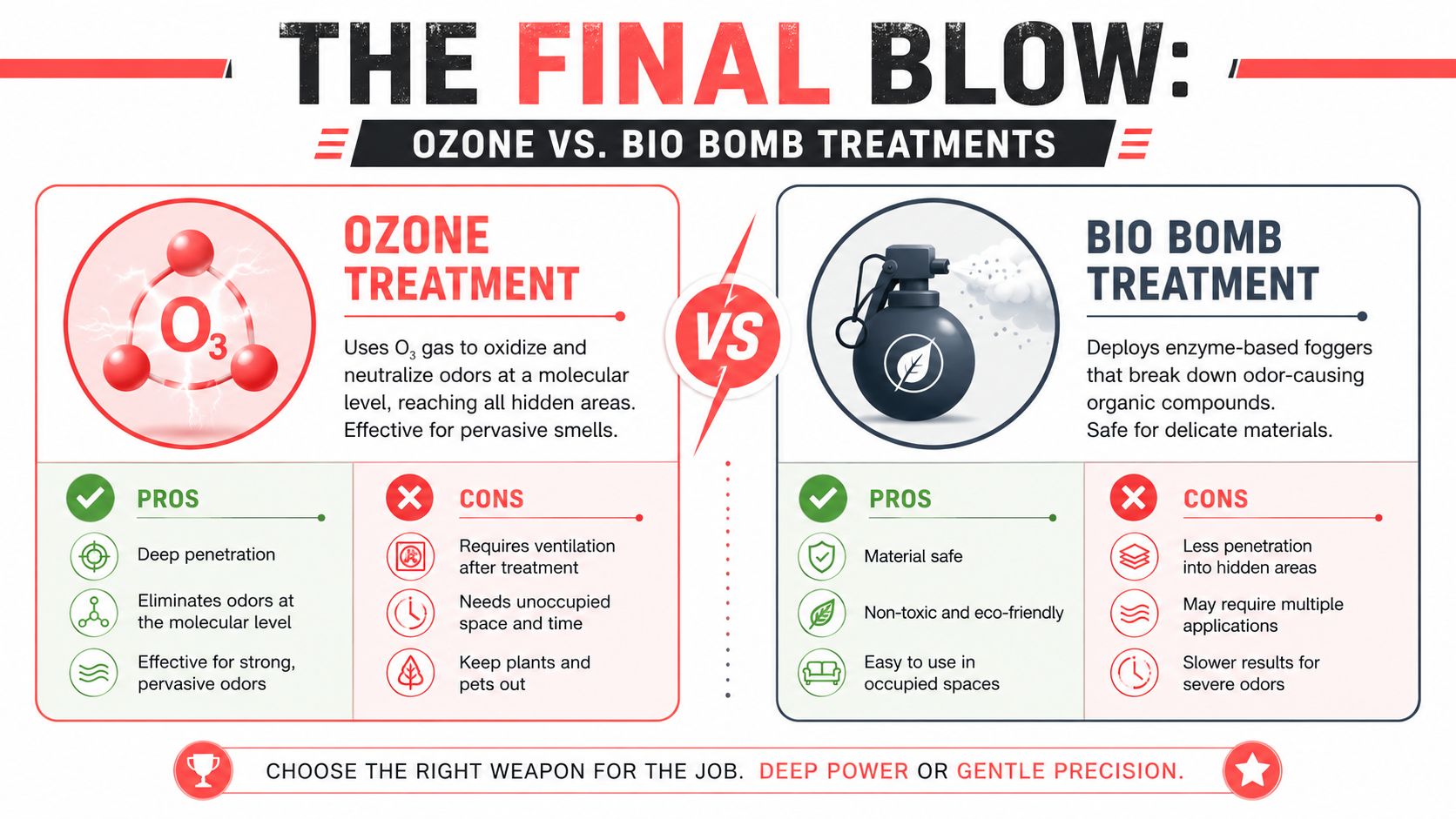
How ozone works
Ozone treatment uses O3 gas to oxidize odor compounds. Its strength is penetration. Because it moves as a gas, it can reach tight areas that are difficult to scrub by hand.
That said, ozone is not a “spray and forget” solution. It needs controlled use, proper ventilation, and careful re-entry handling. If you want a deeper explanation of where it fits in vehicle detailing, this article on what ozone treatment does in cars gives the automotive context.
How Bio Bomb treatments work
Professional biocatalytic odor eliminators, often called “Bio Bomb” treatments, work by chemically breaking down odor-causing molecules at their source, rather than just masking them like home remedies or oxidizing them like ozone, as explained in this Home Depot smoke odor guide.
That “breaking down” part is why many detailers prefer biocatalytic treatment in vehicle interiors. In practical terms, a good Bio Bomb treatment attacks the source chemistry instead of trying to cover it with fragrance or relying only on oxidation.
Side-by-side trade-offs
| Treatment | What it does well | What you need to watch |
|---|---|---|
| Ozone | Reaches hidden areas and oxidizes odor molecules | Requires careful handling, ventilation, and safe re-entry procedures |
| Bio Bomb | Targets odor at the molecular level and is well-suited to soft interior materials | Still depends on proper prep cleaning to work as intended |
The deodorizer is the finisher, not the cleanup crew. If residue is still sitting in the car, no final treatment can make up for skipped cleaning.
Why the choice matters in family vehicles
For a work truck with a rough interior, one approach may make sense. For a family SUV with child seats, pet traffic, soft trim, and lots of fabric, material sensitivity matters more. That's why many professionals lean toward a biocatalytic treatment when they want strong odor elimination without treating the entire interior like an industrial chamber.
The bigger point is this. Professional smoke smell removal works best when the final treatment matches the contamination level and the materials inside the car. Ozone has a place. Bio Bomb treatments have a place. Neither one should be sold as magic on its own.
Choosing Your Pro What to Expect for Cost and Time
Smoke odor work is one of those services where the cheapest quote can become the most expensive mistake. If a detailer skips extraction, avoids the HVAC side, or relies on fragrance to create a “clean” first impression, you may end up paying twice.
What vehicle smoke removal usually costs
The cost for professional smoke smell removal in a vehicle can vary widely based on severity, but it typically ranges from a few hundred dollars for minor cases to more for heavily saturated interiors, often involving 3 to 5 hours of intensive labor and specialized treatments, based on Angi's smoke remediation cost overview.
That range makes sense in real-world detailing. A lightly affected commuter car and a heavily smoked-in family vehicle are not the same job. Severity, material type, and whether the HVAC system is involved all affect the final scope.
What to ask before you book
A good detailer should be able to explain the process in plain language. If the answer is vague, that usually means the process is vague too.
| Question | What You Want to Hear |
|---|---|
| What's included in your smoke odor service? | A clear explanation of cleaning, extraction, vent treatment, and final deodorization |
| Do you treat the HVAC system? | Yes, because odor in the airflow can bring the smell right back |
| Are you masking the odor or neutralizing it? | Neutralizing, with a defined process for source removal and final treatment |
| How long should I expect the service to take? | An honest time estimate based on severity, not a one-size-fits-all promise |
| What happens if the smell is heavier than expected? | A straightforward explanation of added labor or additional treatment if needed |
| Can I check your customer feedback? | Yes, with real local reviews and a visible business profile |
Reviews matter more than polished promises
Local feedback tells you a lot. You want to see whether people mention reliability, communication, and whether the odor stayed gone. If you're comparing providers in Central Pennsylvania, it's smart to check local customer reviews on this Google Business Profile listing before booking.
If a provider can't explain why each step is necessary, they may be selling a package instead of solving the odor.
For broader budgeting context, this guide on professional car detailing cost can help you compare smoke odor work against other interior services and understand why deep contamination sits in a different category than routine detailing.
A simple hiring checklist
- Look for process detail: You want more than “we deodorize it.”
- Ask about vents and filters: Airflow contamination matters.
- Expect honest limitations: Some severe interiors need more than one pass.
- Choose experience over gimmicks: Tools matter, but sequence matters more.
Professional smoke smell removal is worth paying for when the detailer is removing the source, not just improving the first impression for a day or two.
Get Your Car Smelling Fresh Again Book Your Service
A smoke-filled interior can be fixed. The key is using the right sequence, the right tools, and the right final treatment for the materials inside your vehicle. When that process is done correctly, the goal isn't to cover the smell. It's to stop it from coming back.
If you're in Harrisburg, Mechanicsburg, Carlisle, Newport, or nearby parts of Dauphin and Perry counties, mobile service makes this a lot easier. You don't have to rearrange your day around a shop visit just to deal with an odor problem that's been hanging around for months.
Smoke odor in a car usually gets better only when someone addresses the whole interior, not just the obvious spots. That means the seats, carpet, vents, surfaces, and the final neutralization step all need to work together. When they do, the cabin feels usable again, especially on hot days when smoke odors usually show up at their worst.
If your car still smells like smoke every time the doors open, it's time to stop testing shortcuts and book a real fix.
Ready to get rid of that smoke smell for good? Book a professional interior odor treatment with The Mobile Buff and get expert service brought right to your driveway.

