


Car scratch removal cost typically ranges from $50 for a simple clear-coat polish to over $1,500 for deep primer or metal-level damage, with many professional mobile detailing corrections falling between $150 and $400. The bill depends far more on how deep the scratch goes than how long it is.
You walk out to your car, see a fresh line across the door, and immediately wonder whether you're looking at a quick polish or a body-shop bill. That first visual impression can be misleading. A long, shallow scuff may be inexpensive, while a short gouge that reaches primer or bare metal can require sanding, paint, blending, and corrosion protection.
The smart move is to identify the damage layer before choosing a repair method. Clear-coat damage belongs with paint correction, light paint-layer damage needs a more involved assessment, and primer or metal damage usually belongs with a body shop.
Why Car Scratch Removal Cost Varies So Much
Scratch depth controls the price because modern automotive paint is built in layers. The clear coat protects the colored paint beneath it. Under that sits the paint or color layer, then primer, and finally the vehicle's metal or plastic substrate. A professional can often restore damage confined to clear coat through compounding and polishing, but a scratch that breaks through the color layer needs refinishing.
That explains the broad range in car scratch removal cost. Independent pricing guidance places clear-coat-only repairs around $50 to $150, while deeper scratches can reach $400 to $1,500 or more when sanding, repainting, and blending become necessary. See the clear breakdown of scratch repair pricing by damage level for the underlying tiered estimates.
Length isn't the deciding factor
A scratch running across most of a door may still be a surface scuff. If it hasn't cut through the clear coat, a detailer may be able to reduce or remove it with a controlled paint-correction process. A short mark that catches your fingernail and exposes a lighter layer is more serious, even if it looks less dramatic from a distance.
Practical rule: Judge the scratch by its depth and exposed layer, not by the number of inches it covers.
Three broad categories make the decision easier:
- Clear coat: Usually suited to machine polishing, compounding, or wet sanding followed by polishing.
- Paint layer: Often needs sanding, color-matched touch-up or spot repair, and new clear coat.
- Primer or metal: Generally requires refinishing, and exposed metal may need rust prevention.
The economic difference is substantial. Industry pricing data places clear-coat correction at roughly $50 to $150, wet sanding and machine polishing at about $150 to $300, and deeper base-coat or primer work around $400 to $800 or more. Those figures come from paint correction and scratch repair pricing guidance.
The most expensive mistake is treating every scratch as a polishing job. The second most expensive mistake is sending every faint scuff straight to a body shop. Accurate inspection keeps you out of both traps.
Scratch Depth Tiers and What Each Costs
A clean panel and strong daylight reveal more than a quick glance. Dirt can make a surface mark look deep, while wax may conceal missing paint. Wash and dry the area, then drag a fingernail lightly across the scratch. A nail that glides over it usually indicates clear-coat damage. A nail that catches calls for closer inspection, especially if a lighter layer shows through.
Clear-coat scratches
Clear-coat marks are usually the most affordable to correct because the colored paint remains intact. A professional may use a test spot, compound, polish, and paint protection. Regional labor rates and the repair method affect the final quote. The independent cost guide for clear-coat repair compares published U.S. and UK guidance, including light surface-repair pricing.
Mobile detailing often suits this tier. Light contact from a car-wash brush, parking incident, or environmental scuff may improve substantially through controlled paint correction. The result depends on how much clear coat remains and whether the mark has broken through it. Waiting still carries a cost. Water and contamination can reach deeper layers, and a scratch that could have been corrected may later require paintwork.
Paint-layer scratches
Once the scratch reaches the colored paint, polishing cannot restore missing pigment. The repair may involve controlled sanding, color matching, spot application, blending, and fresh clear coat. One U.S. pricing breakdown places independent-shop paint-layer repairs around $400 to $800, while other 2026 estimates place this work around $150 to $400, depending on method and scope.
The range reflects different repair choices, not a contradiction. A small spot repair takes less labor than blending across a larger panel, and a near-perfect finish costs more than a basic visual improvement. The 2026 repair-cost breakdown for deeper scratches explains why a shop needs photographs or an in-person inspection before giving a dependable quote.
Primer and bare metal
Primer-level damage means the protective paint system has been breached. Repairs can run around $800 to $1,500 or more at independent shops, with dealership estimates around $1,200 to $2,000 or more. Rust or broader refinishing can raise published estimates to $1,200 to $2,500 or more at independent facilities and roughly $2,000 to $3,500 or more at dealerships, according to professional scratch repair estimates by paint layer.
| Scratch Depth | Independent Shop | Dealership |
|---|---|---|
| Clear coat | Lower-cost correction, with regional variation | Usually higher than independent correction |
| Paint layer | About $400 to $800 in one published breakdown | About $600 to $1,100 |
| Primer or metal | About $800 to $1,500+ | About $1,200 to $2,000+ |
| Rust or broader refinishing | About $1,200 to $2,500+ | About $2,000 to $3,500+ |
For another comparison, 2026 scratch repair cost comparisons place paint-layer work around $150 to $400, color-layer repairs around $250 to $600, and base-coat scratches around $400 to $700.
If you are considering home repair, review this professional guide to DIY car scratch removers first. Use approved compounds and polishing systems only. Stop when the mark reaches color, primer, or metal, because further abrasion can increase the eventual repair bill.
Comparing Your Repair Options
The right repair path depends on the damage, finish expectations, and your tolerance for risk. A kit can be appropriate for a superficial clear-coat mark, but it can't recreate missing paint. A professional detailer can correct surface damage, while a body shop handles refinishing that extends beyond safe paint correction.
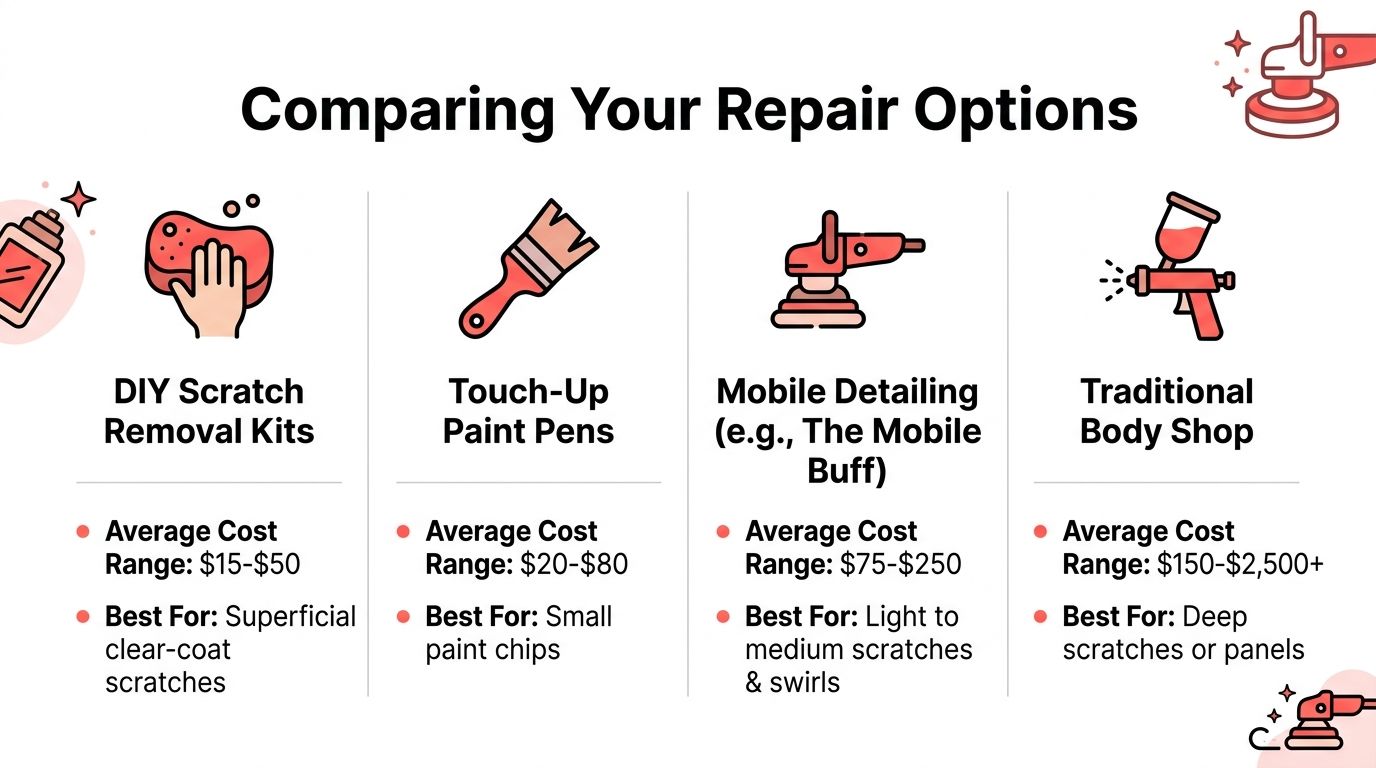
DIY scratch removal kits
Industry-approved kits typically combine a compound, polish, applicator, and sometimes a small machine. They're most suitable for faint clear-coat scuffs when you understand how to work cleanly and avoid excessive abrasion. The risk is uneven correction, haze, or removing more clear coat than necessary.
Don't use toothpaste, household cleaners, or other improvised remedies. They aren't a reliable professional paint-correction system, and they can complicate the next repair.
Touch-up paint pens
A paint pen can help with a small chip or isolated mark that has exposed the color beneath. It won't make a long scratch disappear, and a poor color match can make the repair more noticeable. Application also requires careful preparation, controlled buildup, curing, and finishing.
Touch-up paint is a spot-repair tool, not a substitute for polishing or panel refinishing.
Mobile detailing
Mobile detailing is the practical middle ground for clear-coat scratches, swirls, and some light paint-layer defects. A trained detailer can inspect the surface, perform a test spot, use a machine polisher, and determine whether correction is safe before taking aggressive steps.
The Mobile Buff is one local option for mobile detailing, and its scratch-removal service guidance distinguishes light correction from deeper paint or bodywork needs. You get professional tools and process without transporting the vehicle to a shop.
Traditional body shops
A body shop is the correct destination when the scratch reaches primer or metal, when rust is present, or when the panel needs repainting and blending. Body shops can restore missing paint, but the process usually costs more and requires leaving the vehicle at the facility.
Paintless dent repair
Paintless dent repair can address suitable dents when the paint remains intact. It doesn't remove a scratch by itself. If a door ding includes both a dent and paint damage, a technician may need to combine repair methods or refer the paint portion to a refinishing provider.
For a broader value comparison, review whether mobile detailing is worth the cost before choosing between correction and bodywork.
Factors That Change Your Final Quote
Two vehicles can have similar-looking scratches and receive very different estimates. The panel, paint system, access, surrounding condition, and repair method all change the labor involved.
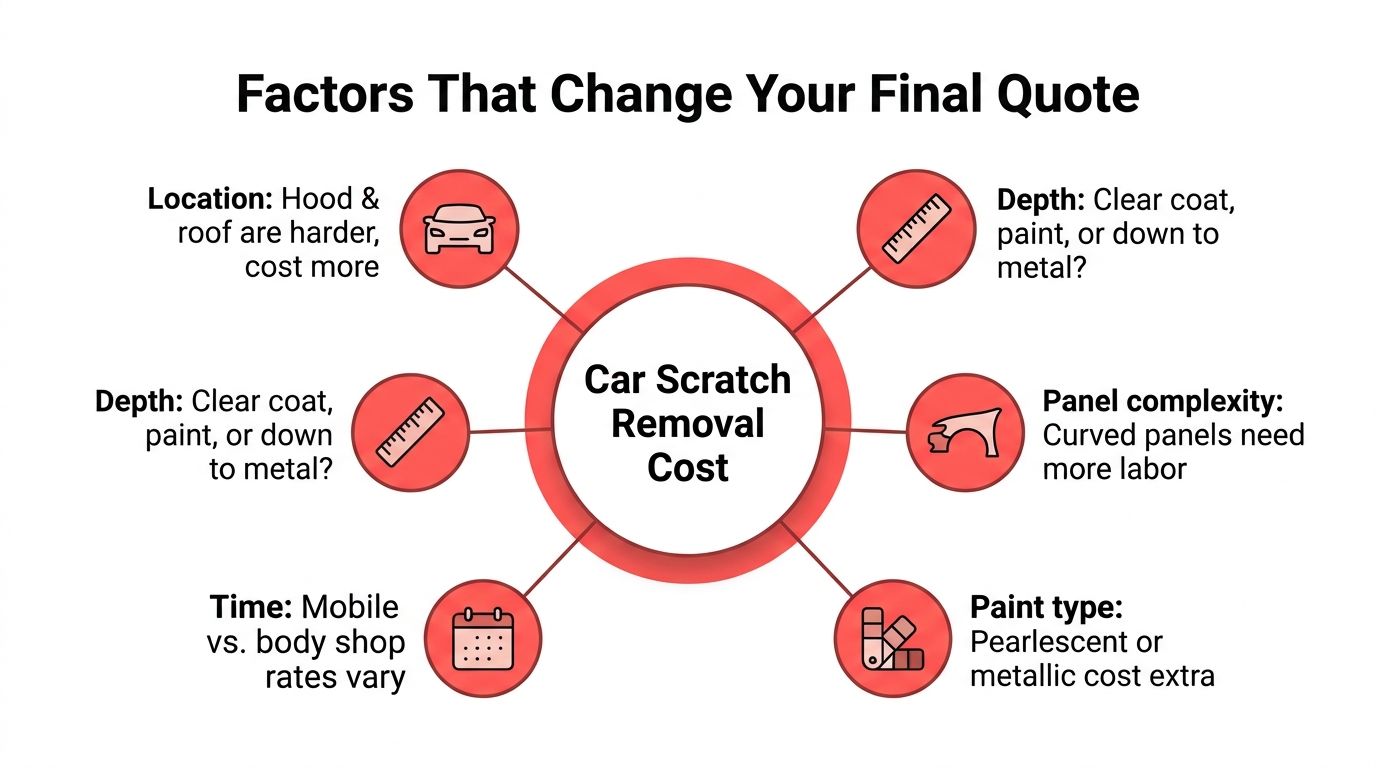
Location and panel shape
A flat door usually gives a technician more workable space than a sharply curved fender or bumper edge. Hoods and roofs can also require broader blending because the damage sits on a large, highly visible surface. Trim, handles, badges, body lines, and panel gaps create extra masking and polishing work.
A scratch near a door edge may be harder to correct cleanly than one in the center of the same panel. The visible result matters, so professionals consider how the repair will look from several angles rather than only whether the mark has been filled.
Paint type and condition
Solid colors are generally easier to match than metallic, pearl, or multi-stage finishes. Metallic flake and pearl effects change with viewing angle and light, so spot refinishing demands more careful color matching and blending.
Older or faded paint adds another complication. Even if a new paint mixture matches the factory code, the surrounding panel may no longer look like fresh paint. A detailer may recommend correction for the surrounding area, while a body shop may recommend a larger blend.
Access, damage, and local labor
A quote also reflects whether the technician can safely reach the area, whether the scratch came with a dent, and whether hidden damage exists beneath the visible mark. Local labor rates vary, and a dealership commonly charges more than an independent facility for comparable depth categories.
Ask for an itemized quote: It should identify correction, sanding, touch-up or refinishing, blending, clear coat, and final polishing when those steps apply.
Timing and corrosion risk
The factor you control most is timing. Clear-coat damage can remain a correction job, but exposed primer or metal deserves prompt attention because moisture can contribute to corrosion. Recent pricing guidance also warns that delaying repairs can leave owners facing a larger refinishing bill as labor and refinish costs rise. The discussion of waiting, rust risk, and resale concerns explains why the cheapest-looking option isn't always the cheapest decision.
Why Mobile Detailing Is the Smart Middle Ground
Most everyday marks don't justify a full body-shop process. If the damage remains in the clear coat, professional paint correction can address the defect with controlled compounding and polishing. If the scratch is deeper, a mobile detailer can still provide an honest assessment and tell you when refinishing is unavoidable.
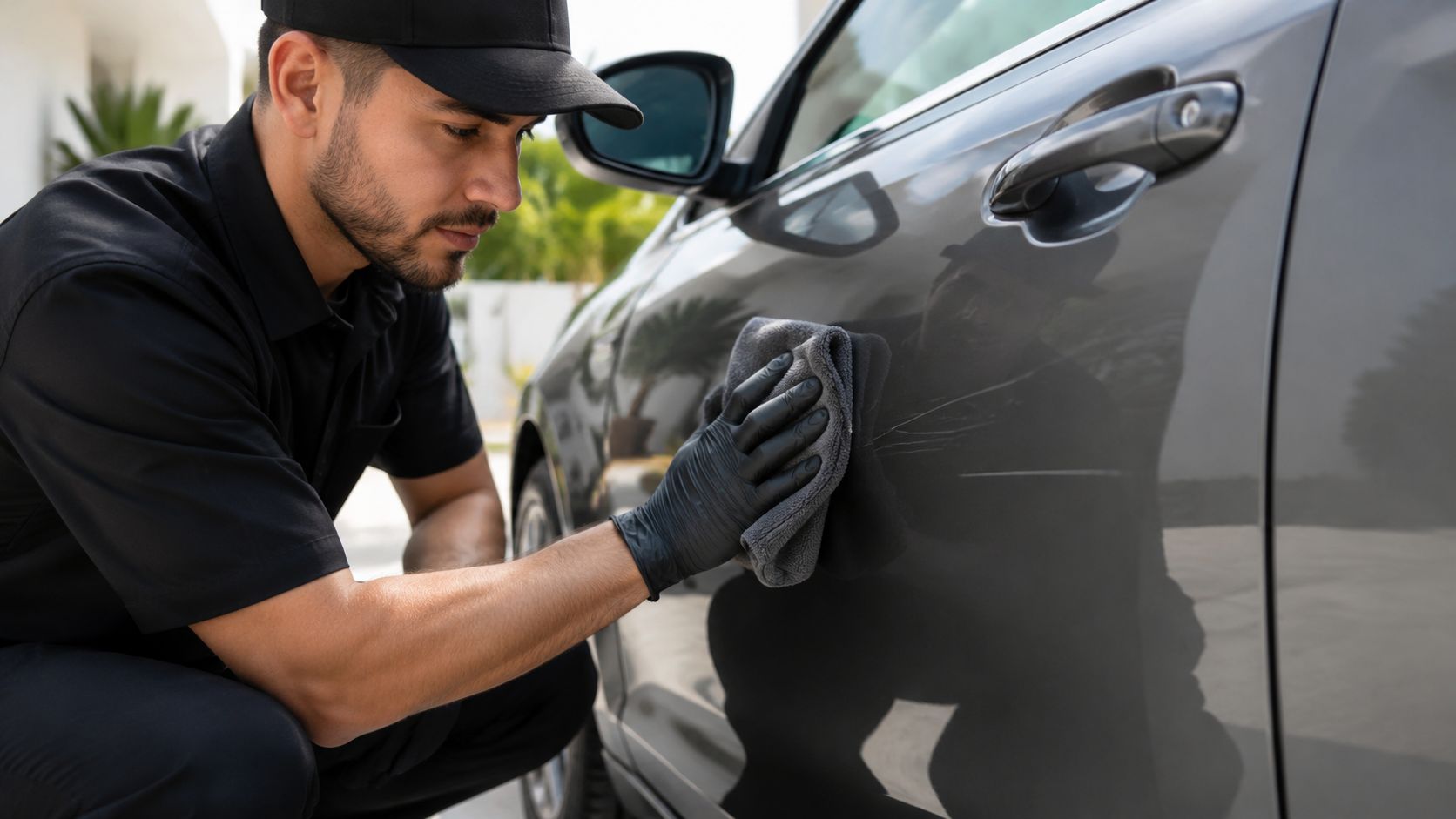
The value isn't only the repair method. A mobile appointment eliminates the shop drop-off, waiting room, and second trip to collect the vehicle. For busy owners, that convenience has a real practical benefit, especially when the technician can inspect the paint at home or at work.
What a professional correction visit should include
A proper service starts with washing and drying the affected area, assessing the scratch under suitable lighting, and testing the least aggressive method first. The technician may use a dual-action polisher, a measured compound, a finishing polish, and surface protection. The process should stop when further correction risks the clear coat.
The Mobile Buff serves Harrisburg, Mechanicsburg, Carlisle, Newport, and surrounding areas in Dauphin and Perry counties. Appointments are available seven days a week from 7am to 3pm, with electronic billing and payment due on completion, according to the business information provided for its mobile detailing service.
The cost of waiting
Waiting makes sense only when the surface is stable and the repair decision is informed. It makes less sense when the scratch exposes primer or metal, when moisture can enter the damaged area, or when you're preparing to sell or trade the vehicle.
A clear-coat repair may stay in the lower-cost correction category, while deeper work can move into hundreds or thousands of dollars. A mobile assessment is the sensible first stop because it separates a correctable cosmetic defect from a refinishing problem before you commit to the wrong service. The mobile detailing value guide offers additional context on choosing an on-site service.
Questions to Ask Before You Book a Repair
A low quote isn't useful if it describes a temporary disguise instead of a durable repair. Ask the provider to identify the damaged layer and explain exactly what the quoted process includes.
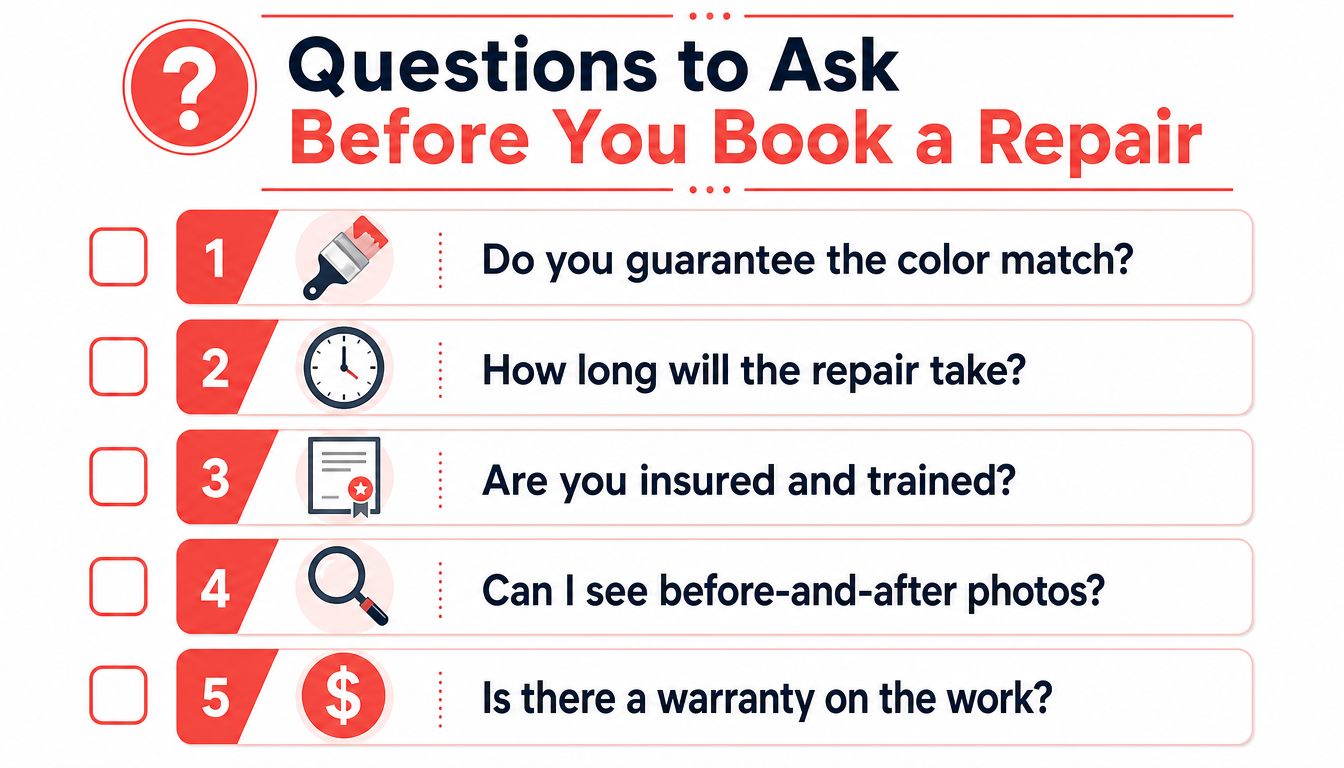
Use this checklist before you schedule:
- What layer does the scratch reach? Ask whether it's clear coat, color, primer, or metal.
- Will you polish, spot-repair, or repaint? The method should match the damage, not the provider's favorite tool.
- Can you match metallic or pearl paint? Ask how the technician handles finishes that change appearance with viewing angle.
- What's included in the price? Confirm whether sanding, blending, clear coat, buffing, cleaning, and protection are included.
- How long should the repair last? A provider should explain the expected durability and any maintenance requirements.
- Is the work covered by a warranty? Get the warranty terms in writing before authorizing refinishing.
- Can I see comparable before-and-after photos? Look for work on similar paint colors and damage levels.
- Are you insured and trained? This matters whenever someone is working on your vehicle's finish or moving the vehicle on your property.
For deeper damage, get an independent body-shop quote as well as a detailing assessment. Comparing itemized estimates helps you spot whether one provider is recommending polishing while another is pricing a complete panel respray.
You can also reduce waste by addressing the scratch early, bundling correction with an already planned exterior detail, and sending clear photos before requesting an appointment. Don't choose a provider solely because the first number is low. The cheapest process can become expensive when it leaves sanding marks, mismatched paint, or exposed metal untreated.
Your Next Step for a Scratch-Free Finish
Use a simple decision rule. If your fingernail doesn't catch and the paint remains intact, book professional paint correction. If the mark reaches the colored paint, request an assessment from a mobile detailer and a body shop before choosing. If you can see primer or metal, skip aggressive polishing and go straight to a body shop for refinishing and corrosion protection.
Most light parking scuffs, wash marks, and everyday contact damage deserve attention before they become a larger cosmetic or resale problem. A professional inspection tells you whether correction is enough, whether spot repair is appropriate, or whether the panel needs bodywork.
Central Pennsylvania drivers can use the The Mobile Buff Google Business Profile to request a convenient driveway-side assessment. The service brings professional detailing to Harrisburg, Mechanicsburg, Carlisle, Newport, and nearby communities, with satisfaction-first service and electronic billing.
Visit The Mobile Buff to schedule a mobile paint-correction assessment for your scratch. Their team can evaluate clear-coat and light paint-layer damage at your driveway and tell you plainly when a body shop is the safer choice.

