


You've just driven through a Central Pennsylvania salt storm. The car is coated in gray slush, the wheel wells are packed with grit, the floor mats are wet, and the cabin has that damp smell that never quite disappears. A quick trip through an automatic wash may make the paint look cleaner, but it won't necessarily address the salt and moisture hiding underneath the vehicle or inside the carpet.
Winter car detailing is preventive maintenance, not a cosmetic luxury. A professional service reaches the areas that collect corrosive brine, manages interior moisture, restores cloudy headlights, and applies protection before the next round of treated roads.
Why Winter Car Detailing Matters More Than You Think
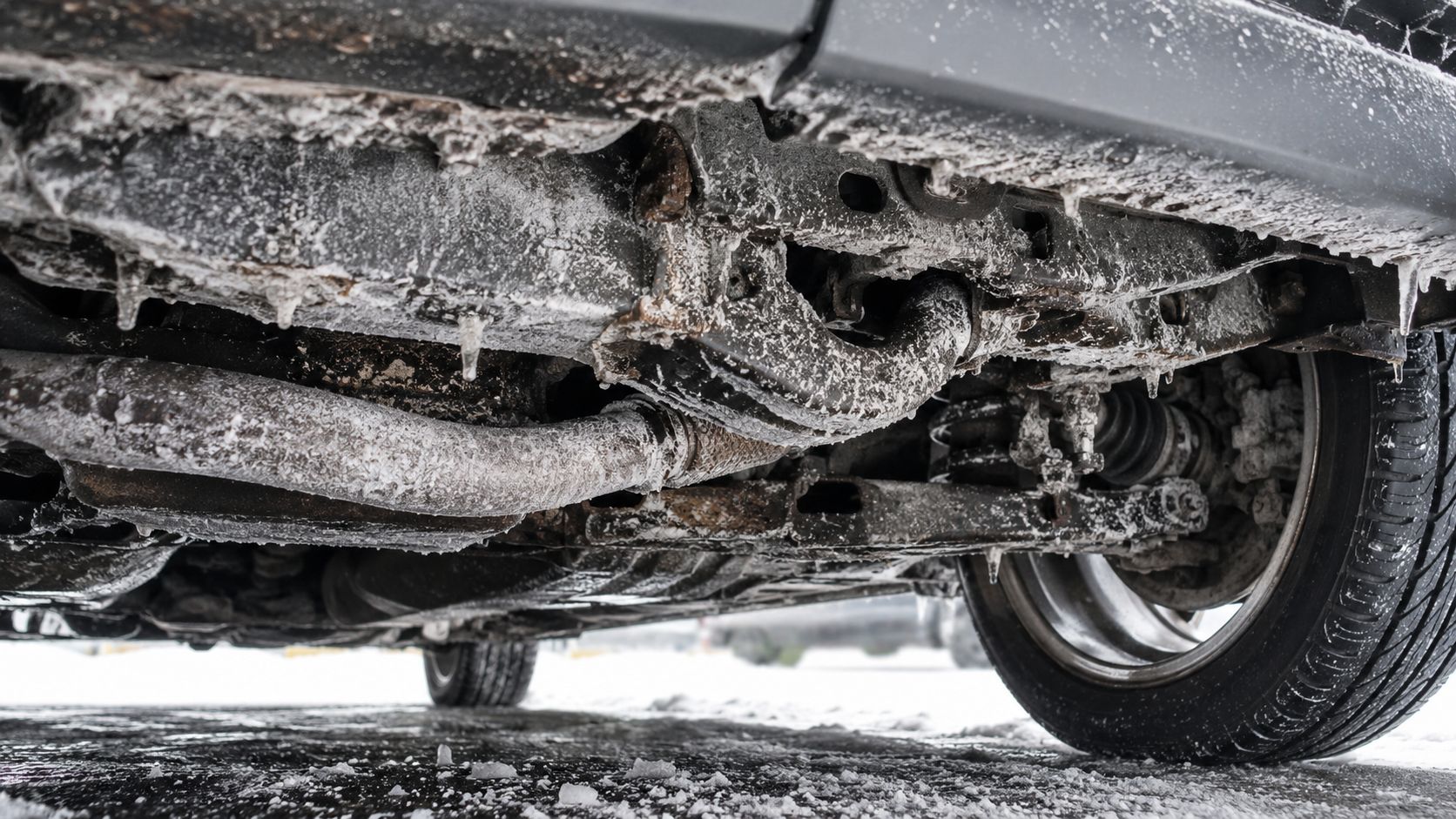
A commute through Harrisburg, Mechanicsburg, Carlisle, or another Central Pennsylvania route can leave salt and salty splash in places a quick wash never reaches. Brine works into wheel arches, rocker panels, seams, drainage channels, and the underside of the chassis. These areas stay wet longer than exposed paint, allowing corrosion to begin outside the driver's view.
AAA estimated that road de-icing chemicals cost U.S. drivers more than $3 billion per year in rust-related damage, with $15.4 billion in total repair costs over five years. AAA also reported that 15% of drivers in winter-climate regions had a vehicle repair at least once in the prior five years because of salt and other de-icers, while the average rust-related repair cost was $490 per incident. AAA's road de-icer and rust damage fact sheet shows why winter washing is maintenance, not just appearance care.
Where salt damage starts
The vulnerable parts extend beyond painted panels. Salt-laden slush collects around brake lines, fuel lines, suspension components, wheel arches, door bottoms, rocker panels, and chassis seams. Tires repeatedly spray these areas, and contamination can remain after the body appears clean.
The Transportation Research Board material explains why washing still matters, even though no cleaning routine removes every source of corrosion. One report found that, even assuming only half of a vehicle's corrosion comes from road salt, salt inhibitors could reduce total corrosion by only about 25%. Its technical history also cited long-running evidence that cars exposed to salted highways can corrode roughly twice as much as those exposed to sanded rural roads. The Transportation Research Board report supports the practical approach detailers use each winter: remove contamination before it remains trapped.
A drive-through wash moves quickly across exposed surfaces. Winter detailing gives the undercarriage, wheel wells, rocker panels, seals, and jambs more deliberate attention. It also includes drying areas where water can freeze and hold more residue. For seasonal wheel considerations, consult this winter vs summer wheel guide from The Alloy Hub Ltd.
Practical rule: A clean hood does not prove the underside is clean.
Interior moisture deserves equal attention. Wet mats, damp carpet edges, and slush carried into the cabin can keep humidity trapped long after the floor looks dry. That moisture can create persistent odors and support mold growth, especially when the vehicle is closed between short winter trips. Drying mats, checking carpet beneath them, and cleaning door sills address risks a basic exterior wash leaves untouched.
The useful wash follows salt exposure, rather than preceding the next storm. Mobile service can make that timing easier when freezing conditions make a shop visit inconvenient. See mobile detailing in winter for practical service considerations.
Professional Exterior Detailing for Salt and Slush Protection
Winter exterior work starts below the beltline, not with a glossy final rinse. The detailer first evaluates the vehicle's condition, loosens surface buildup with a controlled rinse, and avoids dragging abrasive salt across the paint during contact washing.
A professional cleaning sequence
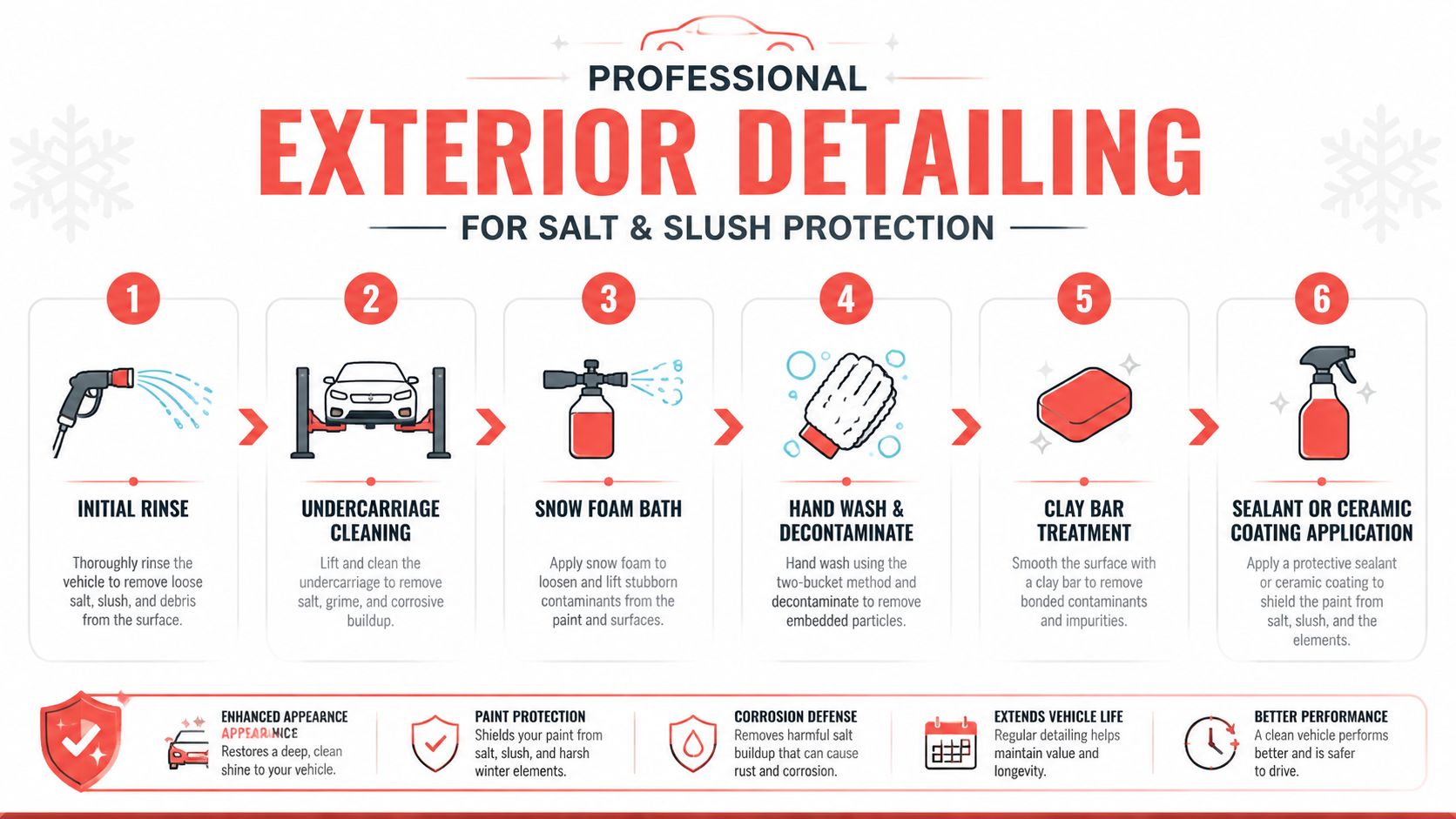
Initial rinse. Loose salt, grit, and slush come off before brushes or mitts touch the vehicle. This reduces the chance of grinding sharp contamination into the clear coat.
Undercarriage flush. The underbody, wheel wells, rocker panels, and seams receive focused attention. Salt often accumulates where corrosion is least visible, which is why an undercarriage rinse is more valuable than adding extra soap to the roof.
Foam and contact wash. Snow foam helps loosen remaining road film. A professional then hand-washes from cleaner upper panels toward dirtier lower areas with dedicated wash media and proper lubrication.
Decontamination. Embedded road film and bonded contaminants may require chemical decontamination or clay treatment. The method depends on the paint condition and the contamination present.
Drying. Water is removed from mirrors, handles, badges, jambs, door seals, and other places where trapped moisture can freeze or leave residue.
Protection. A suitable wax, sealant, or coating adds a sacrificial layer that makes future washing easier. Protection won't stop salt exposure, but it can reduce direct contact and improve maintenance between appointments.
Why pressure and distance matter
An equipment-focused undercarriage guide benchmarks a 40-degree nozzle at roughly 800 to 1000 PSI for 5 to 7 minutes to soak and dissolve salt. It then describes a 15-degree nozzle at 1200 to 1500 PSI, held 12 to 18 inches away, for a final flush. The same guide uses runoff conductivity as a residue check, with readings above 500 µS/cm indicating meaningful salt remains, and recommends continuing until runoff approaches source-water conductivity. The technical undercarriage rinse guidance shows why uncontrolled pressure from too close a distance isn't a substitute for trained technique.
Professionals also adjust the service around weather and vehicle condition. A rinseless or waterless method may be appropriate for certain surface conditions, but heavy salt accumulation requires a cleaning approach capable of safely removing that material rather than encapsulating it.
For more on treating visible winter residue, see winter salt stain removal. The process shown here also gives a useful visual reference:
AAA recommends washing at least every two weeks during winter and more often after heavily salted-road travel, with underbody sprays and an initial rinse to remove loose salt before washing. AAA's winter salt warning gives drivers a practical baseline. Other consumer guidance ranges from once a month at minimum to every 7 to 10 days or weekly during active salting and slush, so exposure should determine the schedule rather than a fixed calendar rule. This winter underbody-care guidance reflects that difference.
Interior Protection Against Moisture Odors and Stains
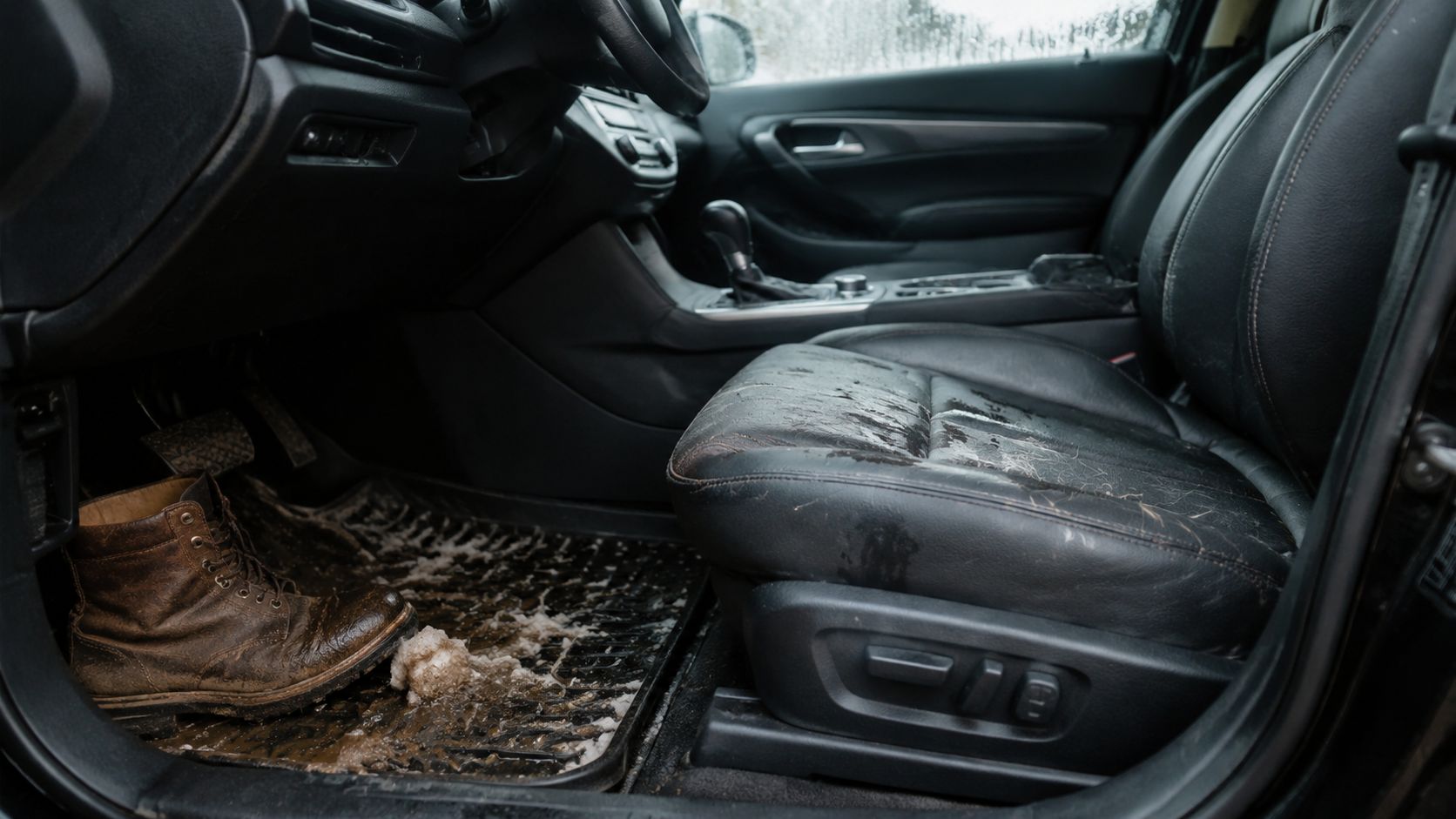
The cabin takes a beating during a Central Pennsylvania winter. Wet boots leave slush on the mats, children track in salt and mud, pets carry moisture into the carpet, and damp clothing can keep the interior humid long after the drive ends. Vacuuming removes loose debris, but it doesn't extract embedded moisture or neutralize an odor source.
Start with moisture control
Rubber mats are useful during salt season because they contain slush better than many carpeted mats, but they still need to be removed, cleaned, and dried. A professional interior detail should inspect the mat channels, carpet edges, seat rails, door jambs, and areas beneath child seats or cargo liners.
The HVAC intake area also deserves attention. Leaves, damp debris, and contaminated water can contribute to unpleasant smells when the climate system runs. A careful technician evaluates the accessible areas without forcing water into electronics, vents, switches, or seat mechanisms.
Moisture management comes before fragrance. A scented product can cover a smell temporarily while the carpet remains damp underneath.
Fabric protection can help slow the absorption of future spills, while leather conditioner supports the surface of leather and vinyl materials that face repeated contact with wet clothing and winter grime. These treatments work best after proper cleaning and extraction. Applying protectant over salt residue or greasy soil preserves the problem beneath a more finished surface.
Treat odors at the source
Persistent odor needs diagnosis. Pet hair, food residue, wet carpet, and organic contamination each require a different cleaning response. Professional-grade Bio Bomb odor elimination can address odor sources more directly than a fragrance spray, but the technician still needs to remove the underlying soil and dry the affected materials.
Some owners also research a portable ozone machine for car from EcoQuest Purifiers. Ozone equipment requires professional judgment, correct vehicle preparation, and appropriate ventilation. It isn't a substitute for extraction, source removal, or drying, and improvised use around people, pets, and sensitive materials is not an industry-approved shortcut.
Families and pet owners should schedule interior attention whenever mats and carpets repeatedly stay damp or odors return after ordinary cleaning. Fleet managers benefit from consistent inspections because several vehicles can develop the same moisture problem when drivers face identical routes and weather. The priority is simple: extract what is trapped, dry what was cleaned, protect high-contact surfaces, and remove odors instead of masking them.
Headlight Restoration and Winter Visibility Maintenance
Winter visibility problems often start with headlights that look slightly dull in daylight. At night, haze and yellowing scatter the beam and reduce the clarity of the light pattern, a serious concern during early sunsets, snow, fog, and wet roads.
Most modern headlight lenses use polycarbonate with a UV clear coat. As that protective layer wears through, the lens can yellow and haze. One technical restoration guide identifies this yellow haze as typical on headlights older than 6 to 8 years and states that UV resealing after restoration is mandatory. The technical guide to UV damage and acrylic restoration explains why polishing alone isn't a complete repair.
Polishing is only part of the repair
A proper restoration begins with inspection. If the damage is limited to surface oxidation, controlled correction can restore clarity. If the lens has deep internal damage, cracking, severe pitting, or failed structure, replacement may be more appropriate.
The professional sequence generally includes cleaning, masking surrounding paint, removing the oxidized layer with controlled abrasives, refining the surface, and applying a UV-resistant protective layer. The final seal protects the newly corrected polycarbonate from rapid re-oxidation. Without that step, a lens may look clear immediately after polishing but lose that clarity sooner than expected.
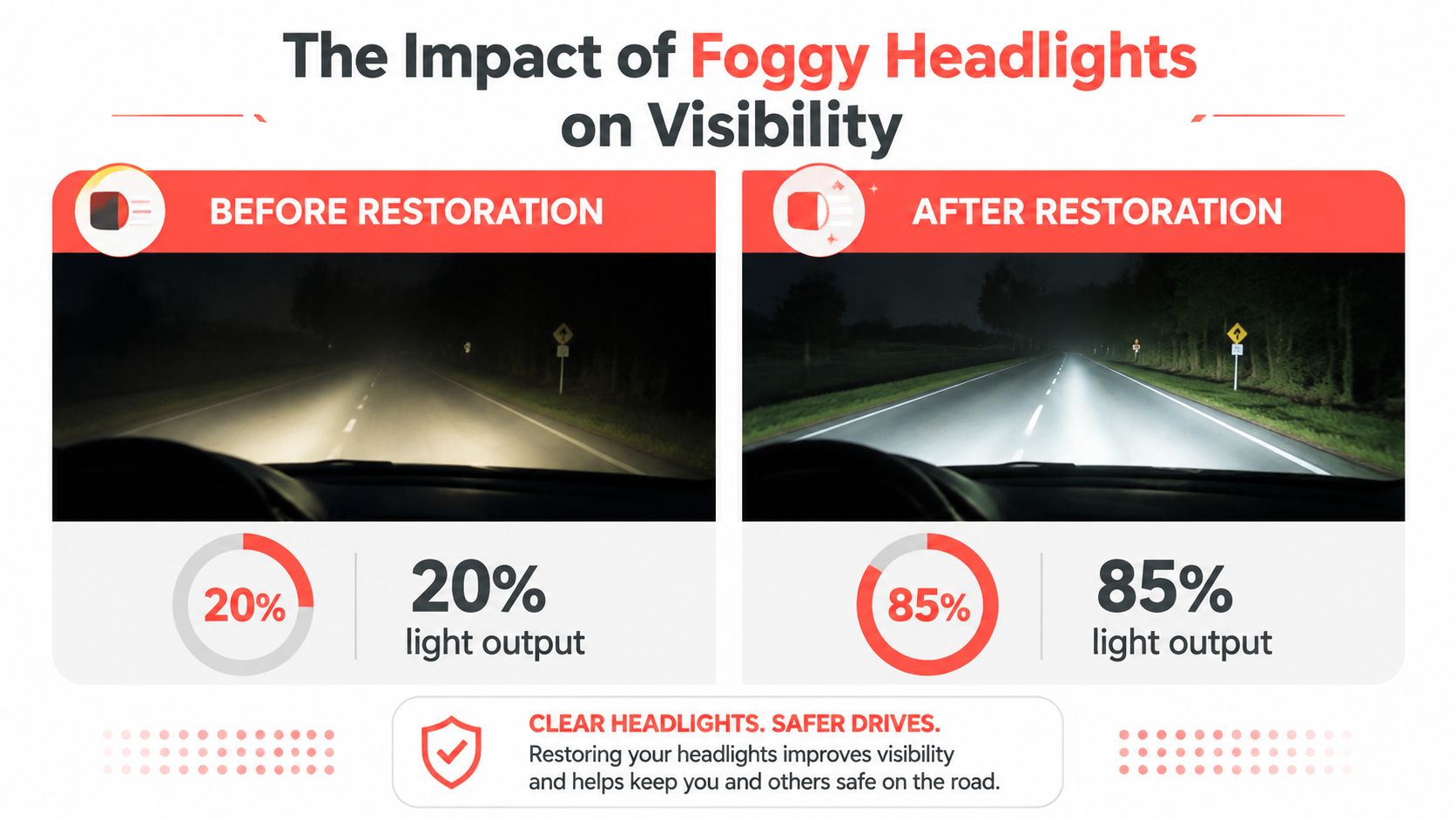
A restored lens also improves the vehicle's presentation before resale, but safety should come first. Clear headlights won't compensate for misalignment, failed bulbs, damaged housings, or poor wiper performance. A professional inspection can identify when restoration will help and when the assembly itself needs replacement.
For a closer look at the correction process, review the best headlight restoration method. The important distinction is durability. Correction removes the damaged surface. UV resealing protects the corrected surface. Both steps belong in a complete winter visibility service.
Choosing the Right Detailing Package for Your Vehicle
The right winter service depends on what the vehicle is fighting. A parent with wet mats and pet hair needs a different starting point than a commuter whose headlights have become cloudy or an owner preparing a vehicle for resale.
| Driver Scenario | Recommended Package | Key Benefits |
|---|---|---|
| Daily commuter on salted roads with a clean, clear cabin | Interior & Exterior | Removes salt from exposed surfaces, addresses undercarriage buildup, and refreshes the cabin |
| Driver with cloudy or yellowed headlights and manageable interior condition | Exterior & Headlight | Combines salt-focused exterior cleaning with visibility correction and UV resealing |
| Family vehicle with odors, wet mats, or pet hair and acceptable exterior protection | Interior & Headlight | Prioritizes moisture and odor control while improving winter visibility |
| Older vehicle needing a complete seasonal reset | Full Service & Headlight | Addresses interior contamination, exterior salt buildup, and headlight oxidation together |
| Fleet vehicle with recurring grime and shared-use interiors | Interior & Exterior | Creates a practical maintenance baseline for high-use vehicles |
Match the package to the condition
Start with the problem that can become expensive or unsafe. Visible salt, recurring damp odors, and cloudy headlights deserve attention before minor paint imperfections. A vehicle in good condition may need maintenance cleaning and protection, while one that has been neglected requires deeper decontamination, extraction, or restoration.
Budget also affects sequencing. If you can book only one service, choose based on exposure and risk. A heavily salted commuter should prioritize exterior and undercarriage work. A family vehicle with soaked carpets and persistent odor should prioritize interior cleaning and drying. A vehicle driven mostly after dark may justify headlight work sooner than cosmetic paint enhancement.
Seasonal timing matters because protection works best on a properly cleaned surface. Schedule the first detail before repeated salt exposure if possible, then return according to road conditions. AAA's winter guidance supports washing at least every two weeks, while other recommendations become more frequent during heavy salting, as noted earlier.
Mobile service removes a major scheduling obstacle. The Mobile Buff offers Interior & Exterior, Exterior & Headlight, Interior & Headlight, and Full Service & Headlight packages, with service brought to the driveway in its Central Pennsylvania coverage area. That approach suits busy households, small fleets, and owners who don't want to leave a vehicle at a shop during a workday.
Book Your Winter Detail with The Mobile Buff
Skipping winter detailing can leave you with more than a dirty vehicle. Salt may reach brake lines, fuel lines, suspension parts, rocker panels, and other hidden areas. Damp interiors can keep producing odors, and oxidized headlights can make nighttime driving less comfortable and less clear. AAA's documented average rust-related repair cost of $490 per incident is a useful reminder that prevention deserves a place in the winter maintenance budget. AAA's rust damage data shows why waiting until corrosion is obvious can be a costly strategy.
The Mobile Buff serves Harrisburg, Mechanicsburg, Carlisle, Newport, and surrounding communities in Dauphin and Perry counties. The mobile team brings professional hand-wash precision, interior detailing, stain and pet hair removal, Bio Bomb odor treatments, exterior protection, and headlight restoration to your driveway.
Appointments are available seven days a week from 7am to 3pm. That schedule works for commuters, parents, property managers, and small business owners who need vehicle care without arranging a shop drop-off and pickup. Weather can affect service quality, so exterior appointments may be rescheduled when conditions aren't suitable for a proper result.
You can review local information, customer feedback, and booking details through The Mobile Buff's Google Business Profile. Book before the next salt truck treats your regular route, especially if your vehicle already has visible buildup, damp odors, or hazy headlights.
Protect your vehicle with professional winter car detailing from The Mobile Buff, including salt-focused exterior cleaning, moisture-conscious interior care, odor elimination, and headlight restoration. Visit The Mobile Buff to choose the service that fits your vehicle and schedule a convenient driveway appointment.

