


You open the car door after work, or after school pickup, and the smell hits before you even sit down. Maybe you already sprayed something from the auto parts store. Maybe you scrubbed the seat, blotted the carpet, or left the windows cracked all weekend. For a day or two, it seemed better. Then the next warm afternoon brought it right back.
That's the part that frustrates people most. The car looks clean, but it still smells like cat urine.
A vehicle is one of the hardest places to solve this problem. The contamination doesn't just sit on the surface. It works into seat foam, carpet backing, under-seat padding, and sometimes the HVAC system that keeps recirculating odor every time you turn the fan on. That's why a real cat odor removal service for a car has to be more technical than a quick interior wipe-down.
That Lingering Cat Odor in Your Car and How to Fix It
If you're dealing with this right now, you're not overreacting. Cat odor inside a vehicle is stubborn for reasons that have nothing to do with effort and everything to do with how cars are built.

Why cars are harder than houses
Those seeking assistance typically encounter articles about carpets, bedrooms, and living rooms. That advice only goes so far. As SERVPRO's odor removal guidance notes, existing content on cat odor removal service rarely addresses how cat urine odor behaves differently in low-airflow, soft-surface vehicle interiors versus stationary homes, which can trap urea and ammonia vapors within carpets, upholstery, and HVAC ducts at higher concentrations than in many home interiors.
Inside a car, soft materials are packed tightly together. Seat cushions absorb. Carpet backing holds residue. Plastic trim creates edges and seams where liquid can settle. Then heat builds up in a closed cabin and pushes odor back into the air.
That's why people often tell me the smell is worst when:
- The sun has been on the car all day
- The AC or heat first kicks on
- The windows have stayed closed for a while
- They thought the stain was gone because the surface looked normal
Practical rule: If the odor disappears and then returns when the car warms up, the source probably wasn't removed from below the visible surface.
What usually doesn't work
The most common failed approach is surface cleaning. Spray, wipe, repeat. It can freshen the top layer, but it doesn't reach what soaked beneath it.
Another problem is fragrance-based products. They don't remove contamination. They just compete with it. For a short time, you smell “clean scent” mixed with cat odor. Then the fragrance fades and the original problem wins.
A car-specific cat odor removal service works because it treats the cabin as a confined system, not just a dirty seat. That means checking hidden areas, treating soft surfaces correctly, and addressing airflow paths that ordinary cleaners ignore.
Beyond Masking The Science of Professional Odor Removal
Permanent odor removal starts when you stop treating smell like a surface problem.
What the odor actually is
Cat urine odor keeps returning because the source isn't just “wetness” or a visible stain. The persistent issue is organic residue, especially uric acid crystals, left behind in fabric, foam, and padding. Those residues can keep releasing odor long after the original accident dried.
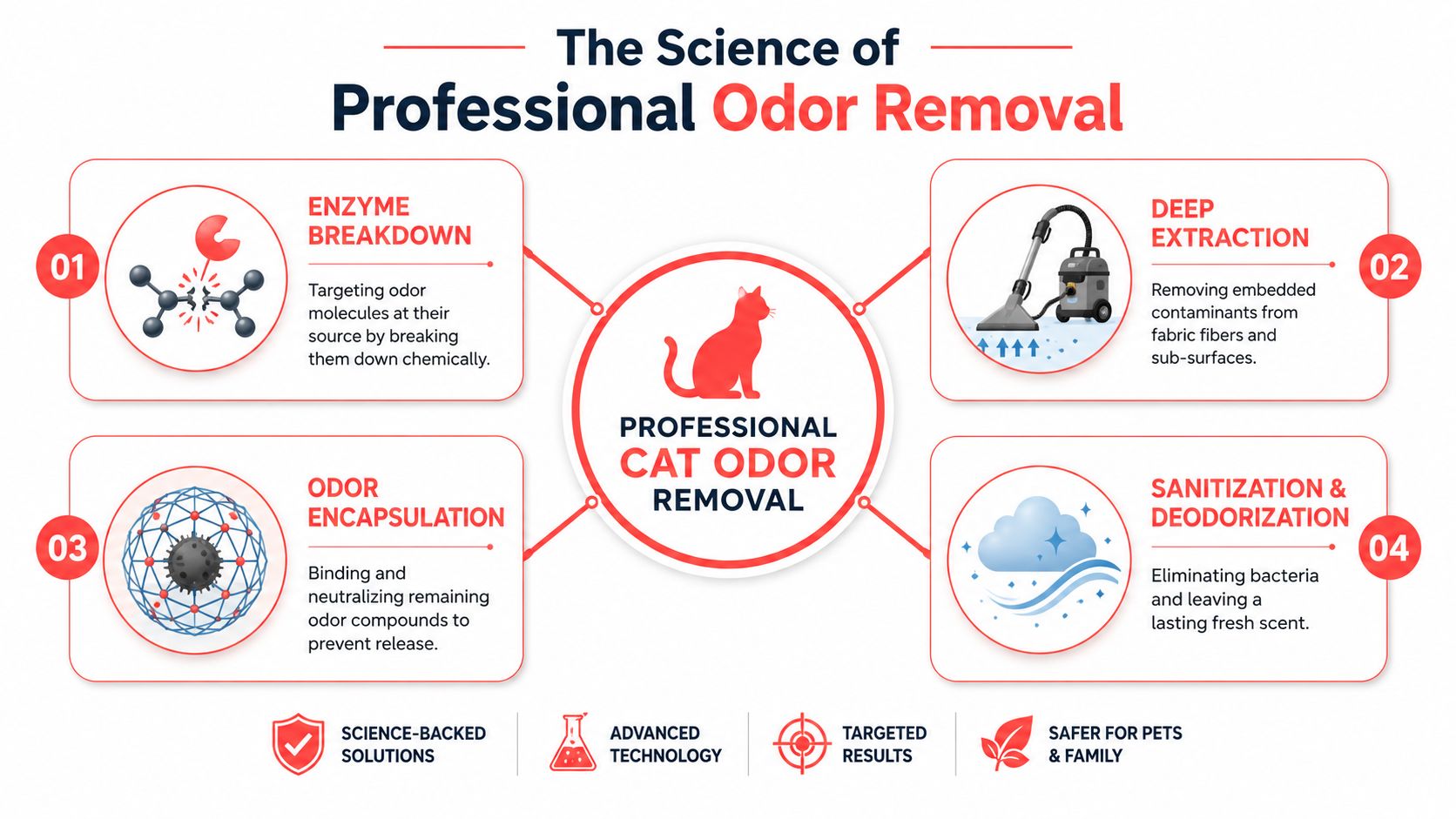
Professional cat odor removal relies on enzymatic bio-oxidizers that break down proteins, fats, and urea derivatives. Because uric acid can crystallize and remain in fibers and padding, systematic services use moisture detection, multi-step wet vacuuming, and full bio-oxidizer saturation so the product reaches below the visible surface and helps stop odor from re-emerging, as described in this odor elimination overview.
Why enzymes matter
The easiest way to understand enzymes is to think of them as odor-targeting work crews. They don't cover the smell. They work on the material causing it.
A proper enzyme treatment has to do three things:
Reach the contamination
If the urine soaked into foam or under carpet edges, the product has to get there too.Stay in contact long enough
Dwell time matters. Spraying and immediately wiping usually cuts the chemistry short.Be removed correctly
Once the residue breaks down, extraction matters. Otherwise, softened contamination can remain trapped.
Independent testing discussed in a PubMed-indexed source on enzymatic cleaning supports the basic professional approach: enzymatic cleaners work by breaking down uric acid crystals, and because the action is biological, treatment has to be thorough and often repeated to fully degrade the contaminated material.
A product can be good and still fail if it never reaches the source.
What pros use instead of shortcuts
Professionals don't rely on one miracle spray. They combine inspection, saturation, extraction, and cabin treatment. In some jobs, an additional whole-cabin process may be appropriate. If you want a plain-English breakdown of when that's used, this explanation of ozone treatment for cars is a helpful reference.
It also helps to understand which chemical choices are safe for interior materials and which can create problems. For readers comparing disinfecting agents, BacteriaFAQ.com's guide is worth reading because it reinforces a point professionals already know: aggressive household chemistry can be the wrong tool in a confined vehicle interior.
A Step-by-Step Look at Our Cat Odor Removal Process
A proper mobile appointment should feel methodical, not mysterious. You should know what's being checked, why it's being treated, and what the likely outcome is.
The first inspection
The process starts with locating every affected area, not just the spot you already know about. Cat urine can wick sideways through fibers and settle under trim edges or beneath the seat.
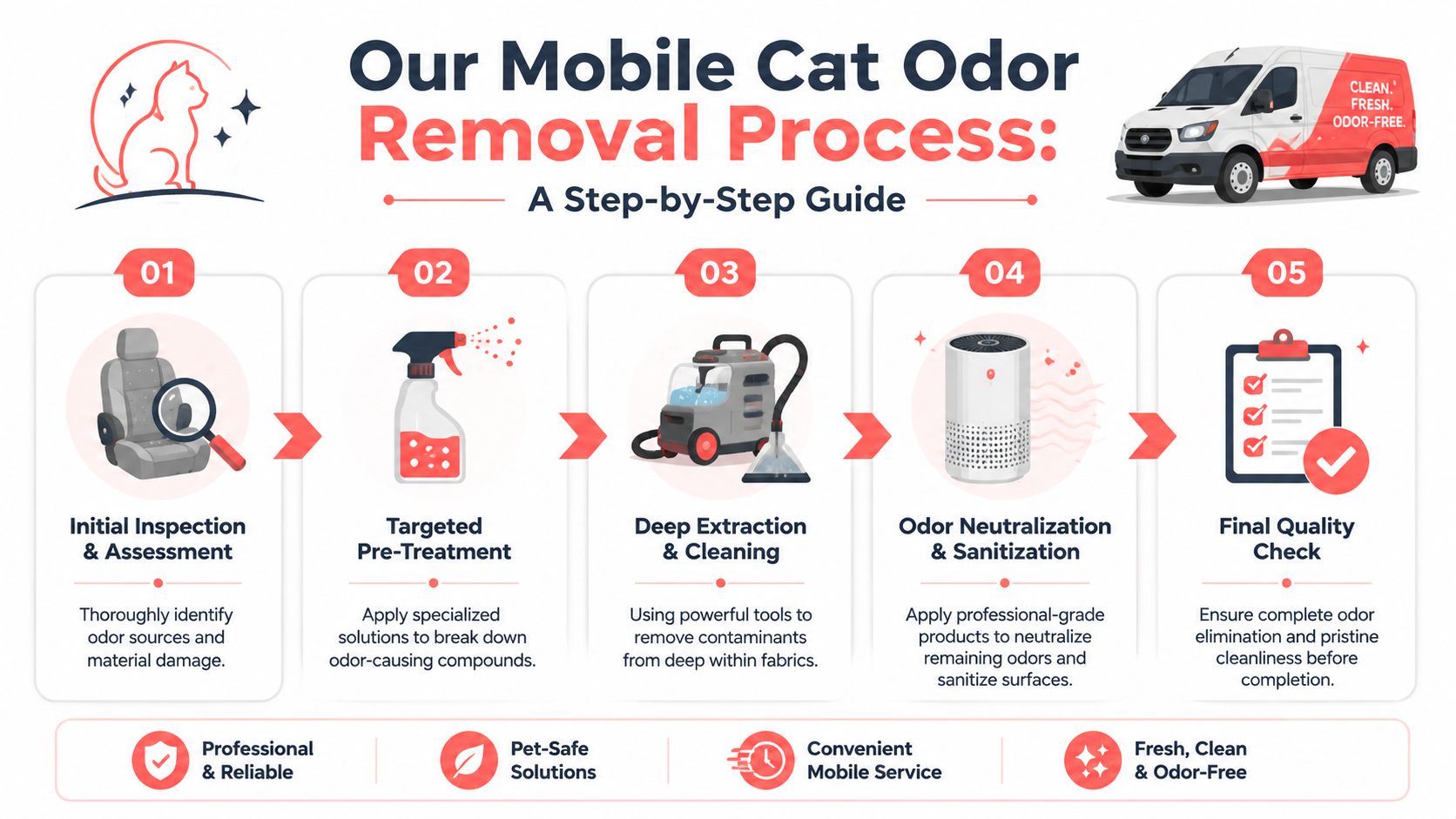
We inspect the likely contact zones first:
- Seat base and seat tracks where liquid often runs downhill
- Carpet seams and floor mats that hold residue longer than the visible surface suggests
- Rear footwells and cargo areas where carriers, blankets, or litter-tracking accidents often happen
- Vent output and cabin airflow if the smell becomes stronger when the fan runs
UV inspection can help reveal hidden contamination, but it's only part of the picture. Odor source mapping also comes from smell, touch, and material response during the inspection.
A useful background read on prevention and cleanup limits is this article on how to get cat urine out of a car. It gives context for why older stains usually need more than consumer products.
The deep cleaning phase
Once the affected areas are identified, the first working stage is controlled cleaning and extraction. The goal isn't to flood the cabin. It's to remove as much source material as possible without over-wetting parts that are hard to dry.
That often includes:
- Targeted pre-treatment for the contaminated textile or carpet area
- Mechanical agitation where the material allows it
- Hot or warm extraction depending on the surface and severity
- Repeated passes in the worst sections to pull out dissolved residue
Here's the kind of process people usually want to see before they book:
The mistake amateurs make is trying to “clean” before they've identified depth. In a car, depth matters more than stain size.
The treatment and cabin reset
After extraction, the enzyme stage is applied where needed and allowed to dwell. This is the part many cheap services rush. If the product is removed too early, it hasn't finished breaking down the contamination.
For whole-cabin odor work, one available option is The Mobile Buff's Bio Bomb treatment, which is used to neutralize lingering odor in vehicle interiors as part of a broader interior odor-elimination service. That kind of cabin-wide step is useful when odor has spread beyond the original deposit area.
What I tell customers: the best result comes from matching the process to the material. Cloth, carpet, foam, trim seams, and airflow channels don't all respond the same way.
If you want a practical read on routine upholstery care between deep services, this guide on maintaining car upholstery is a solid maintenance resource. Just keep in mind that maintenance cleaning and urine remediation are different jobs.
Understanding the Cost of Cat Odor Removal
Price is usually the next question, and the honest answer is that there isn't one flat number that fits every vehicle.
Why the price range varies
A light, isolated issue in one area is a very different job from a vehicle with repeated accidents that reached carpet padding or multiple soft surfaces. National pricing for pet odor removal helps frame the difference in severity. According to Angi's pet odor removal cost guide, professional pet odor removal runs from $75 to $300 for single-room spots and over $900 for severe, multi-area contamination, while severe cat urine problems often fall in the $700 to $1,250 range when deep cleaning and specialized equipment are needed.
Those numbers are for residential odor remediation, but they're useful because they show the same core truth that applies in vehicles. The harder part is not deodorizing. The harder part is finding, reaching, and removing contamination that spread beyond the surface.
What drives a vehicle estimate
In a car, the biggest pricing variables are usually:
| Situation | What changes the labor |
|---|---|
| One localized accident | Inspection is faster, treatment is limited, and extraction stays contained |
| Seat foam involvement | More dwell time and more careful extraction are needed |
| Carpet and under-seat contamination | Access gets harder and drying control matters more |
| HVAC odor carryover | Cabin-wide treatment may be added |
| Repeat marking or older residue | Multiple treatment passes are more likely |
Material matters too. Cloth tends to absorb more readily than sealed surfaces. Tight seams, rail hardware, and layered carpet assemblies also add time.
If you're comparing odor work with broader interior packages, this overview of professional car detailing cost helps explain why specialized contamination work is priced differently from standard detailing.
What you're really paying for
You're paying for diagnosis, proper chemistry, extraction equipment, dwell time, and follow-through. A real cat odor removal service isn't a scented add-on. It's corrective work.
Keeping Your Car Fresh After Your Service
You pick up the car, the cabin smells clean again, and then a week later you start second-guessing every warm day and every closed-door parking session. That reaction is normal. Cars are small, heat builds fast, and enclosed materials hold onto any missed contamination more noticeably than a room in a house.
The first 24 to 48 hours matter because the interior is still finishing its drying cycle. If your technician gives ventilation or dry-time instructions, follow them closely. In vehicle interiors, a little trapped moisture in carpet backing, seat seams, or under-floor insulation can create confusion later because it can smell stale before it is fully dry.
A few habits help protect the result:
- Ventilate the cabin when weather allows
- Wash pet blankets, carrier pads, and anything that sat in the affected area
- Skip heavy fragrance products for the first few days
- Check one suspect area at a time instead of judging the whole cabin at once
- Call your detailer promptly if one spot smells stronger than the rest
That last point matters more in a car than people expect. Vehicle odor issues are usually location-specific. One lower seat bolster, one patch of carpet under a rail, or one spot near a vent can stand out long before the rest of the cabin does.
For prevention, speed helps. If a new accident happens, blot it up right away, remove any loose fabric layers for washing, and avoid soaking the area with random cleaners. Too much liquid can push contamination deeper into seat foam or carpet padding, which makes the next correction harder and more expensive.
Fragrance only changes the smell profile. It does not confirm the source is gone.
If you like a light scent after the interior has fully dried and settled, keep it mild. Strong perfumes can hide early warning signs and make it harder to tell whether the car is clean or just heavily scented. If you want options that are less overpowering, these durable car air freshener picks are a reasonable place to start.
Long term, the goal is simple. Use a secure carrier when possible, put washable protection in the areas your cat uses most, and respond quickly to any new incident before it has time to travel through the layers that make vehicle odor removal so much harder than household cleanup.
Your Cat Odor Questions Answered
Will the smell be gone for good
If the contamination is fully found and properly treated, results can hold very well. The key phrase is fully found. The usual reason odor returns isn't that the treatment “wore off.” It's that some of the source remained in foam, carpet layers, or airflow areas that weren't addressed the first time.
For severe or older contamination, a good professional should tell you upfront if one appointment is likely to solve it or if the car may need additional work.
Are the products safe for my family and pets
Professional interior odor work should use products and methods selected for enclosed vehicle spaces and automotive materials. Ask what's being applied, where it's being applied, and whether there are re-entry or ventilation instructions after service. A trustworthy detailer won't dodge those questions.
How long does the appointment take
That depends on how many areas are affected, how far the urine traveled, and how much extraction and dwell time the job needs. A light issue is quicker than a vehicle with seat foam involvement and cabin-wide odor spread. The important part is not rushing the chemistry or the drying plan.
Can mobile service really handle this kind of job
Yes, if the service is set up for interior remediation and not just cosmetic detailing. Mobile work is especially convenient because the car can be treated where it's parked, without you arranging a drop-off and pickup.
How do I know who to trust
Start with reviews and clear communication. You want a business that explains process, limitations, and likely outcomes in plain language. If you're in Central Pennsylvania, you can check The Mobile Buff's Google Business Profile reviews to see what local customers are saying.
Is there any guarantee
Policies vary by company, so ask directly before booking. A satisfaction-minded detailer should be willing to explain what they stand behind, what counts as pre-existing material damage, and what happens if one area needs a follow-up look.
Ready for a Fresh Start? Book Your Mobile Detail Today
Your car doesn't have to stay trapped in that cycle of spray, wait, and smell-it-again. Cat urine odor in a vehicle is fixable, but it takes the right process for carpet, upholstery, foam, and cabin airflow. That's why a specialized cat odor removal service is worth it. You're not paying for perfume. You're paying for source removal.
If you're in Harrisburg, Mechanicsburg, Carlisle, Newport, or nearby Central PA areas, mobile detailing means the work can be done right at your driveway. That makes it easier to get the car handled before the odor gets worse or spreads deeper into the interior.
If your vehicle still smells like cat urine every time it warms up, it's time to stop guessing. Book a service with The Mobile Buff and get a professional inspection, real interior odor treatment, and the convenience of mobile detailing brought to your home.

