


You wash the car on a sunny afternoon. The paint looks better, the wheels look darker, and then you notice the gray, soapy water slipping down the driveway toward the storm drain.
Consideration of that part is often absent. The immediate desire is for a clean car and a fast job. That's understandable. But runoff, water use, and chemical choice are part of the job whether you see them or not, especially in Central Pennsylvania where driveways, streets, and local waterways are all connected by what leaves the vehicle during a wash.
That's why eco friendly detailing products matter more now than they used to. They aren't just a “green” label stuck on a bottle to make people feel good. In a professional setting, they're part of a smarter system for cleaning vehicles with less wasted water, less unnecessary packaging, and fewer harsh ingredients than old-school solvent-heavy products.
The bigger point is this. Eco-friendly detailing isn't about lowering standards. It's about using better chemistry, better process, and better judgment. When the products are chosen well and the technique is right, you can clean, protect, and maintain a vehicle without defaulting to the harshest option on the shelf.
Your Driveway Shine Has a Downside
You pull into the driveway after a week of Central Pennsylvania winter driving. The rocker panels are chalked white with salt, the wheel wells are packed with grime, and the lower doors have that gritty film that never comes off with a quick rinse. A basic driveway wash can make the paint look better for the moment, but it also sends that mess off the vehicle and across the concrete.
That runoff carries more than soap. It can pull road salt, traffic film, old tire dressing, grease, and the dirt you just lifted from the paint, then move it toward the street and storm drains. It also takes more water than many drivers expect, especially with an open hose and repeated rinsing.
That matters here because Central PA is hard on vehicles. Winter roads leave behind salt and brine. Back roads add mud and fine grit. Spring brings pollen, and daily driving builds a stubborn film on lower panels that needs the right cleaner, not the harshest one.
What customers notice first
Most drivers are not comparing ingredient lists. They notice whether the vehicle looks clean, whether the finish feels slick instead of stripped, and whether the job leaves behind a strong chemical smell.
They also notice durability.
If a car looks good in the driveway but collects dust fast, streaks in a day, or loses protection after the next storm, the process was not as good as it looked. Good eco friendly detailing products help avoid that cycle because many are designed for controlled use, better surface safety, and less waste during maintenance washes.
Clean paint should come from good product choice and good technique, not from using more water and stronger chemicals than the job calls for.
Why professional judgment matters
I have seen plenty of vehicles where aggressive products were used out of habit, not necessity. That approach can dry out trim, stain delicate finishes, and leave more cleanup on the ground than on the car. On the other hand, a mild product alone will not cut through heavy winter buildup if the vehicle has months of salt packed into seams and lower panels.
That is the trade-off. Eco friendly detailing works best when the detailer knows when a pH-balanced soap is enough, when a stronger but still responsible cleaner is the better choice, and how to use less water without grinding grit into the paint. The product matters. The process matters more.
For Central Pennsylvania drivers, that means choosing methods that handle salt, sludge, and daily road film without treating every wash like a heavy solvent job. That is how you get a clean vehicle, protect the surfaces, and keep the mess under control.
What Makes Detailing Products Truly Eco-Friendly
“Eco-friendly” gets thrown around too loosely. In professional detailing, the label only means something if the product meets real performance and safety standards.
The clearest benchmark comes from the EPA. Their guidance ties greener cleaning products to specific characteristics, not vague branding.
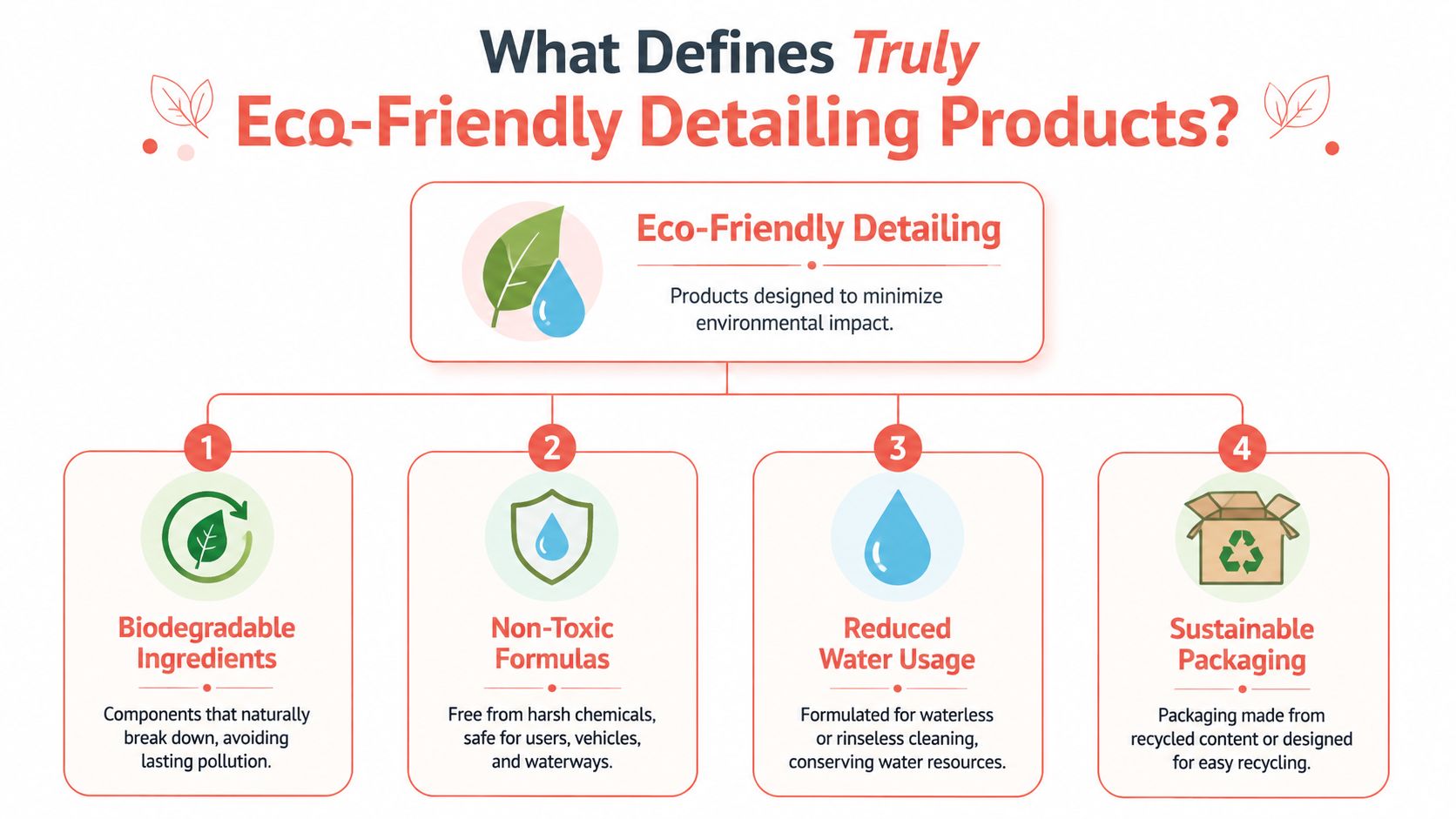
The U.S. EPA ties “eco-friendly” to measurable criteria such as low VOC content, biodegradability, low aquatic toxicity, and a neutral-to-mild pH of roughly 4 to 9.5, along with packaging practices like refillable bottles, recycled-content packaging, and pump sprays rather than aerosols, as outlined in the EPA's guide to identifying greener cleaning products.
The product traits that actually matter
Here's what that looks like in plain English:
- Low VOC content means fewer harsh fumes from volatile chemicals. Inside a vehicle, that matters. You don't want the cabin smelling like a solvent cabinet after an interior detail.
- Biodegradable ingredients are designed to break down more responsibly after use.
- Low aquatic toxicity matters because what leaves the vehicle can end up in drainage systems and, eventually, local waterways.
- Neutral-to-mild pH products are generally gentler on surfaces. Think of the difference between a mild hand soap and an aggressive degreaser. One is built for routine contact. The other has a narrower use case.
Packaging counts too
A product can't claim the moral high ground if the formula is decent but the delivery system is wasteful. Refillable bottles, recycled-content packaging, and pump sprayers are all part of the eco-friendly standard because the bottle matters almost as much as what's inside it.
That's one reason concentrates have become a serious professional format. They reduce unnecessary water in the shipped product and make it easier to mix only what's needed for the task at hand.
Why green labels aren't enough
Some products look eco-friendly because the branding is green, the bottle has leaves on it, or the description uses words like natural and pure. That doesn't tell you much.
A better question is whether the chemistry is mild enough for regular vehicle care, effective enough for the intended task, and packaged in a way that reduces waste instead of creating more of it.
If you want to see a real local business behind this kind of work, you can find our Central Pennsylvania Google Business Profile.
Benefits Beyond a Clean Car
A clean vehicle should not leave a mess behind in the customer's driveway. That matters even more in Central Pennsylvania, where winter salt, black slush, and spring runoff already put enough grime into the gutter without a wash adding more.

Cleaner process, not just cleaner paint
The obvious benefit is reduced water use and less runoff across the driveway. For mobile detailing, that is a practical win, not just an environmental talking point. A controlled rinseless or water-conscious wash keeps residue from spreading toward the street, and it gives me better control over where the dirt goes.
That makes a difference near local creeks, storm drains, and the Susquehanna watershed. It also makes a difference for the customer standing ten feet away who does not want soap, road film, and brake dust washing across the property.
There is also less waste built into the job when pros use concentrates and refill systems instead of burning through one ready-to-use bottle after another. If you want to see the kind of mobile car detailing supplies that support that approach, the format matters almost as much as the formula.
A better setup usually means:
- fewer disposable bottles in the van
- less product wasted from overpouring
- more accurate dilution for the surface being cleaned
- easier restocking for recurring maintenance details
Better experience for the people who use the vehicle
Customers usually notice this part right away. Milder, water-based products tend to leave less harsh smell hanging in the cabin, especially during interior work on daily drivers, family SUVs, and vehicles that carry pets.
That does not mean every eco-friendly product smells pleasant or works the same. Some are excellent for maintenance cleaning but weaker on neglected buildup. Professional judgment is what keeps the service safe and effective. The right product for a lightly dusty console is not always the right one for salt tracked into carpet after a Pennsylvania winter.
Comfort matters. So does restraint.
A good detail should leave the vehicle fresh, not heavily perfumed or chemically sharp.
The real value is consistency
Eco-friendly detailing products also support a steadier maintenance routine. Customers are more likely to keep up with regular service when the process uses less water, creates less mess around the home, and feels more considerate of the space where the car is parked.
For a mobile detailer, that consistency is good business and good service. Tools that keep scheduling, follow-ups, and repeat visits organized help support that kind of maintenance plan, which is one reason shops use systems like FixyFlow customer tracking.
Later in the process, this kind of chemistry also supports cleaner maintenance routines:
How Professionals Use Eco-Friendly Products Safely
Safe use starts before the first spray. On a Central Pennsylvania driveway in February, a vehicle can look washable but still carry sharp salt residue and gritty film along the lower panels. That is where professional judgment matters. Eco-friendly products perform well when the method matches the dirt.
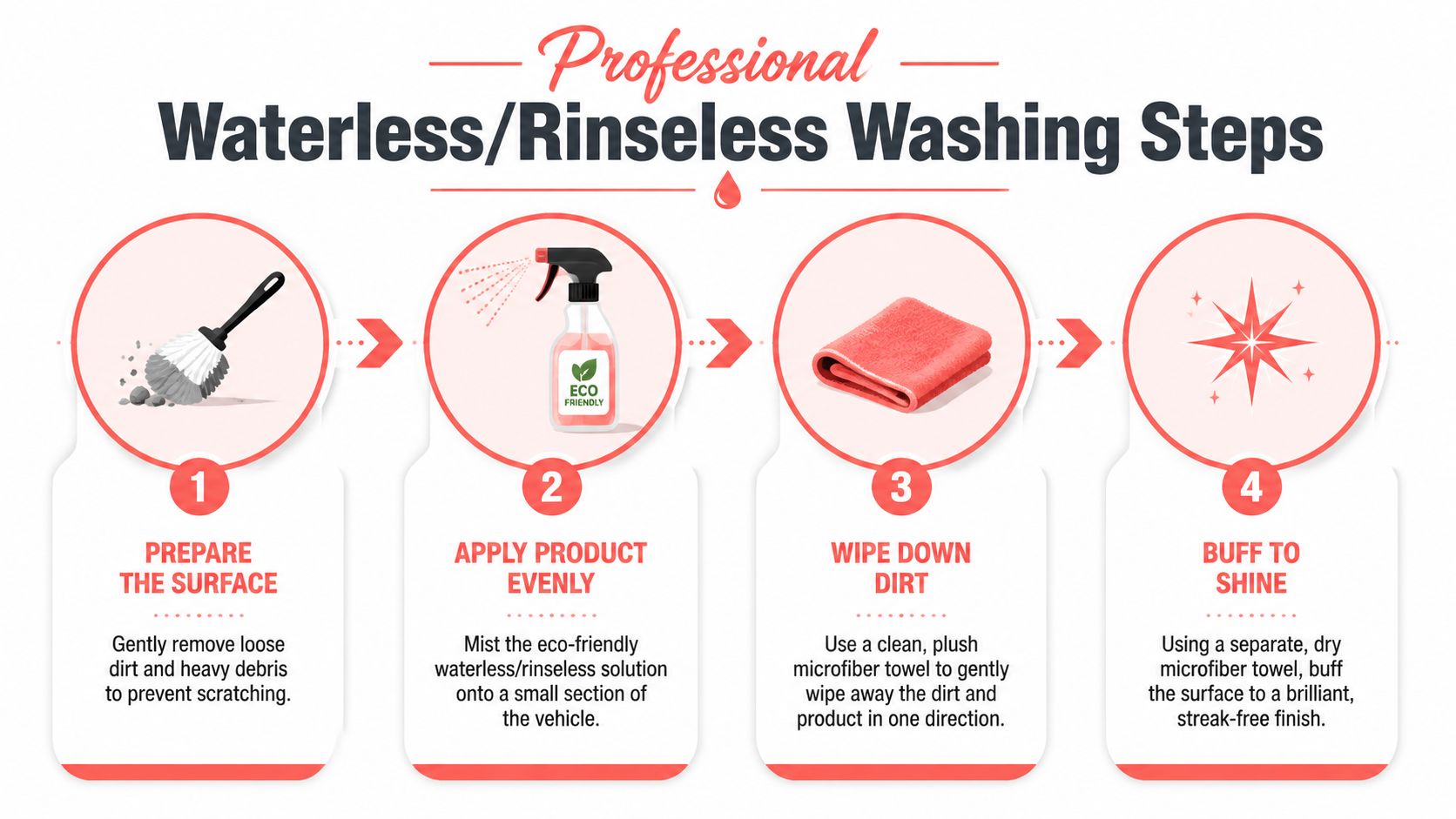
These products are safest in trained hands because the process is controlled. Waterless and rinseless formulas are built to surround and lift light to moderate contamination so microfiber can pick it up with less runoff and less waste. If the towel is already loaded, the panel is too dirty, or the user pushes too hard, that same process can mark the paint.
What safe use looks like
A good eco-friendly wash follows a repeatable routine, especially on daily drivers that see winter roads, construction dust, and long stretches of highway grime.
Check the vehicle before choosing the method
Light dust and routine road film can be handled with a waterless or rinseless approach. Heavy salt crust, caked mud, and gritty debris call for a different plan or a stronger pre-treatment.Use enough product for real lubrication
The surface needs to stay wet enough for the towel to glide and lift dirt safely. Cutting corners on product usually creates more risk than savings.Clean in small sections
Working half a hood or one door at a time keeps the chemical active and makes it easier to watch what the towel is picking up.Swap towels early
A clean microfiber is part of the safety process. Once one side is holding visible soil, it is time to rotate or replace it.
Technique matters more than the label
The bottle matters, but the hands matter more. A biodegradable cleaner can still be misused. A milder product can still scratch paint if the towel choice is wrong or the panel is dirtier than it looks.
That is why experienced detailers stick to habits that reduce risk:
- Straight-line wiping helps keep any accidental marks easier to spot and correct
- Light pressure lets the chemistry and towel do the cleaning
- Towel separation keeps wheel grime away from paint, jambs, and interior surfaces
- Method changes when needed because forcing a low-water wash on heavy contamination is not safer or greener
In practice, the safest approach is often the one that uses the right amount of water, not the least amount possible.
Product knowledge supports the process
Panel temperature, dilution, towel quality, and local conditions all affect results. In summer, product can flash too fast on hot paint. In winter, road salt and slush residue can push a car past the point where a waterless wash makes sense. That is why pros build a system around the products instead of relying on the label alone.
If you want to see the setup behind that process, this guide to mobile car detailing supplies used in the field covers the tools that support safer, cleaner work. On the business side, shops that want organized follow-up and fewer missed inquiries often use FixyFlow customer tracking to manage quotes, jobs, and customer communication.
Practical rule: The safe wash method is the one that fits the dirt level, surface condition, and season.
Can They Handle Tough Central Pennsylvania Grime
This is the key question most drivers care about. Can eco friendly detailing products effectively deal with winter salt, road film, gritty lower panels, and the mess that builds up after weeks of Central Pennsylvania driving?
Yes, but not in every situation with the exact same approach.
Where eco-friendly products perform well
For maintenance cleaning, modern eco-friendly products do very well. If a vehicle is washed on a sensible schedule, waterless and rinseless options can handle dust, light to moderate road film, interior touch-up cleaning, glass, dashboards, door panels, and a lot of normal-use grime without needing harsher chemistry.
That's where these products often shine. They clean effectively while staying gentle on surfaces and easier to manage in a mobile environment.
A good maintenance plan usually includes:
- Waterless or rinseless exterior cleaning for light soil loads
- Biodegradable interior cleaners for plastics, vinyl, and routine wipe-downs
- Properly diluted concentrates when the same product line needs to cover multiple tasks
- pH-aware product selection so sensitive surfaces aren't hit with unnecessary aggression
Where judgment becomes the difference
There's a point where “green” can't mean “use the mildest thing no matter what.” If the vehicle has gone through a full Central PA winter and the lower half is crusted with road salt and heavy film, a professional may need a stronger pre-treatment or a different wash sequence before returning to gentler chemistry for the finish work.
That's not a contradiction. It's good detailing.
Steamology's eco-friendly detailing guidance makes this point well. The answer is professional judgment, using the right product for the job from maintenance washing to deeper restoration without dropping your standards.
For a deeper look at the philosophy behind that approach, this article on eco-friendly car detailing in practice is a useful companion read.
The honest answer customers deserve
Eco-friendly products are not magic. They won't erase every kind of heavy contamination with one spray and one wipe. They also shouldn't be judged by unrealistic expectations.
What matters is using the mildest effective method. That protects the clear coat, avoids unnecessary chemical load, and still gets the vehicle properly clean. Skilled detailers know when a maintenance product is enough and when the job calls for a more aggressive first step before refining the finish.
That balance is what separates professional work from guesswork.
Get a Brilliant Shine the Smart Way
A black SUV pulls into a driveway in February with salt packed behind the wheels, gray film along the doors, and a dull finish that looks older than it is. That kind of mess is common in Central Pennsylvania. Getting it glossy again without overdoing the chemistry takes product knowledge, wash discipline, and good judgment.
That is why eco friendly detailing products raise the standard instead of lowering it. They push the detailer to match the cleaner to the surface, the season, and the level of contamination. On a well-kept vehicle, that often means a gentler wash process and better finishing work. On a winter-beaten daily driver, it may mean stronger first-step cleaning in the trouble areas, followed by safer products for the rest of the correction and protection work.
Clean results come from the full system
A sharp finish never comes from one bottle. It comes from the full process. Safe wash technique, the right towels, proper dwell time, controlled agitation, and knowing when to stop matter just as much as the label on the product.
If you want to see what that process should include, this car detailing checklist gives a clear picture of what a careful service looks like.
Good eco friendly detailing is practical. It helps protect paint, trim, and interior materials over time. It cuts down on unnecessary runoff in driveways and parking lots. It also makes mobile service easier to deliver in the places people need it, whether that is at home, at work, or during a busy week when a shop visit is one more errand.
The goal is simple. Get the vehicle properly clean, restore the shine, and avoid creating new problems in the process.
When that standard is followed, eco-friendly products are a strong fit for routine maintenance and long-term vehicle care across Harrisburg, Mechanicsburg, Carlisle, and the surrounding Central Pennsylvania area.
If you want your vehicle cleaned with professional care and eco-conscious methods that make sense for real Central Pennsylvania driving, book with The Mobile Buff. We bring hand-wash precision, safe product selection, and convenient mobile detailing right to your home or office so your car looks better without the hassle of a shop visit.

